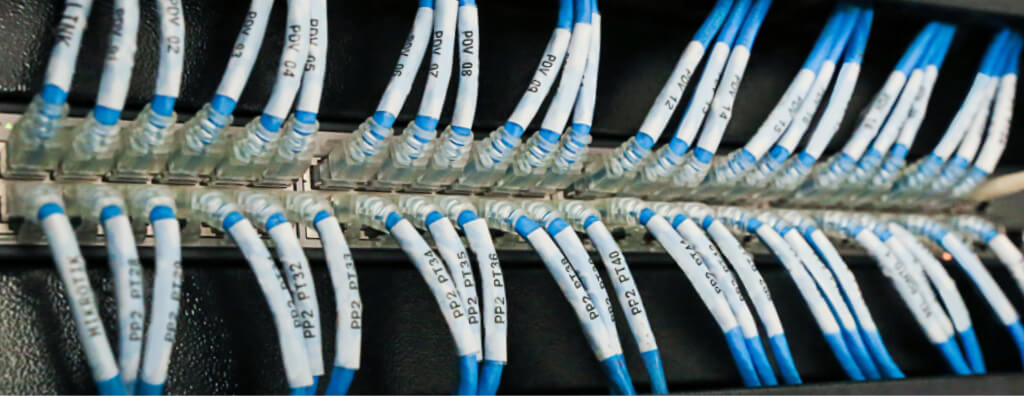
Understand the role of structured cabling consulting, the benefits of specialized design support, and the hidden risks of deploying network infrastructure without proper technical planning.
Check it out!
Structured cabling consulting is a specialized service aimed at assessing the existing communications infrastructure, identifying improvement opportunities, and recommending technical solutions suited to the client’s needs.
Introduction:
In the corporate environment, network availability and performance are critical factors that directly affect business results. A network with high availability, performance, and scalability is essential to ensure business continuity and operational efficiency.
Connection outages and system problems can generate significant losses, affecting productivity and real-time decision-making.
In this context, it is essential to hire a demonstrably qualified company to ensure the delivery of a well-designed Network Infrastructure capable of providing the stability required to support the company’s demands, avoiding interruptions that may compromise operational and financial performance.
How do you hire a specialized Structured Cabling company?
Before looking for a company that can help with network demands, it is necessary to understand what type of service should be hired:
Structured Cabling Design:
A structured cabling design is the detailed planning and execution of all infrastructure required to support data, voice, and image communications in a corporate environment.
This process includes gathering technical requirements, preparing drawings and specifications, choosing appropriate materials, and defining the network topology.
The design is developed based on technical standards, ensuring that the installation meets the required performance and safety criteria. In addition, the design involves managing all stages, from the physical installation of cables and equipment to certification testing to ensure the quality and functionality of the deployed network.
Structured Cabling Consulting:
Structured cabling consulting is a specialized service designed to assess the existing communications infrastructure, identify improvement points, and recommend technical solutions suited to the client’s needs.
Consulting is not limited to planning; it provides a comprehensive network assessment, including compliance verification and identification of potential issues such as interference, performance limitations, and design flaws.
The consultant supports decision-making, suggests best practices, and may propose corrective actions to optimize network performance, offering an accurate diagnosis that serves as the basis for future projects or adjustments to the existing infrastructure.
Execution of a Structured Cabling Project:
The execution of a structured cabling project is a service that covers the implementation of the entire scope defined in the project, including cable pulling, connectorization, rack assembly, patch panels, and other components, strictly following technical specifications and applicable standards.
Execution must be carried out by qualified professionals, following good practices for cable routing to minimize interference, optimize physical space, and ensure infrastructure organization.
Hiring an Engineering company to provide design-consulting-execution services in structured cabling projects offers a range of advantages that go far beyond simply “running cables.”
In this article, we will list some of these benefits, which can make a real difference in the final delivery of the project.
[elementor-template id=”24446″]
Main benefits of hiring a specialized company to develop the design:
Characteristics that justify hiring design consulting.
Technical Expertise:
An Engineering company has professionals with the knowledge, technical qualifications, and experience required to plan and design a Network Infrastructure that meets your company’s current and future needs. This includes the proper specification of materials, equipment, and technologies that ensure efficient and reliable network performance.
Project Customization:
Every environment has its own characteristics, and an Engineering company can create a customized design that takes into account factors such as site layout, distances between devices, and specific communication and power requirements.
Compliance with Standards and Guidelines:
Compliance with Technical Standards and international guidelines is crucial to ensure network safety and efficiency, applying these standards to minimize future issues and ensuring that the infrastructure remains within required regulations.
Scalability and Flexibility:
A well-developed Structured Cabling Design ensures network scalability, making future expansions and adaptations possible with minimal interruptions.
An engineering company can design a network that supports your company’s growth and enables integration with new technologies.
Cost-Benefit:
Although there is an initial cost to hire an Engineering company to prepare the design, the investment pays for itself by minimizing the purchase of unnecessary materials and accessories, since the company responsible for the design provides a list of the materials truly needed. This also avoids major variations in proposals when hiring contractors for project execution.
In addition, if the design is well executed, it will drastically reduce the need for frequent maintenance, avoid rework, and minimize network downtime, resulting in long-term savings.
Documentation and Maintenance:
Engineering companies deliver a detailed design with all documentation required for future network maintenance. This drastically reduces time lost in diagnostics and facilitates fast, efficient interventions, ensuring that the network is always operating optimally.
These and other factors make hiring an engineering company a strategic choice for companies seeking a high-performance, reliable network prepared for the future.

What are the main factors that make it essential to hire structured cabling design consulting?
Hiring specialized consulting for structured cabling projects can bring significant advantages that go beyond preliminary study and planning.
As in the case of project development, consulting can provide substantial financial and operational benefits, helping the company maximize return on investment and avoid future problems.
Let us talk a little about each benefit consulting can bring, how much, and how it can reduce the final costs of the project.
These are some of the highlights that justify hiring consulting:
Customized and Strategic Analysis
- Accurate Diagnosis: Consulting performs a detailed analysis of the company’s specific needs, considering the installation site, operational demands, and growth projections. This customized diagnosis allows the Structured Cabling solution to be perfectly adapted to business requirements, avoiding unnecessary costs and ensuring that the infrastructure meets present and future needs.
- Benchmarking and Best Practices: Specialized consultants bring knowledge of best practices and market trends, ensuring that the company adopts the most efficient and up-to-date solutions, avoiding investments in outdated or inappropriate technologies.
Identification of Cost-Saving Opportunities
- Cost Optimization: Consulting can identify areas where the company can save money, such as supplier selection, technologies, and installation methods. This can result in significant savings, often much greater than the cost of the consulting itself.
- Supplier Negotiation: Experienced consultants have extensive market knowledge and relationships with manufacturers and suppliers, allowing them to negotiate better prices and delivery times, generating savings for the company.
Prevention of Errors and Rework
- Avoiding Impulsive Decisions: Without consulting, decisions about Network Infrastructure may be made based on incomplete or incorrect information, leading to mistakes that generate costly rework. Consulting ensures that all decisions are grounded in careful analysis and specialized technical knowledge.
- Risk Mitigation: Specialized consultants help identify and mitigate technical and operational risks before they become problems, preventing additional costs and ensuring network stability.
Decision-Making Support
- Support in Choosing Technologies: With consulting support, the company can make more informed decisions about the technologies and solutions to be adopted, ensuring that each choice maximizes investment value and aligns with the organization’s strategic objectives.
- Scenario Evaluation: Consultants can present different scenarios and simulations, showing the financial and operational impact of each option. This helps the company choose the most efficient and economical path.
Assurance of Compliance and Quality
- Compliance with Standards and Regulations: Consulting ensures that the design and execution of Structured Cabling comply with all applicable standards and regulations.
- Quality Certification: Hiring consulting may include certification of the installed network, ensuring that all components and the installation meet the required quality standards. This can be an important differentiator in highly regulated industries.
Efficiency and Agility
- Reduced Implementation Time: Specialized consultants have the experience needed to accelerate the planning and implementation process, reducing overall project time and minimizing the impact on the company’s daily operations.
- Project Management: Consulting can take over project management, coordinating all parties involved and ensuring that schedules and budgets are respected. This frees the internal team to focus on other strategic priorities.
Maximizing Return on Investment (ROI)
- High ROI: As with a well-developed design, consulting helps maximize ROI by ensuring that every aspect of the network infrastructure is optimized for performance and cost-effectiveness. The savings generated, whether through reduced rework, resource optimization, or more favorable negotiations, are often far greater than the cost of the consulting service.
- Financial Sustainability: Consulting helps the company anticipate and control future operating costs, ensuring that the investment is sustainable over the long term and that the company does not face unpleasant financial surprises.
Training and Capacity Building
- Knowledge Transfer: In addition to planning and implementing solutions, consulting can also train the internal team, transferring technical knowledge and best practices. This reduces dependence on third parties in the future and increases operational efficiency.
- Ongoing Support: Many consulting firms offer ongoing support, helping the company adapt to new demands or technologies, ensuring that the investment in network infrastructure continues to generate value.
In Summary:
Investing in consulting is a strategic decision that goes far beyond a simple cost. When well implemented, consulting not only solves specific problems but also provides substantial gains in efficiency, productivity, and resource savings. The initial cost of hiring specialists is quickly outweighed by the benefits generated, including process optimization, waste reduction, and improvements in risk management.
For example, specialized consultants can identify operational bottlenecks that, once resolved, result in continuous and significant savings. In addition, the expertise brought by experienced consultants allows the company to adopt market best practices, avoiding costly mistakes and maximizing return on investment.
Therefore, when evaluating the cost of consulting, it is essential to consider the positive and lasting impact it brings to the organization. Ultimately, the value generated in savings and efficiency far exceeds the initial investment, making consulting not merely an expense but an essential tool for the company’s sustainable and competitive growth.
The hidden risks of trying to implement structured cabling without specialized professional support:
Mistakes that can generate unexpected additional costs.
Although it may seem tempting at first to save money by implementing a structured cabling solution without the help of specialized consulting, this approach generally leads to much higher costs in the long run. The lack of proper technical support can turn an initiative that should bring efficiency and savings into a constant source of problems and rework.
Without a well-developed design and qualified execution, it is extremely difficult to ensure that structured cabling is installed efficiently and in compliance with technical standards. This can lead to network failures, frequent interruptions, and the need for constant maintenance, causing significant losses of time and money. In addition, mistakes during the implementation phase may result in unexpected additional costs, such as the need to replace materials or even redo the entire installation.
Another critical aspect is the lack of optimization. Poorly designed or poorly installed cabling can limit the network’s future expansion capacity, which may force the company to make premature new investments to meet growing demands. On the other hand, specialized consulting not only ensures that the initial design is robust and efficient, but also that the infrastructure is prepared to support future technological evolution.
Therefore, by trying to save money by avoiding the hiring of a design project, the company runs a high risk of incurring much higher costs with repairs, rework, and lost productivity. Consulting offers technical support at all implementation stages, which is crucial to ensure that the structured cabling investment results in a stable, scalable, and durable solution, avoiding significant financial and operational losses.
Main challenges of network deployment without a project.
Main attention points to avoid when hiring structured cabling services.
Many companies make the mistake of focusing the hiring of Structured Cabling Services only on the number of required network points and the budgets for executing those services, leaving room for companies to present proposals with varied scopes and no real technical benchmark.
In this context, companies often end up spending more resources than necessary by redoing services or purchasing unnecessary materials, because each company offers what suits its own interests rather than what the client actually needs.
It is very important for companies to pay attention to certain factors that we will list below:
Undersizing or Oversizing:
Without a detailed design, it is difficult to estimate the amount of materials and equipment required correctly. This can lead to undersizing, where the network does not meet needs, or oversizing, resulting in unnecessary expenses.
Additional Costs:
The lack of a design can generate unexpected costs during implementation. Problems that could have been identified and solved during the planning phase end up emerging during execution, requiring rework and adjustments that considerably increase the initial cost.
Technical Incompatibilities:
Without a design, there may be purchases of components that are not compatible with one another or that do not meet the network’s specific requirements. This can cause performance problems, maintenance difficulties, and even the need to replace equipment, raising costs even further.
Connectivity and Performance Problems:
The absence of a structured design or specialized consulting can result in a poorly distributed network, with cable routing performed without following the criteria required by the standards, poorly distributed consolidation points, and interference that affects network performance. This compromises communication reliability and speed.
Difficulty in Future Expansions:
Without proper planning and with network deployment based only on the number of points and budgets, network scalability may be compromised and the company may face major difficulties when expanding in the future. This can limit business growth or require additional investments to redo parts of the infrastructure, generating high costs again every time network expansion is needed.
Non-Compliance with Standards and Guidelines:
A Structured Cabling Design must follow specific technical standards. Without a design, there is a risk that the installation will not comply with these standards, which can generate network failures and communication problems.
Lack of Documentation:
The lack of a design also means the absence of detailed network documentation, which makes future maintenance, problem diagnosis, and even the resolution of legal or regulatory issues much more difficult.
Downtime:
Problems during installation due to the lack of a design can cause interruptions in network operation, impacting company operations and generating losses.
Conclusion
In summary, the absence of a defined design before requesting implementation budgets can result in inefficient network deployment, increased costs, and a network infrastructure that does not fully meet the company’s needs. Investing in a well-prepared design is crucial to ensure efficient deployment without unpleasant surprises.
Hiring design and consulting services for structured cabling is a strategic investment that ensures the efficiency and longevity of any enterprise’s communication infrastructure. These services not only ensure that the installation is carried out according to best practices and technical standards, but also provide a solid foundation for the company’s future growth.
The cost of hiring design/consulting for structured cabling represents only a small fraction of the total project value. This small percentage is more than offset by the savings in materials and resources generated over time, whether through reduced corrective maintenance, increased component durability, or ensuring optimized network performance.
In short, investing in structured cabling consulting and design is a smart decision that maximizes project efficiency, minimizes future risks and costs, and ensures that the infrastructure is prepared to support constantly evolving technological demands.
Final Considerations
We hope this article has clarified the importance and benefits of investing in structured cabling design and consulting. By choosing a professional approach, you not only ensure the success of your project, but also secure a robust infrastructure prepared for the future. Thank you for reading, and we remain available for any questions or support needs.
Frequently Asked Questions
A Structured Cabling System (SCS) is a standardized infrastructure of cables, connectors, racks, cable trays, patch panels, and network active equipment that provides the foundation for a telecommunications network to operate efficiently.
A Structured Cabling System works through the installation of several network components, including cables, active network equipment, patch panels, and other devices, following technical standards and guidelines.
Horizontal cabling connects telecommunications outlets to distribution rooms on the same floor, while vertical cabling, or backbone, interconnects different floors or buildings, carrying data between the main and floor distributors.
It is the main cabling that connects telecommunications rooms, data centers, or buildings to one another. It usually uses higher-capacity cables, such as fiber optics or higher-category copper cables.
Electrical engineers, network engineers, telecommunications technicians, network infrastructure designers, and companies specialized in the design and deployment of corporate networks.
Specialized consulting assesses your company’s real needs, designs tailored solutions, and ensures that the entire system complies with technical standards and market best practices, avoiding errors and rework.
The consultant guides the selection of cables, connectors, racks, and equipment according to the usage profile, expected company growth, and performance requirements, always seeking the best cost-benefit and avoiding unnecessary spending.
Yes. Consulting performs a complete diagnosis of the existing infrastructure, points out non-compliance issues, suggests adjustments, and can prepare a regularization plan according to current standards, increasing reliability and asset value.
Yes. An important differentiator of consulting is the delivery of detailed technical documentation, including diagrams, descriptive reports, drawings, and test certificates, facilitating future maintenance and audits.
Look for companies with proven experience, market references, technical certifications, and mastery of ABNT and international standards. Also evaluate transparency in proposals and clarity in customer support.
Yes. One of the differentiators of structured cabling consulting is the ability to perform a detailed diagnosis of the infrastructure and quickly identify the causes of slow performance, connection drops, interference, and other recurring issues. The consultant uses test equipment, network point mapping, and configuration analysis to propose practical and immediate solutions, ensuring system stability and performance.
Services may include: assessment and diagnosis of the current infrastructure, preparation of a technical design according to standards, specification and guidance on materials, preparation of descriptive reports and diagrams, construction follow-up, certification tests, documentation regularization, internal team training, and post-deployment support. Some consultants also offer maintenance plans and periodic system updates.
Normative References
“NBR 14565 – Structured Cabling for Commercial Buildings” – ABNT (Brazilian Association of Technical Standards)
“ISO/IEC 11801 – Generic Cabling for Customer Premises“- ISO/IEC (International Organization for Standardization) & (International Electrotechnical Comission)
“”ANSI/TIA 568 – Generic Telecommunications Cabling for Customer Premises” – ANSI/TIA (American National Standards Institute) & (Telecommunications Industry Association)
“What are the structured cabling services and their respective technical responsibilities?” – CREA (Regional Council of Engineering and Agronomy)
“Structured Cabling Systems: the Fact File” – CommScope
Relevant Links (Complementary Technical Materials)
eBook – Why hire a Structured Cabling Design?
Structured Cabling Technical Standards
Network Certification for Structured Cabling Systems
Structured Cabling Installation
How to avoid common problems in Structured Cabling Systems?
Key Benefits of Structured Cabling
