
The Ethernet protocol connects local area networks (LANs), wide area networks (WANs), the internet, cloud systems, IoT devices and Wi-Fi systems, forming an integrated and continuous global communications network. What is Ethernet? Ethernet, conceived more than 50 years ago, is a data link and physical layer protocol that enables data communication in a network, whether […]
Check it out!
The Ethernet protocol connects local area networks (LANs), wide area networks (WANs), the internet, cloud systems, IoT devices and Wi-Fi systems, forming an integrated and continuous global communications network.
What is Ethernet?
Ethernet, conceived more than 50 years ago, is a data link and physical layer protocol that enables data communication in a network, whether it is a LAN (Local Area Network) or a WAN (Wide Area Network). It uses a packet transmission structure known as Ethernet frames, which contain both the data to be transmitted and address control information.
Original Ethernet, also known as 10-megabit Ethernet, used a media access method called CSMA/CD (Carrier Sense Multiple Access with Collision Detection) to handle collisions that occurred when two devices attempted to transmit data simultaneously. Over time, Ethernet evolved to support higher speeds, starting with Fast Ethernet (100 Mbps), followed by Gigabit Ethernet (1 Gbps), 10 Gigabit Ethernet (10 Gbps), and so on.
Modern Ethernet mainly uses packet switching, which allows data to be transmitted efficiently over high-speed networks. Switching is performed by network devices such as switches and routers, which direct data packets to the correct destination on the network.
Ethernet has also evolved to support a variety of physical media, including twisted-pair cables (such as Cat5 and Cat6), fiber optic cables and even wireless connections (such as Wi-Fi, which is essentially Ethernet over radio waves).
Ethernet is fundamental to many modern technologies and applications, from data centers and cloud environments to the Internet of Things (IoT). Its simplicity, robustness and ability to evolve with technological demands have secured its position as the backbone of data communications.
How the Ethernet Protocol Works
Ethernet operates based on a protocol that enables data transmission between computing devices on wired networks. This protocol uses a packet transmission structure known as Ethernet frames, which contain standardized information, such as source and destination addresses, helping route frames through the network.
Originally, Ethernet was designed around the CSMA/CD principle (Carrier Sense Multiple Access with Collision Detection), which ensured that the line was not in use before any frame was sent. However, with the evolution of networks and the introduction of switches and nodes, each device now generally has its own private connection to the network, making CSMA/CD less relevant.
In addition, modern Ethernet operates using full duplex, meaning that sending and receiving channels are completely separate, eliminating the possibility of collisions during this part of the transmission path. Although Ethernet does not have built-in error correction, it still provides the foundation for most digital and internet communications and integrates easily with most higher-layer protocols.
Ethernet’s versatility, which allows it to operate in almost any environment, has led to its universal adoption. This is evidenced by the fact that organizations can use the same Ethernet protocol both in their Local Area Networks (LANs) and in their wide area networks (WANs). This means Ethernet is effective in a variety of scenarios, from data centers to internal or private corporate networks, internet applications and almost everything else. Ethernet can even support more complex forms of networking, such as Virtual Private Networks (VPNs) and software-defined network (SDN) deployments.
Ethernet can handle applications that require high bandwidth, such as video streaming or voice over IP (VoIP) applications. On the other hand, the simplicity of the Ethernet protocol also allows it to work with smaller-scale and relatively less sophisticated devices, such as those that make up the Internet of Things (IoT), without the need for special configurations.
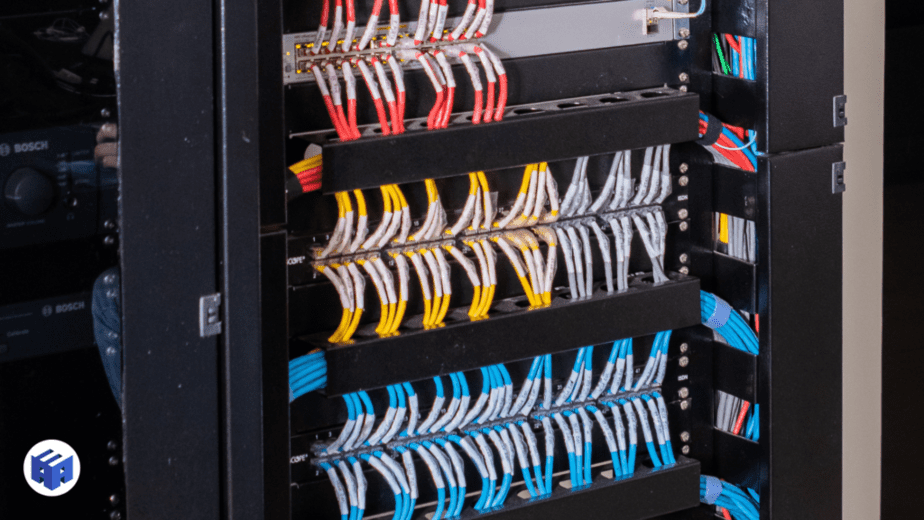
In a complex network environment, such as a data center, color coding may be used to indicate different network functions, data types or connection destinations. For example, a blue cable may be used for data connections, a green cable for voice and a red cable for video. If a network device is not working properly, color coding can help quickly identify whether the problem is in the cable and which connection is affected.
However, it is important to note that there is no universal standard for Ethernet cable color coding. The choice of colors and their meaning may vary depending on the network administrator’s preferences. Therefore, it is essential to maintain clear documentation of the color-coding practices used in a given network environment.
Enhancing Ethernet to Meet the Demands of Artificial Intelligence
Artificial Intelligence workloads are expected to impose unprecedented performance and capacity demands on networks, and some network vendors have joined forces to enhance Ethernet technology so it can meet the scale and speed required by AI.
In July 2023, AMD, Arista, Broadcom, Cisco, Eviden, HPE, Intel, Meta and Microsoft announced the Ultra Ethernet Consortium (UEC), a group hosted by the Linux Foundation that is working to develop advances in Ethernet at the physical, link, transport and software layers. There are concerns that today’s traditional network interconnects cannot deliver the performance, scale and bandwidth required to keep up with AI demands, and the consortium aims to address these concerns.
The UEC wrote in a white paper that it will enhance an Ethernet specification to introduce a series of key technologies and capabilities, including:
- Multi-pathing and packet spraying to ensure that AI workflows can access a destination simultaneously.
- Flexible delivery order to ensure that Ethernet links are optimally balanced; ordering is applied only when the AI workload requires it in bandwidth-intensive operations.
- Modern congestion control mechanisms to ensure that AI workloads avoid hot spots and spread the load evenly across multiple paths. They can be designed to work together with multi-path packet spraying, enabling reliable transport of AI traffic.
- End-to-end telemetry to manage congestion. Information originating from the network can advise participants about the location and cause of congestion. Reducing the congestion signaling path and providing more information to endpoints enables more responsive congestion control.
