
Learn about the main structured cabling components, including twisted-pair cables, patch panels, racks, patch cords, RJ45 outlets, cable managers, ODFs, and fiber optics.
Check it out!
The components of structured cabling are:
1. Twisted Pair Copper Cables (Cat5e, Cat6, Cat6A); 2. Patch Panels; 3. Racks and Cabinets; 4. Patch Cords; 5. RJ45 Outlets and Connectors (Keystones); 6. Cable Managers; 7. ODF; Fiber Optics;
[elementor-template id=”24446″]
Structured cabling is the organized and carefully planned distribution of cables for an efficient network, ensuring secure and stable connectivity among devices. A well-designed structured cabling project begins with meticulous planning, taking into account the network’s present and future needs, allowing expansions without compromising performance.
The execution of the project is also a critical factor for the success of the system. Strictly following technical standards, using high-quality components, and ensuring correct cable installation and organization help maintain network performance over time with minimal maintenance needs.
Investing in excellence in the design and execution of structured cabling means creating a solid foundation for network infrastructure, essential for the optimized operation of any organization.
To achieve excellence in a structured cabling project, it is essential to understand the components that make up this infrastructure and how each contributes to efficient network performance. These elements work together to ensure connectivity and network organization, enabling fast and secure data transmission.
Next, let us explore each of the items that make up structured cabling:
1 – Twisted Pair Copper Cables (Cat5e, Cat6, Cat6A)
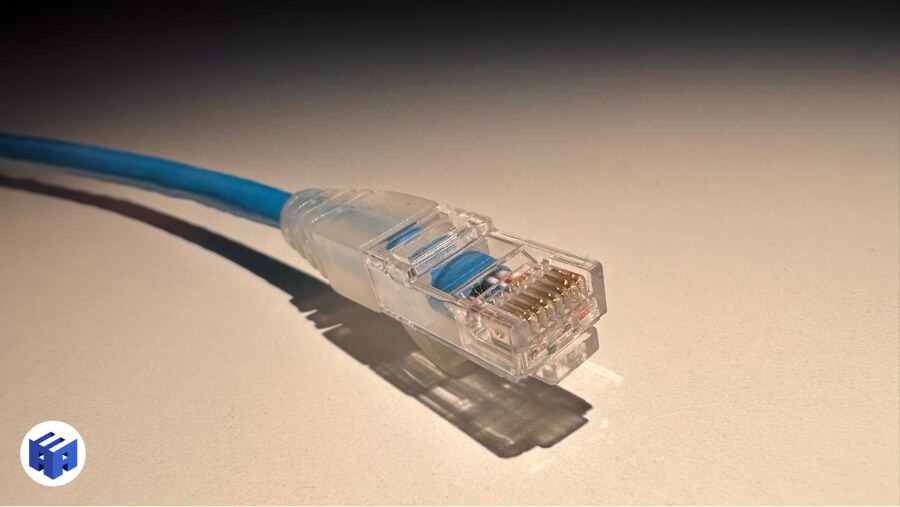
Twisted pair copper cables are used in horizontal cabling within a structured cabling installation.
Composed of intertwined wire pairs to reduce electromagnetic interference, they are available in different categories such as Cat5e, Cat6, Cat6A, Cat7, Cat7A, Cat8.
Each category supports specific speeds and bandwidths, with Cat6 being the most recommended for Gigabit Ethernet networks, while Cat6A is ideal for environments that require even greater data transmission capacity.
2 – Patch Panels:
A3A Engenharia de Sistemas Archive
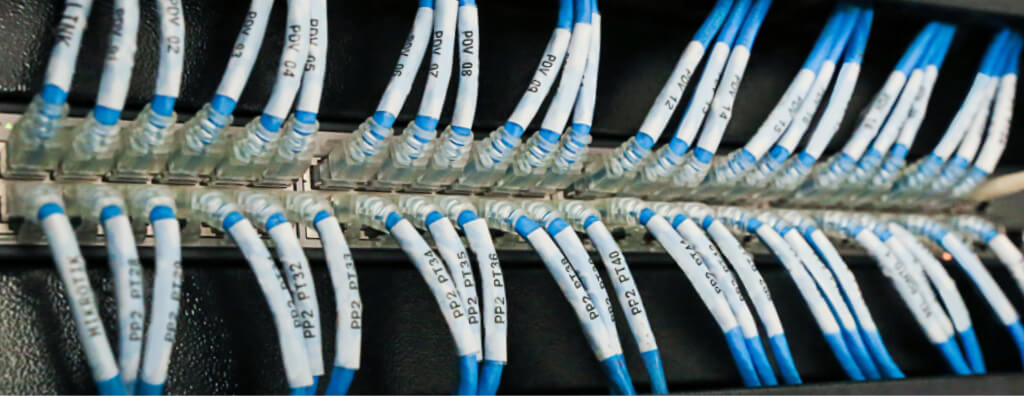
The patch panel is a connection panel used to organize and manage cables in a structured cabling system. It is the equipment that centralizes the arrival of network cables from the horizontal cabling that interconnects workstations and other network points to the distribution rack.
The patch panel simplifies cable management because it allows quick and efficient network changes, enabling and disabling points by using patch cords only, without the need to modify the main cabling, which is fundamental for system flexibility and maintenance.
3 – Racks and Cabinets
A3A Engenharia de Sistemas Archive
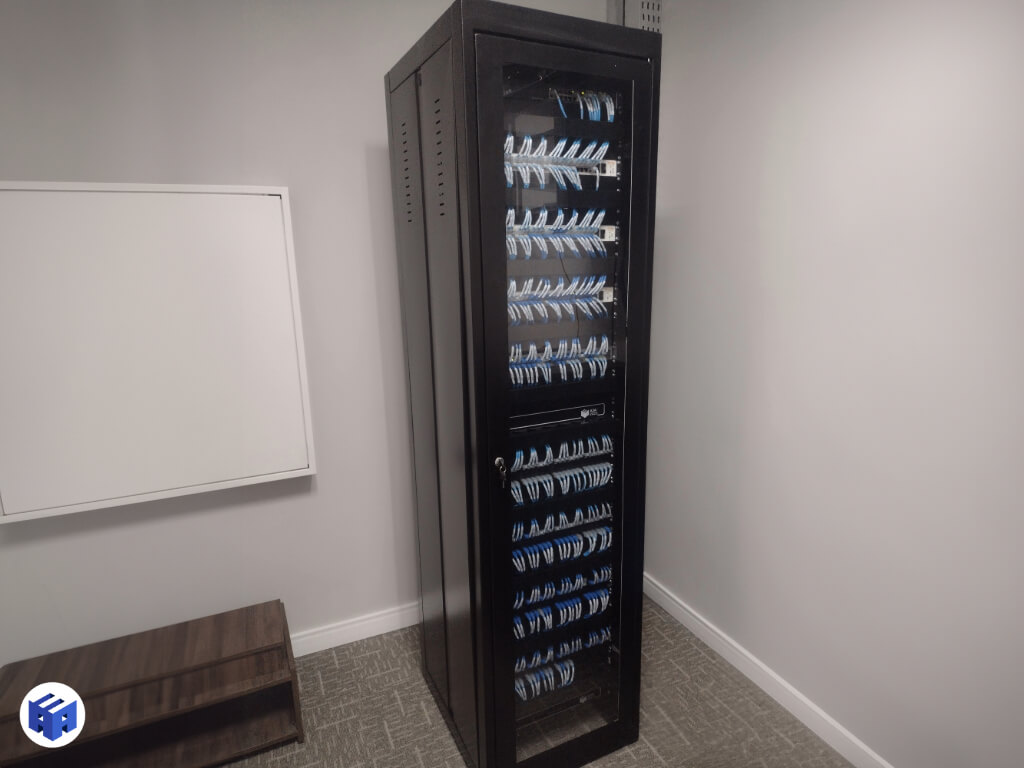
Racks and cabinets are essential structures in structured cabling, used to organize and house network equipment such as patch panels, switches, servers, and routers.
They provide an efficient solution for keeping devices secure and ventilated, ensuring easy access for network maintenance and expansion. Racks help maintain cable organization, preventing tangles and facilitating physical infrastructure management. In addition, they protect equipment against physical damage and improve the aesthetics of the IT environment.
4 – Patch Cords
A3A Engenharia de Sistemas Archive
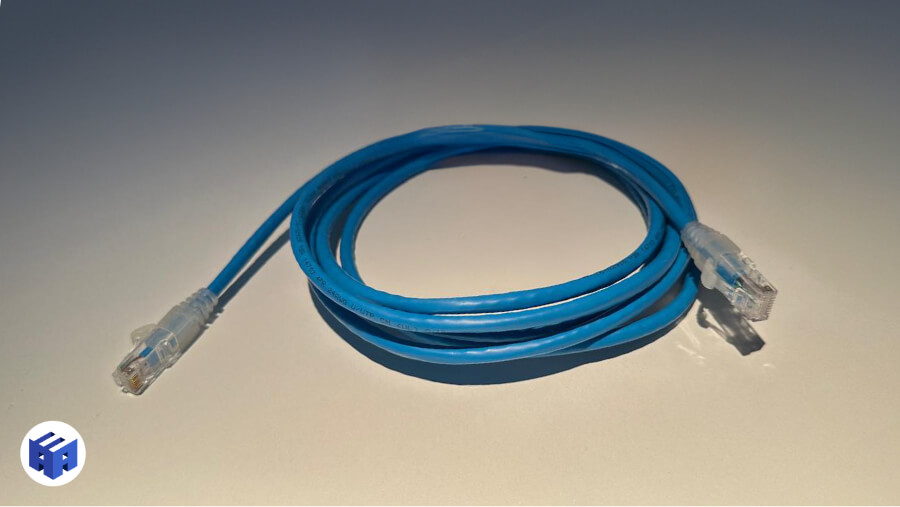
Patch cords are flexible, short-distance connection cables used as patching cables to enable and disable network points on switches.
Patch cords connect network equipment such as switches, patch panels, and servers.
They play a crucial role in structured cabling by allowing fast and efficient interconnection among devices.
These cables are usually terminated with RJ45 connectors and are available in categories such as Cat5e, Cat6, and Cat6A, among others, to ensure compatibility with different types of networks and data transmission speeds. The quality and organization of patch cords are fundamental for network performance.
5 – RJ45 Outlets and Connectors (Keystones)
A3A Engenharia de Sistemas Archive
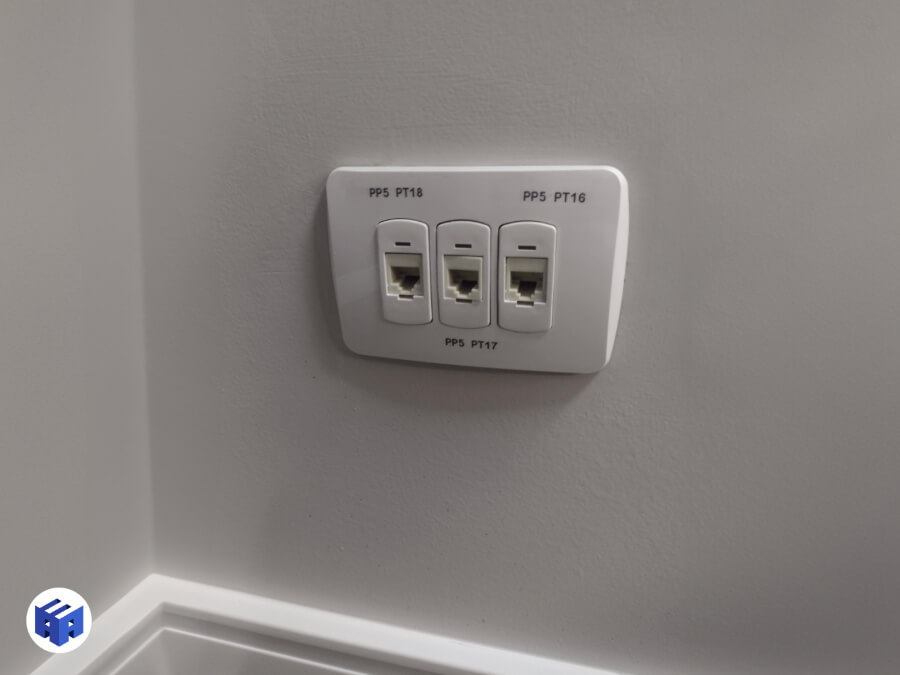
RJ45 outlets and keystone connectors are fundamental termination points in structured cabling.
They allow network cables to be connected to devices such as computers, IP phones, and printers in a simple and practical way.
RJ45 connectors are widely used to establish Ethernet network connections and ensure a standard and secure interface for data traffic. Keystones, in turn, are modules that fit into wall plates or panels, facilitating connection organization and maintenance, ensuring a modular and flexible installation for future expansions.
6 – Cable Managers
A3A Engenharia de Sistemas Archive
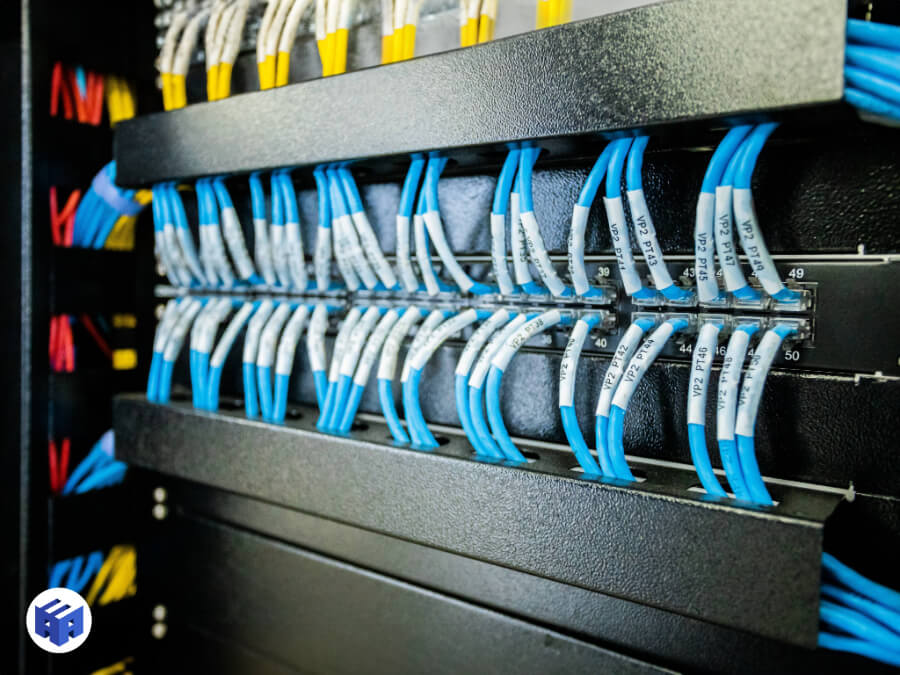
The cable manager is an essential component in structured cabling, responsible for organizing and routing cables inside racks and cabinets. Cable managers accommodate and distribute cables, avoiding bends and breaks that can impair network performance.
In addition, the proper use of cable managers improves airflow among equipment, contributes to system efficiency, and ensures a more professional and organized appearance.
7 – ODF (Optical Distribution Frame)
A3A Engenharia de Sistemas Archive
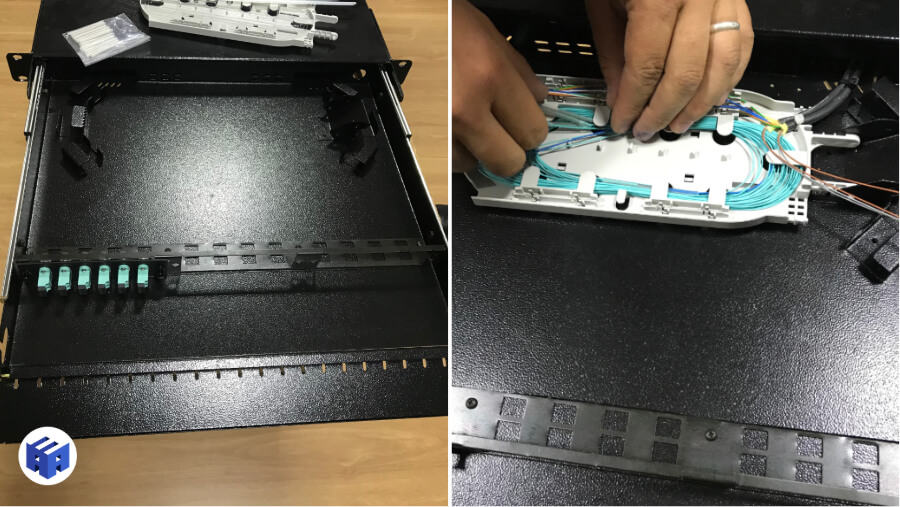
The ODF (Optical Distribution Frame) is a fundamental component in fiber optic networks within a structured cabling system because it serves as the backbone termination point and the organization point for fiber optic cables, enabling safe and efficient connection among different network segments.
The ODF facilitates infrastructure maintenance and expansion, providing a centralized location to manage optical connections, protect cables, and accommodate splices and couplings. Its use is crucial to ensure the integrity and quality of transmissions in networks that require high data capacity.
Although the ODF (Optical Distribution Frame) and the patch panel have similar functions regarding cable organization and termination, they are used for different cable types and have specific applications:
- Patch Panel: Used mainly for twisted pair cables (such as Cat5e, Cat6) in Ethernet networks. It organizes and manages copper cable connections, allowing the interconnection of network devices efficiently.
- ODF: Designed for fiber optic networks. Its main function is to accommodate, protect, and organize fiber optic cable connections, allowing safe termination and maintenance of the fibers.
In summary, both have the function of facilitating the organization and management of network connections, but the patch panel is for copper cables, while the ODF is aimed at fiber optics.
8 – Fiber Optics
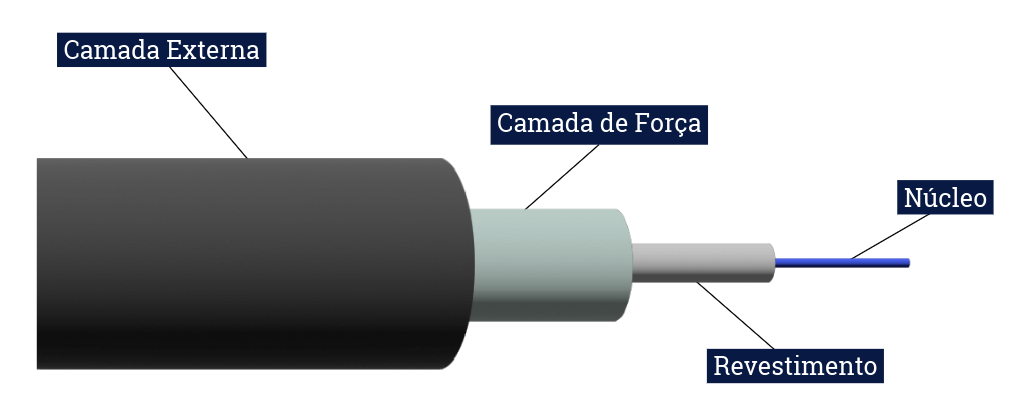
Fiber optics is a data transmission technology that uses pulses of light to send information quickly and efficiently over long distances.
Optical fibers are made up of an extremely thin glass or plastic core, which is surrounded by a layer of material with a lower refractive index, called the cladding. This design allows light to be reflected internally within the core, ensuring that it travels through the fiber with minimal signal loss.
Final considerations
The components of structured cabling form a complete and efficient solution for building reliable and scalable networks.
By choosing the appropriate components, considering factors such as performance, organization, and security, networks can operate with high capacity and flexibility, meeting current and future data communication needs.
A well-designed infrastructure not only optimizes network operation but also reduces maintenance and upgrade costs in the long term.
References
Structured Cabling Technical Standards
Structured Cabling for Companies
Consulting for Structured Cabling Projects
Brazilian Association of Technical Standards
Acknowledgements
Thank you for taking the time to read this article. We hope the information has been useful and enlightening.