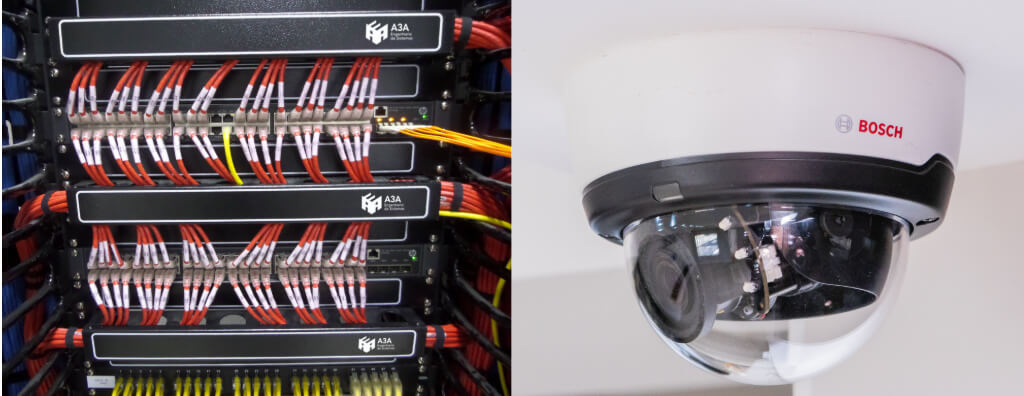
Compare Cat5e and Cat6 in CCTV projects and understand how bandwidth, transfer rate, interference, and expansion needs affect system performance.
Check it out!
Cabling for CCTV: Cat5e vs. Cat6? Successful CCTV projects begin with an important choice: defining the system cabling.
This choice is fundamental to ensure ideal system performance. With the advance of high-definition camera technologies featuring embedded video analytics and the growing integration among different security systems, such as access control, facial recognition, and alarms, the demand for networks with higher capacity and efficiency has increased significantly.
When considering the cabling infrastructure for CCTV, two options often appear: Cat5e and Cat6. Both are widely used, but they present significant differences in terms of performance and application.
In this article, we will analyze the characteristics of each cable type, their pros and cons, and understand in which project types each option is more viable.
We will evaluate how these cables behave in scenarios with high-definition cameras, use of video analytics, and integration with other systems, as well as their limitations and possibilities for future expansion.
[elementor-template id=”24446″]
The Role of Cabling in CCTV Projects
Cabling plays a fundamental role in CCTV projects because it is the medium that carries audio and video data and establishes communication between cameras and other devices within the system architecture, such as switches, recording servers, and monitoring devices, or client servers.
Installation quality and cable capacity directly affect system performance and stability, especially in environments that use high-definition cameras and advanced video analysis resources.
Transfer Rate and Bandwidth: Decisive Factors
In CCTV projects, two critical factors affect communication quality: transfer rate and bandwidth.
- Transfer Rate refers to the actual amount of data that can be transmitted per second on a network, usually measured in megabits per second, or Mbps, or gigabits per second, or Gbps. In a CCTV system, the required transfer rate depends on the number of cameras, video resolution, and the use of video analytics. The higher the camera resolution and the complexity of the video analysis architecture, the greater the demand for transfer rate.
- Bandwidth refers to the maximum capacity of the cable to carry data within a frequency range, measured in megahertz, or MHz. A cable’s bandwidth defines how much data it can support simultaneously. Cables with higher bandwidth can better handle intense traffic and multiple video streams, reducing the risk of latency and data loss.
Impacts of poorly sized cabling:
Problems caused by poorly sized CCTV cabling can result in a series of issues, such as:
- Data loss: Cables that cannot handle the data demand may cause loss of video packets, resulting in recording and monitoring failures.
- Latency: When the infrastructure is not capable of transmitting data efficiently, image and security alert delays may occur, compromising system effectiveness.
- Difficulty expanding: Inadequate cabling limits future upgrade capacity, which means the network may quickly become obsolete as new cameras and functions are added to the system.
Therefore, ensuring that cabling has the capacity to support CCTV system requirements, both current and future, is essential for the success of any project.

Cable Cat5e:
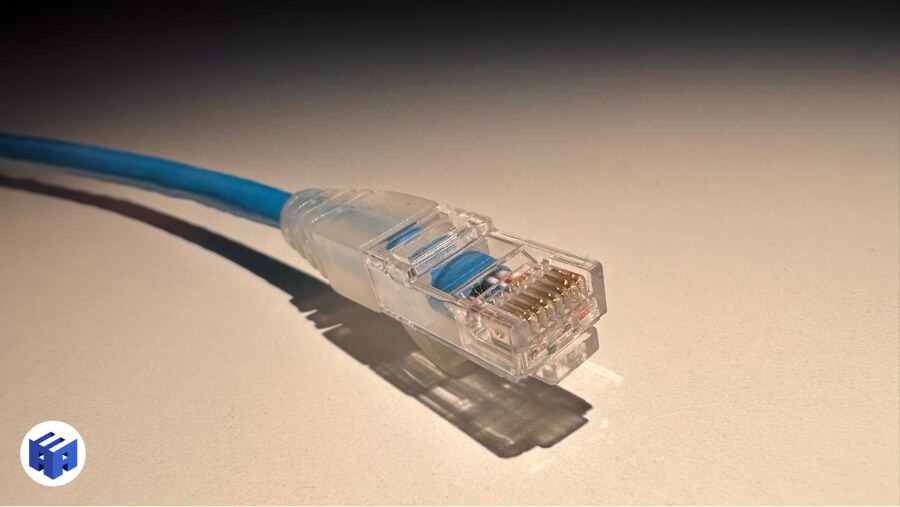
The Cat5e cable, or Category 5e, is widely used in network projects, including CCTV installations, due to its affordable cost and ease of installation. Although it is a technology that has been on the market for a long time, Cat5e is still viable for certain types of installations. However, its performance is limited when compared with options such as Cat6, especially in CCTV projects that demand high transfer rates and bandwidth.
Technical Characteristics of Cat5e
- Maximum Transfer Rate: Cat5e supports rates of up to 1 Gbps, or Gigabit Ethernet, over distances of up to 100 meters. This capacity is sufficient for smaller systems and lower data traffic volumes, such as standard-resolution analog cameras or even Full HD in projects with few cameras.
- Bandwidth: The maximum bandwidth that Cat5e can support is 100 MHz. Although this capacity is adequate for some network applications, it may be limited in systems that use high-definition cameras, such as 4K, and advanced video analytics that generate large volumes of data.
- Crosstalk and Interference: Cat5e offers limited control over crosstalk, or interference between cable pairs, and is more susceptible to electromagnetic interference.
Advantages of Cat5e
- Cost-effectiveness: The main attraction of Cat5e is its low cost. For smaller projects, or where budget is a limiting factor, Cat5e can be a more economical solution.
- Availability: It is easily found in any network materials store.
Disadvantages of Cat5e
- Performance Limitation: Although Cat5e supports up to 1 Gbps, it is not appropriate for CCTV projects that require high transfer rates and multiple high-resolution video streams. In systems with high-definition cameras that constantly communicate with databases, such as license plate reading or facial recognition systems that need to make requests and validations continuously, the maximum capacity of Cat5e will be quickly exceeded.
- Obsolescence: As network needs grow, Cat5e is becoming an outdated technology for scenarios with large data demand, as is the case with complex CCTV systems integrated with other systems. It may meet current demands in small installations, but it will struggle to keep up with future expansions.
- Lower Bandwidth: With a bandwidth of only 100 MHz, Cat5e has less capacity to transmit large volumes of data simultaneously, which can cause bottlenecks in systems that require higher transmission speed.
Cable Cat6:
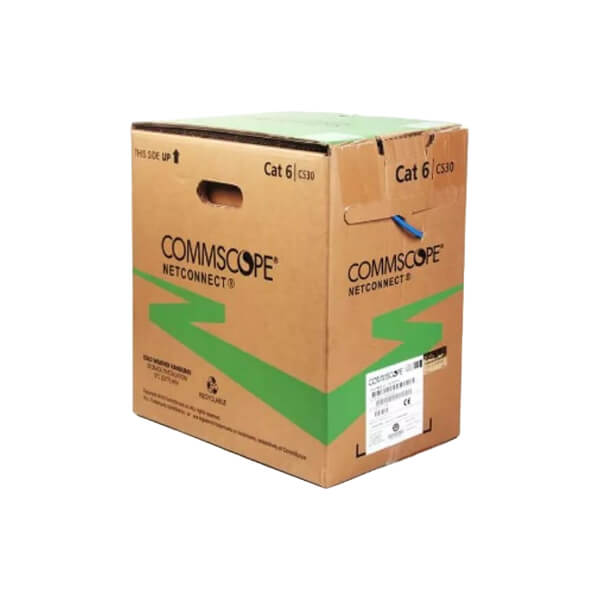
Cat6, or Category 6, was developed to support higher speeds and greater data transmission capacity. In CCTV projects involving high-definition cameras, video analytics, and multiple streams, Cat6 cabling is the most appropriate solution to handle bandwidth and transfer rate demands.
Technical Characteristics of Cat6
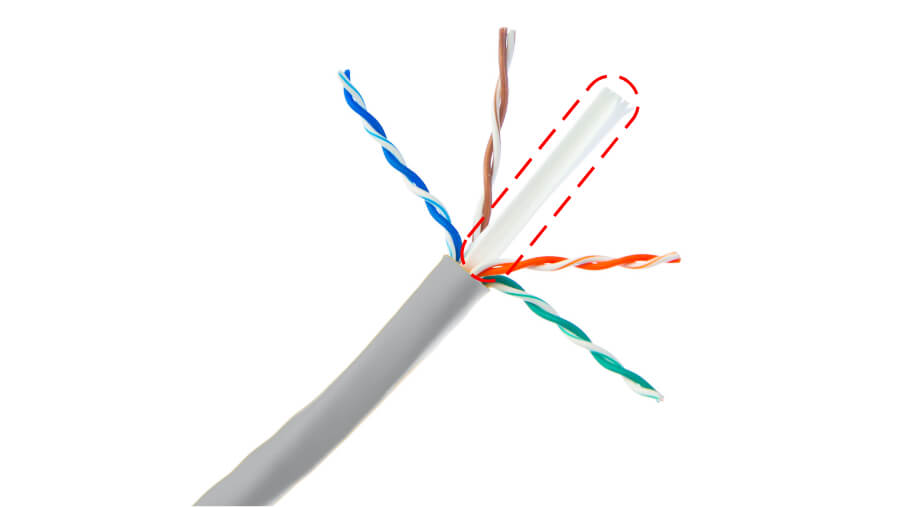
- Maximum Transfer Rate: Cat6 supports rates of up to 10 Gbps over short distances, generally up to 55 meters, and maintains 1 Gbps over distances of up to 100 meters, which makes it ideal for CCTV projects with high-resolution cameras and large data volumes.
- Bandwidth: Cat6 offers bandwidth of up to 250 MHz, more than double the capacity of Cat5e. This means it can better handle multiple high-definition video streams and avoid latency and data loss problems.
- Crosstalk and Interference Control: The construction process of Cat6 includes internal separators that help reduce crosstalk, making it much more efficient in high-demand environments, such as CCTV networks with multiple cameras.
Advantages of Cat6
- High Transfer Rate: The ability to support up to 10 Gbps makes Cat6 ideal for projects that require high data transmission speed, such as CCTV with 4K cameras or systems that use intensive video analytics. This performance ensures the network operates quickly and efficiently, even with large volumes of data being transmitted.
- Higher Bandwidth: With up to 250 MHz of bandwidth, Cat6 can handle simultaneous high-definition video streams without compromising signal quality or generating delays. This is crucial in CCTV systems that need to transmit real-time images.
- Less Interference: The design and jacket of the Cat6 cable significantly reduce crosstalk and other forms of electromagnetic interference, resulting in more reliable data transmission, especially in environments with many cameras and network devices.
- Future-ready: As the demand for high-speed, high-bandwidth networks continues to grow, Cat6 offers a longer-lasting solution, supporting future technology upgrades without the immediate need to replace the cabling infrastructure.
Disadvantages of Cat6
- Greater Installation Complexity: Cat6 cable is physically thicker and less flexible than Cat5e, which can make horizontal cabling installation more difficult, although it ensures better mechanical and electrical protection. In addition, it requires more attention during installation, because it needs specific tools and any failure in the crimping or termination process may impair performance.
- Maximum Performance Over Short Distances: Although Cat6 supports rates of up to 10 Gbps, that speed is limited to distances of up to 55 meters. For longer distances, up to 100 meters, Cat6 maintains a rate of 1 Gbps, which must be considered in projects with distances greater than 55 meters.
Infrastructure Demands of a High-Performance CCTV System
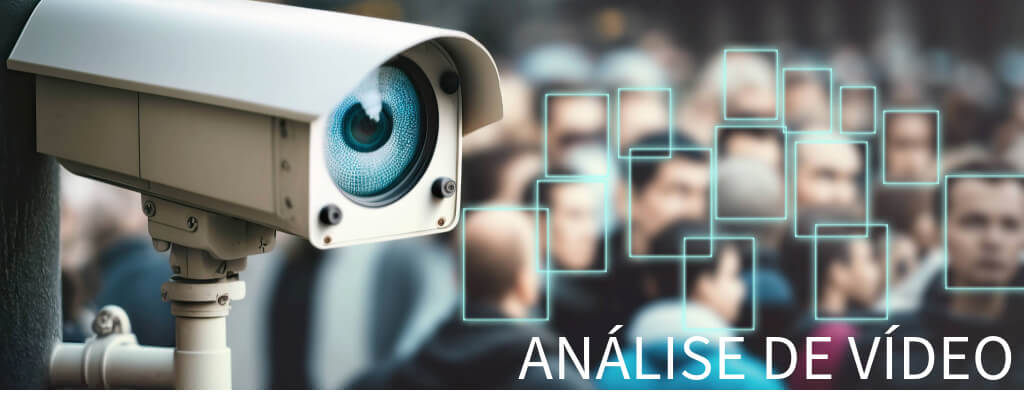
With the advancement of monitoring technologies, CCTV systems are no longer limited to low-resolution recording. Today, many systems use high-definition cameras, such as Full HD, 4K, or higher, advanced video analytics, such as motion detection, facial recognition, and behavioral analysis, and often integrate these systems with other security devices, such as alarms and access control.
All these features significantly increase the demand for bandwidth and transfer rate in the network infrastructure.
High-Definition Cameras and Data Demand
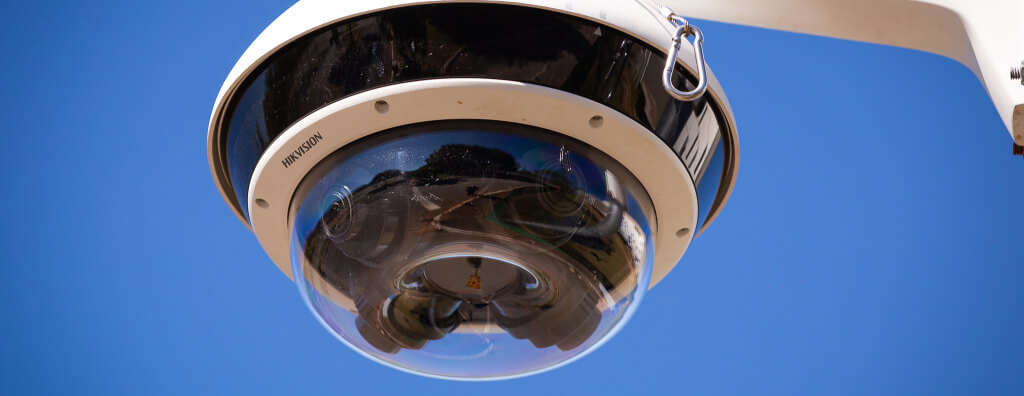
Digital CCTV cameras can record at resolutions ranging from 1080p, or Full HD, up to 4K or more. The higher the resolution and the number of frames per second, the greater the amount of data generated that must be transmitted and stored:
- Full HD cameras, or 1080p: They may consume between 4 and 8 Mbps per video stream, depending on the frame rate and the compression used.
- 4K cameras: They require much more bandwidth, potentially needing 15 to 25 Mbps per camera, especially at higher frame rates and in environments with more movement.
Collection: A3A Systems Engineering
In a CCTV project with many cameras, it is necessary to take various network infrastructure and camera parameterization factors into account, because bottlenecks may occur in some sectors of the facilities. These bottlenecks cause delays in the delivery of data packets, latency, and other performance problems.
With multiple cameras installed in one system, it must be considered that the total transfer rate on the backbone between sectors can easily exceed 1 Gbps, especially in large installations with hundreds of cameras.
Video Analytics and Integration with Other Systems
Collection: A3A Systems Engineering
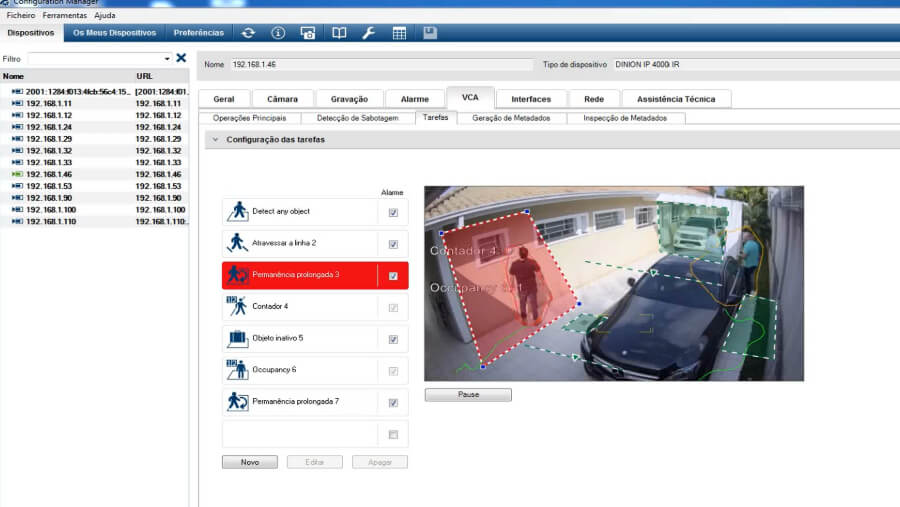
In addition to capturing images, many CCTV systems use video analytics that process data to provide real-time information, such as:
- Motion detection
- Facial recognition
- People counting
- Identification of abandoned or removed objects
These video analytics may run embedded in cameras and send metadata to the VMS, or, in other architectures, a dedicated video analytics server may receive images directly from the cameras or from the VMS server and process the images by running analysis algorithms. This generates heavy network traffic by receiving images and sending processed data, demanding more from the network infrastructure. In addition, CCTV integration with other systems, such as access control or alarms, generates additional data traffic.
Direct Impact on Bandwidth and Transfer Rate
To ensure operation without interruptions, data loss, or latency, a CCTV system with these functions requires cabling that supports not only the traffic generated by the cameras, but also the traffic generated by video analytics and by integration with other systems.
- Bandwidth: In large systems, with multiple high-definition video streams and simultaneous analytics processing, bandwidth demand can easily exceed the 100 MHz supported by Cat5e.
- Transfer Rate: For systems with multiple 4K cameras, the transfer rate may reach 1 Gbps or more, depending on the number of cameras and transmitted video quality. This already exceeds the 1 Gbps limit of Cat5e, making Cat6, with support of up to 10 Gbps, a more appropriate choice for these applications.
Latency and Data Loss
Latency can be a critical problem in security systems. In a CCTV system, delays in video transmission or in the delivery of video analytics alerts may compromise security. Cables that do not have adequate capacity to handle the data volume, such as Cat5e in high-demand environments, may increase the risk of latency. Cat6, on the other hand, with its greater bandwidth and better interference control, significantly reduces the possibility of data loss and latency.
Comparison Between Cat5e and Cat6 for CCTV
Collection: A3A Systems Engineering
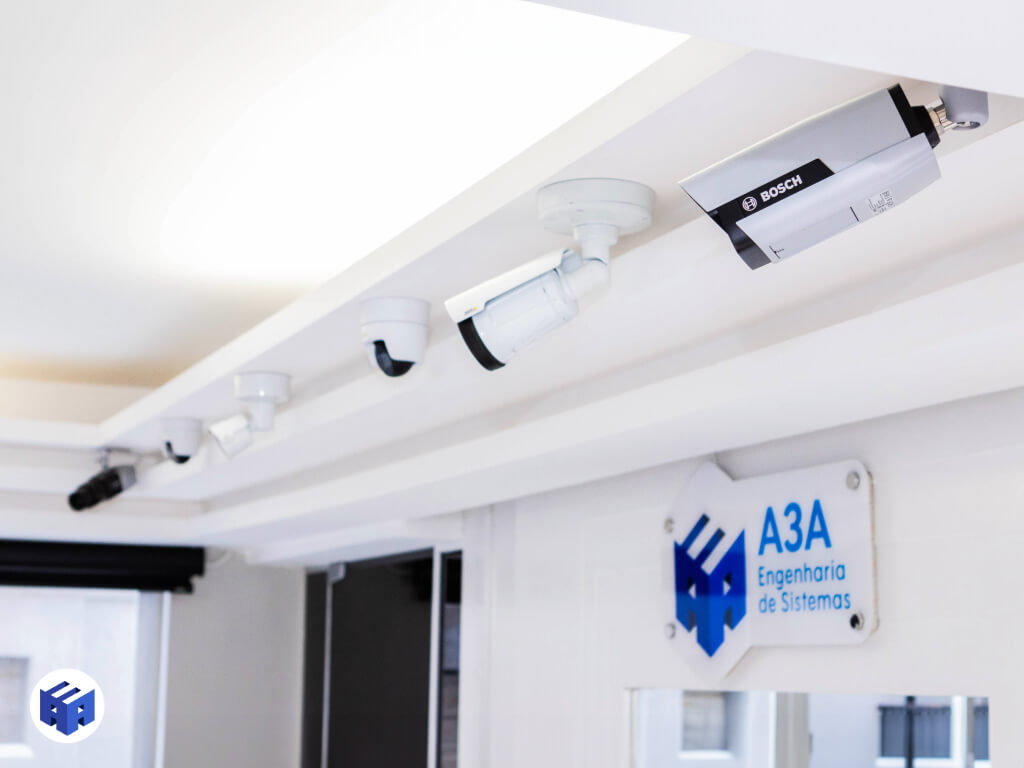
Now that we have discussed the characteristics of each cable type and the demands of a CCTV system, it is time to directly compare Cat5e and Cat6 in the context of projects with high bandwidth and transfer rate demand. This comparison will help determine which cable is best suited for different installation scenarios.
Bandwidth Performance
- Cat5e: Offers bandwidth of up to 100 MHz, which may be sufficient for smaller CCTV systems or those with lower requirements, such as lower-resolution cameras, such as 1080p, and few simultaneous streams.
- Cat6: Supports up to 250 MHz of bandwidth, making it ideal for CCTV systems that use high-definition cameras, such as 4K, and advanced video analytics. In systems with multiple simultaneous streams, Cat6 has a clear advantage over Cat5e.
Conclusion: For high-demand CCTV projects, such as systems with 4K cameras and video analytics integrated with other systems, Cat6 is the best choice due to its greater bandwidth capacity.
Transfer Rate
- Cat5e: Supports a maximum transfer rate of 1 Gbps over distances of up to 100 meters. This may be sufficient for small installations, but in larger systems, that transfer rate can be quickly reached and exceeded.
- Cat6: Supports rates of up to 10 Gbps over short distances, up to 55 meters, and 1 Gbps over distances of up to 100 meters. In large-scale projects, the 10 Gbps capacity may be crucial to avoid transmission bottlenecks and ensure the network operates without interruptions.
Interference and Crosstalk
- Cat5e: Cat5e cable is more susceptible to crosstalk compared with Cat6 cable. In CCTV environments with many network devices and cameras, this can compromise signal quality.
- Cat6: The construction design of Cat6 cable includes internal separators that significantly reduce crosstalk and electromagnetic interference, ensuring more stable and reliable transmission.
Cost and Viability
- Cat5e: It is significantly cheaper than Cat6, both in terms of cable cost and installation. For smaller projects or tighter budgets, Cat5e may be an attractive choice.
- Cat6: Although more expensive, Cat6 offers a longer useful life and is prepared for future network demands. The higher initial investment may pay off in the long run, especially in CCTV projects that require continuous expansion and updating.

Cat5e cable is a more economical solution for small CCTV systems, but Cat6 cable offers better cost-benefit in medium- and large-scale projects where performance is critical.
Use Scenarios
- Cat5e: Recommended for smaller installations, with cameras of up to 1MP resolution and where the amount of data traffic does not exceed 1 Gbps. This cable type may serve CCTV projects in homes or small businesses.
- Cat6: Recommended for projects involving high-definition cameras, such as 4K or higher, the use of video analytics, integration with other security systems, and a large number of cameras. Cat6 is also more suitable for medium- and large-scale projects in business or industrial environments.
Conclusion: For small CCTV projects with low bandwidth requirements, Cat5e may be sufficient. However, for projects that demand high performance, Cat6 is the best choice.
The deployment scenario of a CCTV system, including system cabling, can be a major challenge without help from specialized professionals. Ideally, you should seek a company with expertise in network infrastructure and CCTV projects to assist in developing the system scope and architecture.
Conclusion
When it comes to choosing the proper cabling for CCTV projects, the decision between Cat5e and Cat6 depends directly on the number of cameras and the system requirements. While Cat5e may be a viable choice for small installations with standard-resolution cameras and a limited number of video streams, its limitations in bandwidth and transfer rate can quickly become an obstacle in larger projects.
On the other hand, Cat6 offers superior performance, with greater bandwidth capacity, up to 250 MHz, and support for transfer rates of up to 10 Gbps, which makes it the best choice for CCTV systems that use high-definition cameras, video analytics, and integration with other security systems. Although Cat6 has a slightly higher cost, cable pulling labor is the same, so the savings occur only in the cable itself, which is not worthwhile because of the losses this economy causes. In addition, Cat6 provides greater reliability, better interference control, and an infrastructure prepared for the future, allowing expansions and upgrades without compromising network performance.
Acknowledgements
Thank you for reading our article about choosing the best cabling for CCTV projects. We hope the information was useful in clarifying the differences between Cat5e and Cat6, helping you make the best decision for your needs.
For more information about Project Design and Consulting, contact our Engineering Department.