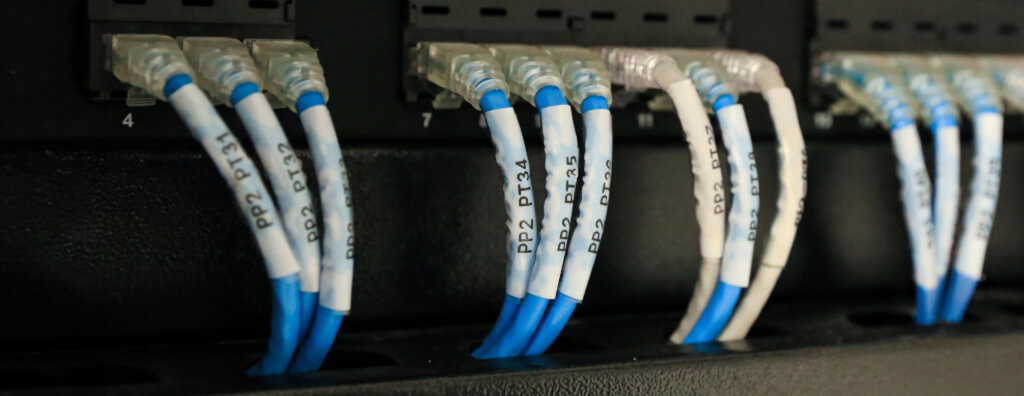
Specialized structured cabling services help ensure compliant, scalable, and high-performance network infrastructure.
Check it out!
Specialized structured cabling services are essential to ensure secure, organized networks that comply with technical standards. Whether the goal is to implement, expand, correct, or certify the data infrastructure, companies that invest in professional services gain efficiency, flexibility, and predictability in their operations.
Many managers only realize the importance of structured cabling when they face recurring problems: network instability, connection drops, expansion difficulties, failed audits, or unexpected corrective maintenance costs.
These problems usually stem from non-compliant installations, lack of technical documentation, unidentified cables, use of inappropriate materials, and the absence of testing and certification.
In day-to-day operations, this translates into downtime, financial impacts, and even legal risks, especially in environments that cannot afford to stop or lose data.
By choosing a technically driven structured cabling service, companies ensure regulatory compliance, high availability, certified performance, and full traceability. The result is an infrastructure ready to grow, support new demands, simplify maintenance, and protect the investment throughout the network’s entire life cycle.
Here are some reasons that highlight the importance of Specialized Structured Cabling Services:
Benefits of a Professional Structured Cabling Service
- Guaranteed regulatory compliance: execution in accordance with NBR 14565, TIA/EIA-568, ISO/IEC 11801, with technical documentation and ART.
- Performance and availability: cabling tested, certified, and ready to support high demands without bottlenecks or instability.
- Risk and cost reduction: less downtime, fewer corrective interventions, and longer infrastructure life.
- Flexibility and scalability: ready for future expansions or layout changes.
- Legal security: support for audits, contracts, and legal requirements.
What Is Included in Structured Cabling Services
- Network installation and expansion (data, voice, optical fibre)
- Technical diagnostics and physical/logical mapping
- Point certification and electrical testing
- Remediation/retrofit of legacy systems
- Preparation and updating of technical documentation (as built, ART, reports, diagrams)
- Preventive and corrective maintenance
- Consulting for upgrades and expansion
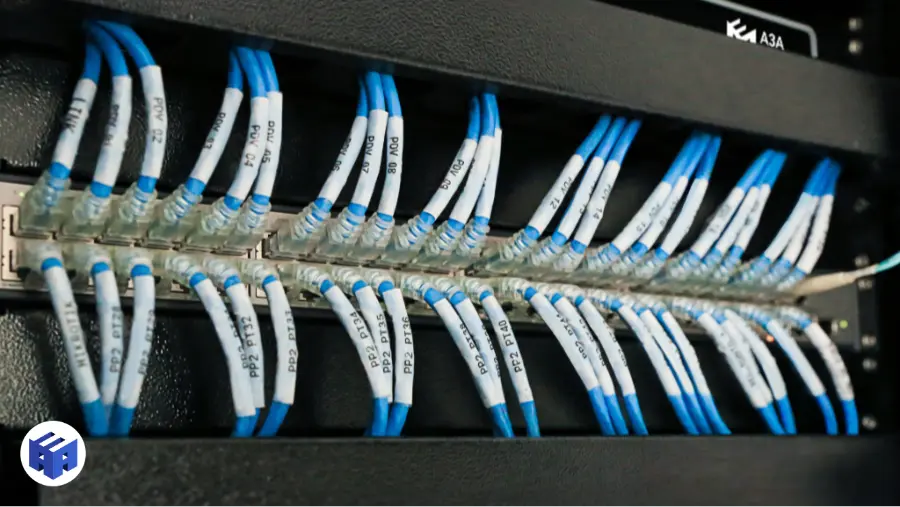
- Rack standardization and cable identification
Standards and Compliance: Security for Your Investment
All services strictly follow national and international standards, including:
- ABNT NBR 14565: the main reference in Brazil for structured cabling projects
- TIA/EIA-568: the U.S. standard for telecommunications infrastructure
- ISO/IEC 11801: the international standard for generic cabling
- Technical responsibility registration (ART) issued by a CREA-licensed engineer
Learn more about structured cabling standards
Risks of Hiring Non-Specialized Services
- Instability and constant network outages
- Audit failures and contract losses
- Hidden emergency maintenance costs
- Loss of warranty for equipment and materials
- Rework and the need to rebuild the entire infrastructure
Tips for Hiring Structured Cabling Services
- Require a project signed by a qualified engineer (ART)
- Request testing and certification after installation
- Ask for complete system documentation
- Always compare quotations by considering technical scope and compliance
- Evaluate references and case studies from the service provider
Reliability
Structured Cabling is designed to provide a reliable, high-quality communications network. Specialized services ensure that cables are properly installed and compliant with technical standards, minimizing problems such as interference and signal loss. This results in a more stable network that is less prone to failures.
Scalability
Specialized Structured Cabling Services consider an organization’s current and future Network Infrastructure needs. Structured Cabling allows new devices and systems to be added to the network easily, without requiring a complete rebuild. This supports organizational growth and facilitates adaptation to technological change.
Flexibility
A well-planned Structured Cabling Infrastructure offers flexibility in resource allocation, as it takes into account factors such as device layout, work areas, and each organization’s specific communication needs. This flexibility enables better cable organization and management, simplifying maintenance and repair.
Network Performance
The Structured Cabling System plays a crucial role in overall network performance. In Specialized Services, cables are installed efficiently, minimizing signal loss and ensuring a higher and more consistent data transfer rate. This results in faster and more reliable communication between network devices.
Source: A3A Engenharia de Sistemas
Long-Term Cost Reduction
A well-designed and properly implemented Network Infrastructure reduces the need for constant maintenance and prevents expensive problems related to poorly executed cabling. The Scalability and Flexibility of Structured Cabling help avoid additional infrastructure costs when the organization grows or needs to adapt to changes.
The Network Troubleshooting service plays a key role in identifying and resolving the frequent problems found at the network physical layer:
What are the most common physical-layer network problems?
The network physical layer is susceptible to a range of problems that can compromise connectivity and network hardware performance. These issues, arising from physical and electrical causes, have a significant impact on network stability and functionality. Below are some of the most common problems found at the physical layer:
Damaged Cables
Ethernet cables may suffer physical damage such as damaged connectors, broken internal wires, improper crimping, or excessive twisting. These problems can cause signal loss, attenuation, and unstable connections.
Loose or Poorly Seated Connections
Loose connections between cables and network ports can lead to intermittent disconnections, packet loss, and degraded network performance. Ensuring a firm and proper connection is essential.
Excessive Cable Length
Ethernet cables have a recommended maximum length. If the cable exceeds this limit, signal attenuation, packet loss, and reduced transmission quality will occur. It is essential to comply with Technical Standards for cable length.
Electromagnetic Interference (EMI)
Nearby electrical equipment such as motors, transformers, or wireless devices may generate EMI, interfering with the network signal. This may result in packet loss, reduced transmission speed, and connection instability.
Power Problems
Power failures, voltage fluctuations, or electrical issues can cause interruptions in network connectivity. It is recommended to verify that network devices are properly powered and to use surge protection devices to avoid power-related issues.
Network Equipment Malfunctions
Routers, switches, network cards, and other network devices may experience hardware failures, overheating, power supply problems, or obsolescence. These issues directly affect the network physical layer, causing connectivity interruptions.
Incompatibility
Problems at the physical layer may arise due to incompatibilities between the network devices in use. For example, a network card may not be compatible with a certain router or switch, resulting in connectivity problems.
A Structured Cabling System is essential to solve the problems mentioned above and ensure a reliable, high-performance network infrastructure. To achieve this goal, it is important to follow the main structured cabling standards. These standards establish technical guidelines and specifications that ensure the quality, compatibility, and interoperability of cabling systems.
Network Diagnostic Services
Network mapping and diagnostics are essential steps for identifying bottlenecks, configuration failures, performance loss points, and operational risks in IT infrastructures. Through analysis tools, physical inspections, and certifier-based testing, it is possible to obtain an accurate view of topology, link quality, and compliance with technical standards. Preventive and corrective maintenance, when planned based on this diagnosis, increases network availability, reduces incidents, and extends infrastructure life.
✅ Checklist to ensure professional structured cabling:
- Project signed by a CREA-licensed engineer
- Certified materials (NBR, TIA/EIA, ISO/IEC)
- Complete documentation (as built, ART, reports)
- Testing and certifications completed
- Labeling and identification of all points
- Support and traceability guarantee
🛑 When should you call for specialized diagnostics/maintenance?
- Frequent outages or network slowness
- Expansion or physical layout changes
- Audit failures or client requirements
- Difficulty identifying or documenting network points
- Upgrade for new technological demands
⚡ Benefits of a professional service:
- Guaranteed performance and connection stability
- Predictable costs and reduced rework
- Regulatory compliance and easier audits
- Infrastructure ready to grow with your business
Request a technical diagnosis
Speak directly with a specialized engineer
Main Structured Cabling Standards
ANSI/TIA-568-C: Published by the Telecommunications Industry Association (TIA) in the United States, this standard establishes general requirements for telecommunications cabling, covering both copper and optical fibre infrastructures.
ISO/IEC 11801: Published by the International Organization for Standardization (ISO) and the International Electrotechnical Commission (IEC), this standard defines international specifications for telecommunications cabling, covering both copper and optical fibre cabling.
ABNT NBR 14565: Developed by the Brazilian Association of Technical Standards (ABNT), this standard establishes minimum requirements for the design and deployment of structured cabling systems in commercial and residential buildings in Brazil.
It is essential that the professionals involved be familiar with national and international technical standards and incorporate them into their Structured Cabling Projects. This balanced approach results in high-quality projects that meet the country’s specific requirements while remaining aligned with global technological trends and advances.
To ensure that a Structured Cabling Project is delivered in perfect condition, it is important to follow some recommended practices. Here are measures that can help:
Hire a Specialized Company
Look for a company with proven experience in Structured Cabling Projects and Services. Check its references, certifications, and reputation in the market. A specialized company will have the knowledge and expertise needed to carry out a proper installation.
Source: A3A Engenharia de Sistemas
Learn more about A3A Engenharia
Clearly Define Your Needs
Communicate your needs and expectations regarding the Structured Cabling Project. Explain the scope of the work, the devices that will be connected, and any specific requirements you may have. This will help the contracted company understand your needs and deliver a customized project.
Perform Testing and Certification
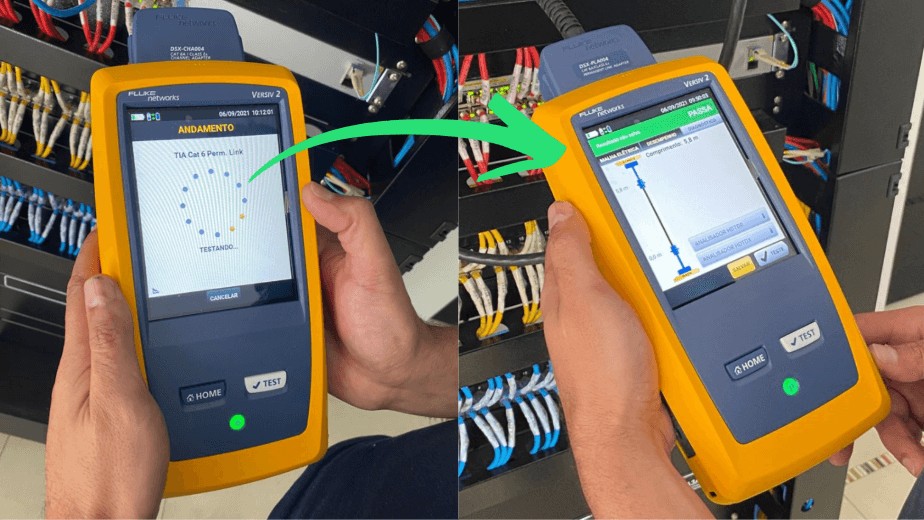
Carry out rigorous testing to verify the integrity of the Structured Cabling before the project is completed. Use appropriate testing tools to check cable continuity, signal attenuation, electromagnetic interference, and other important parameters. Make sure the cabling meets the specifications required by technical standards and, if possible, obtain a certificate of compliance.
Maintain Complete Documentation
Maintain detailed documentation for the entire structured cabling project, including network diagrams, physical layouts, proper cable labeling, and test and certification records. This documentation will be valuable for future maintenance, changes, or network expansions.
By following these recommended practices, you will ensure the delivery of a structured cabling project in perfect condition, resulting in a reliable, efficient, and high-performance network infrastructure. These measures are intended to ensure installation quality, compliance with technical standards, and complete project documentation.
Conclusion
A properly installed Structured Cabling solution offers significant benefits to your organization, such as greater network reliability, scalability to accommodate future growth, flexibility in resource allocation, optimized network performance, and long-term cost reduction.
When looking for a specialized company, check its track record, expertise, and certifications. Clearly defining your needs and expectations will help the company tailor the project to your specifications. Carrying out tests and obtaining certifications proves the quality of the installed cabling.
A3A Engenharia de Sistemas
With more than 29 years of experience and headquartered in Ponta Grossa, Parana, A3A Engenharia de Sistemas is an engineering company specialized in technological infrastructure projects.
Our expertise covers a wide range of solutions: Structured Cabling Systems, Video Monitoring, Access Control, Ambient Sound Systems, Fire Detection and Prevention, and Lightning Protection. We work closely with clients to deliver tailored solutions that meet their specific needs.
Our highly qualified and certified team guarantees the delivery of high-performance solutions, providing greater efficiency and security for our clients’ businesses.
🔵 100% compliant with CREA
🔵 29+ years of expertise in critical environments
🔵 Certified team by the market’s leading manufacturers
Do not waste time. Ensure your business efficiency with a high-quality structured cabling project. Fill out the form below so we can find the ideal solution for your business.
Normative References
“NBR 14565 – Structured Cabling for Commercial Buildings” – ABNT (Brazilian Association of Technical Standards)
“ISO/IEC 11801 – Generic Cabling for Customer Premises” – ISO/IEC (International Organization for Standardization) & (International Electrotechnical Commission)
“ANSI/TIA 568 – Generic Telecommunications Cabling for Customer Premises” – ANSI/TIA (American National Standards Institute) & (Telecommunications Industry Association)
“What are structured cabling services and their corresponding technical responsibilities?” – CREA (Regional Council of Engineering and Agronomy)
“Structured Cabling Systems: the Fact File” – CommScope
Relevant Links (Supplementary Technical Materials)
Projects
eBook – Why hire a Structured Cabling Project?
Complete Guide to Structured Cabling
Technical Standards
NBR 14565 – Structured Cabling
Brazilian Lightning Protection Standard
Engineering Services
Network Certification for Structured Cabling Systems
Consulting for Structured Cabling Projects
Structured Cabling Installation
How structured cabling affects network performance
How to avoid common problems in Structured Cabling Systems?
Main benefits of Structured Cabling
Frequently Asked Questions
Classic symptoms include slowness, outages, difficulty expanding, or failed audits.
A Structured Cabling System (SCS) is a standardized infrastructure of cables, connectors, racks, cable pathways, patch panels, and network equipment that provides the foundation for a telecommunications network to operate optimally.
A Structured Cabling System works through the installation of various network components, including cables, network equipment, patch panels, and other devices, following technical standards and specifications.
A cabling structure is a generic system organized into interconnected subsystems, made up of cables, connectors, and devices, designed to support multiple services such as voice, data, video, and building automation in a standardized, flexible, and application-independent way, enabling modifications and expansions without major interventions in the physical infrastructure.
A structured cabling system is designed to meet connectivity needs in corporate, commercial, industrial, and residential environments, providing a reliable, high-performance network.
The most common are UTP cable (unshielded twisted pair), STP cable (shielded twisted pair), coaxial cable, and optical fibre. Each has different transmission applications and capacities.
UTP (Unshielded Twisted Pair) has no shielding. It is less expensive and used in environments with low interference levels. STP (Shielded Twisted Pair) includes shielding that reduces electromagnetic interference, making it suitable for industrial environments or those with high electromagnetic pollution.
The main standards are ABNT NBR 14565 (Brazil), ISO/IEC 11801 (international), ANSI/TIA-568 (North America), and NBR 16264 for Data Centers. They define installation, performance, and testing rules.
Horizontal cabling connects telecommunications outlets to distribution rooms on the same floor, while vertical cabling, or backbone, interconnects different floors or buildings, transporting data between main and floor distributors.
It is the main cabling that connects telecommunications rooms, data centers, or buildings to one another. It normally uses higher-capacity cables such as optical fibre or higher-category copper cables.
Electrical engineers, network engineers, telecommunications technicians, network infrastructure designers, and companies specialized in corporate network projects and implementation.
