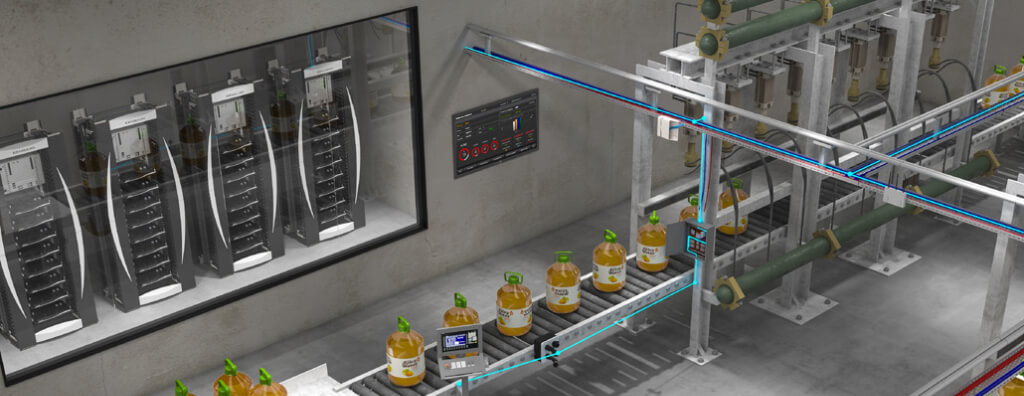
Installation of structured cabling in industrial environments presents unique challenges, such as the presence of heavy equipment, high levels of electromagnetic interference and the need to maintain continuous operation. These factors require advanced techniques and safety measures to ensure cabling is installed efficiently and lastingly. In this article, we will explore best practices and techniques […]
Check it out!
Installation of structured cabling in industrial environments presents unique challenges, such as the presence of heavy equipment, high levels of electromagnetic interference and the need to maintain continuous operation. These factors require advanced techniques and safety measures to ensure cabling is installed efficiently and lastingly.
In this article, we will explore best practices and techniques for installing structured cabling in industrial environments, ensuring both network efficiency and security.
[elementor-template id=”24446″]
Adequate Infrastructure Planning
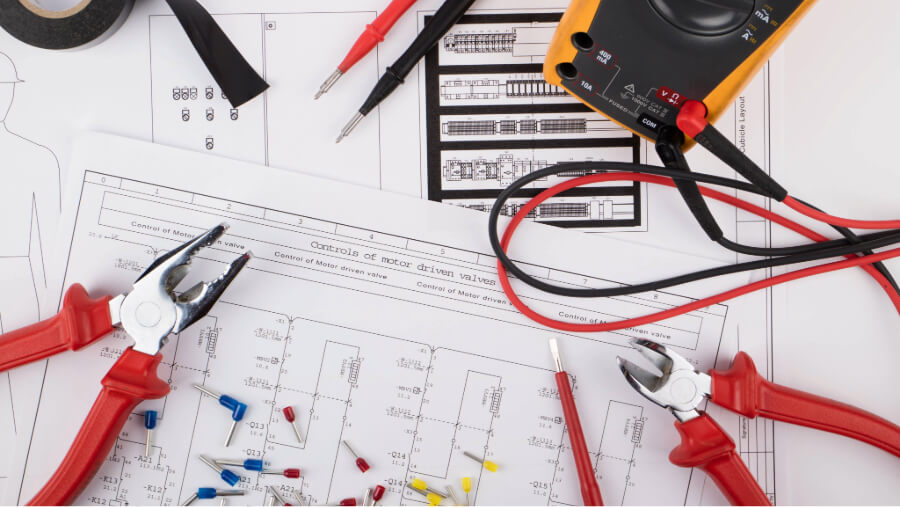
Before starting any installation, it is essential to carry out a detailed planning for project execution, which takes into account the complexity of the industrial environment. Factors such as factory layout, equipment distribution and ideal cabling routes must be carefully evaluated.
- Recommended technique: Split the installation into zones, so that each area of the factory is served by a consolidation point connected via fiber optic backbone. This approach makes it easier to maintain and expand the network in the future. Additionally, performing a thorough technical survey helps identify areas at high risk for interference or physical damage to cables.
Specification of suitable materials
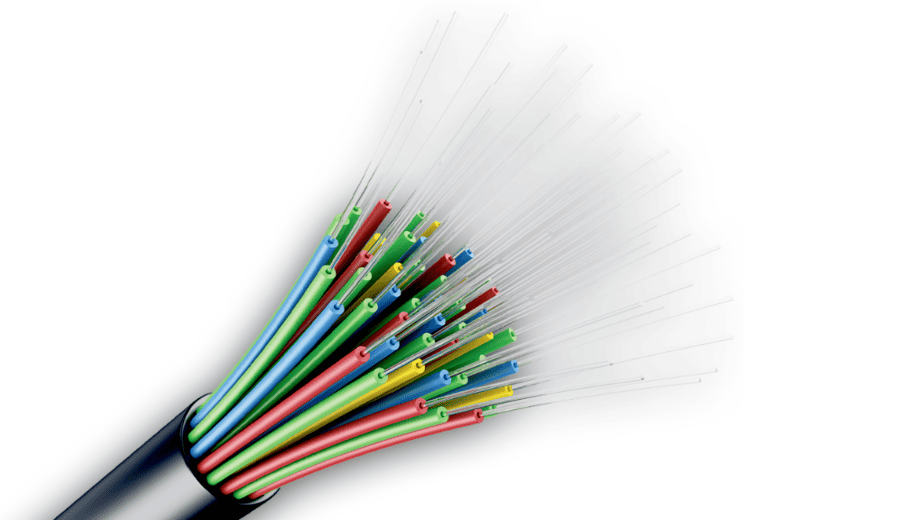
In industrial environments, cables are often exposed to adverse conditions such as heat, humidity, dust and vibrations. Therefore, choosing the appropriate materials is essential to guarantee the durability of the system.
- Recommended technique: Use shielded cables (STP) or optical fiber, which are more resistant to electromagnetic interference and physical damage. These cables are ideal for industrial environments, where proximity to heavy machinery can compromise signal integrity. Furthermore, choose to install cable beds that offer mechanical and electrical protection for these cables minimizing the effects of heat and humidity in places where these conditions are prevalent.
Protection against Electromagnetic Interference (EMI)
One of the biggest challenges in industrial environments is the electromagnetic interference (EMI), caused by electric motors, industrial equipment and control systems. This interference can degrade the Network signal and compromise communication between connected devices.
- Recommended technique: Use shielded cables to minimize the impact of EMI. Furthermore, ensure that Network cabling is properly separated from power cables and other industrial systems that may cause interference. Another important technique is the use of Dedicated cable routes, which keep network cabling away from interference-generating equipment, and also provide grounding of metallic structures and potential equalization.
Installation of cable trays
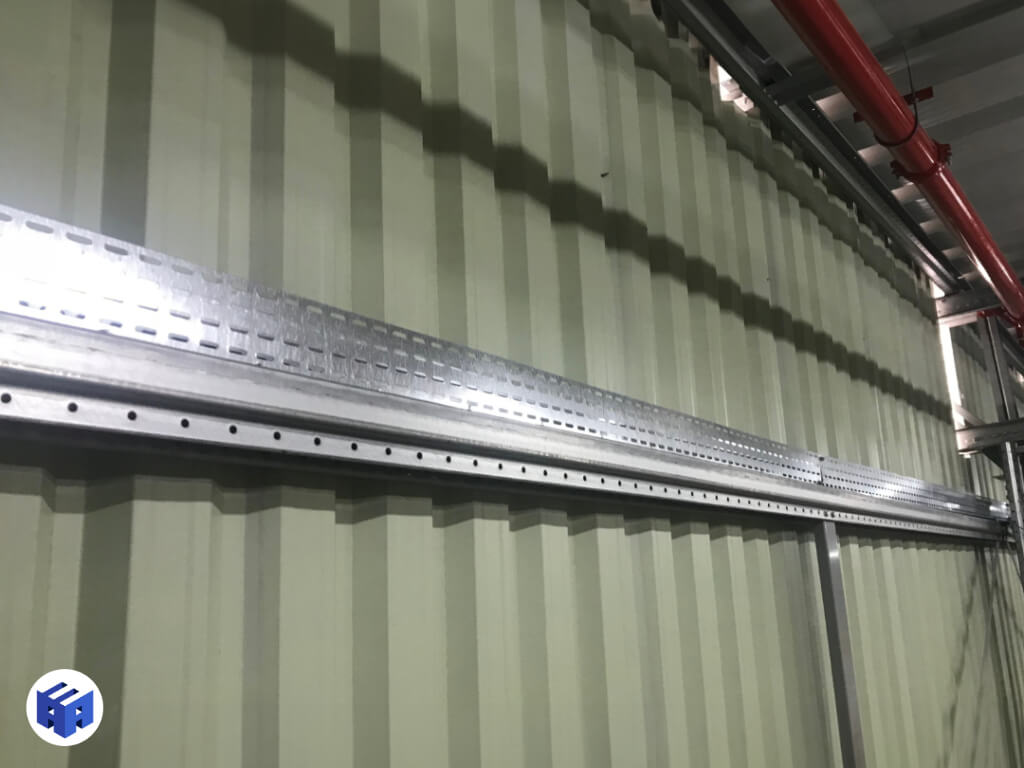
Collection: A3A Systems Engineering
In industrial environments, network cables are subject to physical damage, such as impacts, vibrations and contact with moving machines. To ensure system safety, it is essential that cables are adequately protected.
- Recommended technique: Install reinforced ducts to protect cabling against physical damage. Ducts made of steel or reinforced plastic materials are ideal for environments with high movement of equipment. These ducts must be installed in a way that allows easy access for maintenance, but that protects the cabling against collisions or abrasion.
Grounding of metallic structures
Grounding cable trays and all metallic structures is essential to minimize the effects of overvoltages caused by overloads or atmospheric discharges, reducing problems caused by electrical surges and minimizing the risk of electromagnetic interference that can compromise network performance. In industrial environments, where there are a large number of machines and equipment that generate electrical noise, it is essential to ensure that the cable trays are properly grounded.
- Importance of Grounding: Proper grounding of cable trays protects the cabling against voltage spikes and ensures that unwanted currents are safely dissipated. This prevents damage to network components and protects operators.
- Standards: It is necessary to strictly follow the Standards NBR 5410 – Low Voltage Electrical Installations and NBR 5419 – Protection of structures against atmospheric discharges to adapt the grounding system and protect against electromagnetic interference (EMI) applicable to the industrial environment. The correct connection of the cable tray system to the main grounding system reduces the effects of interference induced in the network.
- Good Practices: Make sure that all metal parts of the cable tray are continuously connected to the grounding system, using suitable connectors, and check the system continuity periodically.
Potential Equalization
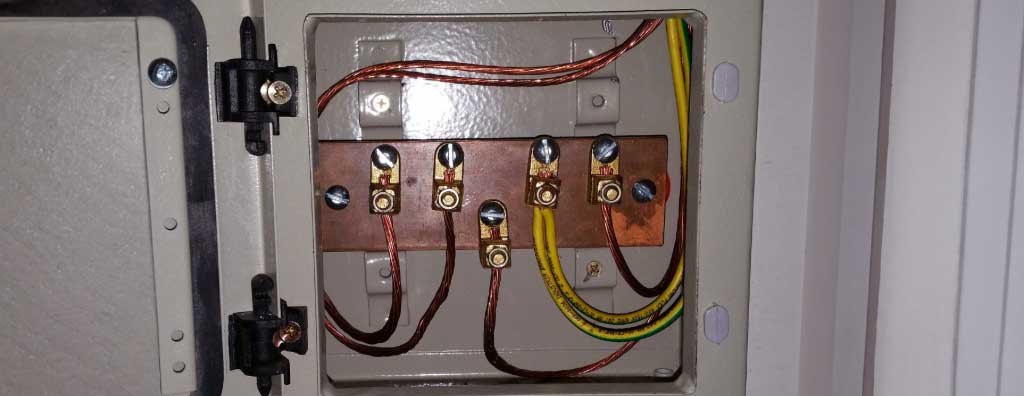
Collection: A3A Systems Engineering
Potential equalization is another fundamental practice in structured cabling installations in industrial environments. It aims minimize electrical potential differences between different points of the installation, reducing the risk of electric shocks and protecting the integrity of equipment and the network.
- Equalization Objective: Potential equalization is responsible for ensuring that voltage differences between different points in the installation are minimized. In industrial environments, where large equipment and motors can generate electromagnetic fields, this practice is vital to ensure safety and operational stability.
- Correct Execution: Potential equalization can be carried out by connecting all metallic parts of the installation, such as cable trays, equipment shelves and metallic structures, to a common equalization system, in accordance with applicable standards. This helps protect both operators and network systems from electrical discharges and surges.
- Checks and Maintenance: Maintaining continuous checks and appropriate adjustments to potential equalization systems is a good practice for environments with equipment that generate high levels of interference.
- ABNT NBR 5410 – Low voltage electrical installations: This standard also covers potential equalization, offering guidelines on how to guarantee equipotentiality between different metallic parts of the installation, minimizing the risks of electric shocks and protecting the integrity of the systems.
- ABNT NBR 5419 – Protection against atmospheric discharges: Complements potential equalization practices, especially in industrial areas with greater exposure to surges and lightning strikes, ensuring that metallic systems are correctly equalized.
Cable Organization and Management
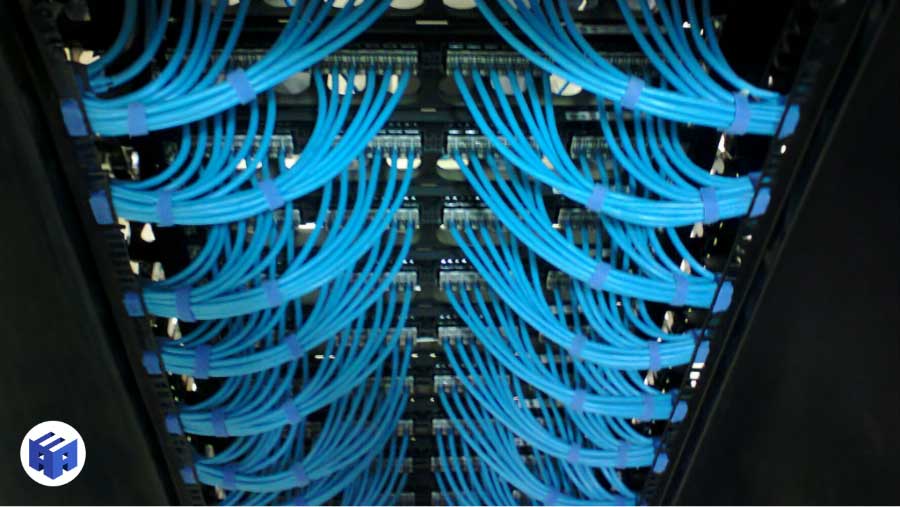
Collection: A3A Systems Engineering
Proper cable organization is essential in any environment, but in industrial environments, where the movement of machines and people is constant, keeping cables organized and safe is even more important.
- Recommended technique: Use cable guides, suspended trays and channels to keep cables organized and protected. Furthermore, clear identification of each cable is essential to facilitate maintenance and expansion. Keeping cables organized makes it easier to locate possible faults in the network.
Implementation of Redundancy Systems
Continuity of operation is critical in industrial environments, and any interruption in the network system can result in production stoppages and losses. Therefore, it is essential to implement redundancy systems in the cabling.
- Recommended technique: Plan the installation of redundant cable routes, which ensure that the network continues to operate even in the event of a failure in one of the connections. The use of ring topologies or mesh It is an effective way to ensure that devices always have more than one communication path available.
Cabling Certification and Testing
After installation, the cabling certification is a fundamental step to ensure that the infrastructure is functioning correctly and within the standards established by technical standards. In industrial environments, it is even more important to carry out detailed tests to ensure that the network functions properly, even under adverse conditions.

- Recommended technique: Use certification equipment to perform continuity, attenuation and crosstalk tests. Furthermore, testing cable resistance in conditions of electromagnetic interference and high vibration environments ensures that the network will be prepared for continuous operation.
Preventive Maintenance
In an industrial environment, the preventive maintenance It is essential to ensure that the structured cabling system operates efficiently over the long term. Cable wear, increased interference and changes in equipment layout can affect network performance.
- Recommended technique: Implement a preventive maintenance plan that includes periodic inspections of cables, ducts and connections. Identifying and replacing damaged or deteriorated cables before they cause system failure ensures continued operation. Additionally, recalibrating interference protection systems may be necessary as the environment evolves.
Conclusion
Installation of structured cabling in industrial environments requires special attention to several factors, such as resistance to adverse conditions, protection against ielectromagnetic interference and the implementation of redundancies to ensure continuity of operation. By using safe installation techniques, you can ensure that your cabling system operates efficiently and lasts.
A hiring a specialized engineering company ensures that all stages of the process, from planning to certification, are conducted with the utmost care and precision, resulting in a robust and reliable network infrastructure.