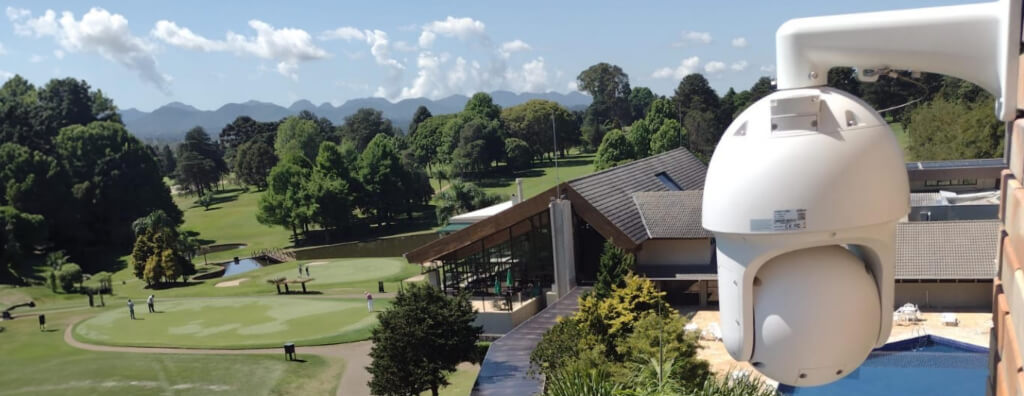
Understand the role of CCTV project consulting: diagnosis, requirements, architecture, sizing, specification, procurement, design review, implementation, commissioning, and acceptance.
Check it out!
CCTV project consulting is an independent engineering activity that transforms security and operational needs into verifiable technical requirements, defines or reviews system architecture, establishes specification and procurement criteria, and supports critical decisions through acceptance. The objective is not simply to recommend cameras or brands, but to reduce technical uncertainty before investment and create an objective basis for comparing alternatives, suppliers, and proposals.
This work is especially relevant when a facility has multiple areas, different risk profiles, existing infrastructure, integration with other systems, availability requirements, large video volumes, or a need for competitive procurement. Consulting may cover diagnosis and site survey through design, design review, procurement support, technical inspection, commissioning, and handover, according to the owner’s needs.
The key difference from a commercial proposal is engineering independence: risk, objectives, performance, interfaces, and acceptance criteria are established first; only then are the technologies capable of meeting them evaluated. Resolution, camera, lens, VMS, storage, network, analytics, cloud, and other components therefore cease to be isolated decisions and become parts of a coherent system.
What does CCTV project consulting do?
Consulting operates between the owner’s needs and the technical solution. Its role is to organize requirements that often arrive fragmented—“we need better cameras,” “the storage cannot meet retention,” “there are blind spots,” “we want to integrate access control,” “we need to tender the system”—and convert them into a measurable engineering problem.
The scope may include diagnosis of the existing system, risk analysis, technical survey, operational requirements, architecture, coverage studies, pixel density, network and storage sizing, VMS specification, integration, cybersecurity, procurement documentation, proposal analysis, implementation support, and acceptance testing.
This does not mean every consulting engagement must perform all of these stages. The scope may be limited to a specific decision—for example, reviewing a third-party design, comparing proposals, validating storage, defining modernization requirements, or investigating recurring failures—or it may cover the entire system lifecycle.
The common principle is that consulting must produce technical evidence for decision-making, not merely an opinion. Assumptions, calculations, criteria, alternatives, risks, and recommendations must be traceable.
When should CCTV consulting be hired?
Hiring consulting makes the most sense when the technical risk of deciding without engineering is greater than the cost of the analysis. This is common in corporate, industrial, government, healthcare, logistics, educational, commercial, and critical-infrastructure systems.
Typical situations include:
- deployment of a new video surveillance system with dozens or hundreds of cameras;
- modernization of legacy analog or IP systems;
- expansion of an existing VMS to new sites or areas;
- poor image quality despite high-resolution cameras;
- blind spots, unsuitable framing, or difficulty identifying targets;
- recording retention shorter than required;
- network bottlenecks, packet loss, or unstable streams;
- insufficient ports, uplinks, or PoE budget;
- uncontrolled growth in licenses, servers, and storage;
- need to integrate CCTV, access control, intrusion, LPR, intercom, PSIM, or other systems;
- deployment of video analytics and metadata;
- migration to an on-premises, cloud, or hybrid architecture;
- preparation of procurement, tender, RFP, or technical terms of reference;
- comparison of technically different proposals;
- project based on a third-party design requiring design review or Owner’s Engineering;
- need for commissioning and independent acceptance;
- absence of drawings, diagrams, design narratives, or as-built documentation.
An organization may also hire consulting before deciding whether equipment really needs to be replaced. In many cases, the problem lies in the lens, configuration, lighting, network, compression, retention, VMS, operations, or maintenance—not necessarily in the camera.
Consulting, design, integration, and Owner’s Engineering are not the same thing
Independent consulting helps transform risk, operational needs, and existing infrastructure into requirements that can be designed, procured, and accepted objectively.
The roles are related but have different responsibilities.
| Role | Main focus | Expected result |
| CCTV Consulting | Diagnosis, requirements, alternatives, and technical decision-making | Criteria, recommendations, architecture, and procurement baseline |
| CCTV Design | Detailed technical definition of the solution | Drawings, diagrams, design narratives, calculations, specifications, and quantities |
| Integrator | Supply, configuration, and implementation | System installed and configured according to the contracted scope |
| Owner’s Engineering | Technical representation of the owner | Review, inspection, interface management, quality control, and acceptance |
| Commissioning | Verification against requirements and design | Performance evidence, outstanding items, and technical acceptance |
A single company may perform more than one role, provided responsibilities and conflicts of interest are clear. For the owner, however, it is important to distinguish who defines the requirement, who supplies the solution, and who verifies compliance.
This separation is particularly useful in competitive procurement. When the same supplier informally defines the requirement and offers the product, proposals tend to be compared across different architectures. Independent consulting creates a common technical baseline.
Consulting starts with the client’s objectives, risks, and expectations
The first task is not choosing technology. It is establishing why the system exists and what it must deliver.
Risk analysis identifies vulnerabilities, assets, areas of interest, threats, consequences, and criticality. From this, engineering defines which VSS functions will act as mitigation measures and what level of performance will be required in each situation.
Client expectations must also be converted into requirements. Terms such as “good image,” “high availability,” “easy to use,” “scalable system,” and “long retention” are insufficient for procurement and acceptance. Consulting must transform them into parameters that can be designed, tested, and documented.
Operational requirements commonly identified include:
- events that must be detected, verified, or investigated;
- areas, access points, perimeters, and assets to be monitored;
- operating hours and conditions;
- detection, observation, recognition, and identification objectives;
- expected operator response for each event class;
- need for audio, LPR/ANPR, thermal imaging, or other special functions;
- recording retention period;
- number and profile of operators;
- remote users and access levels;
- integration with other systems;
- expected availability, redundancy, and recovery;
- evidence export and preservation policy;
- privacy, cybersecurity, and audit requirements;
- future capacity and expansion horizon.
ABNT NBR IEC 62676-1-1 treats the VSS as a system composed of image capture, interconnections, image handling, management, interfaces, and integrity mechanisms. This view is more appropriate for consulting than treating CCTV as a list of cameras.
Technical survey and diagnosis of the existing system
The site survey provides the physical and operational data that support the design. In existing installations, it also helps separate symptoms from causes.
The survey should record areas of interest, access points, perimeters, obstacles, distances, installation heights, lighting, reflections, backlighting, vegetation, environmental conditions, infrastructure pathways, racks, switches, uplinks, power, optical fiber, technical rooms, servers, storage, operator workstations, and existing integrations.
When CCTV is already installed, consulting may include asset inventory and assessment of:
- camera models, firmware, condition, and lifecycle;
- lenses, positioning, focus, and field of view;
- configured resolution, frame rate, compression, and bitrate;
- continuous, motion-based, or event-based recording;
- actual retention capacity;
- health of disks, arrays, or external storage;
- network topology, VLANs, links, and uplink utilization;
- PoE budget and electrical redundancy;
- VMS versions, licenses, and architecture;
- client workstations and video wall;
- users, access profiles, and audit trails;
- integrations and automations;
- time synchronization;
- video-loss, failure, storage, and communication alarms;
- backup, export, and recovery policies;
- available documentation and consistency with the installed system.
This diagnosis is essential in modernization projects. Replacing equipment without understanding the existing architecture may simply move the bottleneck to another subsystem.
Technology selection: analog, IP, and modernization strategy
In legacy systems, consulting may compare retaining existing technology, phased migration, or complete replacement. The decision must consider image requirements, infrastructure availability, integration, lifecycle, interoperability, and total cost of ownership.
Traditional analog systems use dedicated coaxial transmission and associated recorders. They may remain in operation in specific installations, but they offer less flexibility for expansion, integration, and distributed processing than modern IP architectures.
Digital IP systems transport video and control over Ethernet networks, enable PoE, multiple streams, edge processing, metadata, enterprise VMS integration, and distributed servers and storage. Scalability, however, is not automatic: it depends on suitable network architecture, bandwidth, licensing, processing, storage, and governance.
Consulting should avoid the simplistic conclusion that “IP is better” merely because it is newer. The objective is to demonstrate which architecture best fits the context and how the transition will be performed without compromising operations or evidence.
On-premises, cloud, and hybrid architecture
Architecture defines where capture, management, processing, recording, metadata, and user access are located.
On-premises keeps servers, recording, and management within the client’s infrastructure. This approach can provide direct control over data, local integration, and predictable external-bandwidth requirements. In small systems, NVRs can centralize recording and basic functions; in larger environments, dedicated servers and enterprise storage provide greater modularity. Consulting must evaluate scalability, redundancy, maintenance, space, power, cooling, and lifecycle.
Cloud uses external resources for a significant portion of management, processing, or storage. It can simplify expansion and remote access, but requires careful analysis of connectivity, upload capacity, latency, recurring costs, data sovereignty and governance, service availability, and vendor-exit strategy.
Hybrid combines local processing or recording with cloud services. It is common when an organization wants to keep critical functions locally while using cloud resources for management, redundancy, analytics, sharing, or supplemental retention.
Consulting should document functional distribution rather than merely classifying a solution as “cloud” or “hybrid.” It is necessary to know where each function occurs, what happens when a link fails, how the system recovers data, and which external dependencies exist.
Camera selection is image engineering, not a megapixel comparison
Camera type is a consequence of the scene and operational requirement. Mini dome, bullet, PTZ, box, panoramic, multisensor, thermal, and specialized models serve different use cases.
| Type | Main characteristic | Typical applications | Design considerations |
| Mini dome | Discreet, compact, and harder for third parties to visually determine its direction | Indoor environments, corporate areas, circulation | Dome reflections, IR, height, lens, and vandal resistance |
| Bullet | Directional body, generally designed for outdoor use | Perimeters, façades, access points, and open areas | Exposure, mounting, vibration, protection, and field of view |
| PTZ | Controllable pan, tilt, and zoom | Operational tracking and large areas | Does not replace fixed coverage while pointed elsewhere |
| Box | Visible body with broad flexibility for lenses and accessories | Special applications and deterrence | Housing, lens, environmental protection, and mounting |
Dome cameras may use fixed, varifocal, or motorized lenses, and their discreet form is useful when the capture direction should not be obvious. Bullet cameras make the viewing direction more apparent and are common outdoors. PTZ cameras enable tracking and zoom, but a moving camera only observes the direction in which it is positioned at that moment. Box cameras remain useful when the application requires specific lenses, housings, or accessories.
Image quality under real conditions
Image quality depends on lens, sensor, lighting, exposure, WDR, motion, noise, compression, bitrate, resolution, frame rate, transmission, recording, and playback. An excellent image in a static demonstration may lose useful information at night or when the target is moving.
White balance and the ability to handle different light sources—LED, fluorescent, sodium-vapor, and natural light—affect color reproduction. Backlighting and high contrast require attention to WDR. Low-light performance requires joint evaluation of sensor, aperture, exposure, noise, and auxiliary illumination.
Higher resolutions do not automatically guarantee better low-light performance. When more pixels are placed on sensors of similar dimensions, each photodetector may receive fewer photons; the result depends on sensor design and image processing. Nominal specifications must therefore be evaluated together.
Resolution, DORI, and pixel density
Consulting should define the level of detail required for each area. Detection, observation, recognition, and identification concepts help translate the operational objective into pixel density and scene geometry.
The correct reasoning is not “use 4K everywhere,” but to determine whether the target occupies enough pixels, considering distance, scene width, lens, effective resolution, and capture conditions. The content on pixel density and DORI requirements explores this verification in greater depth.
Lenses, sensor, and field of view
The lens is a determining part of image capture. Focal length, aperture, focus, depth of field, and sensor compatibility must fit the scene. Varifocal or motorized lenses facilitate field adjustment but do not eliminate the need for prior calculation.
The sensor converts captured light into signals that are processed to form the digital image. Sensor size, pixel size, electronic architecture, and processing affect sensitivity, noise, and dynamic range. The design must evaluate the camera+lens combination rather than isolated specifications.
The field of view determines the observed area. A wider FOV covers more space but distributes resolution across a greater width; a narrower FOV concentrates more detail in a specific region. Camera position must balance coverage, detail, and perspective.
Compression and bitrate
Compression reduces the amount of data required for transmission and storage by removing spatial and temporal redundancy. The more aggressive the compression, the greater the risk of artifacts and loss of useful detail. Codec, GOP, bitrate, stream profile, frame rate, and scene complexity must therefore be included in network and storage sizing.
Features, protection, and environment
Features such as IR, white light, audio, motion detection, analytics, edge recording, multiple streams, and I/O can add value when tied to clear requirements. A feature without a use case increases complexity without necessarily improving security.
For outdoor or harsh areas, IP protection rating, IK impact resistance, temperature range, humidity, corrosion, vibration, and exposure must be specified according to the actual environment. A rating such as IP66 may be suitable for many outdoor applications but should not be treated as a universal rule without considering the site.
Network, PoE, and infrastructure are part of the CCTV system
Network, PoE, and video surveillance must be sized as a single architecture. Transport bottlenecks can compromise recording, viewing, and availability even when cameras are correctly specified.
In IP CCTV, the network is not auxiliary infrastructure. It carries essential VSS functions. The design must consider switches, ports, uplinks, VLANs, optical fiber, redundancy, synchronization, QoS where applicable, security, multicast where needed, and growth capacity.
PoE sizing must consider nominal and maximum device consumption, PoE class, total switch power budget, available power per port, temperature, redundancy, and behavior during failure or restart. PTZ cameras, heaters, illuminators, and accessories can significantly increase required power.
Bandwidth must be calculated from the actual expected streams, not merely from nominal port speed. Resolution, FPS, codec, bitrate, multiple profiles, and simultaneous viewing affect the load.
When the network is shared with other applications, engineering must verify that video flows neither compromise nor are compromised by other loads. ABNT NBR IEC 62676-1-1 treats interconnections as a functional part of the VSS and requires system operation to be preserved.
For further detail on the transport layer, see IP CCTV Infrastructure: network, PoE, switches, VMS, storage, and backbone.
VMS, storage, and retention must be sized together
The VMS organizes devices, users, events, viewing, recording, search, export, logs, and integrations. In enterprise environments, consulting should evaluate management architecture, recording servers, failover, licensing, federation/multisite where applicable, identity, permissions, updates, compatibility, and support strategy.
Storage sizing must consider the number of cameras, bitrate, recording hours, retention profile, continuous or event-based recording, overhead, redundancy, spare capacity, and expansion. The calculation should not assume that all cameras produce the same data rate.
Local solutions using disks, NVR, DAS, NAS, or SAN and cloud solutions have different performance, availability, and cost implications. Edge recording can act as a complementary resource and, in specific architectures, help recover periods affected by communication loss.
Retention is also a governance decision. It is not enough to “keep 30 days” by convention; operational needs, investigation requirements, internal policy, privacy, capacity, and cost must be considered together.
The article How to size storage for enterprise CCTV and VMS explores storage variables in greater depth.
Video analytics, metadata, and events change operations
Modern IP cameras and VMS platforms can generate metadata and events in addition to video. People and vehicle detection, classification, virtual lines, loitering, direction, LPR/ANPR, and other analytics can reduce dependence on continuous observation, but they must be treated as functions with defined requirements, limitations, and tests.
Consulting should define:
- which event matters;
- in which area and under what condition it must be detected;
- what sensitivity and behavior are acceptable;
- which metadata must be retained;
- what the VMS will do when it receives the event;
- how the operator will be alerted;
- which response procedure should be followed;
- how false positives and false negatives will be evaluated;
- how the function will be tested during commissioning.
ONVIF Profile M addresses metadata and events for analytics applications, while other profiles cover streaming, edge storage, and video functions. Compatibility, however, must be confirmed by profile and by the functions actually supported; generically stating “ONVIF compatible” does not guarantee every required integration.
Integration with access control, alarms, and monitoring centers
When CCTV, access control, intrusion, and other subsystems share events and procedures, engineering must define interfaces, priorities, failure behavior, and test criteria before implementation.
A VSS can exchange information with access control, intrusion, fire detection, intercom, LPR, PSIM, BMS, and other systems. Integration may occur through events, APIs, standardized protocols, SDKs, or specific connectors.
Consulting should document flow direction, event origin, transmitted data, authentication, failure handling, time synchronization, and expected behavior in the receiving system. Without this definition, the word “integration” becomes merely a commercial promise.
Example: a forced door may generate an event in the access-control system; the VMS should automatically display associated cameras, create a bookmark, preserve recording, and generate an alarm for the operator. The acceptance test must reproduce the event and verify the entire chain.
Alarms and notifications also require priority, acknowledgment, and procedures. Email or push notifications can complement operations, but critical environments typically require handling within a platform that provides queues, logs, states, and traceability.
When there is a dedicated room, the architecture should also consider ergonomics, client workstations, video wall, network, availability, and procedures. The article Monitoring Center: architecture, systems, and design requirements connects the VSS to the operational environment.
Cybersecurity, data integrity, and privacy belong in the design
Cameras, VMS platforms, servers, and recording devices are network-connected assets. Default credentials, obsolete firmware, unnecessary services, exposed remote access, flat networks, and excessive permissions increase the attack surface.
Consulting should consider segmentation, authentication, credential management, TLS where supported, firmware updates, hardening, access profiles, logs, configuration backup, recovery, and vulnerability procedures. The Cybersecurity in CCTV Systems whitepaper explores this layer in greater depth.
Data integrity is also part of the VSS. Camera identification, date and time, access control to images, protection against tampering, and the ability to export evidence with associated information should be part of the solution.
Privacy must be addressed from the definition of purpose and capture areas onward. Privacy masks, access profiles, retention periods, export, sharing, and action logging should align with organizational policies and applicable legislation.
What should consulting deliver?
The deliverable set varies by engagement, but well-structured consulting must provide enough traceability for another team to understand the decisions and execute the next stage.
Possible deliverables include:
- diagnostic report and inventory of the existing system;
- as-is survey and site-survey records;
- risk and operational-requirements matrix;
- coverage criteria and areas of interest;
- DORI/pixel-density studies;
- logical and physical architecture;
- implementation drawings and camera locations;
- network and interconnection diagrams;
- server, VMS, and storage diagrams;
- bandwidth calculation report;
- storage and retention calculation report;
- PoE sizing;
- performance-based technical specifications;
- interface and integration matrix;
- cybersecurity requirements;
- bill of materials or quantities;
- design narrative;
- installation criteria;
- test and commissioning plan or requirements;
- design-review opinions or reports;
- technical proposal equalization matrix;
- follow-up and nonconformity reports;
- acceptance and handover documentation.
The depth of each document must match the project phase. A conceptual study should not pretend to be detailed design, and a detailed design cannot depend on decisions that remain undefined.
Performance-based specification and interoperability
Independent consulting should specify what the system must do before restricting how the supplier will do it. This enables technical competition without sacrificing performance.
For cameras, for example, the specification may combine image, lens, WDR, lighting, protection, interface, codec, stream, event, cybersecurity, and compatibility requirements. For the VMS, it may define capacity, users, recording, failover, search, export, audit, integration, and licensing.
Interoperability should be verified function by function. ONVIF states that conformance is associated with profiles containing defined function sets; a product should therefore be checked in the conformance database and against the profile corresponding to the use case. For video, current profiles include functions related to streaming, edge recording, and metadata.
Open protocols help, but they do not eliminate the need for integration testing. Advanced features may remain proprietary or require specific plugins, drivers, and licenses.
Procurement support and proposal equalization
One of the most valuable consulting functions is turning different commercial proposals into a coherent technical comparison.
Without a baseline, one supplier may offer more cameras with shorter retention; another, fewer cameras at higher resolution; another, a more robust VMS without failover; another, larger storage with different compression. Comparing only total price does not reveal these differences.
Equalization may evaluate:
- compliance with mandatory requirements;
- declared deviations and exceptions;
- models and datasheets;
- compatibility and interoperability;
- proposed architecture;
- processing and storage capacity;
- initial and recurring licensing;
- support and lifecycle;
- redundancy and single points of failure;
- implementation methodology;
- migration and operational continuity;
- test plan;
- documentation and training;
- commercial assumptions affecting the technical scope.
The result should not be a subjective supplier preference, but a compliance and risk matrix capable of supporting the decision.
Consulting can support implementation, testing, and acceptance
VSS acceptance must demonstrate that coverage, recording, events, integrations, users, recovery, and other functions meet defined requirements. An image appearing on the screen is only one part of the test.
After the integrator is contracted, engineering may remain as the owner’s technical representative. At this stage, the focus shifts from defining to verifying.
Support may include review of submittals, shop drawings, datasheets, coordination, RFI responses, infrastructure inspection, position validation, model verification, critical configuration, change control, nonconformity treatment, and document updates.
During commissioning, tests must demonstrate whether the system meets requirements. IEC 62676-4:2025 addresses planning, design, installation, testing, commissioning, and maintenance of VSS and reinforces the logic of verifying the system as a whole.
Tests may include:
- field of view and image quality under representative conditions;
- focus, exposure, WDR, and nighttime performance;
- specified DORI or pixel-density criterion;
- recording, retention, and recovery;
- loss and restoration of communication;
- failure and video-loss alarms;
- failover, when specified;
- evidence export and playback;
- user profiles and logical access control;
- time synchronization;
- analytics events;
- integration with access control and other systems;
- behavior of client workstations and monitoring center;
- recovery after power failure or restart.
The Complete Guide to Commissioning explores test structure, evidence, and handover in greater depth.
How to evaluate a CCTV consulting company?
Evaluation should not be limited to the sales presentation. The client must verify whether the company can assume technical responsibility for architecture decisions and produce documentation usable by third parties.
Relevant criteria include:
- proven experience in projects of similar scale and criticality;
- expertise in capture, networks, VMS, storage, integration, and cybersecurity;
- ability to work with multiple manufacturers;
- knowledge of applicable standards and good practices;
- survey and requirements methodology;
- sizing and documentation capability;
- experience in procurement and proposal analysis;
- expertise in testing and commissioning;
- qualified professionals and professional technical responsibility where applicable;
- independence to compare alternatives;
- clarity regarding deliverables, assumptions, and scope boundaries.
Manufacturer certifications can demonstrate depth in specific technologies but do not replace a systems perspective. In consulting, value comes from combining product knowledge with engineering methodology and decision independence.
Recurring mistakes consulting should avoid
The first mistake is starting with the equipment list. When the design begins with a catalog, technology starts determining the requirement rather than the other way around.
Another mistake is using a single camera resolution or model for all areas. Each scene has different distance, width, lighting, risk, and objectives.
Other recurring mistakes include:
- treating PTZ as an automatic replacement for fixed coverage;
- sizing storage only by camera count;
- ignoring bitrate, compression, and recording profile;
- disregarding PoE budget and uplink utilization;
- using “ONVIF” as a generic synonym for guaranteed integration;
- selecting a VMS without evaluating licensing, failover, and lifecycle;
- specifying analytics without test criteria;
- neglecting cybersecurity and credentials;
- designing without considering operations and alarm response;
- omitting configuration and as-built documentation;
- accepting the system simply because all cameras appear on screen.
Mature consulting anticipates these problems at the stage when correcting them costs less: before procurement, installation, and operation.
Final considerations
CCTV project consulting is an engineering activity applied to decision-making. Its value is not in adding a bureaucratic layer to a project, but in converting risk and expectations into requirements, architecture, procurement criteria, and acceptance evidence.
When the system is approached this way, cameras, network, VMS, storage, analytics, integrations, and operations cease to be independent acquisitions. They become a VSS with defined functions, interfaces, performance, and responsibilities.
For organizations that need to implement, expand, or modernize video surveillance, consulting is especially useful when there is technical complexity, multiple suppliers, legacy infrastructure, a need for competitive procurement, or a requirement for independent acceptance. In these scenarios, a well-documented decision before implementation reduces rework, facilitates proposal comparison, and creates an objective baseline for operations and future expansions.
Technical references
[1] BRAZILIAN ASSOCIATION OF TECHNICAL STANDARDS. ABNT NBR IEC 62676-1-1:2019 — Video surveillance systems for use in security applications — Part 1-1: System requirements — General.
[2] INTERNATIONAL ELECTROTECHNICAL COMMISSION. IEC 62676-4:2025 — Video surveillance systems for use in security applications — Part 4: Application guidelines. Available at: https://webstore.iec.ch/en/publication/110108.
[3] ONVIF. ONVIF Profiles — profiles for interoperability of IP-based physical-security products. Available at: https://www.onvif.org/profiles/.
[4] ONVIF. Profiles, Add-ons and Specifications — conformance concept, profiles, and interface specifications. Available at: https://www.onvif.org/profiles-add-ons-specifications/.
Frequently asked questions
Consulting transforms risks and operational needs into technical requirements, analyzes or defines architecture, sizes subsystems, structures specifications, and can support procurement, design review, implementation, testing, and acceptance.
Consulting is broader and oriented toward technical decision-making. It may include diagnosis, studies, requirements definition, comparison of alternatives, design review, and follow-up. Design is one possible deliverable and details the solution through drawings, diagrams, calculations, design narratives, specifications, and quantities.
When there is greater complexity or technical risk, such as implementation or modernization of enterprise systems, multiple sites, integration with other systems, legacy infrastructure, large video volumes, competitive procurement, or a need for independent acceptance.
It may indicate technical references when necessary, but the logic should start from required performance and compatibility. In competitive procurement, specifications based on requirements and verifiable criteria tend to enable better equalization among alternatives.
Yes. Design review and Owner's Engineering can verify requirements, coverage, architecture, network, storage, VMS, integrations, cybersecurity, documentation, and acceptance criteria without automatically assuming authorship of the original design.
Yes. The scope may include submittal review, equipment validation, inspections, coordination, change management, nonconformity treatment, testing, commissioning, handover, and assisted operation.
Not generically. Interoperability must be verified against the corresponding ONVIF profile and the functions actually supported by the device and client. Advanced features may also require specific integrations.
Among others: diagnostic report, requirements matrix, coverage and DORI studies, architecture, drawings, diagrams, calculation reports, specifications, quantities, interface matrix, proposal equalization, design-review reports, and testing and acceptance documentation.
Additional technical resources
Related solutions
- Video Surveillance: IP CCTV, VMS, analytics, and operations
- Intelligent Video Surveillance (IVS): video analytics, alerts, and automation
Related services
- IP CCTV and Video Surveillance Design: coverage, VMS, storage, and integration
- Integrated Electronic Security Design: CCTV, access, intrusion, and integration
- Logical and Corporate Network Design: architecture, redundancy, segmentation, and security
- Engineering Commissioning: planning, testing, readiness, and handover
Core content on this topic
- Complete Guide to CCTV Systems
- Video Surveillance Design: requirements, architecture, and sizing
- CCTV Design: How to Contract, Stages, and Technical Standards
