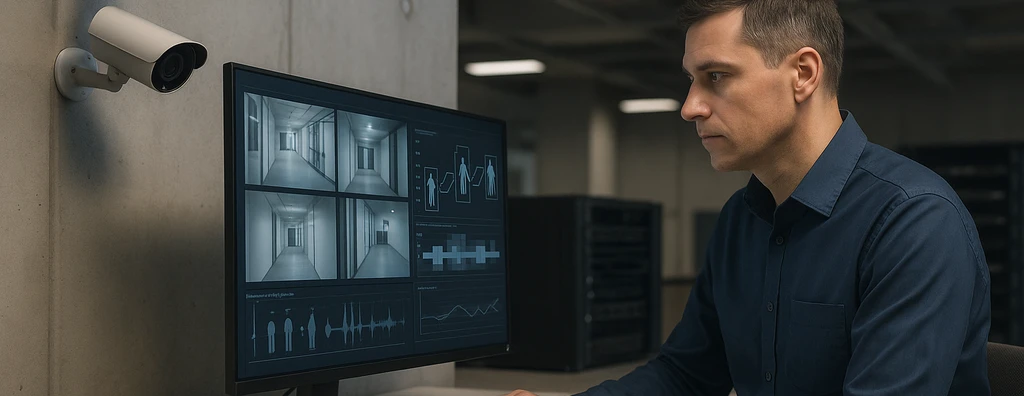
Artificial intelligence-based video analysis represents a significant advance in the field of computer vision dedicated to electronic security. Rather than simply capturing images and recordings, systems equipped with analytical capabilities can transform video streams into structured and actionable information, incorporating machine learning and deep learning techniques. This scenario substantially modifies the purpose of CCTV systems, […]
Check it out!
Artificial intelligence-based video analysis represents a significant advance in the field of computer vision dedicated to electronic security. Rather than simply capturing images and recordings, systems equipped with analytical capabilities can transform video streams into structured and actionable information, incorporating machine learning and deep learning techniques. This scenario substantially modifies the purpose of CCTV systems, enabling everything from automatic event detection to the generation of dynamic summaries, known as video synopsis. Among the challenges faced are data volume, the need for secure automation, and compliance with privacy principles, especially in high-traffic environments.
In this article, the fundamentals, architecture, applications, and implications of using video synopsis with artificial intelligence in monitoring systems will be explored. The goal is to provide a detailed overview of the technologies, from metadata-based analysis to integration with open and hybrid platforms, highlighting normative criteria, technical requirements, and recommendations for safe and effective adoption.
Check it out!
[elementor-template id=”24446″]
Fundamentals of Video Analysis with Artificial Intelligence
Artificial intelligence (AI) encompasses a set of advanced computational techniques aimed at solving complex tasks, attributing characteristics of perception and reasoning to digital systems. In the context of video synopsis, two subsets of AI stand out: machine learning and deep learning, with emphasis on convolutional neural networks for pattern recognition in visual streams.
The deployment of AI for video analysis enables the extraction of detailed descriptive metadata, including detected objects, behavioral and contextual attributes, as well as temporal event analysis. The process is divided into structured stages:
- Data Collection and Recording: The video is captured and segmented into frames for indexing and reference.
- Training: Analytical algorithms are adjusted through labeled data, enabling the system to learn environmental and behavioral patterns.
- Testing: The model’s performance is evaluated in real operational situations to ensure accuracy and efficiency.
- Deployment: The trained model is integrated into the monitoring system infrastructure, operating in real time or in batch mode for retrospective applications.
This structured approach enables not only analysis, but also the creation of comprehensible summaries of the original stream, eliminating redundancies and prioritizing critical information for security operations.
Architecture of Video Synopsis Systems
Video synopsis systems with artificial intelligence are composed of multiple integrated components, which can operate in embedded (edge), centralized (server), or distributed (cloud) configurations, as well as hybrid models. Each architecture presents specific technical advantages:
- Camera-Based (Edge): Analytics executed locally on cameras use hardware accelerators to reduce latency and bandwidth consumption.
- Server-Based: Video streams are forwarded to centralized servers, where more robust algorithms perform massive processing.
- Cloud-Based: They offer computational elasticity, enabling scalable analysis and maintaining structured logs for future consultation.
- Hybrid Approach: Combines local and central processing, optimizing resources and facilitating integrations with third-party platforms and applications.
Beyond physical infrastructure, the importance of video management software integrated with open middlewares stands out, enabling stream orchestration, intelligent archiving, and interoperability with external algorithms.
Video Synopsis Process: Stages and Data Flow
Video synopsis is characterized by a structured flow that transforms large volumes of continuous recordings into a condensed and strategic visualization. The main stages include:
- Object and Attribute Extraction: Using AI techniques, objects of interest (people, vehicles, animals, etc.) are segmented in each frame.
- Temporal Description and Indexing: For each object, time intervals, trajectory, type, and other analytical descriptors are recorded.
- Synchronization and Prioritization: Events considered relevant, according to logical or analytical rules, are highlighted and overlaid on the condensed timeline.
- Synopsis Generation: The resulting video presents a synthesis of critical events, compressing multiple occurrences and enabling quick reviews for investigation or auditing.
Diagrammatically, the process is represented by:
Video inputs → Object detection → Metadata extraction → Temporal segmentation → Video synopsis generationIn the operational context, this flow allows drastically reducing the time needed to review large monitoring periods, maximizing the efficiency of the security team and the incident response rate.
Analytical Metadata and Their Applications in Security
The use of video synopsis with artificial intelligence depends on the generation of detailed metadata for each processed frame. This metadata includes:
- Object Identification: Automatic classification of people, vehicles, and other elements based on visual attributes.
- Spatial Trajectories: Mapping of routes taken and areas of permanence.
- Behaviors and Activities: Detection of relevant patterns such as suspicious movement, object abandonment, or crowd formation.
- Specific Attributes: Color, clothing type, vehicle model, among others.
The metadata is essential for:
- Facilitating retroactive searches by specific criteria.
- Generating automatic alarms from parameterizable rules.
- Automating the masking of faces and shapes, promoting compliance with privacy guidelines.
- Feeding situational intelligence dashboards and statistical reports.
This meta-informational structure transforms traditional video into an indexable information asset, providing significant gains in traceability and operational response.
Technical Challenges and Design Considerations
The adoption of video synopsis with artificial intelligence imposes significant challenges in terms of design, implementation, and maintenance. Among the main critical aspects are:
- Computational Dimensioning: The execution of AI algorithms requires specialized hardware accelerators (for example, GPUs, ASICs, or FPGAs) to process multiple streams simultaneously without prejudice to latency.
- Imaging Optimization: Factors such as lighting, resolution, camera stability, and line-of-sight configuration directly impact the efficiency of object recognition.
- Privacy and Masking: To comply with data protection standards and regulations, intelligent masking is implemented, blurring faces and bodies as required, without prejudice to behavioral analysis.
- Alarm and Recording Management: Event parameterization requires careful policy to avoid false positive alarms.
- Maintenance: Frequent updates of analytical models and revalidation routines are mandatory to ensure consistency in the face of environmental changes.
The success of the project depends directly on observing these premises and applying robust testing and validation cycles, using data sets relevant to the operational context.
Integration with Open Platforms and Ecosystems
The flexibility of video synopsis systems with artificial intelligence is enhanced by the adoption of video management platforms that allow the modular integration of third-party analytics. The importance of the following elements also stands out:
- APIs and Middlewares: They allow the exposure of metadata streams and interoperability with superior platforms for access control, alarms, and building automation.
- Application Ecosystem: Open platforms support analytics for perimeter detection, automatic vehicle license plate reading, device health monitoring, among others.
- Edge and Centralized Processing: Adapting algorithms to the operational environment requires support for both decentralized and centralized processing, enabling mixed topologies.
Such integrations enhance the formation of robust, scalable systems adherent to future technological advances in AI for electronic security.
Operational Benefits of Video Synopsis with AI
The use of video synopsis with artificial intelligence provides direct and significant benefits to monitoring and security management:
- Reduction of Review Time: Allows synthesizing hours of recording in minutes, expediting investigations and audits.
- Improvement of Proactive Detection: Elevates the efficiency in identifying relevant incidents without overloading operator teams.
- Content Organization: Facilitates the archiving, search, and organization of relevant events in statistical patterns and trends.
- Active Privacy: Implements automatic distortion or masking features to comply with privacy guidelines.
- Operational Efficiency: Automates processes, reduces labor costs, and increases the assertiveness of incident responses.
Technical Standards and Compliance Requirements
The implementation of video synopsis solutions with artificial intelligence must observe relevant industry standards to ensure interoperability, security, and compliance. Among the main recommendations are:
- Standard NBR IEC 62676: Defines requirements for video monitoring systems and video analysis, addressing everything from architecture to privacy and interoperability aspects.
- IT and Security Best Practices: Involve network segregation, access control, integrity monitoring, and system update policies.
- Privacy Policies and LGPD: Brazil’s General Data Protection Law (LGPD) regulates the processing, storage, and transmission of personal data captured by video systems.
Continuous adherence to these normative references avoids non-compliance risks and keeps operations aligned with sector best practices.
Conclusion
The adoption of video synopsis with artificial intelligence redefines the role of video monitoring in corporate, urban, and critical environments, transforming conventional videos into intelligent informational assets. The process of metadata extraction, critical event definition, and visual synthesis enables agile responses, complemented by high automation rates and normative adherence. To achieve maximum performance from these systems, it is necessary to employ hybrid architectures, careful implementation of algorithms, and rigor in observing privacy premises. Applications range from asset security to behavioral and statistical analyses, consolidating AI video synopsis as a pillar of modern electronic security systems.
Final Considerations
As seen, video synopsis driven by artificial intelligence converges technological innovation, operational automation, and normative compliance, becoming essential for projects of any size in electronic security. We thank you for reading this technical article and invite you to follow A3A Engenharia de Sistemas on social media for updates and specialized content of high relevance to the sector.
