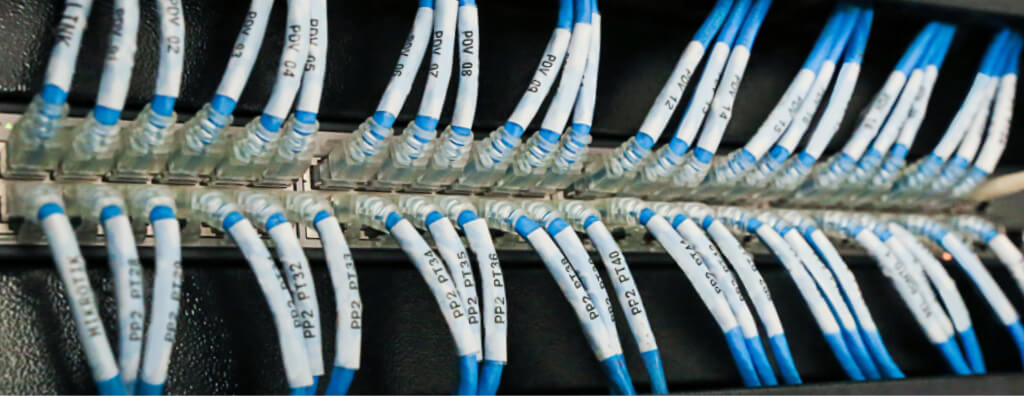
Structured cabling consulting for assessment, requirements, design, procurement, inspection, certification, as-built, commissioning, and handover.
Check it out!
Structured cabling project consulting is an engineering service that helps the client convert connectivity needs into technical requirements, architecture decisions, procurement documents, implementation controls, and acceptance criteria. It may address a single phase — for example, assessment of an existing network — or support the full lifecycle from survey through testing and handover.
Consulting should not be confused with installation execution. While the installer mobilizes labor and materials to implement the system, the consultant structures the problem, evaluates alternatives, defines requirements, develops or reviews designs, verifies interfaces, supports procurement, monitors quality, and gathers evidence so the owner can verify that the contracted scope was delivered.
In structured cabling, this role is especially relevant because apparently simple decisions are interdependent. Telecommunications-room locations affect horizontal-cabling length; the selected category affects connectors, pathways, and testing; PoE density affects cables, switches, power, and temperature; future expansion depends on fiber, racks, and physical infrastructure; and acceptance is only reliable when identification, as-built documentation, and test results can be correlated.
The central role of consulting is therefore to reduce technical uncertainty and provide governance for decisions. It is not limited to recommending a cable or reviewing a drawing; it establishes traceability from need to solution, specification, implementation, evidence, and acceptance.
What Does Structured Cabling Consulting Do in Practice?
Scope varies according to the project phase and the organization’s maturity. In a new project, consulting may begin with requirements and architecture. In an existing installation, it may begin with survey, inspection, and testing. During construction, it may support technical review, inspection, or Owner’s Engineering.
A comprehensive engagement may combine activities such as:
- document and field surveys;
- inventory of existing infrastructure;
- identification of risks, constraints, and interfaces;
- definition of capacity, performance, and expansion requirements;
- alternatives studies;
- design of copper, fiber, racks, pathways, and spaces;
- technical specifications and equivalency criteria;
- quantities and bills of materials;
- support for RFI, RFP, or RFQ processes;
- technical bid leveling;
- review of contractor submittals and documents;
- inspections and nonconformity control;
- monitoring of testing and certification;
- review of as-built and handover documentation;
- support for acceptance and closeout.
This does not mean every contract needs every activity. The correct service design depends on the problem. An organization with a mature detailed design may need only procurement support and Owner’s Engineering. Another organization with an old, undocumented network may first require assessment and survey.
O artigo When to Hire Structured Cabling Project Consulting? discusses the main hiring triggers. Here, the focus is on understanding how consulting works and what it should deliver.
Consulting, Design, Execution, and Owner’s Engineering Are Different Functions
It is useful to separate four functions that are often mixed together in procurement.
| Function | Main question | Typical deliverable |
| Consulting | What is the problem and which technical approach should be adopted? | assessment, requirements, studies, technical opinions, and governance |
| Design | How will the solution be materialized and specified? | drawings, design narratives, specifications, quantities, and criteria |
| Execution | How should the contracted system be physically installed? | installed infrastructure, terminations, identification, and installation records |
| Owner’s Engineering | Does what is being executed meet the owner’s interests and requirements? | inspection, analyses, approvals, records, and acceptance |
The same company may perform more than one of these functions when technically and contractually appropriate, but the client should understand where each responsibility begins and ends.
For example, a consultant may develop the Design de Cabeamento Estruturado and then support procurement. During construction, an Owner’s Engineering team may verify whether the installer is following the design and address deviations. At acceptance, independent testing can provide additional performance evidence.
This distinction matters because “consulting” should not become a generic label for any activity. A good scope describes deliverables, interfaces, technical authority, and completion criteria for each phase.
The First Step Is to Understand the Starting Condition
When existing infrastructure is unreliable, assessment and survey establish the factual baseline before deciding on investment, reuse, or replacement.
Before proposing a solution, the consultant must determine whether the situation is greenfield, brownfield, an expansion, a fault-correction project, or a partial modernization. The quantity and quality of available information materially change the work.
In a new building, architectural, occupancy, electrical, HVAC, electronic security, and IT documents may provide enough information to begin requirements definition and design. In an existing building, documentation may be outdated or incomplete, requiring field verification.
The survey may include:
- location and condition of telecommunications rooms;
- existing racks, patch panels, and active equipment;
- horizontal routes, shafts, and pathways;
- link identification and organization;
- cable types, categories, and connectivity;
- optical and copper backbone;
- pathway and rack occupancy;
- PoE-powered equipment;
- available documentation and certification reports;
- decommissioned or untraceable points;
- access and operational constraints;
- interfaces with electrical, HVAC, and other disciplines.
When the objective is to establish a reliable technical baseline for an existing installation, Engineering Technical Due Diligence or an Engineering Existing-Conditions Survey may form part of this phase.
Assessment Is Not the Same as Inventory
An inventory tells what exists. An assessment explains whether it meets the needs, what risks it presents, and what should be done.
Two racks may have the same number of ports while being in very different conditions. One may be documented, with spare space, tested fibers, and accessible pathways; another may have improvised switches, unlabeled patch cords, undocumented fibers, and no expansion capacity.
Consulting converts observations into criteria. This may result in a matrix covering current condition, risk, impact, evidence, recommendation, and intervention priority.
Requirements Should Come from Operations, Not Brands or Components
Technically independent consulting starts with the owner’s needs. The objective is to prevent the design from being built around a product proposed by a manufacturer or supplier before requirements have been defined.
Inputs may include:
- number of users and devices;
- critical applications;
- expected speed and capacity;
- Wi-Fi coverage and density;
- cameras and access control;
- PoE requirements;
- planned growth;
- availability and redundancy;
- special environments and conditions;
- maintenance strategy;
- internal standards;
- construction and security constraints;
- schedule and budget.
The Engineering Requirements Program is a useful tool for organizing this translation. In cabling, it separates the need — for example, supporting a given density of access points and devices — from the specific solution that will be selected later.
ABNT NBR 16869-1:2020 reinforces this principle by requiring installation specifications to include technical specifications, scope of work, and a quality plan, in addition to addressing documentation, testing, and inspections. Consulting can organize these requirements before the installer is hired, reducing ambiguity.
Technical Requirements Must Be Verifiable
A useful requirement has an acceptance condition. “High-quality system” is subjective. “All links shall be identified according to the defined standard, tested against the applicable limit, and delivered with files correlated to the as-built” can be verified.
This improves design, estimating, inspection, and closeout because all parties discuss evidence rather than interpretations.
Architecture and Alternatives Should Be Evaluated Before Detailed Design
After requirements and assessment, the consultant can evaluate architecture alternatives. This prevents detailed design from progressing around a solution that has not yet been selected.
Typical questions include:
- number and location of distributors;
- need for new telecommunications rooms;
- optical or copper backbone;
- fiber type and spare capacity;
- Category 6 or Category 6A for horizontal cabling;
- use of consolidation points;
- applications suitable for MPTL;
- primary and alternative routes;
- rack strategy;
- expansion by floor or area;
- integration with Wi-Fi and IP systems;
- need for physical redundancy.
ABNT NBR 14565:2019 structures subsystems, interfaces, and performance requirements; NBR 16415:2021 addresses pathways and spaces. Consulting uses these references as the basis for engineering reasoning, not as an automatic list of solutions.
In projects with multiple alternatives, a Multi-Criteria Analysis can help explicitly compare performance, cost, risk, expansion, maintenance, and implementation impact.
From Study to Design: Which Deliverables Should Exist
When the scope includes design, consulting must materialize decisions in documents sufficient for procurement and execution.
Deliverables may include:
- design criteria and assumptions;
- architecture and distribution diagrams;
- point and route drawings;
- telecommunications-room and rack details;
- backbone and optical distribution;
- sizing calculations;
- cable and connectivity specifications;
- requirements for PoE and fixed devices;
- identification and administration criteria;
- bill of materials and quantities;
- inspection and testing requirements;
- quality plan or requirements for its preparation;
- as-built and document-handover criteria;
- interfaces with other disciplines.
The level of detail should match the procurement model. A design used for pricing should reduce gaps that would cause suppliers to assume different premises. A detailed design should provide enough information for installation and control.
The Structured Cabling Design is the specific service used when requirements and studies must be converted into engineering documentation for procurement and implementation.
Design Should Not Freeze Decisions Without Justification
Good consulting records why relevant decisions were made. If the design defines Cat6A, a specific fiber type, two backbone routes, or rack spare capacity, the choice should be traceable to requirements and risks.
This traceability helps when a supplier proposes a substitution or when the budget needs optimization. The team can distinguish essential requirements from solutions that may accept equivalent alternatives.
Technical Procurement Starts Before Quotation
Design, specifications, and acceptance criteria reduce hidden assumptions and make bids technically comparable before the commercial decision.
Many procurement problems arise because the buyer receives several proposals that appear to cover the same scope but actually use different assumptions. One includes pathways while another assumes infrastructure is ready; one certifies every link while another only tests continuity; one provides as-built documentation while another does not; one includes backbone fibers while another excludes them.
Consulting can prepare the procurement baseline by defining:
- scope and supply boundaries;
- reference technical documents;
- mandatory requirements;
- quantities and measurement criteria;
- interfaces with third parties;
- documentation required in the proposal;
- experience and technical qualifications;
- pricing presentation model;
- equivalency criteria;
- inspection and testing plan;
- handover documents;
- acceptance criteria.
The choice among RFI, RFP, and RFQ depends on information maturity and the objective of each request. An RFI may explore market capabilities; an RFP may request a solution and methodology; an RFQ works best when the scope is sufficiently defined for price comparison.
Performance-Based Specification Reduces Brand Dependency
Consulting should distinguish functional and performance requirements from specific commercial characteristics. A brand may be used as a reference when justified, but competitive procurement should avoid turning incidental product features into requirements unrelated to the actual need.
This does not mean accepting any “similar” product. Technical equivalency should be demonstrated against performance, compatibility, environment, warranty, documentation, and installation requirements.
Technical Bid Leveling Is Different from Choosing the Lowest Price
After proposals are received, consulting can perform technical bid leveling to verify whether bidders responded to the same scope.
The analysis should identify:
- full or partial compliance with each requirement;
- supplier exclusions and assumptions;
- quantity discrepancies;
- material substitutions;
- warranty differences;
- installation methods;
- included tests;
- planned documentation;
- interfaces transferred to the client;
- technical risks;
- open clarification items.
A bid-leveling table turns hidden differences into visible decisions. The lowest nominal price may no longer be the lowest comparable cost when it excludes infrastructure, certification, or documentation included by another proposal.
Consulting does not replace the client’s commercial decision. It provides the technical basis for evaluating price, schedule, risk, and compliance using comparable information.
Quality Should Be Planned Before Execution
NBR 16869-1 includes requirements for quality planning, inspections, testing, documentation, and nonconformity management. This logic is essential because installation failures are far less expensive to prevent or detect early than to correct at closeout.
A quality plan may define:
- documents that must be approved before work begins;
- incoming-material inspection;
- pilot sample for termination and identification;
- hold or witness points;
- pathway inspections before closure;
- control of cable pulling and placement;
- rack assembly criteria;
- termination inspection;
- identification verification;
- test sequence and configuration;
- nonconformity and retest process;
- documentation required for release.
The methodology may be organized in an Inspection and Test Plan — ITP, adapted to the project scale and risk.
The Objective Is Not to Increase Bureaucracy
Controls should be placed where they prevent relevant failures. Inspecting a route before closing the ceiling can avoid civil rework. Validating the first termination before producing hundreds prevents repetition of an incorrect method. Checking the cable model at receiving prevents installation of unapproved material.
Consulting should balance inspection depth with project criticality, quantity, and the installer’s track record.
Design Review and Submittals Control Changes Before Field Execution
During implementation, suppliers normally submit data sheets, shop drawings, details, equivalency proposals, and work methods. If these documents are reviewed only after installation, the control has lost its preventive function.
Consulting can perform technical review by checking:
- compliance with the original requirement;
- compatibility among components;
- impact on performance and warranty;
- interfaces with other disciplines;
- maintenance and accessibility;
- quantity changes;
- impact on testing and documentation;
- need to revise drawings.
The principle of Design Review is to review decisions before they become field costs.
An apparently simple substitution, such as changing connectivity or cable diameter, can affect pathway fill, tooling, termination procedures, and certification. The analysis must consider the complete chain.
Owner’s Engineering Represents the Owner During Construction
When implementation begins, consulting may evolve into an Owner’s Engineering. The objective is to monitor the project from the owner’s requirements and interests without assuming the installer’s execution responsibility.
Activities may include:
- technical meetings;
- responses to RFIs;
- review of contractor documents;
- inspection and field oversight;
- photographic records;
- deviation control;
- assessment of nonconformities;
- monitoring of the technical schedule;
- review of progress measurements;
- interface management;
- test witnessing;
- punch list and acceptance.
The Owner’s Engineering service is particularly useful when the client has multiple suppliers, a small internal team, or needs independence between the party executing and the party accepting the work.
Inspection Must Preserve the Installer’s Responsibility
The presence of consulting does not transfer installation responsibility to the consultant. The installer remains responsible for methods, labor, quality, and compliance within its scope.
Consulting verifies, records, provides guidance within its contractual authority, and recommends decisions to the owner. This boundary should be clearly stated in the contract to avoid confusion of responsibilities.
Testing and Certification Must Be Connected to Acceptance Criteria
Certification should not be an isolated event on the last day of construction. It is part of a sequence that begins with specification, continues through installation, and ends with analysis, correction, and documentation.
For balanced cabling, the design should define the test configuration and applicable limits. For fiber, it should define required tests and loss criteria. Test equipment, adapters, calibration, and file formats may also be specified.
The consultant should verify not only the word “PASS,” but the integrity of the full evidence package:
- does the identification correspond to the physical point?
- was the correct limit selected?
- are the category and configuration correct?
- are there relevant marginal results?
- were failures corrected and retested?
- was the native file preserved?
- are date and equipment traceable?
- do results match the as-built?
When the owner requires independent verification, Engineering Testing and Technical Tests can complement execution and provide independent evidence for acceptance.
As-Built and Handover Are Part of Engineering, Not Dead Records
At closeout, consulting should verify whether documentation represents the as-built condition. A drawing stamped “As Built” without updated routes, points, racks, and identifiers does not fulfill its operational purpose.
The package may include:
- final drawings;
- backbone diagrams;
- rack elevations;
- point lists;
- fiber identification;
- test reports;
- inspection records;
- closed nonconformities;
- approved data sheets;
- warranties;
- spare-parts inventory;
- authorized residual punch items;
- history of relevant changes.
The Engineering As-Built Framework and the Technical Handover Framework help connect documentation with the transfer of responsibility to operations.
Handover Must Enable Another Team to Take Over the Asset
A good handover does not depend on the installer’s memory. A team that did not participate in construction should be able to understand the architecture, locate points, identify spare capacity, and consult test results.
This is a practical way to assess documentation quality: if operations must call the installer to discover how the system was built, the handover is incomplete.
Greenfield and Brownfield Require Different Approaches
In greenfield projects, consulting has greater freedom to coordinate rooms, shafts, pathways, and infrastructure with architecture before construction. This is the right time to avoid constraints that would be expensive to correct later.
In brownfield projects, the challenge is different: infrastructure is already in operation, documentation may be outdated, and changes must occur with minimal impact. The work may involve existing-conditions surveys, sample or full certification, capacity analysis, migration planning, and selective reuse.
The article on Brownfield Projects explores engineering for existing installations in greater depth.
Mature consulting does not apply the same checklist to both scenarios. The method is adapted to risk, information availability, and operational constraints.
Which Deliverables Should You Expect from Consulting?
The client should require deliverables that match the purpose of the service. The value of consulting is not in “meeting hours,” but in the decisions, analyses, and documents that reduce risk and guide the project.
| Phase | Possible deliverables |
| Assessment | condition report, asset register, risks, priorities |
| Requirements | requirements matrix, assumptions, and criteria |
| Studies | alternatives, comparisons, and recommendations |
| Design | drawings, design narratives, specifications, and quantities |
| Procurement | RFI/RFP/RFQ, bid leveling, and technical opinions |
| Implementation | technical meeting minutes, inspections, NCRs, analyses, and releases |
| Testing | plans, witnessing, reports, and result evaluation |
| Handover | punch list, reviewed as-built, and handover dossier |
Not every project requires all of these documents. The contract should select deliverables that generate useful decisions or evidence.
A Technical Opinion Should End with a Clear Decision
When consulting analyzes an equivalency, proposal, or deviation, the document should clearly state the subject analyzed, criteria, evidence, limitations, and conclusion.
Vague opinions merely transfer uncertainty to the client. A good analysis states whether the item complies, does not comply, complies with conditions, or requires additional information.
A Responsibility Matrix Prevents Gray Areas
Cabling interfaces with architecture, electrical, HVAC, electronic security, active network systems, and operations. Without defined responsibilities, activities can fall between parties.
A RACI matrix or equivalent can clarify who:
- provides occupancy information;
- approves architecture;
- authorizes site access;
- designs pathways;
- installs pathway infrastructure;
- supplies and installs racks;
- provides grounding and power;
- pulls and terminates cables;
- configures active equipment;
- certifies links;
- corrects failures;
- updates as-built documentation;
- approves acceptance.
This matrix is particularly useful when a civil contractor, security integrator, network supplier, and cabling contractor are working simultaneously.
Technical Independence: When to Separate Consultant and Installer
There is no universal rule requiring all functions to be separated, but there are situations where independence creates value.
If the main concern is verifying a problematic installation, hiring only the party that will perform the replacement may create an incentive to expand scope. If the objective is to compare integrator proposals, independent consulting helps avoid specifications being shaped around one bidder’s portfolio. If acceptance has high impact, independent testing can increase confidence.
On the other hand, in small and well-defined scopes, integrating design and execution may be efficient. The decision should consider criticality, complexity, the owner’s internal capability, and governance needs.
The key is to make roles transparent and define which decisions require independent review.
How to Procure Structured Cabling Consulting
The client should start by defining the problem rather than simply requesting “consulting.” The Terms of Reference or scope should describe context, objectives, areas, systems, available information, deliverables, and interfaces.
Useful selection criteria include:
- experience with projects of comparable size and complexity;
- knowledge of cabling and infrastructure standards;
- ability to work with copper and fiber;
- experience in certification and assessment;
- knowledge of Wi-Fi, PoE, and interfaces with IP systems;
- management and quality methodology;
- ability to produce engineering documentation;
- technical independence appropriate to the role;
- professionals with relevant education and credentials.
The proposal should state assumptions, exclusions, number of site visits, deliverables, revisions, responsibilities, and criteria for additional services. The objective is to compare methods and outputs rather than only hourly rates.
Phased Scope Improves Governance
An engagement may be divided into phases with approval gates:
- assessment and requirements;
- study and design;
- procurement;
- Owner’s Engineering;
- testing and handover.
This structure allows the client to advance as decisions are made and avoids procuring detailed work before validating assumptions from the previous phase.
How to Measure the Value of Consulting
Value should not be measured only by material-price reductions. Consulting can create value by avoiding rework, reducing ambiguity, preserving existing infrastructure, improving competition, anticipating risks, and preventing acceptance of incomplete work.
Possible indicators include:
- number of requirements defined before procurement;
- proposal discrepancies eliminated before purchase;
- nonconformities detected before irreversible stages;
- reduction in changes caused by insufficient design;
- percentage of documentation delivered and validated;
- traceability between points and test results;
- punch-list closure before acceptance;
- confirmed reuse capacity in retrofit projects.
These indicators help the owner view consulting as a decision and control mechanism rather than a bureaucratic layer.
How Consulting Addresses Risks Before They Become Rework
Structured cabling involves different types of risk. Some relate to performance, such as links that fail to meet specified limits. Others are architectural, such as poorly located rooms or undersized backbones. There are also contractual risks, such as ambiguous scope, and operational risks, such as migration that interrupts a critical area.
Consulting can organize these risks in a matrix covering probability, impact, cause, evidence, response, and owner. The objective is not to create a standalone document merely to satisfy a methodology, but to use the analysis to guide decisions.
Examples of risks that deserve early treatment include:
- pathways without capacity for the planned cable quantity and diameter;
- inadequate telecommunications rooms or rooms shared with incompatible uses;
- link lengths near the limit due to poor architecture;
- optical backbone without spare fibers or an alternate route;
- category specified without checking connectivity and certification;
- high PoE density without temperature and power-budget analysis;
- AP locations defined before RF design;
- CCTV and access control added after port sizing;
- installer hired without clear documentation criteria;
- testing specified only as a generic item without limits or delivery format;
- migration of an existing network without transition and rollback plans.
Each risk can generate a concrete action. If the pathway is the bottleneck, the response may be to revise the route or infrastructure before cable pulling. If existing information is unreliable, the survey may need to be expanded. If the risk lies in procurement, the scope can be corrected before the RFP.
This approach is consistent with the principle of Engineering Project Risk Management: a useful risk is one that influences decision, priority, or control.
Coordination with Electrical, Architecture, HVAC, and Electronic Security
Cabling consulting cannot work as an isolated discipline. Pathways cross architectural elements; racks depend on electrical power and thermal conditions; cameras and readers depend on locations defined by electronic security; access points depend on RF design.
An interface review should look for conflicts such as:
- insufficient shafts or shafts occupied by other systems;
- cable trays incompatible with cable volume;
- technical rooms crossed by piping;
- rack positioned without maintenance clearance;
- lack of dedicated electrical circuits;
- HVAC sizing that does not account for network equipment;
- camera points shifted from the designed position;
- AP outlets incompatible with the RF layout;
- lack of pathways between areas that require backbone connectivity;
- architectural finishes that prevent future access to pathways.
NBR 16869-1 establishes that installation specifications should consider information from other building services such as electrical distribution, security, access control, fire detection, HVAC, and other utilities. Consulting turns this requirement into practical coordination.
In multidisciplinary projects, Engineering Interface Management can be used to record who provides each required condition and when.
What Consulting Should Verify in a Technical Proposal
Before recommending an award, the analysis should not be limited to brand and price. The technical proposal must be checked against scope and requirements.
A structured review can classify items into four states:
- complies — there is sufficient evidence of compliance;
- complies with condition — the solution may be accepted if a condition is met;
- does not comply — there is an objective deviation;
- not demonstrated — the proposal does not provide sufficient information.
This fourth condition is important. Lack of evidence should not automatically be interpreted as compliance or rejection. The consultant may issue a clarification request and record the response.
For materials, the analysis should verify compatibility among cable, connectors, patch panels, and accessories, as well as category, application, environment, and warranty where required. For services, it should verify installation method, certification, number of tests, as-built, identification, schedule, team, and responsibilities.
For fiber, type, quantity, connectivity, testing criteria, and documentation should be evaluated. For PoE, the solution must be compatible with devices and the active-network architecture.
The final bid leveling should allow the decision-maker to see relevant differences without rereading every full commercial proposal.
Consulting for Existing Networks: How to Decide What to Preserve
One of the most valuable brownfield decisions is distinguishing reusable infrastructure from infrastructure that should be replaced.
Consulting can use a layered process:
- review documentation and history;
- inspect physical condition and identification;
- map architecture and pathways;
- measure available capacity;
- select appropriate testing and sampling;
- compare results against future applications;
- classify each set as keep, correct, expand, monitor, or replace.
This method avoids two extremes. The first is preserving everything because “the network works.” The second is replacing everything because “it is old.” Both ignore technical evidence.
An existing link may remain suitable for a given application while the backbone or pathways have become bottlenecks. Another link may pass transmission testing but have such poor identification and documentation that operational cost remains high. Retrofit decisions should consider both performance and governance.
Consulting should also assess migration impact. If an area cannot stop, the design may provide for parallel implementation, pre-testing, and controlled cutover. If there is risk of incompatibility with legacy equipment, the transition should be validated before final changeover.
The Role of Commissioning in Cabling Closeout
In larger projects, link certification is part of the acceptance process but does not replace verification of overall system readiness.
The Engineering Commissioning can integrate documentation, interface, testing, and punch-item verification to demonstrate that the infrastructure is ready for handover to operations.
In cabling, a commissioning process may verify:
- physical completion of pathways and spaces;
- final rack assembly;
- identification and administration;
- certification results;
- optical backbone;
- power and conditions of technical spaces;
- integration with active network and devices when included in scope;
- closure of nonconformities;
- completion of as-built documentation;
- training or information transfer;
- punch list and handover criteria.
Consulting may participate in this process as coordinator, reviewer, or owner’s representative depending on the contractual model.
The benefício é impedir que o empreendimento seja considerado concluído apenas porque a instalação física terminou. The encerramento passa a exigir evidência de prontidão.
What Good Consulting Should Not Do
Quality can also be defined by what should be avoided.
Consulting should not copy an old specification without validating context. It should not recommend a category or brand without relating the decision to requirements. It should not use standards as an appeal to authority without explaining their application. It should not turn every deviation into a nonconformity without contractual criteria. It should not assume execution responsibility that belongs to the installer. And it should not produce lengthy reports that end without a decision or action.
Another error is keeping the client permanently dependent on the consultant. Documentation should increase operational autonomy. The internal team should receive an understandable system, organized records, and clear criteria for future changes.
Finally, consulting should record limitations. If a specific area could not be accessed, a fiber could not be verified, or source documentation could not be obtained, that uncertainty should appear in the assessment. Silence about gaps creates false confidence.
Final Considerations
Structured cabling project consulting is an engineering function focused on organizing decisions throughout the lifecycle. It may begin with assessment, structure requirements, develop or review designs, support procurement, monitor implementation, evaluate testing, and consolidate handover.
Its main result is the reduction of the gap between what the owner needs and what is actually delivered. This requires documents, criteria, and evidence that remain valid through supplier changes, construction pressures, and transition to operations.
When scope is correctly defined, consulting does not compete with execution. It creates the basis for design, procurement, installation, and acceptance to be technically comparable and governable.
During implementation, an independent layer of technical governance helps control interfaces, deviations, testing, documentation, and acceptance on behalf of the owner.
Technical References
[1] BRAZILIAN ASSOCIATION OF TECHNICAL STANDARDS. ABNT NBR 14565:2019. Structured cabling for commercial buildings and data centers. Available at: https://www.abntcatalogo.com.br/
[2] BRAZILIAN ASSOCIATION OF TECHNICAL STANDARDS. ABNT NBR 16869-1:2020. Structured cabling — Part 1. Available at: https://www.abntcatalogo.com.br/
[3] BRAZILIAN ASSOCIATION OF TECHNICAL STANDARDS. ABNT NBR 16415:2021. Pathways and spaces for structured cabling. Available at: https://www.abntcatalogo.com.br/
Frequently Asked Questions
It converts the owner’s needs into assessment, requirements, architecture, design and procurement documents, implementation controls, testing criteria, and acceptance evidence.
A consultoria estrutura o problema e orienta decisões; o projeto materializa a solução em documentos; a execução implanta fisicamente; e o Owner's Engineering representa o proprietário na verificação, fiscalização e aceite.
When there is uncertainty about existing conditions, modernization needs, a new project, complex procurement, multiple suppliers, rework risk, or a need for independent acceptance.
Depending on scope: assessment, requirements matrix, studies, drawings, design narratives, specifications, quantities, bid leveling, inspection records, test analyses, and handover documentation.
Yes. It can structure RFI, RFP, or RFQ processes, define technical criteria, clarify assumptions, compare compliance, and make differences in scope, materials, testing, documentation, and risks visible to the decision-maker.
In brownfield environments, it combines survey, inspection, capacity analysis, testing, and future-application analysis to classify what should be kept, corrected, expanded, monitored, or replaced and to plan migration.
Complementary Technical Materials
Related Solutions
- Structured Cabling: design, implementation, certification, and management
- Connectivity and Logical Network: architecture, performance, security, and management
Related Services
- Engineering Technical Due Diligence
- Engineering Existing-Conditions Survey
- Structured Cabling Design: copper, fiber optics, racks, and certification
- Owner’s Engineering (Owner’s Engineering): governança técnica, fiscalização e aceite
- Engineering Testing and Technical Tests: verification, performance, compliance, and acceptance
- Engineering Commissioning
Main Content on the Topic
- When to Hire Structured Cabling Project Consulting?
- Structured Cabling Design: phases, NBR 14565, NBR 16869, and deliverables
- Complete Guide to Structured Cabling
