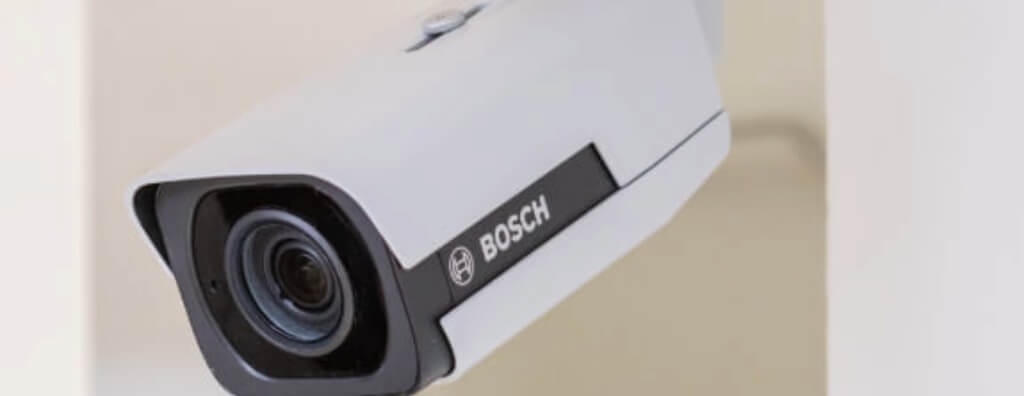
Choosing the correct lens for a CCTV camera is essential to ensure that the monitoring system delivers the necessary coverage and image quality.
Check it out!
CCTV camera lenses – Choosing the correct lens for a CCTV camera is essential to ensure that the monitoring system delivers the necessary coverage and image quality. Different lens types can directly influence the field of view, focal length, and image clarity, making them determining factors for the success of a surveillance system.
In this article, we will explore the most common lens types and how to choose the best lens for each CCTV situation.
[elementor-template id=”24446″]
Fundamental Components of a CCTV Lens
Before analyzing the different lens options, it is important to understand the main components that influence CCTV lens performance:
- Focal Length: Measured in millimeters (mm), focal length determines the camera’s field of view and zoom level. The greater the focal length, the narrower and more focused the field of view; the smaller it is, the wider the field of view will be.
- Aperture (f-stop): Refers to the amount of light the lens allows to pass through to the camera sensor. Lenses with wider apertures (lower f-stop values) allow more light in, which is useful for low-light environments.
- Lens Type: There are several lens types on the market, including fixed, varifocal, and motorized lenses.
Lens Types and Their Applications
1. Fixed Lens
Fixed lenses have a single, unchangeable focal length, which means the field of view is always the same. They are recommended for situations in which the area to be monitored is well defined and does not need frequent adjustments.
- Advantages: Simplicity and lower cost.
- Disadvantages: Lack of flexibility to adjust the field of view.
Ideal application: Monitoring areas with stable size and characteristics, such as entrances, corridors, and small rooms where the field of view does not change.
- Practical example: A camera with a 2.8 mm fixed lens would be ideal for monitoring a conference room, providing a wide and static field of view.
2. Varifocal Lens
Varifocal lenses allow focal length to be adjusted manually, offering flexibility to change the field of view as needed. This is useful in scenarios where monitoring at different distances is required or where the position of the camera may vary during installation.
- Advantages: Flexibility to adjust the field of view.
- Disadvantages: Requires manual adjustment.
Ideal application: Areas where the scenario may change or that require field-of-view adjustments to cover different distances and angles, such as parking lots or industrial yards.
- Practical example: A 2.8-12 mm varifocal lens allows the camera to be adjusted either to monitor a larger area in wide-angle mode or to focus on a specific point at a greater distance, such as the entrance to a parking lot.
3. Motorized Lens (Motorized Varifocal)
Motorized lenses offer the same functionality as varifocal lenses, with the difference that zoom and focus adjustments can be made remotely, without the need for manual adjustments on the camera itself. This makes operation easier and allows adjustments to be made dynamically after installation.
- Advantages: Flexibility with remote adjustment and easy configuration.
- Disadvantages: Higher cost compared with manual varifocal lenses.
Ideal application: Scenarios that require frequent field-of-view adjustments, such as real-time monitoring of dynamic areas, major events, or urban centers.
- Practical example: A camera with a motorized lens in a stadium allows the operator to adjust the field of view as needed, switching between wide crowd coverage and focus on a specific area where an incident is taking place.
4. Fisheye Lens
Fisheye lenses have an extremely wide field of view, usually 180 degrees or even 360 degrees. These lenses are used when it is necessary to monitor a large area with a single camera, providing a panoramic view.
- Advantages: Coverage of large areas with a single camera.
- Disadvantages: Images may suffer distortion, and the level of detail in areas farther from the center of the lens is reduced.
Ideal application: Open areas such as shopping mall lobbies, food courts, or large warehouses.
- Practical example: A camera with a fisheye lens installed in a warehouse allows the entire area to be monitored with a single camera, eliminating blind spots.
5. PTZ Lens (Pan-Tilt-Zoom)
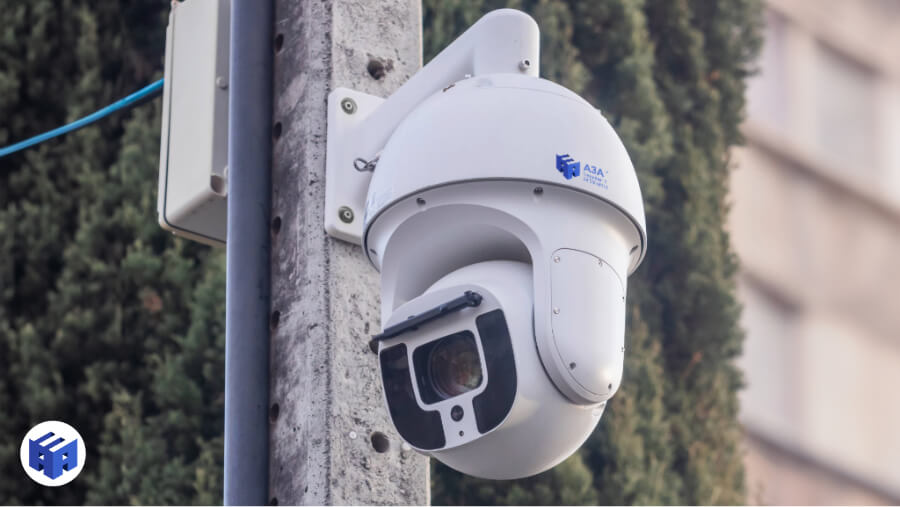
Collection: A3A Engenharia de Sistemas
PTZ cameras use lenses that allow movement in three axes: pan, tilt, and zoom. These lenses are ideal for monitoring large areas, allowing the camera to move and focus on different points as needed.
- Advantages: Ability to monitor broad areas and adjust the camera position dynamically.
- Disadvantages: High cost and greater operational complexity.
Ideal application: Large outdoor areas or environments where motion-based monitoring is essential, such as stadiums, major events, and transport centers.
- Practical example: In a shopping mall parking lot, a PTZ camera can be used to monitor the entire area and focus on a specific vehicle or individual, adjusting the zoom as needed.
How to Choose the Best Lens
Choosing the ideal lens depends on several factors, including:
- Area to Be Monitored: Determine whether the camera needs to cover a wide area or focus on specific details of a more distant point. Indoor environments may benefit from fixed or varifocal lenses, while wide outdoor areas may require PTZ or fisheye lenses.
- Distance to the Monitored Object: If the camera needs to capture details of objects or people at a long distance, a lens with a greater focal length will be required. For close monitoring, such as entrances or corridors, wide-angle lenses are more suitable.
- Required Level of Detail: The farther away the monitored object is, the greater the focal length needed to capture details. If the focus is on faces or license plates, a zoom or varifocal lens will be more suitable.
- Lighting Conditions: In low-light areas, a lens with a wider aperture will allow more light onto the sensor, improving image quality. Technologies such as infrared or lenses with a low f-stop are ideal for low-light conditions.
- Flexibility and Control: If the CCTV system requires frequent adjustments to the field of view or zoom, varifocal or motorized lenses are the best choice, offering flexibility and remote control.
Conclusion
Choosing the right lens for CCTV cameras is a critical factor in ensuring the effectiveness of a monitoring system. Fixed lenses offer simplicity and are suitable for areas with stable requirements, while varifocal and motorized lenses provide flexibility and control in dynamic environments. Cameras with fisheye and PTZ lenses are ideal for monitoring large areas efficiently. By considering the type of environment, focal length, lighting, and the level of detail required, you can select the ideal lens to meet the specific demands of your CCTV system and ensure proper security and surveillance.
Acknowledgments
Thank you for taking the time to read this article. We hope the information provided helps optimize the performance of your CCTV system and supports more informed decisions about video compression.
If you have questions or would like to discuss more about improving your security infrastructure, feel free to get in touch. We are here to help make your surveillance system more efficient and effective.