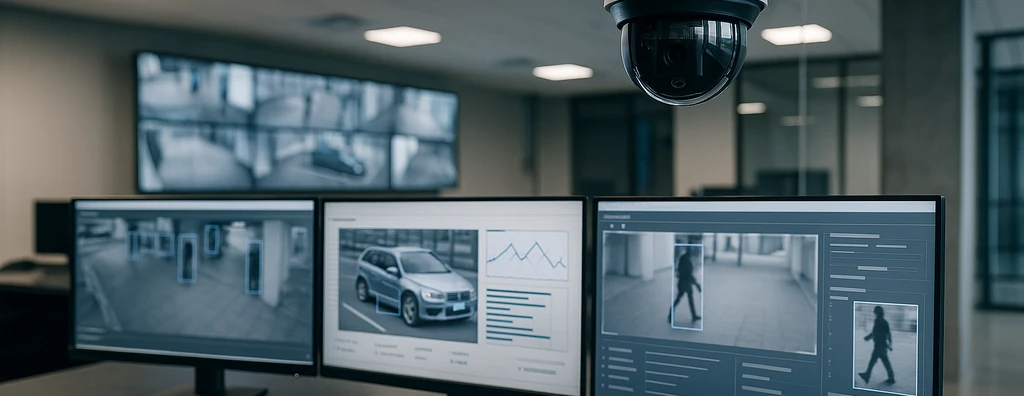
Metadata and Computer Vision: High-performance monitoring define modern automation and electronic security systems. Computer vision processes large volumes of images and videos with precision, while metadata organizes and enables rapid analysis and intelligent decisions in critical scenarios. In this article, we will explore the fundamental concepts of metadata and computer vision, their typologies, benefits, and […]
Check it out!
Metadata and Computer Vision: High-performance monitoring define modern automation and electronic security systems. Computer vision processes large volumes of images and videos with precision, while metadata organizes and enables rapid analysis and intelligent decisions in critical scenarios.
In this article, we will explore the fundamental concepts of metadata and computer vision, their typologies, benefits, and practical applications in corporate and industrial environments. The text details how metadata is generated, structured, and used by video analysis systems, as well as highlighting standards, architectures, and strategies for efficient integration in IP networks and VMS (Video Management System) platforms. The goal is to provide a comprehensive technical reference on the subject for engineering, IT, and electronic security professionals.
Check it out!
[elementor-template id=”24446″]
Technical Definition of Metadata in Computer Vision
Metadata is data about other data. In the context of computer vision, metadata describes relevant information automatically extracted from images or videos, such as:
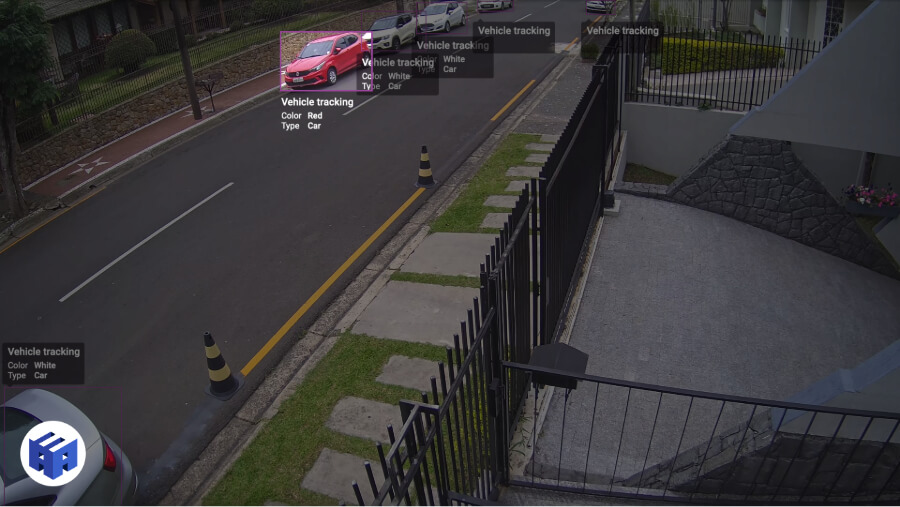
- What objects are present in a scene (e.g., people, vehicles, animals);
- Attributes of detected objects, including color, size, shape, direction, and speed;
- Spatial coordinates, area occupied in the field of view, and times of occurrence;
- Contextual features, such as events, suspicious movements, and the dwell time of a given object in the scene.
TECHNICAL COLLECTION: A3A ENGENHARIA
This data is processed by artificial intelligence analytical algorithms and structured according to standardized semantic models. Metadata enables text searches over large volumes of video, providing operational efficiency and the ability to extract insights automatically.
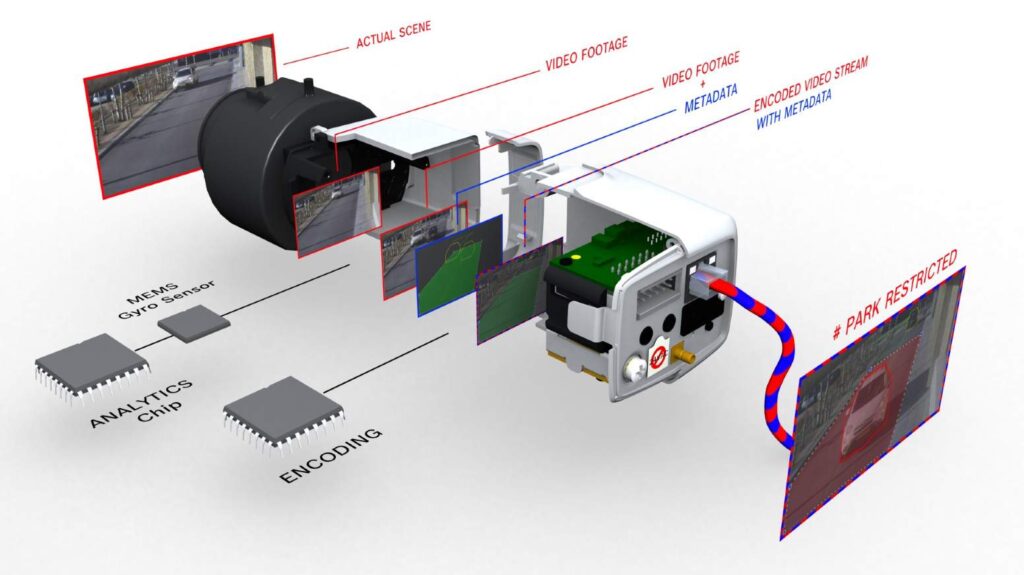
Analytical Metadata Generation: Processes and Architectures
In monitoring systems, metadata generation can occur at different points in the architecture:
- At the edge: Smart cameras process images locally, applying embedded analytical models to classify, label, count, and track objects. This approach reduces bandwidth demand and increases scalability.
- On dedicated servers: The video stream is transmitted to analysis servers, where advanced algorithms extract metadata with high processing power.
- In cloud environments: Videos and metadata can be sent to cloud platforms that concentrate and enrich information, promoting scalability and data centralization.
- Hybrid architecture: Combines preliminary analysis at the edge with refinement on servers or in the cloud, optimized for mission-critical environments.
Analytical metadata can be associated with both real-time events and recorded historical logs, allowing for forensic investigations, automated responses, and the generation of statistical reports.
Metadata Typologies: Structure and Examples
In the universe of security-oriented computer vision, the following categories of metadata stand out:
- Object metadata: Information associated with detected entities, such as type (example: vehicle), color (black, white), class (car, bus), license plate, and position in spatial coordinates;
- Event metadata: Report the occurrence of actions, state changes, and atypical behaviors, such as restricted zone intrusion, abandoned object, or movement outside scheduled hours;
- Statistical metadata: Includes flow counting for people and vehicles, dwell time, hotspot analysis, and other variables that support operational planning and resource management;
- Contextual metadata: Environmental or site-specific data, such as lighting conditions, partial scene blockages, and the identification of temporary obstacles.
Properly structuring this metadata is fundamental to ensuring flexibility in automatic analysis and reliability in forensic searches.
Metadata Representation and Communication Standards
Interoperability between cameras, servers, video management systems (VMS), and analytical solutions requires the standardization of metadata representation and transmission. In the context of IP networks, the following stand out:
- ONVIF Profile M: Standardizes the structure and transmission of analytical metadata and events detected in real-time, standardizing syntax and semantics for seamless integration between different vendors;
- MPEG-4 and MPEG-7 standards: Used for multimedia stream encoding, MPEG standards also include descriptors for identifying video segments, visual characteristics, and associated metadata for classification and search;
- IP network protocols and infrastructure: Transport network, multicast, compression, and synchronization for efficient video and metadata traffic, supporting Ethernet, Wi-Fi, and heterogeneous industrial environments.
The use of these standards provides robustness, flexibility, and future technological alignment to projects, meeting the requirements of scalability and continuous functional evolution.
Integration of Metadata into Video Management Systems (VMS)
The integration of metadata into VMS platforms provides substantial benefits for security and monitoring operations, including:
- Visual overlay: Graphical presentation of detected objects and events over live or recorded images, facilitating quick contextual analysis by operators;
- Automated search: Use of attribute filters (e.g., “person in a red shirt between 12 PM and 1 PM”) to quickly locate events of interest in large video databases;
- Response automation: Automatic rule-based triggers, such as intrusion alerts, PTZ (pan-tilt-zoom) control, alarm dispatch, and integration with other electronic security systems;
- Reports and statistics: Automatic consolidation of statistical data for understanding flows, patterns, and supporting strategic decision-making.
This integration contributes decisively to speeding up forensic investigations, optimizing command center operations, and increasing the efficiency of the human and technological resources employed.
Practical Applications of Metadata in Computer Vision
IoT platforms and operational efficiency systems benefit from the generation and use of analytical metadata, including:
- Automatic visitor counting in commercial establishments;
- Speed measurement and traffic flow monitoring in urban and highway environments;
- Queue management and wait time analysis in critical environments;
- Optimization of logistics routes, movement hotspot analysis, and monitoring of high-risk areas;
- Collective behavior analysis, detection of anomalous situations, and compliance validation in industrial processes.
The application possibilities expand continuously, keeping pace with the evolution of computer vision algorithms, sensors, and IP network infrastructure.
Best Practices for Deployment and Quality in Monitoring Environments
The effectiveness of metadata is directly linked to image quality and the accuracy of analytical processing. Attention to the following factors is recommended:
- Lighting conditions: Avoid shadowed or overexposed areas and use cameras with automatic compensation when necessary;
- Compression and codec settings: Adjust to avoid blurring and artifacts, which can impair object detection and classification;
- Shutter speed: Set according to the scenario to prevent motion blur;
- Device positioning: Ensure a wide field of view free of obstacles, respecting installation guidelines;
- Continuous monitoring: Implement image integrity checks, predictive maintenance, and periodic performance analysis of analytics.
Aligning these practices with the parameters of analytical algorithms results in higher accuracy rates and reduced false positives.
Strategic Benefits of Metadata in Computer Vision
The consistent adoption of metadata offers significant gains:

A3A ENGENHARIA DE SISTEMAS
- Search efficiency: Drastically reduces the time to locate events or objects of interest in voluminous video databases;
- Real-time response capability: Favors quick decisions through automatic triggers based on detections;
- Resource optimization: Allows concentration of human efforts on critical events, delegating routine and repetitive activities to the system;
- Traceability and compliance: Facilitates audits and regulatory compliance by centralizing evidence and automatic data lifecycle controls;
- Predictive and strategic intelligence: Enables the extraction of statistical patterns, supporting prevention, operational optimization, and business planning.
Conclusion
Metadata and computer vision, combined with processing architectures at the edge, server, and cloud, constitute central pillars for the evolution of modern monitoring systems. The proper use of these elements provides concrete benefits in terms of operational efficiency, response automation, investigative capacity, and technological scalability. Standardization through initiatives like ONVIF Profile M and the application of deployment best practices ensure compatibility, robustness, and flexibility in engineering and electronic security projects.
The trend is for the use of metadata to continue expanding its application fronts, becoming fundamental not only for security but also for supporting decision-making and continuous improvement of operational and business processes.
Final Considerations
This article presented a detailed technical analysis of the concepts, benefits, and practical applications of metadata in computer vision. The systemic and standards-oriented approach allows professionals to extract the most from the resources available on platforms and increase the strategic value of monitoring and security projects. Thank you for reading. Follow A3A Engenharia de Sistemas on social media to keep up with more technical content and industry news.
Read more about Monitoring Systems
Technology Rental as a Service (TaaS)
CCTV Systems in Critical Environments
Network Cabling for CCTV Systems
