Understand what an IP video monitoring system is, how VMS and NVR platforms work, and the main benefits of migration, analytics, and integration.
Check it out!
IP Video Monitoring is an advanced technology that has transformed how surveillance and security are carried out across different environments.
By transmitting data over IP (Internet Protocol) networks, this system enables the capture, processing, and storage of high-definition images, offering a series of benefits compared with conventional monitoring systems.
In this article, we will explore in detail what an IP Video Monitoring System is, how it works, and its main concepts and benefits compared with analogue systems.
Take a look!
[elementor-template id=”24446″]
What Is an IP Video Monitoring System?
An IP Video Monitoring System is an Electronic Security solution that uses cameras equipped with IP (Internet Protocol) technology to capture, transmit, and manage images and videos in real time.
IP Monitoring Cameras
IP monitoring cameras are video capture devices that connect to a computer network, transmitting video data to a centralized management system. Within that system, images can be viewed, recorded, and analysed.
One of the main benefits of IP monitoring cameras is their ability to capture high-resolution images. They offer a wide range of resolutions, from HD (720p) to ultra HD (4K), providing clear and detailed images of monitored environments. High resolution makes it easier to identify people, objects, and relevant details accurately, contributing to more efficient surveillance.
Some IP cameras also offer advanced imaging features, such as Wide Dynamic Range (WDR) and night vision capability, ensuring that all important details are captured clearly and accurately.
In addition, Video Analytics, such as motion detection and facial recognition, can be implemented to improve monitoring efficiency and accuracy.
Video Analytics
Video Analytics are software applications that automatically generate descriptions, or “metadata,” about events that occur within a video.
This metadata can be used to identify and list entities such as people, cars, and other objects detected in the video stream, as well as to describe the appearance and movement of these elements.
Here is an overview of some of the main technologies used:
Motion Detection
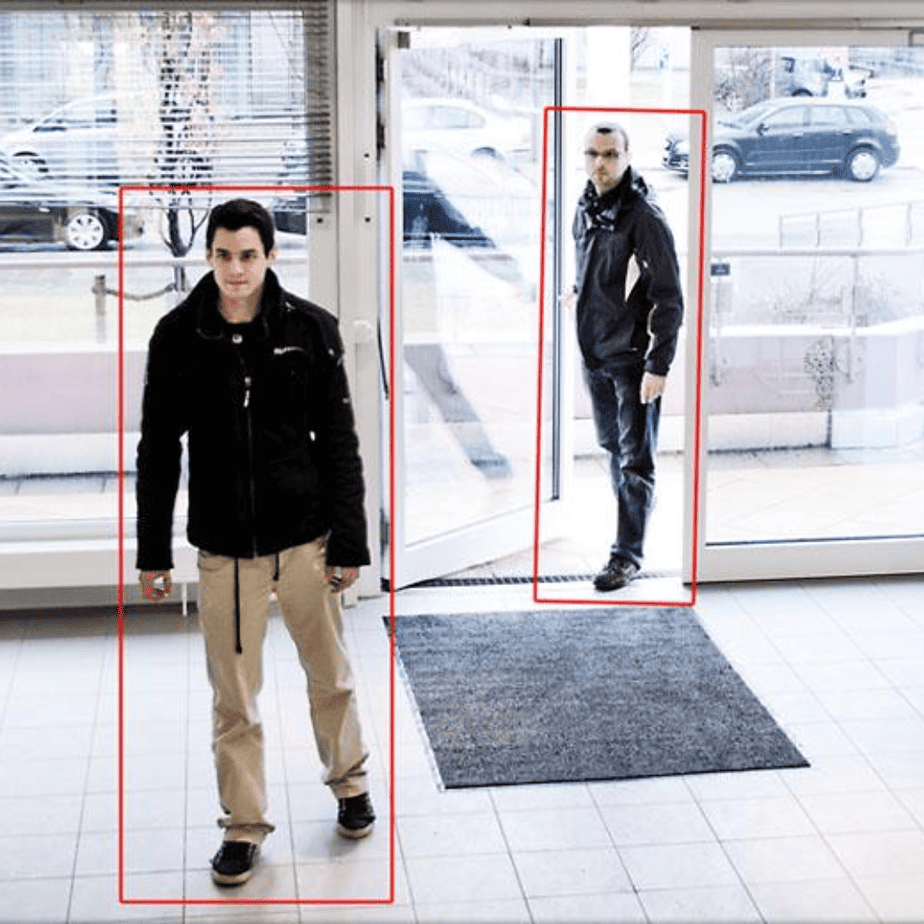
Motion detection algorithms allow the system to dynamically identify changes in the camera’s field of view and trigger corresponding events or alerts. This feature is essential for monitoring sensitive areas, such as security perimeters or restricted zones, and can be configured to start recordings, send notifications, or trigger other security actions.

Facial Recognition
Facial recognition algorithms enable the automatic identification of individuals based on distinct facial characteristics. Using advanced techniques, the system can compare facial traits captured by IP cameras with a database of previously registered faces, allowing the detection of suspicious individuals, the rapid search for specific people, and access control based on facial recognition.

License Plate Recognition
License plate recognition algorithms allow the automatic reading and identification of vehicle plates through IP cameras. Using specialized techniques, the system can capture, identify, and record plate information such as numbers and letters. This feature is widely used in applications such as parking access control, toll systems, traffic control, and vehicle security.
People Counting
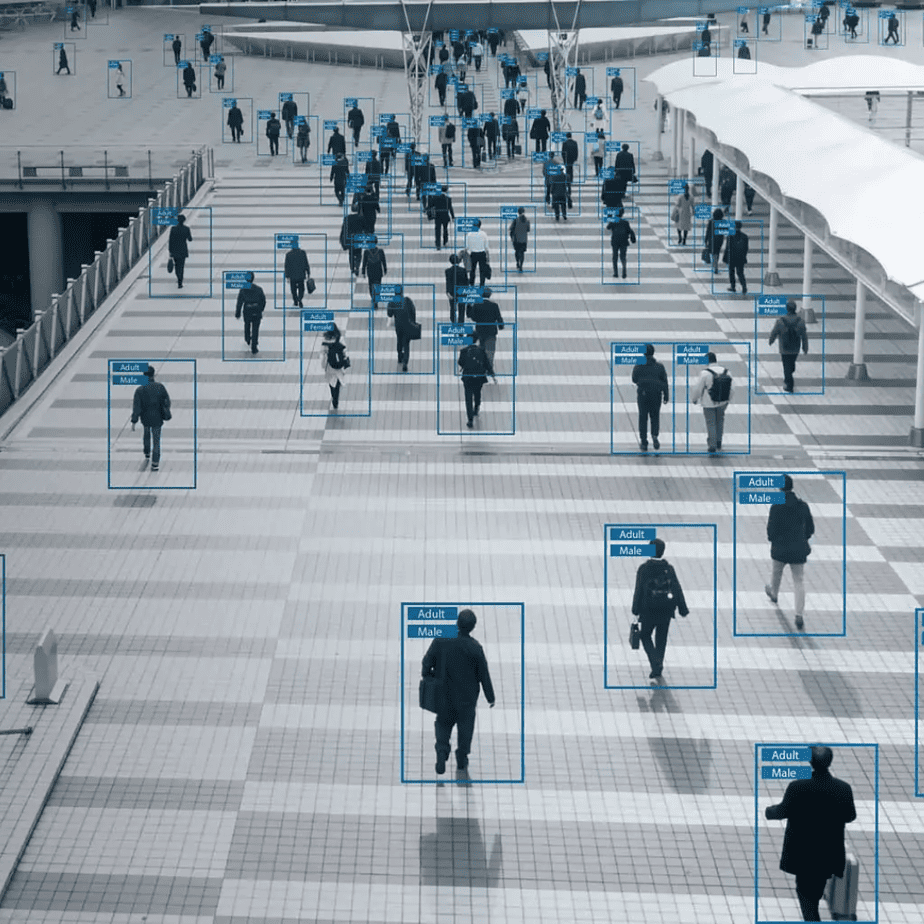
People counting algorithms allow the system to record how many people enter or leave specific monitored areas. This feature is useful for managing occupancy in public spaces such as stores, airports, shopping centres, and others. In addition to counting, the system can provide statistical data about the flow of people over time, supporting decision-making and resource planning.

Intrusion Detection
Intrusion detection algorithms are essential for protecting restricted areas and security perimeters. Using intelligent techniques, the system can identify the presence of unauthorized people or objects in protected zones, triggering immediate alerts, activating video recording, and providing crucial information for security actions.
Forensic Search
Forensic search algorithms allow investigators to perform efficient and accurate searches through large volumes of video data in order to identify relevant events. This tool is especially useful in criminal investigation scenarios, where the analysis of video evidence can play a crucial role in solving crimes.
Centralized Management System
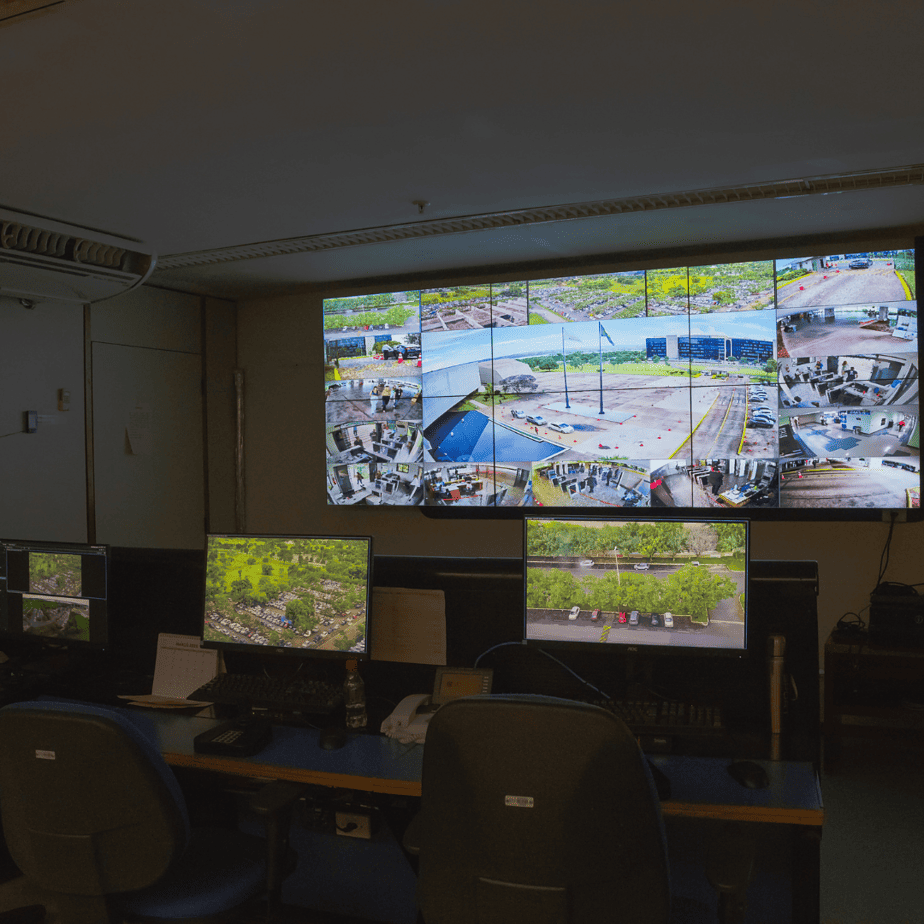
The centralized management system can be either a VMS (Video Management System) or an NVR (Network Video Recorder), and it is responsible for receiving, processing, and storing images and videos coming from the IP cameras.
This system offers advanced features such as real-time viewing, continuous or event-based recording, search filters, and playback of stored recordings.
Video Management System (VMS)
A Video Management System (VMS) is specialized software designed to manage and control IP cameras and other devices in an IP Video Monitoring System.
The VMS acts as the control centre of the system, allowing the reception, processing, and storage of images and videos coming from IP cameras.
The main advanced features offered by a VMS are:
Real-time viewing: The VMS allows operators to monitor IP cameras in real time, providing an up-to-date view of monitored areas. It supports simultaneous viewing of multiple cameras, with the ability to switch between them as needed.
Continuous or event-based recording: The VMS can be configured either for continuous recording or to start recording only when specific events are detected. These events may include motion detection, intrusion detection, sensor activation, among others. This allows recordings to be optimized so that only relevant moments are captured, saving storage and processing resources.
Search and playback: The VMS includes advanced search filters that allow operators to quickly locate specific events in past recordings. Search criteria such as date, time, camera, and event type can be defined to recover relevant incidents. In addition, the VMS supports playback at variable speeds, allowing even more detailed event analysis.
Camera control and image adjustments: The VMS allows operators to remotely control IP cameras. They can adjust settings such as zoom, focus, PTZ (pan-tilt-zoom) movement, and exposure in order to obtain a more detailed view of monitored areas. In addition, the VMS offers image adjustment features such as brightness, contrast, and saturation to improve visual quality.
User and permission management: The VMS includes user and permission management features, allowing administrators to create user profiles with different levels of access and control. This ensures that only authorized individuals have access to cameras and recordings, preserving system security and privacy.
In addition to these features, the VMS can offer integration with other security systems, such as access control and alarms, allowing more integrated operation and a unified view of events.
Network Video Recorder (NVR)
A Network Video Recorder (NVR) is a dedicated device for video storage in an IP Video Monitoring System.
Unlike a Video Management System (VMS), which is a software-based solution, the NVR is a physical device with built-in processing and storage capacity.
The NVR is responsible for receiving video streams from IP cameras over the IP network, decoding them, and storing them on internal or external hard drives. In addition to storage, the NVR may offer basic management features such as real-time viewing and playback of recordings.
However, it is important to note that the scalability and feature set of an NVR are more limited compared with a VMS, which can be installed on servers with different processing and storage capacities, allowing it to adapt to the growing needs of a Video Monitoring System.
Unlike analogue systems, in which images are converted into analogue signals and transmitted through coaxial cables, an IP Video Monitoring System uses the existing network infrastructure, providing much greater flexibility.
How Does an IP Video Monitoring System Work?
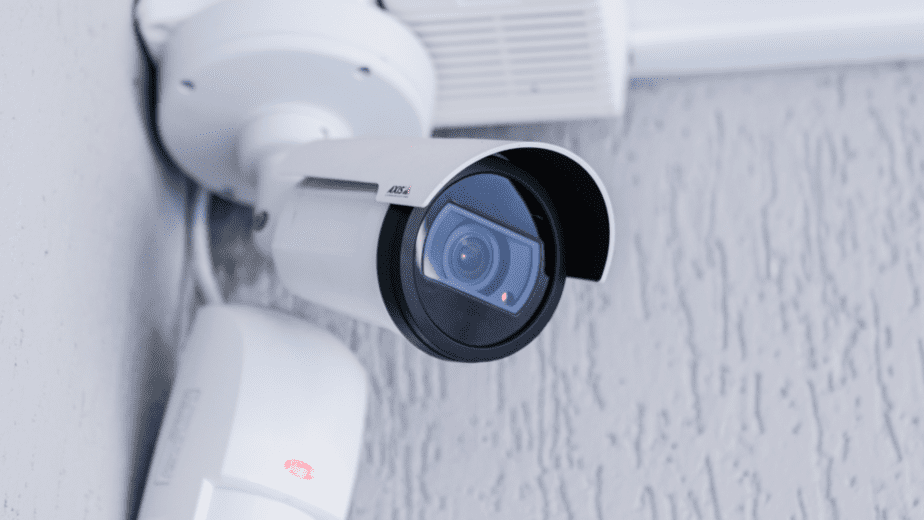
The operation of an IP Video Monitoring System involves several stages, from image capture to video storage and viewing. Let us see how this process works:
Image Capture: IP cameras capture images of the environments where they are installed. These cameras have high-resolution sensors, enabling crisp and detailed images.
Compression and Encoding: The video captured by IP cameras is compressed to reduce file size and optimize transmission efficiency. This is done using compression algorithms such as H.264 or H.265, which remove redundancy while preserving visual quality.
Data Transmission: The compressed video data is transmitted through the Network Infrastructure. IP cameras send video streams to the centralized management system through a wired network connection (Ethernet) or a wireless one (Wi-Fi).
Image Processing: The centralized management system receives, decodes, and processes the video packets transmitted by the IP cameras, converting them back into a viewable video format.
Image Storage: The processed video is stored in the storage system, which can be configured for continuous or scheduled recording, depending on monitoring needs.
Access and Viewing: Operators can then access the video monitoring system through a user interface provided by the VMS or NVR. Through this interface, they can view cameras in real time, access past recordings, and control additional functions such as zoom, PTZ (pan-tilt-zoom) movement, and image adjustments.
The IP Video Monitoring System also enables remote access, allowing operators to monitor cameras and view videos in real time from anywhere with an Internet connection. This can be done through mobile devices such as smartphones or tablets, or through computers with access to the IP network.
Main Benefits of IP Video Monitoring
An IP Video Monitoring System offers a series of benefits compared with analogue monitoring systems. Below are some of the main advantages:
Better Image Quality: IP cameras provide high-definition (HD) images and even ultra HD (4K) resolutions, enabling clear and detailed viewing of monitored environments. The direct digitization of image signals results in greater visual fidelity and clarity compared with analogue systems.
Flexibility and Scalability: IP Video Monitoring uses Network Infrastructure for data transmission, making installation easier and eliminating the need for dedicated coaxial cables for each camera. IP cameras can be connected anywhere on the network, allowing the system to be expanded easily and economically when adding new cameras.
Advanced Features: An IP Video Monitoring System offers a wide range of advanced features, such as motion detection, facial recognition, people counting, intrusion detection, among others. These features are implemented through advanced algorithms and software, enabling the automation of security tasks, real-time event analysis, and improved decision-making.
Remote Access: Remote access allows viewing and control of IP cameras from anywhere through Internet-connected devices. This provides greater flexibility and convenience for monitoring and managing the security of environments, enabling real-time supervision even when users are physically far away.
Efficient Storage: Recording can be configured to be triggered based on specific events, and some cameras offer edge recording, which allows video to be stored directly on local storage devices such as SD cards. This combination of features results in significant savings in storage and network resources.
Migration from an Analogue System to an IP Video Monitoring System
Migrating from an analogue monitoring system to an IP Monitoring System involves a series of technical steps that must be carried out to ensure an efficient and successful transition.
During the migration process, it is recommended to seek support from a company specialized in security and technology, capable of providing the technical expertise required. This partnership will enable proper planning and assist in selecting suitable equipment for the new system.
Choosing the right platform is an important aspect of migration. This may involve selecting a Video Management System (VMS) or a Network Video Recorder (NVR). Each platform has its own characteristics and benefits, and the specialized team will help identify the best option to meet the specific needs of the IP Video Monitoring System.
After a complete assessment of the existing analogue system, the network infrastructure required to support the new system is planned. This includes considering requirements such as bandwidth, storage capacity, and network security.
The selection and installation of IP cameras are performed based on the identified needs and requirements. Factors such as image resolution, special features (such as night vision or video analytics), and coverage requirements are considered. Cameras are strategically installed to provide a comprehensive view of the key points to be monitored.
During migration, integration of the IP Video Monitoring System with the existing infrastructure must be considered. This may include integration with access control systems, alarms, or other security devices. Proper interoperability among these systems ensures a more comprehensive and efficient security environment.
Integration with Other Systems
In addition to the benefits mentioned above, another major advantage is that an IP Video Monitoring System can be integrated with other systems, such as Access Control and Intrusion Alarm systems.
Integrating an IP Monitoring System with other security systems is an important step in creating an efficient security environment. Through this integration, it is possible to maximize the resources of each system and obtain a unified view of events.
When integrating the Monitoring System with an Access Control System, it becomes possible to associate events recorded by IP cameras with entry and exit events involving people or vehicles. This enables visual verification of everyone accessing a restricted area, increasing security and supporting appropriate action in cases of intrusion or suspicious activity.
Integration with alarm systems can be configured to receive events from intrusion detection systems, fire systems, or other security devices. When an alarm is triggered, the associated IP cameras can automatically be directed to the affected area, allowing for a rapid and efficient response.
It is important to emphasize that integration between Video Monitoring Systems and other security systems requires proper configuration of interfaces, communication protocols, and device compatibility. It is strongly recommended to rely on a specialized company to ensure proper and functional integration.
Conclusion
IP Video Monitoring is an advanced technology that has brought significant improvements to the security and surveillance of environments. By transmitting data over IP networks, this system offers numerous advantages compared with traditional analogue systems.
By adopting an IP Video Monitoring System, you invest in a modern and effective security solution capable of providing real-time monitoring, efficient storage, remote access, and advanced data analysis. This technology adds an extra layer of protection, contributing to the security of your environments and bringing peace of mind to you and your team.
Therefore, if you are looking to improve the security of your space, consider migrating to IP video monitoring. Consult a specialized security and technology company for more information and to begin the transition process. Invest in protecting your assets and ensure a safe and protected environment.
Do not waste time! Ensure the security and efficiency of your business with a high-quality IP Video Monitoring system. Fill out the form below so we can identify the ideal monitoring solution for your business.
