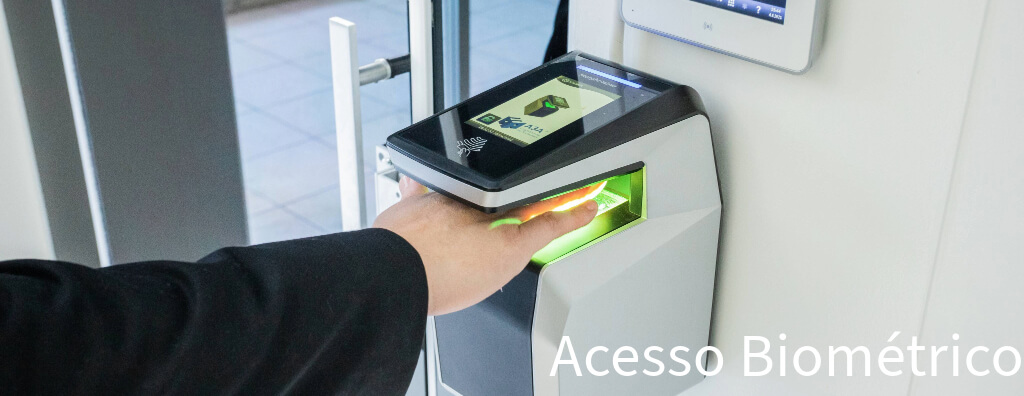
Introduction Biometric access is an authentication technology that uses unique physical characteristics of each individual to control access to restricted areas, systems, or devices. These biometric characteristics can include fingerprints, facial recognition, iris, voice, hand geometry, among others. The basic principle of this technology is that, unlike passwords or identification cards, biometric information is intrinsically […]
Check it out!
Introduction
Biometric access is an authentication technology that uses unique physical characteristics of each individual to control access to restricted areas, systems, or devices.
These biometric characteristics can include fingerprints, facial recognition, iris, voice, hand geometry, among others. The basic principle of this technology is that, unlike passwords or identification cards, biometric information is intrinsically unique and difficult to forge or duplicate, ensuring greater security.
In this article, we will discuss biometrics and its use in access control systems, one of the most secure and precise technologies for access control. Biometrics allows people to be identified based on unique physical characteristics, such as fingerprints, facial recognition, and iris scanning, eliminating the need for passwords or cards. We will cover the technical functioning of this technology, its main applications, and the benefits it brings to the security of facilities of all types.
[elementor-template id=”24446″]
1. What is Biometrics?
Biometrics is the technology that uses physical or behavioral characteristics to identify or verify a person’s identity. Unlike passwords or cards, which can be forgotten, lost, or stolen, biometric data is unique to each individual, making this technology highly secure.
Main types of biometrics:
- Fingerprint: Identifies the person based on the unique pattern of their fingerprints.
- Facial recognition: Uses algorithms to map and recognize an individual’s facial features.
- Iris scanning: Analyzes the unique pattern of the eye’s iris, considered one of the most secure biometric methods.
- Voice recognition: Identifies the user based on unique vocal characteristics.
- Hand geometry: Based on the dimensions and shape of the person’s hand.
2. What is Biometric Access?
Biometric access refers to the application of biometric technologies to control the entry and exit of individuals in restricted locations. It replaces traditional authentication methods, such as passwords, proximity cards, and keys, using a person’s biometric characteristics to grant or deny access.
How does biometric access work?
- Biometric data collection: The person has their physical or behavioral characteristics registered in the system, such as fingerprint or facial recognition.
- Secure storage: The biometric data is stored in encrypted form in a database.
- Authentication: When the person attempts to access an area, the system compares the biometric data captured at the moment with the stored information.
- Access decision: If there is a match, access is granted; otherwise, the system denies access.
3. Technologies Used in Biometric Access
The implementation of a biometric access system involves several technologies that ensure precision and security in the authentication process. Among the main ones are:
3.1 Biometric Sensors
Biometric sensors are responsible for capturing the physical or behavioral characteristics of users. There are different types of sensors, depending on the biometric modality adopted:
- Fingerprint sensors: Capture and digitize the user’s fingerprint.
- Cameras for facial recognition: Use computer vision algorithms to map facial points.
- Iris readers: Detect unique patterns in the eye’s iris, providing high precision.
3.2 Recognition Algorithms
Recognition algorithms are responsible for transforming raw data captured by sensors into mathematical models that can be compared with the data stored in the system. These algorithms are constantly improved to reduce false positives and improve precision.
3.3 Encryption and Secure Storage
The biometric data captured is extremely sensitive, so it needs to be stored securely using state-of-the-art encryption. This ensures that the information is not accessed or manipulated improperly.
4. Applications of Biometric Access
Biometric access is being widely adopted across various industries and sectors due to its security and practicality. Below, we detail some of the main application areas.
4.1 Physical Access Control
Biometric access systems are commonly used in corporate buildings, industrial facilities, hospitals, and data centers to ensure that only authorized individuals can access restricted areas.
4.2 Security at Airports and Government Facilities
Biometrics is used to authenticate passengers at airports, verifying identities quickly and efficiently. In addition, government facilities such as embassies or military buildings also adopt biometric access to ensure security in sensitive areas.
4.3 Fleet and Vehicle Management
Biometric access can be applied to fleet control, ensuring that only authorized drivers can operate vehicles. This improves security and helps prevent improper use of vehicles.
4.4 IT and Digital Security Applications
In addition to physical access control, biometrics is used for authentication in IT systems, replacing passwords with fingerprints or facial recognition for logging into computers and critical systems.
5. Benefits of Biometric Access
Biometric technology offers several advantages over traditional access control methods. Among the main benefits are:
5.1 Enhanced Security
Biometrics offers an additional layer of security, as it is based on unique characteristics of each individual, making forgery or identity theft difficult. This is especially important in high-security locations where the protection of sensitive assets is paramount.
5.2 Convenience and Speed
Users do not need to remember passwords or carry access cards. Biometric authentication is fast and efficient, eliminating queues and ensuring that access is granted almost instantly.
5.3 Fraud Reduction
Traditional access systems, such as passwords or cards, are subject to fraud and misuse. With biometrics, the chance of an unauthorized person gaining access is drastically reduced, as biometric characteristics are difficult to replicate.
5.4 Control and Auditing
Biometric access systems allow detailed recording of all accesses, facilitating audits and investigations in the event of security incidents. This also offers managers greater control over who is entering or leaving critical areas.
6. Challenges in Implementing Biometric Access
Despite its benefits, the implementation of biometric access systems presents some challenges that need to be considered.
6.1 Initial Costs
The investment in high-precision biometric sensors, along with the software needed to manage the system, can represent a high cost. However, this cost tends to be offset by the security and efficiency provided.
6.2 Privacy Issues
As biometric data is sensitive personal information, it is essential to ensure that systems comply with data protection laws, such as Brazil’s General Data Protection Law (LGPD). Organizations must adopt transparent practices for the collection and storage of this data, ensuring the protection of user privacy.
6.3 System Maintenance and Updates
Biometric systems need to be updated regularly to ensure they function accurately and securely. In addition, preventive maintenance is required so that sensors and algorithms continue to operate efficiently.
7. The Future of Biometrics and Biometric Access
The future of biometrics promises new developments, with even more advanced and precise technologies. Some trends include:
7.1 Multibiometrics
The combination of different biometric methods, such as fingerprints and facial recognition, will further increase security by providing multiple layers of authentication for critical areas.
7.2 Integration with IoT
With the expansion of the Internet of Things (IoT), biometric access systems will be able to be integrated with connected devices, allowing even more dynamic control of facilities, residences, and even vehicles.
7.3 AI and Machine Learning
The application of artificial intelligence and machine learning in biometric systems will enable even faster and more precise authentication, continuously adapting to the user’s behavior and characteristics.
Conclusion
Biometric access is revolutionizing security and access control, offering a practical, secure, and convenient solution for a wide range of applications. As technology evolves, biometrics will become increasingly present in our daily lives, offering levels of security and efficiency previously impossible. By adopting appropriate systems, companies can ensure the protection of their assets and data, while improving the user experience.
