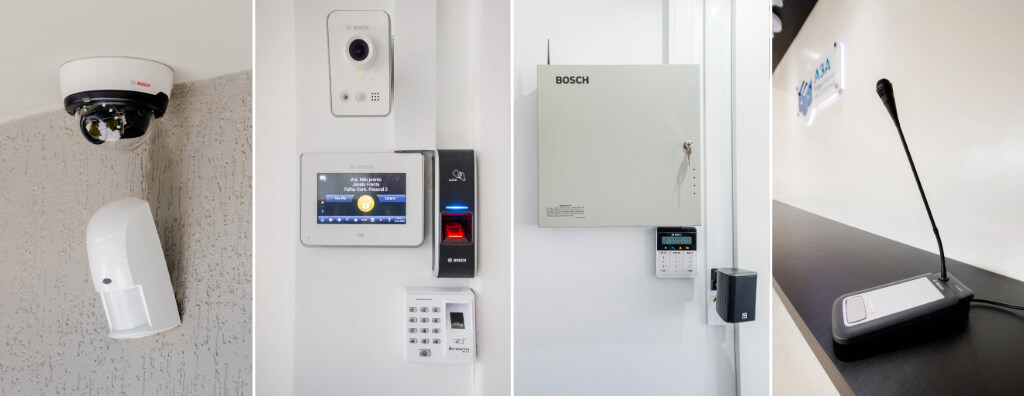
The accelerated evolution of technology in recent decades has significantly driven the development of electronic security systems, making them crucial elements in the protection of corporate, industrial, and residential environments. In this article, we will explore the main concepts of Electronic Security, its main benefits, and the challenges of integration, highlighting the importance of a […]
Check it out!
The accelerated evolution of technology in recent decades has significantly driven the development of electronic security systems, making them crucial elements in the protection of corporate, industrial, and residential environments.
In this article, we will explore the main concepts of Electronic Security, its main benefits, and the challenges of integration, highlighting the importance of a project to ensure efficient protection.
[elementor-template id=”24446″]
What is Electronic Security
Electronic Security is the term used to describe the set of devices and technologies that use electronic and computational principles to protect people, information, and properties against threats and intrusions.
Unlike traditional physical security methods, which rely on mechanical barriers, manual activation, and human presence, an Electronic Security System employs electronic components such as sensors, actuators, integrated circuits, and specialized software to automatically monitor, detect, and respond to security events.
With the increase in connectivity and the use of IP networks, Electronic Security benefits from technologies such as cloud computing, artificial intelligence, and the Internet of Things (IoT), enabling advanced features such as predictive analytics and real-time remote monitoring.
The implementation of an Electronic Security System requires careful planning and specialized technical knowledge. The project must consider bandwidth requirements, system integration, cybersecurity measures, and efficient data storage management. It is essential that the installation be carried out by experienced technicians who follow best practices, ensuring correct and efficient implementation.
How an Electronic Security System Works
In general terms, an Electronic Security System performs several steps to ensure effective protection of an environment. The process begins with continuous monitoring of the location, where sensors and cameras detect signals or conditions that may indicate threats or anomalies, such as suspicious activity, unauthorized access attempts, or changes in environmental conditions. This information is collected and transmitted to a control unit that can be centralized or distributed.
At the control unit, the received data is analyzed based on predefined parameters and algorithms to determine whether any specific action is required. If a threat is identified, the system executes appropriate actions, which may include triggering alarms, notifying human operators, detailed event logging, or activating previously established security protocols.
All events and actions are recorded for auditing purposes, subsequent analysis, and compliance with current security standards. These records are fundamental for continuous system improvement, enabling the identification of patterns and the development of more effective preventive strategies.
The efficiency of an electronic security system depends on the integration of all its operational stages and the precise configuration of detection and response parameters. A well-designed Electronic Security Project is essential to adapt the system to the specific needs of the protected environment, considering factors such as risk level, physical characteristics of the location, and available resources.
Electronic Security Subsystems
An Electronic Security System operates through the integration of subsystems that work together to protect the integrity of an environment.
Video Monitoring System
The video monitoring system, also known as CCTV (Closed Circuit Television), is one of the most important components of the Electronic Security System.
This system aims to capture, transmit, store, and analyze images, providing an efficient means of environment supervision for the prevention of unwanted events and the collection of visual evidence.
With the evolution of network technologies, systems have moved from analog solutions to digital platforms, increasing resolution capacity, range, and integration with other security technologies.
Modern systems use video management platforms that centralize control of all connected devices, allowing advanced configurations such as creating motion detection rules and generating real-time alerts. This centralization facilitates the monitoring of large areas and immediate response to critical situations, providing an additional layer of security beyond simple image recording.
In addition to video capture, video monitoring incorporates advanced analytical technologies, ranging from intrusion detection to the identification of anomalous patterns in flows of people and vehicles. Integration with artificial intelligence algorithms allows the system to perform complex tasks, such as object recognition, individual counting, and detection of suspicious behaviors, making it an active tool in security management.
The implementation of a video monitoring system requires meticulous planning that considers technical aspects such as storage capacity, the bandwidth required for high-resolution video transmission, and redundancy to avoid data loss.
Alarm System
Alarm Systems, together with Motion Sensors, form a vital part of an electronic security system.
Motion sensors are designed to identify movement changes and heat variations in a monitored area. They use technologies such as passive infrared (PIR) or microwave to detect the movement of objects, people, or animals.
When motion sensors detect an event, an alert signal is sent to the alarm system. The alarm system then takes action and activates a series of communication devices, such as sirens, lights, or notifications on the registered users’ mobile devices.
When a motion sensor detects suspicious activity and triggers the alarm, the Video Monitoring System can be configured to automatically open the real-time stream from the IP camera corresponding to the event location.
Early detection of suspicious activities allows security measures to be taken immediately, helping to prevent possible intrusions or damage.
Access Control System
Access Control Systems are technological solutions used to manage, restrict, and monitor access to specific areas within a facility.
These systems are widely used in various environments, such as residences, companies, government and industrial institutions, to ensure the security and privacy of sensitive information and resources.
The main function of access control systems is to allow only authorized persons to have access to certain locations or resources. To this end, various technologies can be employed, such as:
Passwords: Passwords are one of the most common forms of authentication in access control systems. They are secrets shared between the user and the system, used to verify the user’s identity. Passwords can be numeric, alphanumeric, or complex, including a combination of letters, numbers, and special characters.
Access Cards: This method uses cards containing the user’s identification data. When the card is brought close to a reader, the system validates the information and, if authorized, grants access.
Proximity Tags: Similar to access cards, proximity tags are compact devices that store the user’s identification information. When the tag is brought close to a reader, the system validates the information and, if authorized, unlocks the lock, granting access to the restricted area.
Biometric Systems: This technology uses unique physical or behavioral characteristics of the individual, such as fingerprints, facial recognition, hand geometry, iris scanning, or voice patterns for user authentication. Access is granted only when the biometric reading exactly matches the information previously stored in the system’s database.
Proximity and Motion Sensors: These sensors can be used in conjunction with other technologies to detect the presence of a user in the access area and thus trigger the lock release process.
The choice of appropriate technology is determined by specific security requirements and the convenience of each environment. The combination of these technologies with other security systems, such as surveillance cameras and alarm systems, results in more comprehensive and effective protection.
Access control systems also serve to record user activities, enabling security audits and analyses.
Fire Detection and Prevention System
Fire Detection and Prevention Systems are composed of technologies and measures that work together to identify and combat fires quickly and effectively.
Fire detection is carried out through specialized devices, such as high-performance IP cameras and smoke, temperature, and flame sensors, which are strategically distributed throughout the area to be protected and are capable of identifying early signs of fire, such as the presence of smoke or an abnormal increase in temperature.
When activated, these devices send alerts to the detection system, which triggers preventive measures and alerts occupants about a possible fire.
Fire prevention systems include measures such as the installation of fire extinguishers, which allow occupants to immediately combat small fires.
In addition, safety signage with signs indicating emergency exits and escape routes is essential to guide people during a safe evacuation.
Fire doors are designed to resist fire for a specified period, preventing flames from spreading rapidly to other areas. And suppression systems are used to automatically control or extinguish fire, releasing extinguishing agents such as water, foam, or special gases.
The combination of these detection and prevention systems is crucial to minimize the probability of fires occurring and to limit damage should a fire occur.
Quick identification and response to an initial fire source can prevent it from becoming an uncontrolled emergency, protecting lives and valuable properties.
System Integration
Information Centralization
Database
Response Automation
Network Infrastructure
Cybersecurity
Electronic Security Project
When hiring an Electronic Security Project, a specialized company performs an assessment of the location to be protected. During this assessment, vulnerable points are identified and, based on this analysis, the most appropriate equipment is recommended to meet the client’s specific needs.
Once installed, the electronic devices are integrated into a centralized system. When a suspicious event occurs, such as intrusion detection, sensors send an alert to the monitoring system.
At the monitoring center, trained professionals are constantly monitoring the information received, analyzing camera images in real time, and checking for any alarm occurrences.
If a risk or emergency situation is identified, the system takes the necessary measures, which may include notifying operators about the occurrence, contacting the relevant authorities such as police or fire services, and coordinating response actions.
Electronic security systems can be integrated with other devices and technologies, such as lighting control and automation systems, providing even more efficient management and a coordinated response to complex events.
Requirements Assessment
Equipment Sizing and Selection
Installation
Testing and Commissioning
Operator Training
Documentation
Main Benefits of an Electronic Security System
Through the integration of electronic devices and intelligent systems, Electronic Security is capable of continuously monitoring environments, preventing crimes, and providing a rapid response to emergency situations. Here are some of the main benefits of this system:
- Continuous Monitoring: The main advantage of electronic security is the ability to monitor environments continuously, 24 hours a day, 7 days a week. This constant monitoring allows for an immediate response to emergency situations, fires, intrusions, or other threats, ensuring quick and effective action to handle these situations.
- Evidence in Case of Incidents: Monitoring cameras record images and videos that can be used as evidence in criminal investigations or legal proceedings. These recordings can assist in identifying suspects, reconstructing events, and providing valuable proof.
- Remote Access and Management: With remote access technology, those responsible for security can monitor and manage their electronic systems from anywhere, as long as they are connected to the internet. This offers flexibility and convenience in supervising multiple locations, allowing quick responses even when far from the monitored environment.
- Integration with Other Systems: Electronic security can be easily integrated with other systems, such as lighting control and automation, providing more efficient and practical resource management. Integration also allows the creation of customized scenarios to improve security, such as automatically triggering lights when suspicious movement is detected.
- Cost Reduction and Increased Efficiency: The use of advanced electronic security devices can reduce staffing costs for surveillance personnel and provide more comprehensive coverage. With automation and continuous monitoring, it is possible to optimize resources and increase efficiency in the protection of properties and people.
Conclusion
Electronic Security is an indispensable tool in the protection of residences, businesses, and institutions against threats and criminal activities.
Through the integration of electronic devices and intelligent systems, it is capable of continuously monitoring environments, preventing crimes, and providing a rapid response to emergency situations.
The implementation of a well-designed and managed electronic security system can significantly reduce security risks, protect valuable properties, and most importantly, save lives.