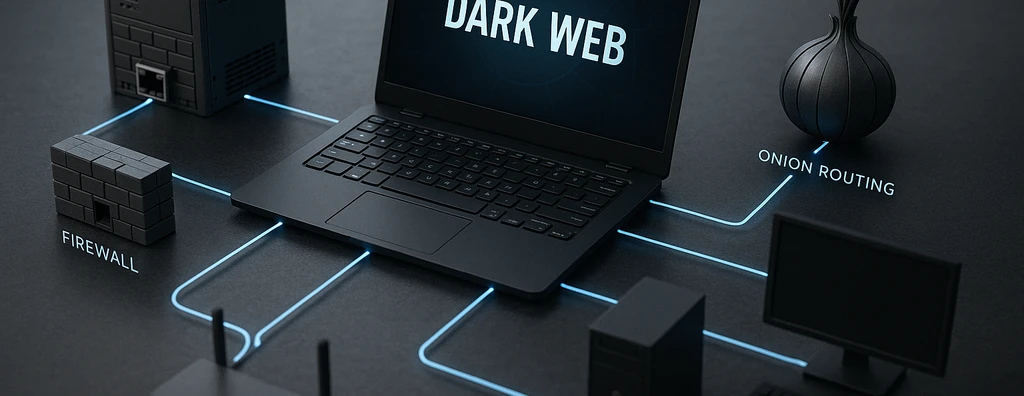
The Dark Web is a hidden part of the internet accessible only through specific software and protocols that provide anonymity, such as the Tor Browser. Unlike the surface web (indexed by search engines) and the deep web (non-indexed content), the dark web is known for its high level of privacy and anonymity, being used […]
Check it out!
The Dark Web is a hidden part of the internet accessible only through specific software and protocols that provide anonymity, such as the Tor Browser. Unlike the surface web (indexed by search engines) and the deep web (non-indexed content), the dark web is known for its high level of privacy and anonymity and is used for both legitimate and illicit purposes. In this article, understand what the Dark Web is, how it works, the risks involved, and best practices for protecting individuals and organizations.
The Dark Web consists of a set of overlay networks characterized by anonymity and the use of advanced cryptographic protocols, operating at layers above the TCP/IP model to conceal identities, routes, and accessed content. These infrastructures are built on anonymization mechanisms such as onion routing and accessed through dedicated software, enabling communications that are difficult to trace between clients and servers outside the scope of conventional browsers and search engines. The main motivations for developing and adopting these networks include enhanced privacy, resistance to censorship, and protection against mass surveillance, while creating growing challenges for cybersecurity, governance, and organizational compliance.
In this article, we present a comprehensive and technically detailed analysis of the Dark Web, covering its definition, distinctions from the Deep Web and Surface Web, network architecture, access methods, protocols, anonymization mechanisms, selected legitimate and illicit applications, main threats and risks, security implications for enterprise projects, and technical standards related to mitigation and monitoring. The content is intended for engineering, information-security, and risk-management professionals seeking an advanced understanding of the subject.
Read on!
[elementor-template id=”24446″]
What Are the Surface Web, Deep Web, and Dark Web?
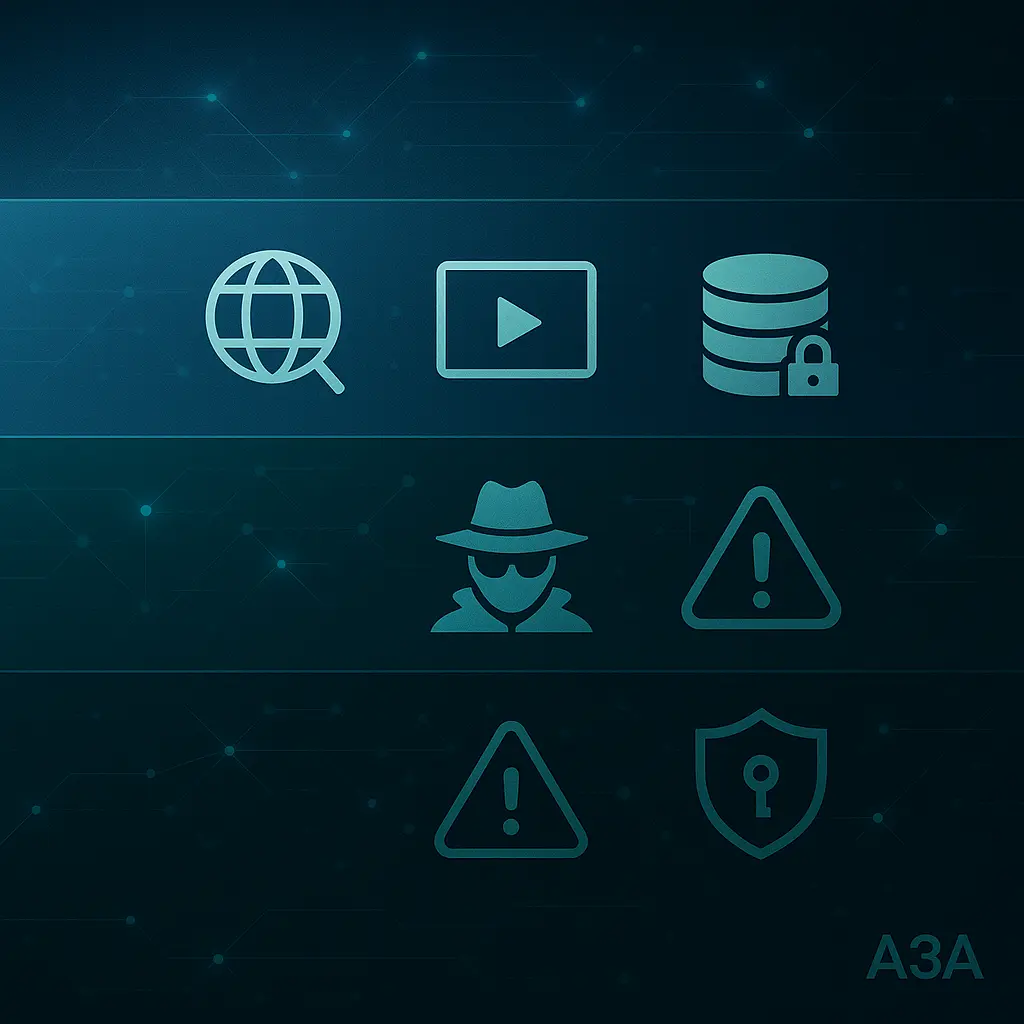
Technical illustration of the different layers of the internet, highlighting the position of the Dark Web and its anonymity, encryption, and corporate-risk elements.
Source: A3A Engenharia de Sistemas.
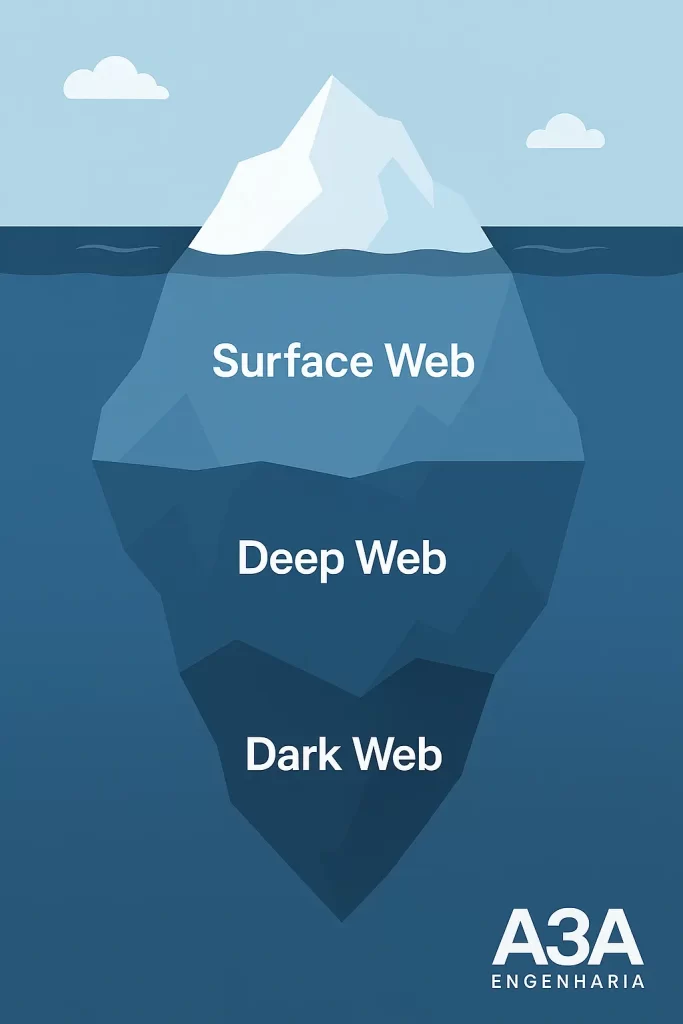
To understand the Dark Web, it is essential to distinguish among the main layers of the Web:
| Characteristic | Surface Web | Deep Web | Dark Web |
|---|---|---|---|
| Visibility | Indexed by conventional search engines (Google, Bing, etc.) | Not indexed by search engines; requires specific permissions | Not indexed, with restricted and anonymized access |
| Access | Public and unrestricted through conventional browsers | Controlled: requires authentication, login, or specific configurations | Restricted: requires dedicated software (e.g., Tor, I2P) |
| Content | Institutional portals, public websites, blogs, and open pages | Corporate databases, internal systems, emails, and confidential documents | Anonymous communication services, marketplaces, specialized forums (legitimate and illicit) |
| Anonymity Level | No inherent anonymity; access and browsing information can be traced | Partial, depending on system configuration and permissions | High, with infrastructure designed to provide anonymity and confidentiality |
| Legality | Content and access are generally lawful | Lawful, except when associated with illicit practices or unauthorized use | Depends on use and accessed content; both legitimate and illicit uses exist |
| Examples | www.a3aengenharia.com.br, news portals, official government websites | Corporate intranet, online banking systems, restricted academic environments | .onion addresses, whistleblowing services, protected communication channels |
Source: A3A Engenharia de Sistemas.
- Surface Web: The visible layer indexed by search engines, such as websites accessible through standard HTTP/HTTPS.
- Deep Web: Includes content not indexed by conventional search engines, including protected databases, restricted system areas, and authenticated websites, without necessarily implying anonymity or illegality.
- Dark Web: A subset of the Deep Web made up of websites and services accessible only through specific protocols and software, such as TOR and I2P, designed for strong anonymity and encrypted communication. Dark Web services are not only invisible to search engines but also outside the reach of conventional browsers, requiring dedicated infrastructure for anonymous routing.
Structurally, the Surface Web corresponds to a minority of the total data space, while the Deep Web and Dark Web include content that is largely not discoverable through conventional mechanisms. In the Dark Web, the concept of an “overlay network” prevails, creating infrastructures layered over the public Internet with non-trivial authentication and restrictive access mechanisms based on consent or client configuration.
To deepen your understanding of the different layers of the internet, also read our article on Deep Web: Everything You Need to Know About the Hidden Side of the Internet
How the Dark Web’s Underlying Architecture and Infrastructure Work
The Dark Web infrastructure is based on overlay networks built on top of the traditional TCP/IP architecture. Anonymization protocols are implemented in multiple layers, especially onion routing, the main enabling technology behind the TOR (The Onion Router) network. Other technologies, such as I2P (Invisible Internet Project), follow similar principles of routing through cryptographic layers, including garlic routing. These networks are accessible only through specialized software that encapsulates and routes IP packets through multiple nodes, reducing direct correlation among the client, server, and requested content.
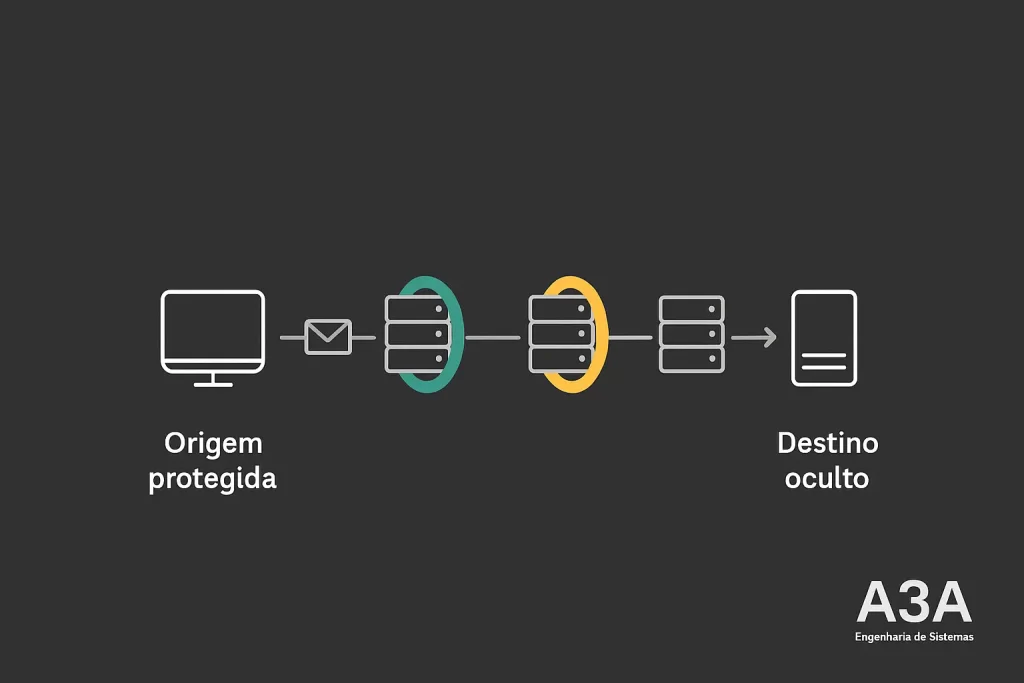
Educational animation demonstrating how data travels through multiple intermediate nodes, with encryption layers removed at each stage, providing separation between origin and destination.
Source: A3A Engenharia de Sistemas.
- Onion Routing: Each packet travels through a chain of intermediate servers (nodes) and is encrypted in multiple layers. Each node removes only its own encryption “layer,” knowing only the previous and next node rather than the origin and final destination simultaneously.
- Firewalls and Proxies: Local client configurations can redirect browsing traffic through anonymous proxies, encapsulating traffic in specific protocols.
- Layers above TCP/IP: The anonymization logic operates above TCP/IP transport, using IP addressing while overlaying multiple encrypted circuits, typically through specific ports and hidden addresses such as ‘.onion’ domains.
The overlay architecture creates challenges for monitoring and inspection because it fragments and distributes data flows across different jurisdictions and platforms.
Main Protocols and Software Used to Access the Dark Web
Accessing the Dark Web requires software specifically designed to operate over anonymous overlay networks. The main examples include:
- TOR (The Onion Router): A widely used anonymization solution available to the public through specialized browsers. It uses onion routing, with each web request traversing multiple servers, each decrypting only the information required for forwarding.
- I2P (Invisible Internet Project): Implements garlic routing, combining multiple anonymous messages into aggregated packets to make correlation and traffic analysis more difficult. It operates with its own addressing infrastructure and dedicated clients.
These tools redirect browser or application traffic through anonymous networks, concealing the real source and destination IP addresses and making forensic identification of users and servers highly complex. Communications use multiple layers of encryption and secure transport mechanisms intended to reduce interception and manipulation of data.
Hidden addresses are generally accessed through specific URLs, such as ‘.onion’ domains, which are not registered in the conventional public DNS and therefore require dedicated resolution mechanisms.
How Does the Dark Web Provide Anonymity and Privacy?
The foundation of the Dark Web lies in anonymization mechanisms. Onion routing is designed so that each network element knows only the next hop required to forward traffic, greatly complicating end-to-end traceability. Additional privacy is supported by techniques such as:
- Multi-Layer Encryption: Requests and responses are protected through multiple cryptographic layers, increasing confidentiality across the communication path.
- Decentralized Proxy Network: Traffic is routed through changing intermediary nodes, reducing direct correlation between source and destination.
- Resilience Against Sniffing and Spoofing: Robust cryptographic mechanisms help prevent interception and unauthorized modification of packets.
This technological framework makes it significantly more difficult to associate activity with a specific user and is designed to resist censorship as well as advanced surveillance and blocking attempts.
Main Uses and Applications of the Dark Web (Legitimate and Illicit)
While the Dark Web provides tools for anonymity and privacy protection — important, for example, to dissidents under repressive regimes or investigative professionals — its architecture is also used to facilitate illicit activity because attribution and law-enforcement oversight can be more difficult.
- Legitimate applications: Anonymous communication, secure journalism, sharing sensitive information under risk, academic research, protection of freedom of expression, and resistance to surveillance regimes.
- Illicit uses: Illegal trade, sale of stolen data or malware, criminal forums, exchange of cyberattack services, distribution of prohibited content, and money-laundering schemes.
The diversity of applications and technical accessibility creates a point of tension between legitimate privacy rights and the risks of supporting organized criminal activity.
Dark Web Risks: Threats, Fraud, and Access-Related Dangers
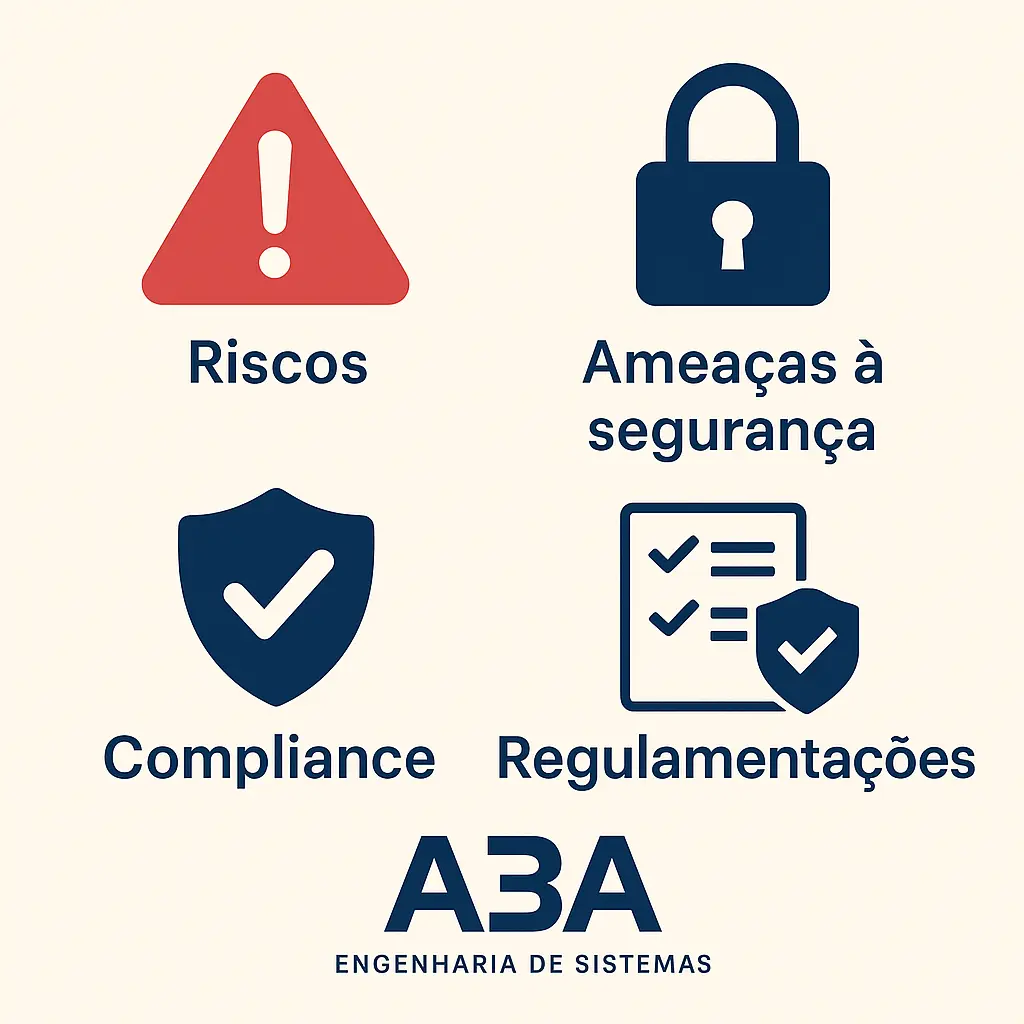
Risks associated with accessing and browsing the Dark Web can be grouped into several domains:
- Exposure to Cyber Threats: High prevalence of malware, spear phishing, ransomware, malicious scripts, and exploits on pages and services hosted in these networks.
- Exposure of Sensitive Data: Credentials, corporate data, and other assets may be compromised when devices are infected or used without appropriate technical safeguards.
- Legal Exposure: Inadvertent navigation or access to unlawful content can create legal risks for individuals and organizations, depending on jurisdiction and conduct.
- Fraud and Extortion: Anonymous networks may host coordination points for financial fraud, extortion schemes, and the sale of confidential corporate information.
- Operational Risk: Malicious actors may seek entry points into enterprise environments, targeting VPNs, proxies, endpoints, and third-party networks connected through insecure channels.
- Advanced Vectors: Reverse-proxy and tunneling techniques can be used to support lateral movement and covert data transfer after compromise.
Source: A3A Engenharia de Sistemas.
Access without adequate safeguards can also lead to system compromise, loss of integrity, regulatory or legal consequences, and employee exposure to manipulation or recruitment attempts by criminal groups.
Technical Summary:
- Primary risk = malware exposure and data leakage
- Organizations need restrictive policies and continuous monitoring
- Compliance with standards and laws (ISO/IEC, LGPD) strengthens governance
⚠️ Important:
Accessing the Dark Web, even for research or curiosity, can expose professionals and organizations to legal and technical risks, including cybersecurity incidents and leakage of sensitive data. Any non-standard access should be governed by information-security policies and qualified technical guidance.
Dark Web in Organizations: Risks and Impacts on Enterprise Environments
Organizations face significant risks when Dark Web access is permitted or neglected within corporate environments. Key implications include:
- System Vulnerabilities: Outdated systems, misconfigured devices, and weak access controls can become entry points for threats associated with Dark Web activity.
- Monitoring and Detection: Intrusion Detection Systems (IDS) and Endpoint Detection and Response (EDR) can help identify suspicious activity such as unusual traffic, connections to non-standard domains, and execution of anomalous code.
- Access-Control Policies: Strong authentication, including multi-factor authentication, privilege segregation, and rigorous logging improve traceability.
- Data Protection: Encryption, Data Loss Prevention (DLP), and segregated offline backups can reduce the impact of data leakage and ransomware.
- Training and Awareness: Continuous training helps teams identify social-engineering attacks and understand the concrete risks of anonymous networks.
Technical standards such as ABNT NBR IEC 62676-1-1:2019 and enterprise-security frameworks support regular audits, attack simulations, and systematic verification of backup and log integrity.
How to Monitor, Mitigate, and Respond to Dark Web Threats
Monitoring risks associated with the Dark Web requires a combination of controls:
- Firewalls and Network Segmentation: Restrict access points, establish isolation boundaries, and monitor traffic for indicators associated with anonymous proxies.
- Audits and Penetration Testing: Periodically perform vulnerability assessments and authorized penetration tests based on relevant threat scenarios.
- Backup and Retention Policies: Maintain disciplined backup and restore routines, retention controls, and segregated backup systems according to established technical requirements.
- Log Integration and Event Analysis: Centralize connection logs, monitor failures, and establish alerts or automated responses when suspicious communications are detected.
- Incident Procedures: Maintain a defined incident-response structure with qualified teams capable of rapid analysis, containment, and recovery after unauthorized access or system compromise.
Together with regulatory and security requirements, these processes support a stronger defensive posture in sensitive environments.
It is important to maintain segregated backup policies aligned with ISO/IEC 27002 guidance and conduct periodic audits based on NIST frameworks to support rapid incident detection and response.
Compliance and Digital Governance in Relation to the Dark Web
Best practices for security and management of risks related to the Dark Web are aligned with international technical standards such as ABNT NBR ISO/IEC 27001 (Information Security Management), ISO/IEC 27005 (Risk Management), and national legislation such as Brazil’s LGPD. In addition, recommendations from CERT.br and NIST frameworks reinforce protection, monitoring, and incident-response policies involving anonymity environments.
An organization’s position regarding the Dark Web depends on strengthened compliance, risk-management, and regulatory-alignment policies, including the Lei Geral de Proteção de Dados (LGPD), ISO/IEC 27005, and ISO/IEC 31000. Recommended measures include:
- Risk Mapping: Prepare technical impact reports, including data-protection impact assessments, considering not only the logical environment but also interfaces with the deep web and dark web.
- Structured Governance: Clearly define standards, responsibilities, and procedures related to exposure, communication, and incident response involving leaks and threats originating from anonymous networks.
- Compliance Monitoring: Implement secure information systems, centralized collection of risk information, identification, blocking, and prompt treatment when nonconformities are detected.
- Organizational Training: Establish training and knowledge-sharing programs aligned with best practices for security, privacy, and data integrity in critical digital environments.
Systematic adoption of these measures can mitigate operational and reputational impacts while supporting compliance with national and international digital-governance standards.
Frequently Asked Questions
No. Accessing the Dark Web is not itself a crime, but accessing or participating in unlawful activities is illegal. Legal risk depends on the content, conduct, and purpose of access.
Yes. With advanced monitoring tools and traffic-control policies, organizations can identify access attempts or suspicious traffic associated with Dark Web services.
Any authorized research access should be performed by qualified specialists under organizational security controls, using isolated systems and without personal or corporate credentials or sensitive data.
No. It is also used for anonymity, privacy, freedom of expression, investigative journalism, and other legitimate purposes.
Conclusion
A technical analysis of the Dark Web reveals a highly complex environment based on advanced anonymization protocols, decentralized architecture, and strong resistance to surveillance and blocking. Access to these environments requires not only knowledge of software and networks but also a deliberate posture toward corporate, operational, legal, and compliance risks. The narrow boundary between legitimate and illicit uses reinforces the need for robust governance policies, advanced monitoring tools, emergency procedures, and continuous team training.
For engineering projects, corporate security, and critical infrastructure, the implications go beyond technology selection: they require broad understanding of threats, defense mechanisms, and applicable standards. Structured auditing, vulnerability analysis, and training practices help organizations manage risk proactively in an evolving threat ecosystem.
Final Considerations
An in-depth understanding of the technical characteristics, risks, and mitigation practices related to the Dark Web is an important component of information security and resilient business operations in a digital society. A3A Engenharia de Sistemas thanks you for reading this article and encourages professionals and organizations to prioritize protection strategies and continuous monitoring of cyber risks.
Want to learn how A3A Engenharia solutions can support your organization?
Discover Digital Security solutions aligned with LGPD requirements.
For updated information and reference content, follow our official social-media channels and stay current on security and applied engineering.
Normative References
“ABNT NBR ISO/IEC 27001 — Information Security Management”
“ABNT NBR ISO/IEC 27005 — Risk Management”
“LGPD — Lei Geral de Proteção de Dados (Brazilian General Data Protection Law)”
“CERT.br — Brazilian Center for Security Incident Studies, Response and Treatment”
“NIST Cybersecurity Framework“