
CCTV systems in critical environments: environmental conditions, vandal resistance, network limitations, cybersecurity, redundancy, and integration for reliable monitoring.
Check it out!
Installing CCTV systems in critical environments such as industrial facilities, energy infrastructure, hospitals, or large urban areas presents a series of technical and operational challenges. These locations require robust, reliable, and uninterrupted monitoring to support security, protect valuable assets, and prevent incidents.
In this article, we examine the main challenges involved in installing CCTV cameras in these environments and the solutions used to address them.
[elementor-template id=”24446″]
Challenges of Installing CCTV Cameras in Critical Environments
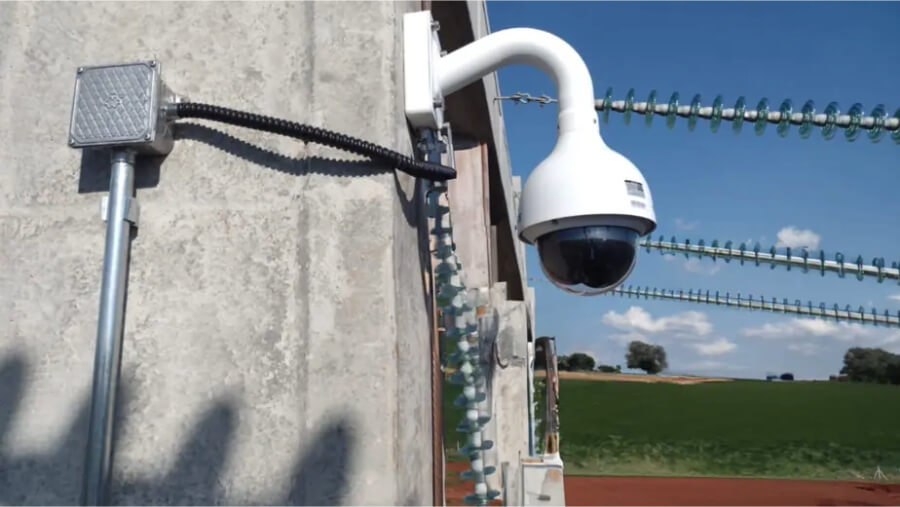
Collection: A3A Engenharia
Extreme Environmental Conditions
One of the main challenges in critical environments, especially industrial and outdoor installations, is exposure to severe climatic and environmental conditions. CCTV cameras may face extreme temperatures, humidity, dust, rain, and even corrosive or explosive substances, depending on the site.
- Practical example: In an oil refinery, cameras must withstand chemical exposure as well as high temperatures and corrosive environments.
Solution: Addressing these challenges requires cameras with suitable ingress-protection ratings such as IP66 or IP67 for dust and water resistance, plus corrosion-resistant cameras and equipment certified for hazardous areas, such as ATEX-compliant solutions where applicable. Protective housings suited to each environment are also essential.
Vandal Resistance
In critical environments such as public areas or remote industrial sites, vandalism and sabotage are relevant risks. Cameras must resist intentional physical damage so the monitoring system can remain operational under adverse conditions.
- Practical example: In an urban transportation hub, cameras may be exposed to vandalism intended to damage or manipulate them and prevent detection.
Solution: Cameras rated IK10, indicating high resistance to mechanical impact, are appropriate in these cases. Strategic positioning in difficult-to-reach locations can also reduce opportunities for sabotage.
Limited Network Infrastructure
Many critical environments, especially remote sites, may have limited or unavailable network infrastructure, complicating the deployment of IP cameras that depend on stable connectivity for real-time data transmission.
- Practical example: An industrial plant in a rural area may lack access to high-speed wired networks, making high-definition video transmission more difficult.
Solution: In these situations, long-range wireless networks such as industrial Wi-Fi, LTE/4G networks, or mesh networks can be effective. Cameras with local recording to memory cards or nearby servers through edge storage can also help preserve recordings during connectivity failures.
Inadequate Lighting
Many critical environments operate under low-light conditions or complete darkness, which can compromise conventional CCTV performance. Inadequate lighting makes it more difficult to capture clear, detailed images needed for security and monitoring.
- Practical example: In an industrial warehouse or outdoor areas of a port complex, insufficient nighttime lighting can make it difficult to identify intruders or incidents.
Solution: Cameras equipped with infrared (IR) illumination or low-light technologies can capture useful images under low illumination. Cameras with WDR (Wide Dynamic Range) also help manage extreme lighting contrast and improve image capture in unevenly lit areas.
Cybersecurity
In critical environments, physical and digital security are equally important. Network-connected CCTV cameras can be exposed to cyberattacks such as video interception, compromise of the video management system (VMS), or remote disabling of cameras.
- Practical example: At a power plant, a cyberattack against the CCTV system could disable monitoring and create opportunities for physical intrusion or sabotage.
Solution: Robust cybersecurity measures are essential to protect cameras and the CCTV system. These may include encryption for video transmission, firewalls protecting video servers, multifactor authentication for system access, and regular firmware updates to address vulnerabilities.
Coverage of Large Areas
In many critical environments, cameras must cover extensive areas such as large plants, industrial complexes, or open fields. Deploying an excessive number of cameras can increase cost and complexity and place additional load on the network infrastructure.
- Practical example: In a solar power plant or mining site, where the monitored area is extensive, positioning cameras efficiently without creating blind spots or overloading infrastructure can be challenging.
Solution: PTZ (Pan-Tilt-Zoom) cameras, which support remote movement and zoom, can help monitor large areas with fewer cameras. High-resolution cameras such as 4K can also cover larger areas while preserving image detail. In addition, a well-developed CCTV Design carefully defines camera positioning and can use mapping tools to maximize coverage.
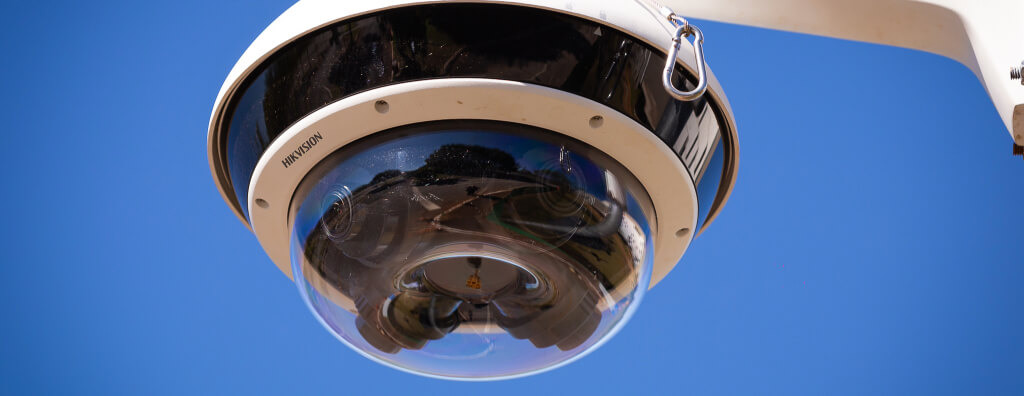
Collection: A3A Engenharia
Additional Solutions for Critical Environments
Redundant Monitoring
A failover server is a backup resource that automatically takes over when the primary server fails or loses connectivity. It provides redundancy so the CCTV system can continue recording, streaming, and storing video during a technical failure.
In CCTV systems, the primary server handles critical functions such as video storage, camera management, and data delivery for live monitoring. If it fails, the failover server assumes those functions, minimizing operational impact.
In critical environments, the risk of CCTV failure must be minimized. Redundant systems, including backup cameras or storage servers in separate locations where justified, help maintain monitoring during hardware or network failures.
Integration with Alarm and Access-Control Systems
Integrating CCTV cameras with other security systems such as intrusion alarms and access control can improve monitoring effectiveness. When an alarm is triggered, cameras can be configured to display or focus on the affected area, supporting a faster and more accurate response.
Conclusion
Installing CCTV in critical environments presents unique challenges, including severe environmental conditions, vandalism risks, limited network infrastructure, and cybersecurity concerns. With appropriate technologies such as IP66/IP67- and IK10-rated cameras, infrared imaging, failover servers, and shielded cabling where justified, these challenges can be addressed. System integration and high-resolution cameras can also support effective monitoring across large or difficult-to-access areas. Careful planning and appropriate equipment selection are essential to implementing a reliable CCTV system in a critical environment.