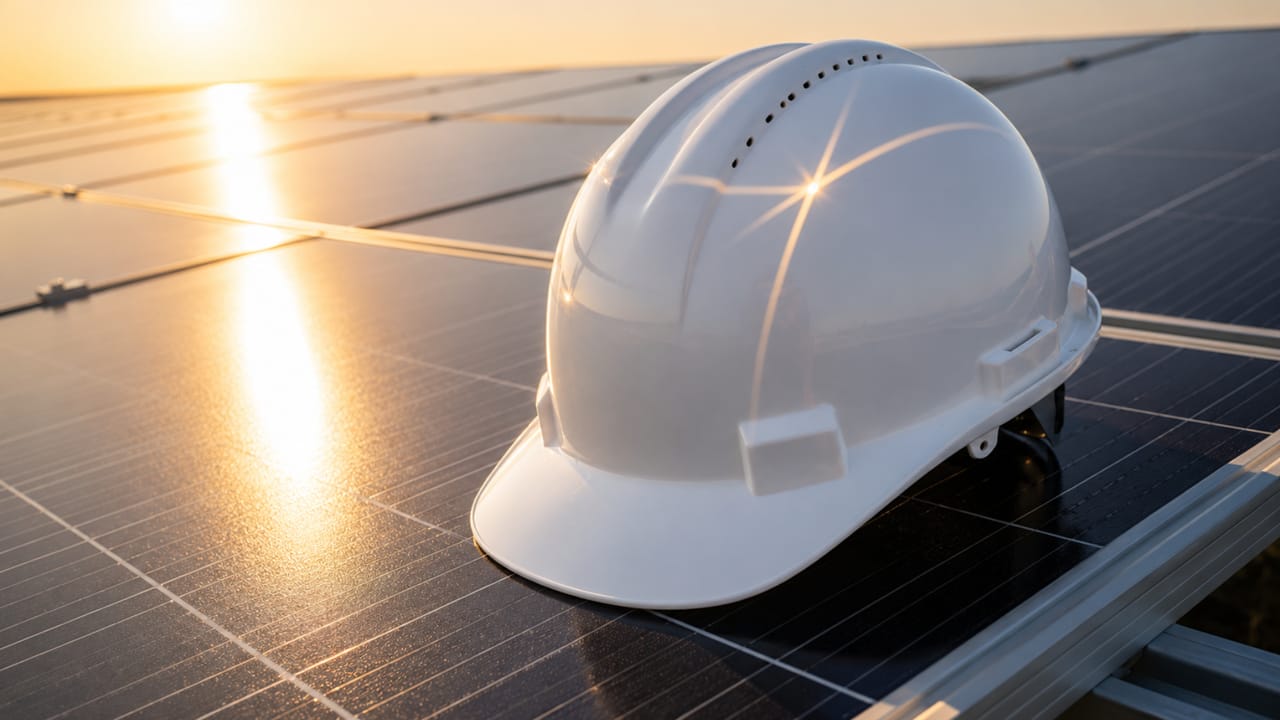
Understand how solar energy works, the role of photovoltaic panels, the inverter, string box, distributed generation, and why technical design is essential.
Check it out!
Solar energy is one of the strongest topics when discussing sustainability, technology, and applied engineering. It is present in homes, businesses, industries, condominiums, rural properties, and infrastructure projects seeking to reduce costs, increase energy predictability, or improve consumption efficiency.
But a solar energy system is not simply a set of panels installed on a roof. Behind photovoltaic generation there is electrical engineering, sizing, protection, inverters, cabling, structures, grounding, grid connection, demand analysis, safety, and maintenance.
For this reason, understanding how solar energy works helps explain why technical design is so important. A properly sized system can provide savings and reliability. A poorly designed system can result in losses, electrical risks, performance failures, and operational problems.
This article provides a clear overview of solar energy, panels, inverters, distributed generation, and the engineering required to transform sunlight into useful energy.
What is solar energy?
Solar energy is energy derived from solar radiation.
It can be used in different ways. In solar thermal systems, solar radiation is mainly used to heat water. In photovoltaic systems, sunlight is converted into electrical energy.
When we talk about solar panels installed on roofs, parking structures, land, or commercial facilities, we are usually referring to photovoltaic solar energy.
A photovoltaic system uses solar modules to generate electric current from light. This energy passes through conversion and protection equipment before being used by the installation or injected into the electrical grid, depending on the type of system.
This technology has become popular because it enables energy generation close to the point of consumption, reducing partial dependence on the grid and creating new possibilities for homes, businesses, and projects.
How solar energy works in practice
In practice, photovoltaic solar energy works in stages.
First, solar modules receive sunlight. The photovoltaic cells inside these modules convert part of this radiation into direct-current electrical energy.
Then, this energy travels through cables and protective devices to the solar inverter. The inverter converts direct current into alternating current, compatible with most electrical installations.
The generated energy can be consumed on-site, sent to the electrical grid in grid-connected systems, or stored in batteries in specific systems.
In a grid-connected installation, when generation is higher than instantaneous consumption, the surplus may be injected into the grid according to the applicable distributed-generation rules. When solar generation is lower than consumption, the facility continues to use energy from the grid.
This operation appears simple, but it depends on many technical details: panel orientation, shading, sizing, electrical protection, equipment quality, installation standards, and compatibility with the existing infrastructure.
Solar panel or photovoltaic module: where energy generation begins
Solar panel and solar plate are popular terms commonly used to refer to photovoltaic modules.
These modules are made of cells capable of converting light into electrical energy. When light reaches the cells, the photovoltaic effect occurs, generating electric current.
Energy production depends on factors such as:
- available solar radiation;
- module orientation and tilt;
- shading;
- temperature;
- surface cleanliness;
- module quality;
- losses in cables and connections;
- electrical design and system configuration.
A common mistake is to assume that simply installing more panels will solve any energy requirement. In practice, the system must be sized according to consumption, available area, electrical capacity, facility profile, site conditions, and technical feasibility.
The panel is the most visible part of the system, but it does not work alone. It depends on inverters, protection devices, support structures, cables, grounding, and proper integration with the electrical installation.
Solar inverter: why the energy must be converted
The solar inverter is one of the main pieces of equipment in a photovoltaic system.
Solar modules generate energy in direct current. However, most electrical installations use alternating current. The inverter performs this conversion.
In addition to converting energy, the inverter can also monitor generation, control electrical parameters, synchronize the system with the grid, and perform safety functions, depending on the equipment type and project configuration.
There are different architectures. In some systems, a central inverter or string inverter receives energy from several modules organized into strings. In others, microinverters are installed near the modules, allowing individual or small-group control.
The choice between a solar inverter and microinverters depends on factors such as system size, shading, layout, maintenance, cost, monitoring, expected performance, and operating strategy.
This decision should be technical, not merely commercial.
String box, protection, and electrical safety
A string box is an assembly used for protection, isolation, and organization of circuits in photovoltaic systems.
It may include surge protective devices, fuses, disconnect switches, and other components, depending on the design and system characteristics.
Electrical protection is especially important in photovoltaic systems because there are direct-current circuits, outdoor exposure, cables from the modules, surge risks, lightning exposure, and integration with the existing electrical installation.
Inadequate protection can compromise safety, performance, and equipment service life.
The analysis also includes grounding, equipotential bonding, lightning protection systems when applicable, cable routing, circuit identification, maintenance access, and compliance with technical standards.
For this reason, photovoltaic systems must be treated as engineered electrical installations, not as simple equipment assembly.
Grid-connected photovoltaic system
A grid-connected photovoltaic system operates integrated with the consumer unit’s electrical installation and the utility distribution grid.
During the day, when solar generation is available, the energy produced can be consumed locally. If there is a surplus, it may be exported to the grid according to applicable rules. When generation is insufficient, the facility consumes energy from the grid.
This type of system requires compatible equipment, electrical protection, appropriate metering, utility approval when applicable, and technical documentation.
The system must also operate safely in relation to the grid. One technical concern is avoiding hazardous conditions in the event of outages, maintenance, or failures.
In addition, grid connection involves technical requirements, utility standards, electrical codes, and approval procedures.
When the system is installed in businesses or facilities with higher demand, the analysis becomes even more important because it may involve load profile, contracted demand, medium voltage, substations, protection, and operational impact.
Distributed generation: when the consumer also generates energy
Distributed generation is a model in which energy is generated close to the point of consumption or connected to the distribution grid.
In the case of solar energy, it allows residential, commercial, industrial, rural, or condominium consumers to generate part of their own energy.
This model changed the traditional relationship between consumer and power system. The consumer is no longer only an energy user and now has a generation unit associated with the installation.
This creates opportunities, but also responsibilities.
Consumption, expected generation, compensation rules, grid connection, equipment quality, safety, maintenance, and economic feasibility must be evaluated.
For businesses, distributed generation can be part of a broader energy strategy involving efficiency, cost reduction, predictability, sustainability, and risk management.
Residential solar energy and solar energy for businesses
Solar energy can be applied in homes, businesses, industries, condominiums, rural properties, and commercial developments.
In homes, the focus is usually on reducing electricity bills and using the available roof area.
In businesses, the analysis tends to be broader. Consumption profile, operating hours, demand, available area, electrical infrastructure, risks, return on investment, maintenance, and future expansion must be considered.
In corporate environments, photovoltaic systems can affect energy planning, operations, institutional image, sustainability, and recurring costs.
But feasibility depends on technical analysis. Not every roof is suitable. Not every electrical installation is ready. Not every consumption profile justifies the same type of system.
For this reason, solar energy for businesses requires diagnosis, feasibility studies, design, documentation, and technical monitoring.
Photovoltaic design: why sizing matters
Photovoltaic design is the technical process that defines how the system will be sized, installed, protected, connected, and operated.
It must consider:
- consumption history;
- load profile;
- available area;
- module orientation and tilt;
- shading;
- mounting structure;
- electrical-installation capacity;
- inverters and protection devices;
- cabling;
- grounding;
- lightning protection systems when applicable;
- utility requirements;
- maintenance and access;
- future expansion.
A poorly sized design can result in performance losses, overload, failures, shutdowns, electrical risks, or a financial return below expectations.
A well-developed design, on the other hand, reduces uncertainty and improves system predictability.
This is the point at which solar energy stops being merely a commercial solution and becomes an engineering solution.
What solar energy teaches us about applied engineering
Solar energy shows that an apparently simple technology depends on many invisible technical decisions.
The user sees the panels and the reduction in grid consumption. Behind that, however, are calculations, standards, protection devices, risk analysis, electrical connection, physical structures, documentation, and maintenance.
It also shows that sustainability must go hand in hand with safety and performance.
A photovoltaic system must generate energy, but it must also be safe, durable, accessible for maintenance, compatible with the existing installation, and suited to the consumer’s actual needs.
This is the role of applied engineering: transforming a technological opportunity into a reliable, properly sized, and useful solution.
In businesses, this care is even more important because energy is directly linked to operations, cost, continuity, and business strategy.
Where A3A Engenharia fits into this context
A3A Engenharia works with technical consulting, design, diagnostics, audits, infrastructure, commissioning, maintenance engineering, and project management.
In solar energy, technical analysis helps assess feasibility, electrical infrastructure, risks, protection, grid integration, installation quality, and how well the system matches the client’s actual needs.
Related technical content
Related services
Technical references
- ABNT NBR 5410 — Low-voltage electrical installations.
- ABNT NBR 5419 — Lightning protection.
- ABNT NBR 14039 — Medium-voltage electrical installations.
- NR-10 — Safety in electrical installations and services.
- ABNT NBR IEC 61643-31 — SPDs for specific use in direct-current circuits.
- ABNT NBR IEC 61643-32 — SPDs connected to the DC side of photovoltaic installations.
- ABNT NBR 16819 — Low-voltage electrical installations — Energy efficiency.
Recommended complementary materials
FAQ
1. What is solar energy?
Solar energy is energy derived from solar radiation. In photovoltaic systems, this radiation is converted into electrical energy.
2. How does solar energy work?
Solar panels convert light into direct current, the inverter converts this energy into alternating current, and the system then supplies the installation or interacts with the electrical grid.
3. What is the difference between a solar panel and a solar plate?
In popular usage, the terms usually refer to the same component: the photovoltaic module responsible for converting light into electrical energy.
4. What is a solar inverter used for?
The inverter converts direct current generated by the modules into alternating current compatible with the electrical installation.
5. What is a string box?
A string box is a protection and isolation assembly used in photovoltaic systems, especially in the circuits between modules and inverters.
6. What is distributed generation?
It is the model in which energy is generated close to the point of consumption, such as residential, commercial, or industrial solar systems connected to the distribution grid.
7. Why is photovoltaic design important?
Because it defines sizing, protection, cables, inverters, connection, safety, performance, maintenance, and compatibility with the existing electrical installation.
Conclusion
Solar energy is one of the most relevant technologies for combining sustainability, savings, and electrical engineering.
But an efficient photovoltaic system depends on much more than solar panels.
Inverters, string boxes, protection devices, grounding, grid connection, sizing, and technical design are essential parts of the solution.
By understanding how solar energy works, it becomes clear that photovoltaic generation should be treated as an engineering system, with technical analysis, safety, and planning.
Is your company evaluating solar energy or distributed generation?
Before investing, it is essential to assess consumption, electrical infrastructure, risks, protection, feasibility, and the technical quality of the solution.
