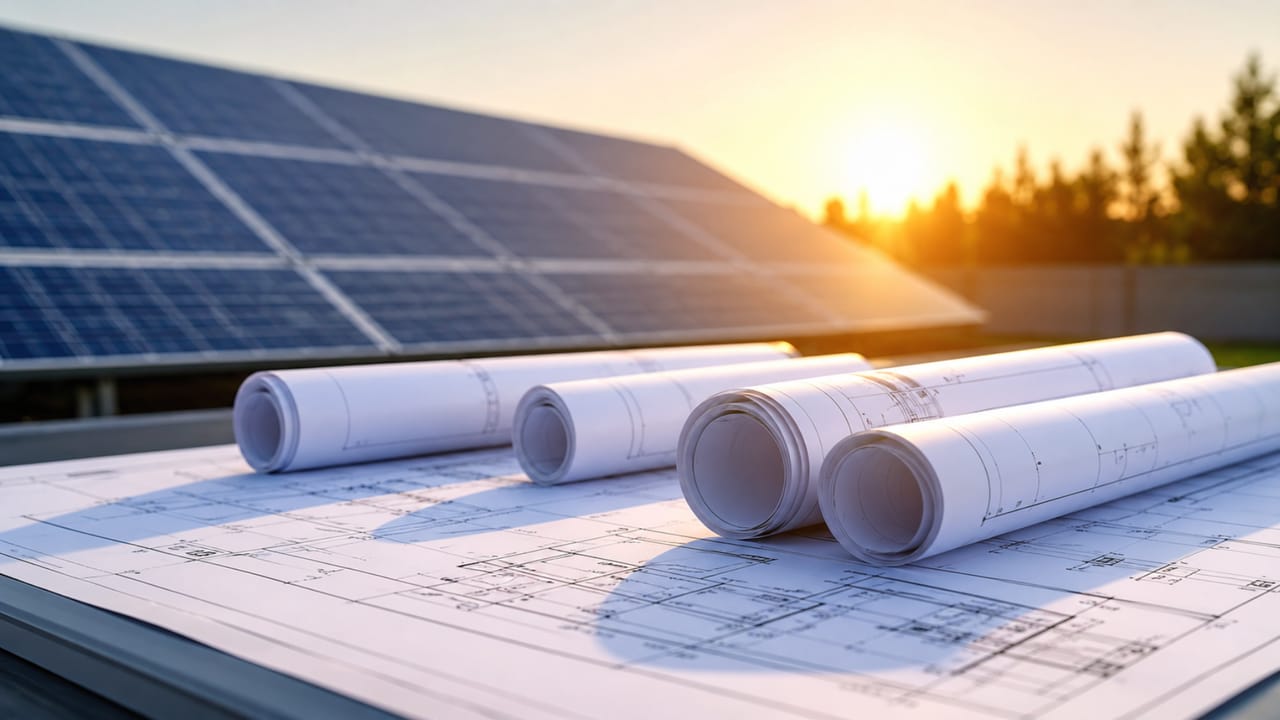
Understand why a photovoltaic project depends on correct sizing, electrical protection, infrastructure, grounding, lightning protection, and technical analysis.
Check it out!
A photovoltaic project is not merely the selection of solar panels and inverters. It is the technical process that determines whether a solar-energy system will be safe, efficient, compatible with the existing electrical installation, and suited to the customer’s actual consumption.
When a photovoltaic system is treated only as a product, many critical points may be ignored: sizing, shading, electrical protection, grounding, lightning protection, cabling, structure, maintenance access, grid connection, and technical documentation.
The result may be a system that generates less than expected, fails, trips frequently, creates electrical risks, or makes future expansion difficult.
That is why photovoltaic design is an essential step in turning solar energy into a reliable engineering solution.
What is a photovoltaic project?
A photovoltaic project is the set of studies, calculations, technical definitions, and documents that guide the implementation of a solar photovoltaic generation system.
It defines how modules will be distributed, installed capacity, inverter selection, circuit protection, cable routing, and how the system will connect to the existing electrical installation.
It also assesses site conditions, energy consumption, usage profile, available area, shading, structure, safety, maintenance, and utility requirements when applicable.
In companies, condominiums, industrial facilities, and higher-consumption units, design becomes even more important. The installation may involve higher power, existing switchboards, contracted demand, medium voltage, substations, protection, metering, and continuous operation.
In other words, photovoltaic design is a technical decision. It should not be reduced to a commercial proposal based only on the number of panels.
Sizing: why actual consumption matters
Sizing begins with understanding consumption.
Before defining the number of modules or system capacity, it is necessary to assess consumption history, seasonality, load profile, operating hours, and customer expectations.
A home, a retail store, an industrial facility, and a condominium can have very different consumption patterns even when the monthly bill appears similar.
For companies, consumption timing is especially relevant. A system may generate power during the day while most of the load occurs at other times. This difference changes the feasibility analysis and how effectively generation is used.
Sizing should also consider:
- available installation area;
- module orientation and tilt;
- shading;
- electrical-installation capacity;
- structural limitations;
- utility restrictions;
- future expansion;
- applicable distributed-generation rules.
An oversized system may increase cost without delivering proportional returns. An undersized system may frustrate generation expectations. The balance depends on technical analysis.
Panel area, orientation, and shading
Photovoltaic modules depend on solar irradiance.
Available area, orientation, tilt, and shading therefore directly affect energy generation.
Even small shaded areas can affect the performance of a module array, depending on the electrical configuration and inverter type.
The project needs to assess obstacles such as water tanks, parapets, antennas, trees, neighboring buildings, towers, air-conditioning equipment, and nearby structures.
It should also consider maintenance access, safe circulation, module fastening, and the strength of the supporting structure.
On existing roofs, the assessment must be careful. It is not enough to verify that physical space exists. The site must support the loads, allow safe installation, and favor adequate performance.
The technical survey stage reduces improvisation and improves system reliability.
Solar inverter and system architecture
The solar inverter converts the direct current generated by the modules into alternating current compatible with the electrical installation.
But its function goes beyond conversion.
Depending on the equipment, the inverter may also monitor generation, synchronize the system with the grid, record faults, protect operation, and enable remote monitoring.
The system architecture may use string inverters, microinverters, or other configurations according to scale, layout, shading, maintenance strategy, and project objectives.
This choice affects performance, cost, monitoring, flexibility, maintenance, and behavior under partial shading.
The inverter should therefore not be selected only by price. It must be compatible with module power, voltage, current, site conditions, applicable standards, and the operating strategy.
String box, surge protection, and electrical protection
Electrical protection is one of the most important aspects of a photovoltaic project.
Solar systems involve direct-current circuits, outdoor exposure, rooftop cabling, inverters, integration with switchboards, and the possibility of electrical surges.
A string box may combine protection, isolation, and circuit-organization devices. Depending on the project, it may include surge protective devices (SPDs), fuses, disconnect switches, and other components.
An SPD helps protect equipment against transient overvoltages that may result from indirect lightning effects, grid switching, or other electrical events.
In photovoltaic systems, protection on the DC side requires specific attention because voltage levels and circuit behavior differ from conventional AC installations.
Poorly specified protection can compromise safety and equipment service life.
For this reason, the definition of string boxes, SPDs, isolation devices, cables, and protection must be part of the design rather than treated as an installation detail.
Grounding, equipotential bonding, and lightning protection
Grounding, equipotential bonding, and lightning protection are essential topics in photovoltaic systems.
Modules are usually installed in exposed areas such as roofs or outdoor structures. This increases the importance of assessing risks related to surges, lightning, potential differences, and personal safety.
Grounding contributes to electrical safety and proper operation of protection devices. Equipotential bonding seeks to reduce dangerous potential differences between metallic parts and systems.
The lightning-protection system should be assessed when applicable, considering the structure, risk, existing installation, and technical standards.
Installing solar panels on a building may require reviewing the existing grounding and lightning-protection conditions.
Ignoring this point can create technical, operational, and property risks.
Existing electrical infrastructure: can the system support solar generation?
Before installing a photovoltaic system, the existing electrical infrastructure needs to be assessed.
This includes switchboards, circuit breakers, busbars, cables, conduits, grounding, metering, connection capacity, service entrance, and any limitations of the consumer unit.
In older installations, infrastructure upgrades may be necessary before connecting the solar system.
In companies, the analysis may involve transformers, substations, contracted demand, protection selectivity, power quality, and operational impact.
This stage prevents a photovoltaic system from being connected to an installation that was not prepared to receive it.
Solar generation must be integrated into the existing electrical system safely and compatibly.
Grid connection and distributed generation
In grid-connected systems, photovoltaic design needs to consider utility requirements and distributed-generation rules.
This may involve technical documentation, access studies, connection standards, metering, protection, approval, and required adaptations.
Distributed generation allows consumers to generate energy near the point of consumption and interact with the distribution grid according to applicable rules.
This creates opportunities for homes, companies, condominiums, and rural properties, but it requires technical responsibility.
The system must operate safely for the consumer unit, the grid, and maintenance teams.
Grid connection therefore should not be treated as merely a bureaucratic step. It is part of system safety and operation.
Maintenance, monitoring, and long-term performance
A photovoltaic system needs to be monitored over time.
Generation may be affected by dirt, connection failures, natural degradation, inverter problems, new shading, communication failures, operated protection devices, or component wear.
Monitoring helps identify performance deviations.
Preventive maintenance helps reduce risk and preserve system operation.
Items that may be checked include:
- module cleanliness and condition;
- electrical connections;
- cables and conduits;
- string box;
- SPDs;
- grounding;
- inverter;
- mounting structure;
- generation records;
- alerts and faults.
Without monitoring, small problems may remain invisible until they affect generation, safety, or availability.
Why technical auditing can prevent losses
Technical auditing of photovoltaic systems can be useful before, during, or after implementation.
Before contracting, it helps assess proposals, assumptions, equipment, scope, responsibilities, and risks.
During implementation, it helps verify compliance with the design, execution quality, documentation, safety, and technical conformity.
After installation, it can support diagnosis of faults, low generation, connection problems, performance questions, or expansion needs.
In corporate projects, technical auditing reduces information asymmetry between the owner and suppliers.
It also helps clients make decisions based on evidence rather than commercial promises alone.
For further reading on this type of analysis, see Engineering Technical Proposal Analysis.
Photovoltaic design as an engineering decision
Photovoltaic design should be treated as an engineering decision because it involves safety, performance, investment, and operation.
Seeking the lowest proposal or the highest generation promise is not enough.
Assumptions, sizing, equipment, protection, installation, maintenance, warranties, documentation, and risks must be evaluated.
A photovoltaic system can be an excellent solution for reducing costs and increasing energy predictability, but its results depend on the technical quality of the project.
When the project is well managed, solar energy stops being merely a trend and becomes reliable infrastructure.
This is the central point: panels generate energy, but engineering generates reliability.
Where A3A Engenharia fits in
A3A Engenharia works in technical consulting, projects, assessments, audits, infrastructure, commissioning, maintenance engineering, and project management.
In photovoltaic systems, technical analysis supports decisions on feasibility, sizing, electrical infrastructure, protection, grounding, grid connection, implementation quality, and long-term performance.
Related technical content
Related services
Technical references
- ABNT NBR 5410 — Low-voltage electrical installations.
- ABNT NBR 5419 — Lightning protection.
- ABNT NBR 14039 — Medium-voltage electrical installations.
- NR-10 — Safety in electrical installations and services.
- ABNT NBR IEC 61643-31 — SPDs for specific use in direct current.
- ABNT NBR IEC 61643-32 — SPDs connected to the DC side of photovoltaic installations.
- ABNT NBR 16819 — Low-voltage electrical installations — Energy efficiency.
- ABNT NBR ISO 21502 — Project management.
Recommended supplementary materials
FAQ
1. What is a photovoltaic project?
It is the set of studies, calculations, and technical documents that define how a solar-energy system will be sized, protected, installed, and connected.
2. Why is photovoltaic sizing important?
Because it defines appropriate system capacity based on consumption, available area, shading, electrical infrastructure, and technical feasibility.
3. What can go wrong in a poorly designed photovoltaic system?
Low generation, overloads, protection failures, electrical risks, connection problems, maintenance difficulties, and lower-than-expected financial returns may occur.
4. What is a string box used for?
A string box organizes, protects, and enables isolation of photovoltaic circuits and may include SPDs, fuses, and switches according to the design.
5. Does a photovoltaic system need grounding?
Yes. Grounding and equipotential bonding are important parts of electrical safety and should be evaluated according to the design and applicable standards.
6. Does solar energy require lightning protection?
It depends on the building and risk assessment. In many cases, installing modules in exposed areas requires evaluating the lightning-protection system.
7. Is a technical audit of a solar system worthwhile?
Yes, especially for corporate or larger systems. It helps assess proposals, execution, performance, safety, and technical compliance.
Conclusion
Photovoltaic design is what turns solar energy into a reliable technical solution.
System performance depends on sizing, available area, inverters, protection, cabling, grounding, lightning protection, grid connection, maintenance, and execution quality.
Solar energy should therefore be treated as electrical infrastructure, not merely as equipment procurement.
When the project is well managed, the system tends to be safer, more predictable, and better aligned with the client’s actual needs.
Is your company evaluating a photovoltaic project?
Before contracting or expanding a system, it is essential to analyze consumption, electrical infrastructure, protection, risks, feasibility, and the technical quality of the solution.