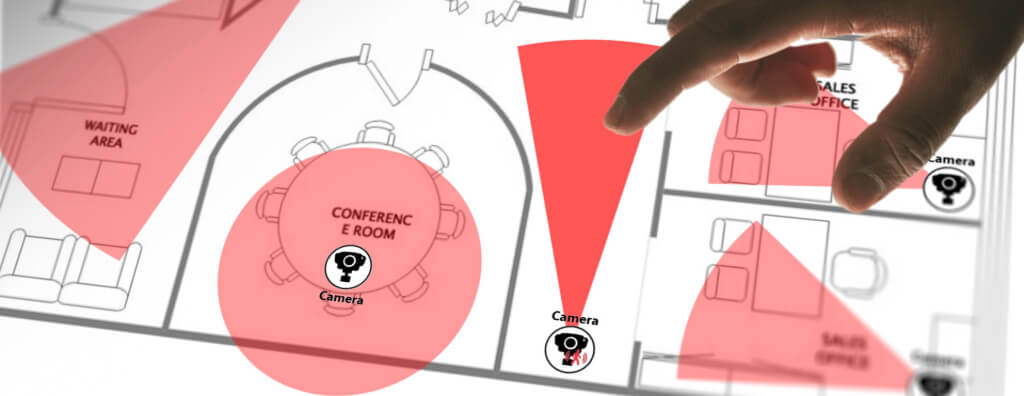
See how a CFTV design turns security requirements into a properly sized technical solution, with suitable cameras, effective coverage, network infrastructure, recording, monitoring, documentation, and acceptance criteria.
Check it out!
A CFTV design is the technical planning process that converts security needs into verifiable requirements for coverage, image quality, transmission, recording, operation, integration, and acceptance. It defines what the system must do before cameras, software, or equipment are selected, reducing blind spots, incompatibilities, rework, and investments that do not address the project’s risks.
This content explains, in a practical way, what a CFTV design is, which stages and documents should be part of it, and the benefits of engaging a specialized engineering company. The focus is on showing how video surveillance should be converted into a solution that can be procured, implemented, and verified — from requirements definition through acceptance criteria.
Companies, industrial facilities, condominiums, schools, hospitals, public agencies, critical infrastructure, and organizations with multiple sites may need a design when they intend to deploy, expand, integrate, or modernize video surveillance. The same applies to existing installations with poor images, downtime, insufficient storage, uncontrolled access, blind spots, or missing documentation for audits, insurers, and procurement processes.
What Is a CFTV Design?
A CFTV design is the coordinated set of studies, criteria, calculations, drawings, diagrams, specifications, and procedures that defines how a video-surveillance system must meet the owner’s security and operational objectives.
A professional design does not begin with the question “how many cameras will be installed?” It begins with questions such as:
- which events need to be detected or investigated;
- which areas, access points, perimeters, people, and assets are exposed to risk;
- what action should occur when an event is identified;
- what level of image detail will be required in each area;
- how long images must remain available;
- who will be allowed to view, export, or administer the system;
- which integrations will be required;
- what availability and recovery capability are expected;
- how it will be demonstrated at the end that the installation complies with the design.
The answers to these questions form the system’s operational requirements. Only after that should the camera, lens, resolution, lighting, network, PoE, servers, VMS, storage, analytics, and other components be defined.
What Should a Security Camera Design Include?
A security camera design translates the project’s protection needs into technical criteria for coverage, identification, recording, transmission, and operation. More than indicating where cameras will be installed, the design must define which events need to be detected, which areas must be observed, and what image quality will be required at each point.
Development typically includes:
- survey of areas, access points, perimeters, flows, and vulnerable points;
- risk analysis and definition of operational requirements;
- observation, detection, recognition, and identification objectives;
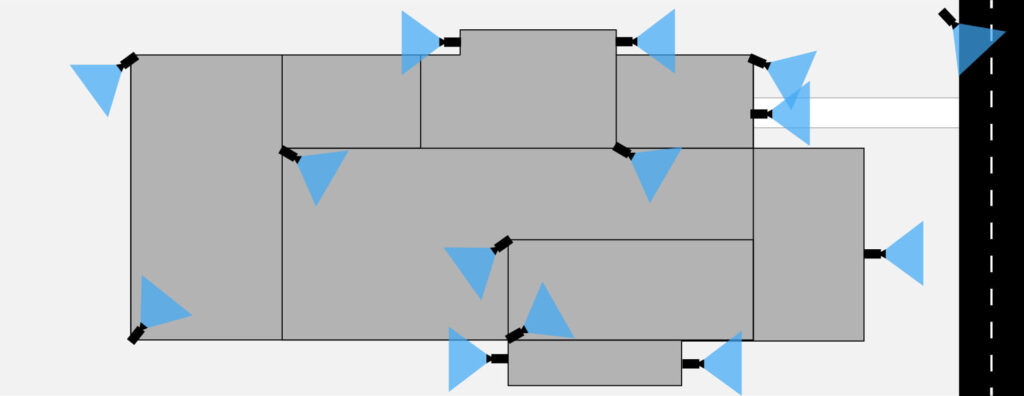
- camera positioning, field of view, height, and orientation;
- specification of lens, resolution, lighting, environmental protection, and analytics features;
- sizing of network, bandwidth, PoE power, and infrastructure;
- calculation of storage, retention, and recording availability;
- integration with VMS, access control, alarms, intercom, and monitoring centers;
- drawings, diagrams, design reports, equipment lists, and installation criteria;
- cybersecurity, privacy, and image-access-control requirements;
- system testing, commissioning, and acceptance procedures.
Although the expression security camera installation design is also used, a technical design should not be limited to placing equipment on a floor plan. It must demonstrate that cameras, network, storage, software, integrations, and operations will work as a single system.
What Are the Benefits of Procuring a CFTV Design?
Procuring the design before purchasing or installing equipment allows the investment to be driven by the owner’s requirements rather than only by a manufacturer’s catalog or the equipment quantities in a commercial proposal.
The main benefits are:
- Coverage aligned with risk: cameras are positioned according to the objectives defined for each area, access point, perimeter, or asset.
- Verifiable image quality: resolution, lens, lighting, and pixel density are specified according to the information that must be obtained.
- Integrated sizing: network, PoE, processing, licenses, recording, and retention are calculated as parts of a single system.
- Technical comparison of proposals: drawings, design reports, quantities, and specifications make it possible to equalize suppliers on the same basis.
- Reduced change orders and rework: interfaces, assumptions, and requirements are defined before implementation.
- Scalability: expansion, future capacity, interoperability, and lifecycle are considered from the design stage.
- Protection of images and access: cybersecurity, permission profiles, logs, and evidence integrity are incorporated into the architecture.
- Objective acceptance: testing ceases to be an informal demonstration and follows predefined criteria.
- Professional responsibility: the design can be developed by qualified professionals, with ART issuance where applicable.
- Procurement independence: the owner may contract implementation, integration, inspection, Owner’s Engineering, or EPC using consistent documentation.
Why Should a CFTV System Not Be Installed Without a Design?
Installations carried out without engineering tend to treat the camera as an isolated item. This can lead to:
- blind spots and unsuitable framing;
- images that look good on a monitor but do not allow the target to be recognized or identified;
- cameras incompatible with distance, lighting, or environment;
- insufficient PoE capacity in switches;
- bottlenecks in links and uplinks;
- storage smaller than required for the retention period;
- loss of recordings during failures or maintenance;
- incompatible VMS, licenses, and analytics;
- lack of time synchronization;
- insecure remote access and shared credentials;
- incomplete integrations with alarms and access control;
- inability to compare supplier proposals;
- missing as-built documents, tests, and acceptance evidence.
The problem may remain hidden until an incident occurs. At that point, the organization may discover that the camera did not capture the required detail, the recording was unavailable, or the export did not preserve essential information.
Operational Requirements and Risk Analysis
The first technical stage should record what the system needs to accomplish in the project’s actual context. The ABNT NBR IEC 62676 series uses the concept of operational requirements to relate risks, objectives, users, events, responses, and expected performance.
The survey should consider:
- threats, vulnerabilities, and consequences;
- areas of interest and zones with different criticality levels;
- operating hours and conditions;
- pedestrian and vehicle flows;
- expected operator behavior;
- events that should generate alarms;
- response procedures;
- image retention and availability;
- continuity during failures;
- integrations with other systems;
- access levels and responsibilities;
- legal, privacy, insurer, or internal-policy requirements.
ABNT NBR IEC 62676-1-1 classifies video-surveillance systems by security grades related to risk. The grade should not be selected generically for every application: it must be consistent with the risk analysis, critical functions, and required protection level.
A good design maintains traceability among:
risk → objective → area of interest → image requirement → camera and lens → transmission → recording → operational response → acceptance test.
This logic prevents decisions from being driven only by brand preference, nominal resolution, or stock availability.
Risks must be converted into verifiable requirements
Before selecting equipment, engineering must define areas of interest, events, operational response, image quality, availability, and acceptance evidence.
Technical Survey and Site Survey
The site survey verifies the conditions that affect performance and implementation. It should be carried out using updated drawings when available and should include records that support design decisions.
Items evaluated include:
- access points, perimeters, corridors, outdoor areas, and restricted zones;
- available installation height and structural support;
- obstacles, vegetation, reflections, and foreseeable scene changes;
- daytime, nighttime, backlighting, and seasonal lighting variations;
- distances to targets;
- environmental conditions, temperature, humidity, dust, rain, and vandalism;
- routes for conduits, cable trays, boxes, and fiber optics;
- technical rooms, racks, and consolidation points;
- electrical infrastructure and grounding;
- switches, uplinks, links, and existing capacity;
- space for servers, storage, monitors, and operator workstations;
- systems that will need to be integrated;
- privacy restrictions and areas that should not be captured.
The survey does not replace calculations. It provides the input data required for calculations and documents to represent the actual installation.
Image Quality, DORI, and Pixel Density
Image quality does not depend only on the number of megapixels. It results from the entire image-formation and usage chain:
scene and lighting → lens and sensor → exposure → compression → transmission → recording → playback → export.
The design should define the image objective for each area. The levels associated with detection, observation, recognition, and identification — often summarized by the acronym DORI — help relate target size in the scene to the information required.
Pixel density in CFTV designs helps verify whether the framing provides enough detail for the objective. However, the result must be combined with:
- distance and width of the observed area;
- focal length and lens characteristics;
- effective resolution;
- installation height and angle;
- minimum illumination and infrared;
- WDR for high-contrast scenes;
- shutter speed and motion blur;
- frame rate;
- compression and bit rate;
- quality of the recorded and exported image.
A good-looking static image does not guarantee performance when people or vehicles are moving, when backlighting is present, or when recording uses different parameters from live viewing.
Camera, Lens, and Environmental Condition Selection
The camera should be a consequence of the requirements at each point. The choice among fixed, dome, bullet, panoramic, multisensor, PTZ, or thermal models depends on the scene, objective, and operation.
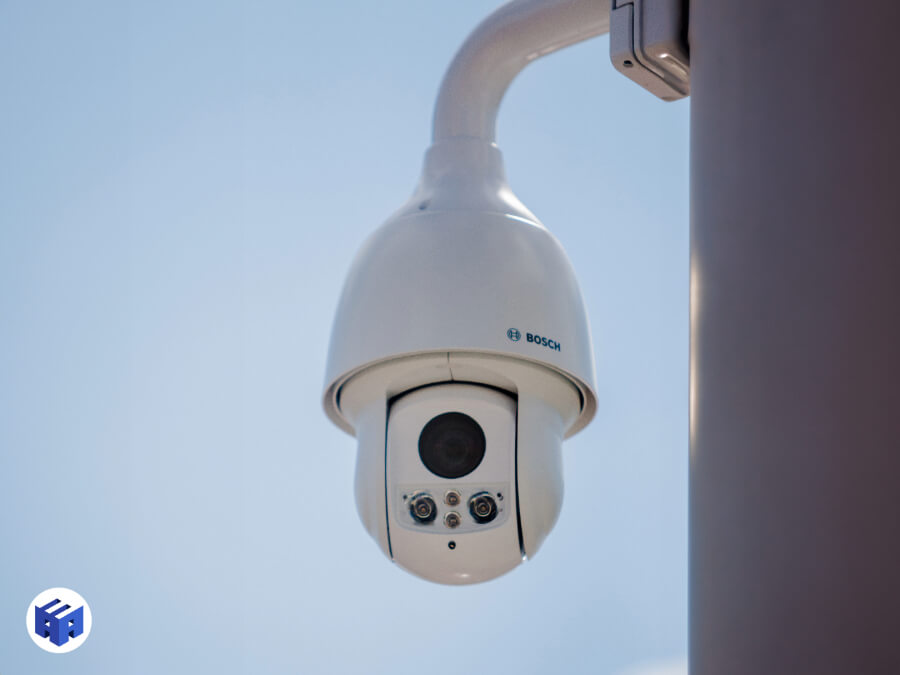
The specification should consider:
- sensor, resolution, and low-light performance;
- fixed, varifocal, or motorized lens;
- horizontal and vertical field of view;
- focal length and depth of field;
- WDR, infrared illumination, and white light;
- target speed and shutter speed;
- compression and multiple streams;
- audio, where legally and technically applicable;
- IP protection and IK impact resistance;
- temperature and environmental class;
- PoE, PoE+, or PoE++ power;
- edge recording;
- tamper detection and video-loss detection;
- compatibility with VMS and integration protocols;
- lifecycle, support, and security updates.
A higher-resolution camera does not automatically correct an unsuitable lens, poor angle, insufficient lighting, or excessive compression. Likewise, a PTZ does not necessarily replace fixed cameras: when it is pointed in one direction, it stops observing the other areas.
IP Network, PoE, Cabling, and Availability
IP CFTV is a network application with its own capacity, availability, synchronization, and security requirements. ABNT NBR IEC 62676-1-2 addresses video-transmission performance, including latency, jitter, packet loss, capacity, interconnection monitoring, and redundancy principles.
The design should include:
- number of streams per camera;
- average and peak bit rate;
- bandwidth for recording, viewing, export, and analytics;
- capacity of uplinks and interbuilding links;
- PoE power budget per switch and per power supply;
- logical segmentation and VLANs;
- IP addressing and network services;
- NTP for time synchronization;
- multicast where technically justified;
- QoS and prioritization, if required;
- device and link monitoring;
- redundant paths and single points of failure;
- communication among cameras, servers, clients, storage, and integrated systems;
- edge protection and remote access.
The article on bit-rate control in IP video surveillance explains in greater depth how scene, codec, resolution, and frame rate affect network and storage.
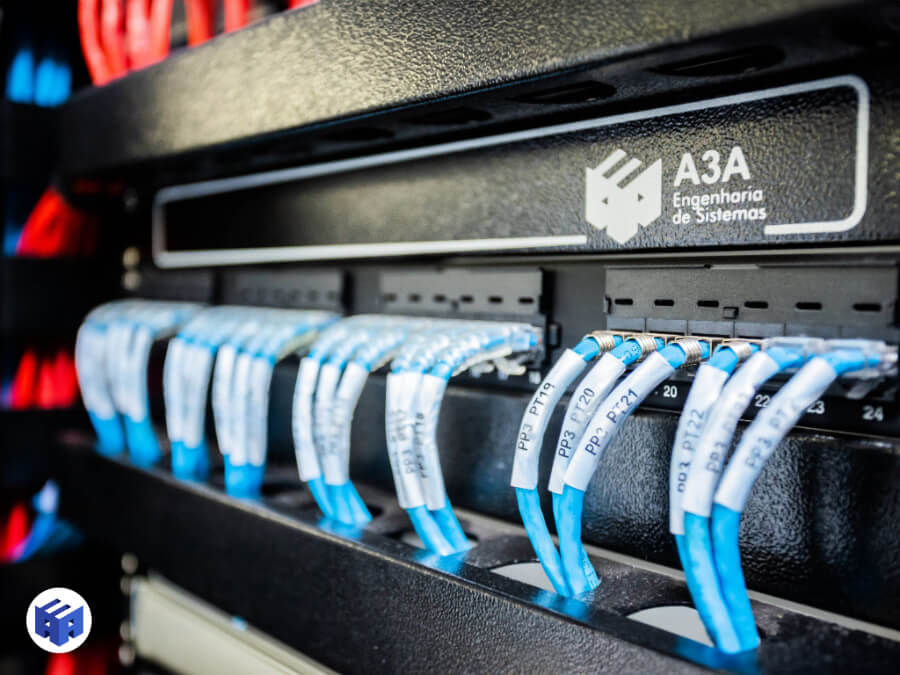
Cabling must be compatible with distance, environment, power delivery, and availability. Copper, fiber optics, wireless links, and converters should not be selected in isolation: each medium changes topology, power, protection, maintenance, and failure points.
Cameras, network, VMS, and storage form a single system
Sizing each part separately creates bottlenecks and single points of failure. Bandwidth, PoE, processing, recording, retention, and operation must be calculated together.
Learn about the IP CFTV and Video Surveillance Design service
Storage, Retention, and Image Integrity
Storage must be sized based on the number of cameras, resolution, codec, frame rate, bit rate, recording profile, retention, growth, and design margins. Storage sizing for CFTV and VMS should also consider write performance, playback, export, and array rebuild operations.
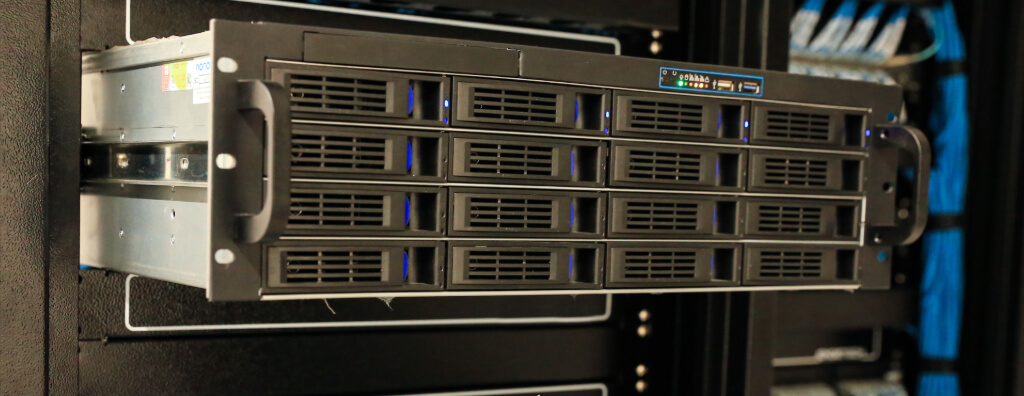
The design should distinguish concepts that are often confused:
- retention: the period during which images remain available;
- disk redundancy: tolerance to certain media failures;
- failover: continuity of recording or service after a component failure;
- edge recording: temporary or complementary storage on the camera;
- backup: a separate copy for recovery;
- archiving: preservation of selected data for a specific period;
- export: extraction of images for investigation or evidence.
RAID does not replace backup, and backing up the entire CFTV volume is not always economically or operationally appropriate. The strategy should reflect criticality, threats, recovery time, and any obligation to preserve specific events.
Evidence integrity requires, depending on the application:
- camera and location identification;
- synchronized date and time;
- metadata preservation;
- access and export logs;
- authentication or integrity verification;
- formats that can be played by authorized third parties;
- protection of the original during exports and image enhancements;
- chain-of-custody procedures.
VMS, Integrations, and Operation
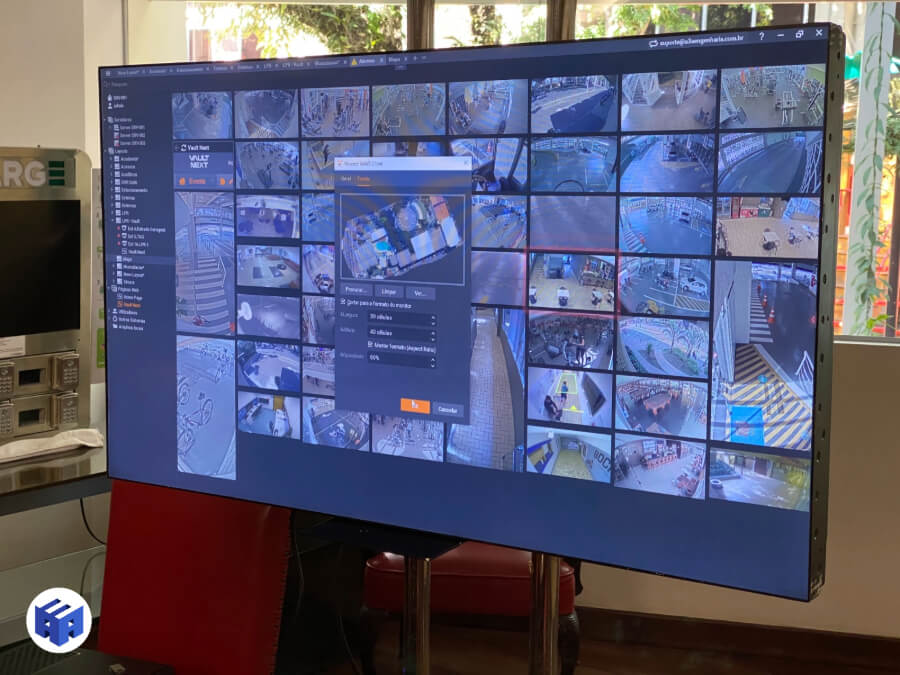
The VMS is responsible for organizing cameras, users, recordings, alarms, maps, searches, exports, and integrations. Its specification should consider the complete architecture, not only the price per license.
Requirements include:
- number and types of devices;
- centralized, distributed, or federated architecture;
- management, recording, event, and client servers;
- failover and recovery;
- user profiles and segregation of duties;
- maps, layouts, and operator workstations;
- logs and auditing;
- directory and authentication integration;
- forensic search and export;
- integration with access control, intrusion, intercom, and automation;
- APIs, protocols, and integration limits;
- licensing, expansion, and lifecycle.
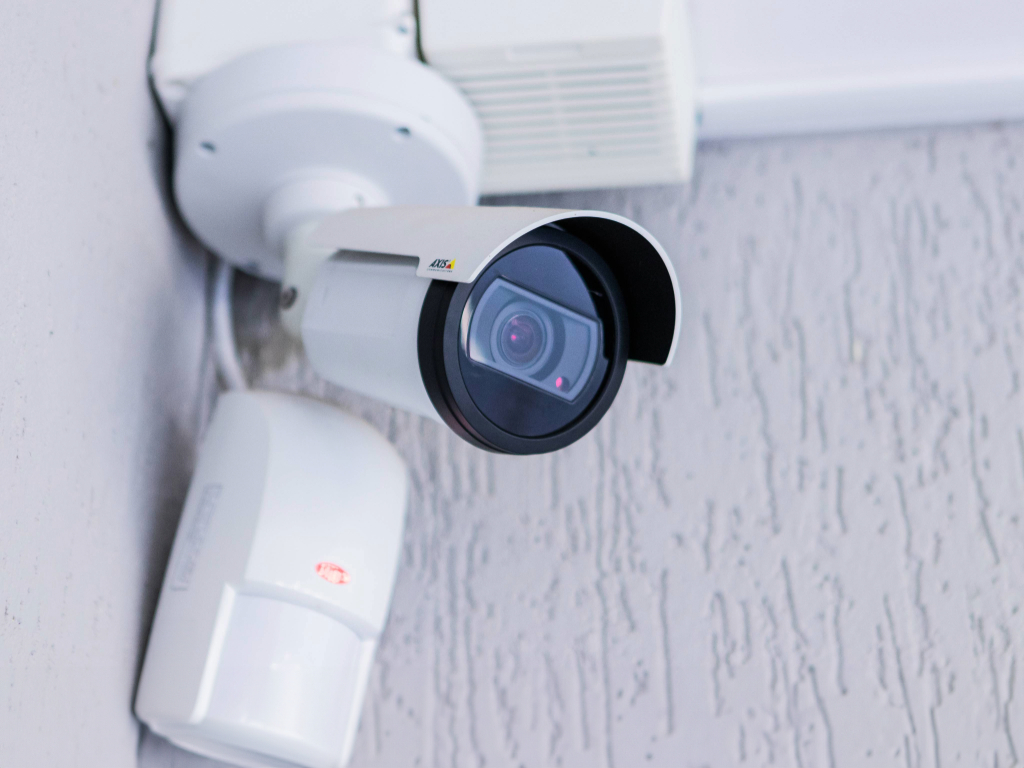
Integration must be specified in terms of events and responses. “Integrate CFTV and access control” is insufficient. The design should define, for example, which event triggers the action, which cameras are displayed, when priority recording begins, who receives the alarm, which data are correlated, and how the operator restores the normal condition.
Video Analytics and Artificial Intelligence
Analytics can classify objects, detect intrusion, line crossing, loitering, crowding, wrong-way movement, abandoned objects, license plates, and other events. However, performance depends on the scene, perspective, lighting, occlusions, camera position, rules, and operational process.
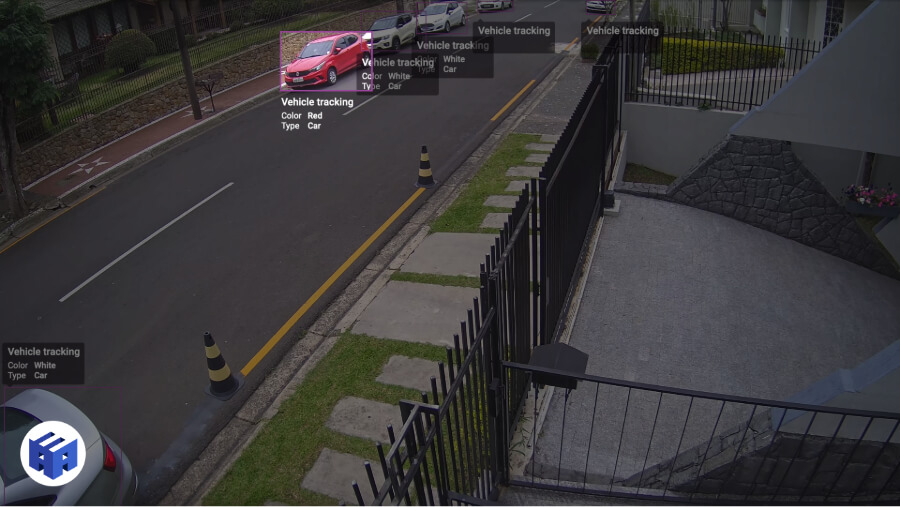
The design should define:
- the event the analytics must identify;
- the area and conditions in which it will operate;
- acceptable false-positive and false-negative rates;
- processing on the camera, server, or cloud;
- computing capacity and licensing;
- generated metadata;
- integration with the VMS and response procedures;
- testing and acceptance method;
- privacy and data-protection impacts.
Facial recognition and other biometric processing require specific legal and data-protection assessment. Visual smoke or flame analytics may complement operations but do not automatically replace fire-detection and alarm systems required by standards or competent authorities.
Cybersecurity and Access Levels
IP cameras, switches, servers, VMS, storage, and workstations are connected assets. A CFTV design must reduce the attack surface and define controls for implementation and operation.
Minimum requirements should include:
- asset and version inventory;
- replacement of default credentials;
- individual passwords and strong authentication;
- least privilege and role-based profiles;
- network segmentation;
- secure protocols and disabling unnecessary services;
- certificate management and encryption;
- firmware updates and vulnerability management;
- remote-access protection;
- logs, monitoring, and alerts;
- configuration backup and restoration;
- rules for suppliers and maintenance;
- response and recovery plan.
ABNT NBR IEC 62676-1-1 addresses system integrity, data integrity, access levels, logging, authentication, and protection against tampering. The whitepaper Cybersecurity in CFTV Systems provides a deeper look at the architecture and hardening of this infrastructure.
LGPD and Privacy in CFTV Design
Images of identified or identifiable people may constitute personal data. The design should consider Brazil’s General Data Protection Law (LGPD) and the controller’s policies, without replacing the legal assessment applicable to each organization.
Relevant principles and controls include:
- specific purpose of monitoring;
- alignment between capture and the stated objective;
- necessity and proportionality;
- transparency and signage;
- field-of-view limitation and privacy masks;
- retention consistent with the purpose;
- access control and logging;
- sharing and export rules;
- technical and administrative security;
- deletion at the end of the defined period;
- responsibilities among controller, processors, and suppliers;
- specific assessment for biometrics and facial recognition.
The article LGPD in CFTV presents good practices for processing and protecting images.
Documents and Deliverables of a CFTV Design
The exact set depends on the project size, stage, and contracting model. A basic design may establish requirements, architecture, and criteria for bidding or procurement. A detailed design should provide sufficient detail for coordinated implementation.
Possible deliverables include:
- survey and site-survey report;
- risk and operational-requirements matrix;
- security and availability criteria;
- camera location and identification drawings;
- coverage and area-of-interest drawings;
- camera, lens, height, and objective schedule;
- DORI or pixel-density calculations;
- bandwidth and bit-rate calculation report;
- PoE power budget;
- storage and retention calculation;
- physical and logical network topology;
- block diagrams and system architecture;
- VMS, server, storage, and workstation architecture;
- integration, event, and response matrix;
- design report;
- technical specifications;
- bill of materials and quantities;
- installation and identification criteria;
- cybersecurity and LGPD requirements;
- testing, commissioning, and acceptance plan;
- as-built documentation, training, and operational requirements.
These documents make it possible to turn the design into terms of reference, an RFP, a comparable budget, and a contract with measurement and acceptance criteria.
Testing, Commissioning, and Acceptance Criteria
The design must define how the installation will be validated. Accepting the system simply because the cameras appear on a monitor does not demonstrate coverage, retention, availability, integrity, or integration.
The test plan may include:
- installation and identification inspection;
- verification of cameras, lenses, heights, and fields of view;
- daytime, nighttime, and critical-lighting tests;
- validation of pixel density at defined targets;
- focus, WDR, infrared, shutter, and motion;
- bandwidth, latency, packet loss, and PoE capacity;
- recording, retention, playback, and export;
- time synchronization;
- edge recording and recovery after interruption;
- server, disk, switch, link, or power failure;
- access profiles and audit logs;
- detection of video loss, tampering, and failures;
- integrations, alarms, and operator procedures;
- analytics and performance limits;
- documentation, training, and as-built documentation.
Each test should have preconditions, a procedure, expected result, approval criterion, evidence, and a responsible party. Open items must be classified, corrected, and retested before final acceptance.
How Much Does a CFTV Design Cost?
There is no reliable universal percentage for determining the price of a design. Cost depends on the work required to turn the demand into technically consistent documents.
The main factors are:
- area, number of buildings, and geographic dispersion;
- estimated number of cameras;
- criticality and complexity of risks;
- availability and quality of existing drawings;
- need for field surveys;
- environmental and lighting conditions;
- existing network, fiber, radio, and infrastructure;
- integrations with other systems;
- VMS, server, and storage architecture;
- coverage and pixel-density simulations;
- standards and cybersecurity requirements;
- level of detail: conceptual, basic, or detailed;
- number of revisions and interfaces;
- support for procurement, inspection, or commissioning.
The proposal should present scope, assumptions, deliverables, exclusions, responsibilities, schedule, and number of revisions. Comparing only the lowest price may result in designs with completely different levels of detail.
Why Engage a Company Specialized in CFTV Design?
A specialized company brings together competencies that are not normally concentrated in a single equipment supplier: security, optics, video, IP networks, cabling, power, servers, storage, VMS, integrations, cybersecurity, documentation, and interface management.
Specialized engineering provides:
- manufacturer-independent perspective;
- requirements survey and analysis;
- performance-based specifications;
- coordination among disciplines;
- documentation for comparing suppliers;
- experience in similar applications and environments;
- early identification of risks;
- professional responsibility within applicable professional attributions;
- support during procurement, implementation, and acceptance.
The Integrated Electronic Security Design connects CFTV, access control, intrusion, intercom, networks, and operations within a coherent architecture.
Design, Owner’s Engineering, EPCM, or EPC
The design may be procured independently or as part of a broader delivery journey:
- Engineering Consulting: structures requirements, alternatives, risks, budget, and implementation strategy.
- Design: produces basic or detailed documents for procurement and implementation.
- Owner’s Engineering: technically represents the owner, reviews documents, equalizes suppliers, and follows interfaces, testing, and acceptance.
- EPCM: integrates engineering, procurement, and construction management while execution contracts remain under the owner’s governance.
- EPC/Turnkey: concentrates design, supply, implementation, integration, testing, and handover under one contractor responsible for the result.
The choice depends on requirements maturity, the owner’s internal capacity, the number of interfaces, project risk, and the desired allocation of responsibilities.
From concept to technical acceptance
A3A can work in Engineering Consulting, Design, Owner’s Engineering, EPCM, EPC/Turnkey, commissioning, and acceptance of electronic security systems.
A3A has public experience in Turnkey implementation of corporate video surveillance and in integrated intelligent video-surveillance systems for government complexes.
Conclusion
A professional CFTV design is not a floor plan with camera symbols. It is the instrument that relates risks, objectives, image quality, infrastructure, recording, operations, data security, and acceptance criteria.
By engaging a specialized company, the owner reduces decisions based solely on equipment and gains requirements, calculations, and documents that make it possible to compare proposals, coordinate implementation, and demonstrate the performance of the delivered system.
The Complete Guide to CFTV Systems helps explain technologies and components. This article addresses the next stage: showing how engineering should organize these elements to form a secure, procurable, scalable, and verifiable system.
References, Frequently Asked Questions, and Additional Materials
The sections below bring together the normative sources used, direct answers to the main questions, and content for further technical study.
Technical references
The references below support the system, transmission, application, data-protection, and infrastructure requirements considered in this article.
[4] BRAZIL. Law No. 13,709 of August 14, 2018 — Brazilian General Data Protection Law.
[5] ABNT. ABNT NBR 14565 — Structured cabling for commercial buildings and Data Centers.
[6] ABNT. ABNT NBR 5410 — Low-voltage electrical installations.
Frequently asked questions
Direct answers about scope, documents, sizing, standards, LGPD, testing, and professional responsibility.
It is the set of studies, criteria, calculations, drawings, diagrams, and specifications that converts security objectives into requirements for cameras, coverage, network, recording, VMS, integrations, operations, and acceptance.
The design defines performance, documents, and acceptance criteria in advance. Installation physically implements what was defined. Installing without a design can create blind spots, poor image quality, insufficient infrastructure, and missing documentation.
Depending on scope, deliverables may include surveys, operational requirements, drawings, coverage studies, pixel-density, bandwidth, PoE and storage calculations, topology, diagrams, a design report, specifications, quantities, and a test plan.
The quantity results from areas of interest, risks, image objectives, distances, geometry, lighting, obstacles, and required pixel density. It should not be defined solely by the total floor area of the property.
They are criteria used to relate target size in the image to the objective of detection, observation, recognition, or identification. They should be combined with lens, lighting, motion, compression, and recording quality.
Yes. An IP CFTV design should size bandwidth, uplinks, PoE power, segmentation, servers, storage, recording rate, retention, redundancy, and growth.
The main framework is the ABNT NBR IEC 62676 series, complemented by the application guidelines of IEC 62676-4. Cabling, electrical-installation, protection, sector-specific standards, and data-protection legislation may also apply.
The design should consider purpose, necessity, transparency, retention, access control, security, sharing, deletion, and responsibilities. Facial recognition and biometrics require specific assessment.
Testing should verify installation, coverage, daytime and nighttime image quality, recording, retention, network, synchronization, failures, access, export, integrations, analytics, and documentation using predefined criteria and evidence.
Area, number of sites, criticality, field survey, number of cameras, network, integrations, storage, simulations, level of detail, revisions, documentation, and support for implementation or acceptance.
Yes. A well-structured basic design or terms of reference provides requirements, specifications, quantities, and acceptance criteria that enable proposal comparison and reduce contractual ambiguity.
The requirement and classification depend on the scope, professional attributions, and rules of the competent professional council. When the service falls within a technical activity subject to professional responsibility, the ART must be issued by the qualified professional responsible.
Additional technical materials
The content below is organized into learning paths. The sequence progresses from CFTV fundamentals to design criteria, infrastructure, operations, investigation, image protection, and engineering procurement.
Fundamentals, technologies, and normative requirements
- Complete Guide to CFTV Systems
- How a security camera works
- IP CFTV versus analog CFTV
- NBR IEC 62676: video-surveillance systems
- Video Management Software — VMS
Design, architecture, and image quality
- CFTV design architecture planning
- Specification of monitoring points and camera effectiveness
- Pixel-density calculation in CFTV
- CFTV installation: design, implementation, and maintenance
Network, power, transmission, and storage
- Network infrastructure for IP CFTV systems
- Power over Ethernet: standards, classes, and sizing
- Bit-rate control in IP video surveillance
- How to size storage for CFTV and VMS
- SPD for data lines, CFTV, and telecommunications
VMS, metadata, operations, and investigation
- Receiving and processing camera metadata in the VMS
- Forensic video search
- Video Synopsis in CFTV
- Video Management Software Solution
Analytics, automation, and advanced applications
- Complete Guide to Video Analytics
- Artificial-intelligence video analytics in CFTV
- Video Analytics Solution
- License-plate recognition integrated with VMS
Privacy, cybersecurity, testing, and lifecycle
- LGPD in CFTV
- Cybersecurity in CFTV Systems
- Total Cost of Ownership in Electronic Security
- FAT, SAT, and integrated testing before technical acceptance
Applications, solutions, services, and experience
- CFTV systems in critical environments
- Perimeter-security CFTV at substations
- Operational CFTV at substations and remote assistance
- Video Surveillance Solution
- Integrated Property Monitoring
- Integrated Electronic Security Design
- Corporate video-surveillance Turnkey case
- Intelligent video-surveillance case in a government complex