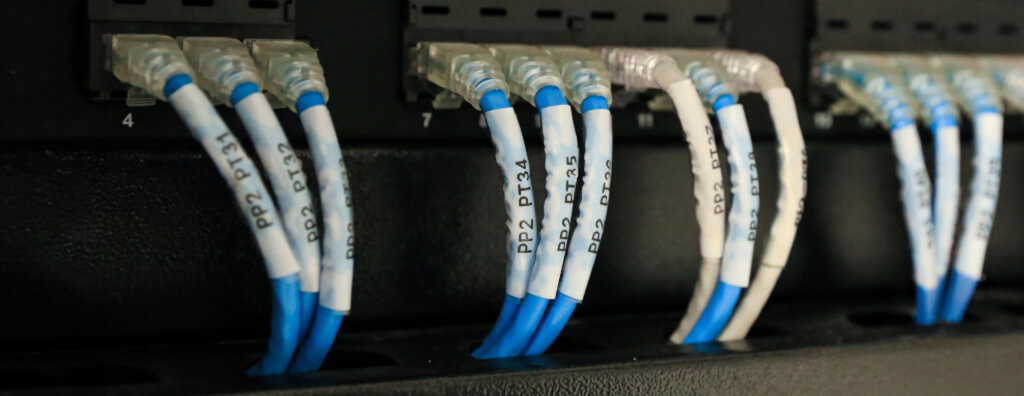
Structured cabling services by phase: survey, diagnosis, design, procurement, implementation, Owner’s Engineering, certification, commissioning, As Built, and handover.
Check it out!
Structured cabling services cover far more than cable pulling and termination. In a new project or an existing facility, the required scope may include surveys, diagnosis, design, specifications, procurement support, implementation, oversight, testing, certification, commissioning, As Built documentation, and support for technical acceptance. Each service addresses a different stage or problem in the infrastructure lifecycle.
The right question is therefore not only “who installs cabling?” but which engineering service is required for the current situation and what evidence must exist at the end. An organization that does not know the condition of its network needs diagnosis before replacing it. A new demand needs design before proposals are compared. A project under construction may require Owner’s Engineering. Infrastructure that is complete but lacks performance evidence may require testing and certification.
ABNT NBR 16869-1:2020 reinforces this lifecycle approach by addressing installation planning, technical specifications, scope, quality plans, installation practices, documentation, administration, testing, and inspection. ABNT NBR 14565:2019 establishes the architecture and performance requirements for cabling in commercial buildings, while NBR 16415:2021 addresses pathways and spaces. Together, these references show that a reliable system depends on decisions made before installation, controls during execution, and evidence produced afterward.
This article organizes specialized structured cabling services by phase, problem, and expected result, helping owners distinguish when they need to survey, design, implement, inspect, test, or accept the infrastructure.
Structured cabling services should be selected according to the client’s problem
Two companies may ask for “cabling services” and require completely different work.
One may have a new office and need to turn layout, user count, Wi-Fi, IP video surveillance, and telephony requirements into a design and budget. Another may have an old network with intermittent failures, no labeling, and no As Built. A third may be constructing a headquarters, already have a design, and need execution control. A fourth may have completed construction and need to verify whether links were actually certified according to scope.
Service selection should begin with the situation:
| Situation | Primary service | Expected result |
| Existing infrastructure is unknown | survey / diagnosis | current condition, risks, and records |
| There is demand but no defined solution | study / design | requirements and documented solution |
| Suppliers need to be procured | technical procurement | comparable scope and leveled proposals |
| Execution is about to start | implementation | system installed according to design |
| The owner needs to control the work | Owner’s Engineering / oversight | controlled deviations and evidence |
| Infrastructure is ready for testing | testing / certification | measured and traceable performance |
| The system needs to be delivered | commissioning / acceptance | readiness, punch items, and acceptance |
| Documentation does not match the field | As Built | consolidated built condition |
| The network needs expansion or modernization | retrofit / expansion | intervention and migration plan |
This matrix helps avoid contracting execution while requirements are still missing, and avoids contracting diagnosis when the problem is already clearly defined and documented.
As-is survey: know what exists before deciding what to do
An as-is survey is appropriate when drawings, outlet lists, racks, pathways, or diagrams do not represent actual conditions. It creates a factual baseline.
For cabling, the survey may record:
- telecommunications rooms and equipment rooms;
- racks, patch panels, distributors, and active equipment;
- quantity and identification of outlets;
- identifiable cable and connectivity types;
- routes, shafts, cable trays, and visible occupancy;
- optical and copper backbones;
- terminated and spare fibers;
- labeling and administration condition;
- connected fixed devices;
- existing documentation and test reports.
The Engineering As-Is Survey is appropriate when the main gap is physical and documentary.
A survey should not assume performance
Finding a cable labeled Cat6 does not prove that the link meets the category limits. Likewise, finding a connected fiber does not prove acceptable optical loss or continuity.
The survey describes observable conditions. When the goal is to assess performance or identify causes of failure, it should be complemented by diagnosis and testing.
Technical diagnosis: turn symptoms into causes and priorities
When existing conditions are uncertain, combine documentary and field evidence before turning symptoms into a replacement or investment scope.
Diagnosis is required when there is a problem, an investment decision, or uncertainty about infrastructure condition.
Symptoms may include:
- link drops;
- low speed at specific outlets;
- recurring errors;
- unstable cameras;
- access points with intermittent power;
- PoE ports at their limit;
- fibers with excessive loss;
- disorganized racks;
- inability to locate links;
- insufficient expansion capacity;
- inconsistent documentation.
The diagnosis must separate passive-layer failures from active-network problems. High ping, for example, may be caused by congestion, configuration, or an application and should not automatically be attributed to cabling. A link negotiating at 100 Mb/s instead of 1 Gb/s may indicate a physical problem, but it still requires investigation.
A Technical Engineering Due Diligence can combine documents, field findings, risks, and recommendations when a decision involves investment, retrofit, or acquisition of existing infrastructure.
Diagnosis should end with an action plan
A report that merely lists defects does not solve the management problem. Each finding should, whenever possible, state its impact, criticality, evidence, and recommended action.
A practical classification can separate:
- immediate correction;
- scheduled correction;
- monitoring;
- expansion;
- replacement;
- need for additional testing;
- documentation update.
This turns an inspection into a prioritized technical backlog.
Structured cabling design: define the solution before execution
Define architecture, pathways, materials, quantities, interfaces, and acceptance criteria before comparing installers and prices.
Design is the appropriate service when the organization knows what it needs to achieve but does not yet have an executable and procurable solution.
The design may define:
- subsystem architecture;
- distributors and backbones;
- horizontal outlets;
- positions for Wi-Fi, IP video surveillance, and IP devices;
- category and physical medium;
- fibers and reserves;
- racks and distribution;
- pathways and spaces;
- PoE and relevant interfaces;
- identification and administration;
- test requirements;
- quantities;
- specifications;
- documentation and acceptance criteria.
The article Structured Cabling Design: stages, NBR 14565, NBR 16869, and deliverables explores the documentation in greater depth.
The Structured Cabling Design service turns needs into drawings, design narratives, specifications, and procurement criteria.
Design must coordinate pathways and spaces
NBR 16415:2021 shows that cabling depends on rooms, shafts, entrance facilities, pathways, and work areas. If these conditions are not designed, the installer ends up making architectural decisions during construction.
This informal transfer increases risk because permanent decisions are made under schedule and field-availability pressure.
Wi-Fi design and access-point infrastructure
When cabling expansion is driven by Wi-Fi, RF design should not be replaced by a geometric distribution of outlets.
Coverage, capacity, density, obstacles, roaming, and interference determine where access points must be located. The cabling must then serve those positions with suitable links, pathways, switch ports, and PoE.
The Corporate Wi-Fi Network Design complements structured cabling when the main issue lies in the wireless network.
This separation avoids installing outlets where cabling is convenient but RF performance is poor.
Technical specifications and quantities: make the design procurable
A design must be converted into a procurable scope. This requires specifications, quantities, measurement criteria, and responsibilities.
NBR 16869-1 requires installation specifications to address technical requirements, scope of work, and the quality plan. It also addresses schedules, identification, inspection, testing, and documentation.
In practice, the procurement package should answer:
- what will be supplied;
- what will be installed;
- which materials and performance levels are required;
- which routes and spaces will be used;
- who performs civil or pathway work;
- which tests will be performed;
- which documents will be delivered;
- which warranties are required;
- how services will be measured;
- what constitutes completion and acceptance.
Without this information, proposals are not truly comparable.
Technical procurement: procure the solution, not only the lowest price
Technical procurement helps manage inquiries, clarify proposals, and level scopes.
Depending on object maturity, RFI, RFP, or RFQ may be used. The appropriate tool depends on whether the owner is exploring the market, seeking a solution, or comparing prices against an already consolidated specification.
Technical leveling should verify:
- scope compliance;
- materials and compatibility;
- inclusions and exclusions;
- quantities;
- installation method;
- certification;
- documentation;
- team;
- warranties;
- schedule;
- interfaces assumed by the client.
The purpose is not to eliminate commercial negotiation, but to prevent price comparison before confirming that proposals actually deliver the same scope.
“Equivalent” must be technically demonstrated
In cabling, a substitution proposal should be checked against performance, compatibility, environment, application, warranty, and certification requirements.
The phrase “equivalent or better” is not a sufficient criterion without verifiable attributes. Engineering must define against which requirements equivalence will be judged.
Cabling implementation: execute under a controlled method
Implementation includes physical activities such as pathway preparation, pulling, routing, termination, splicing, rack assembly, identification, organization, and testing.
Quality execution should follow the design, manufacturer instructions, and applicable practices. Controls include:
- bend radius;
- pulling force;
- protection against damage;
- separation and interfaces;
- routing within pathways;
- pair termination;
- rack organization;
- fiber protection;
- identification;
- cleanliness;
- correlation with drawings.
NBR 16869-1 addresses installation practices and requires the scope to detail pathways, cables, terminations, identification, and the quantity and types of inspections and tests.
Execution should not silently redefine the design
Field conditions always generate changes. The problem is not change itself, but change without analysis and records.
If a route is unavailable, the installer should submit an alternative. If a component is discontinued, equivalence must be analyzed. If the rack location changes, impacts on lengths and pathways must be evaluated.
Change control preserves coherence among requirements, design, execution, and As Built documentation.
Owner’s Engineering and technical oversight: represent the owner
In higher-criticality projects, the owner may hire an independent team to oversee the installer.
Owner’s Engineering may cover:
- technical meetings;
- submittal reviews;
- inspections;
- material control;
- deviation records;
- nonconformity analysis;
- schedule monitoring;
- measurement verification;
- test witnessing;
- punch list;
- acceptance.
The benefit is to separate the installer’s interests from the owner’s interests. The installer remains responsible for correct execution; the Owner’s Engineer verifies, records, and supports decisions.
Control points should occur before irreversible stages
Inspecting a cable tray after the ceiling has been closed is too late. Checking identification after hundreds of cables have already been terminated may reveal a problem at scale.
Oversight should define verification moments according to risk and reversibility. These can be organized in an Inspection and Test Plan — ITP.
Quality control and nonconformities
A nonconformity needs a reference, evidence, responsible party, disposition, and closure. Photographing a defect without controlling its correction does not close the process.
Cabling examples include:
- component different from the approved item;
- labeling outside the standard;
- improper termination;
- unapproved route deviation;
- overfilled pathway;
- damaged cable;
- fiber loss above the criterion;
- failed link;
- As Built inconsistent with field conditions.
The process should distinguish correction from cause. A failed link may be reterminated and pass, but if the cause was an inadequate work method, other links may carry the same risk.
Oversight should determine when inspection or sampling needs to be expanded.
Balanced cabling certification
Certification is a testing service that demonstrates link or channel performance against the applicable limits.
It is different from:
- continuity testing;
- simple wire map;
- ping;
- speed testing;
- visual inspection.
Network Certification for Structured Cabling explains test parameters and models.
The scope should define:
- category/class;
- Permanent Link, Channel, or a specific configuration;
- equipment and adapters;
- calibration;
- percentage or all outlets;
- identification;
- failure handling;
- retesting;
- file formats.
Technical Testing and Inspection is appropriate when the owner needs to measure performance, investigate failures, or produce independent evidence for acceptance.
Native files are an important part of traceability
A PDF summarizes the result, but the certifier’s native file may preserve parameters, plots, selected limits, equipment, date, and other useful information.
The scope should define delivery formats before testing. Requesting files afterward may create gaps or rework.
Optical fiber testing
Optical backbones require their own criteria. Depending on application and scope, optical-loss testing and OTDR analysis may be required.
Test selection should consider:
- fiber type;
- wavelengths;
- connectors and splices;
- topology;
- loss budget;
- launch conditions;
- reference method;
- documentation.
The result must be correlated with the fiber identifier and backbone diagram.
A fiber without origin-and-destination records may have technically good results and still be difficult to operate.
Failure diagnosis: testing should answer a question
Not every test serves the same purpose.
If the question is whether a new link complies, use a certification model. If the goal is to locate a defect, diagnostic tools may investigate distance to fault, loss, reflection, or parameter behavior.
The technician should define the hypothesis first and then select the instrument and method. Measuring everything without a clear question produces data, but not necessarily a diagnosis.
This reasoning is especially relevant for intermittent failures, where PoE load, movement, temperature, or connectivity conditions may affect behavior.
Commissioning: integrate evidence to demonstrate readiness
Commissioning is not synonymous with certification.
Certification measures link performance. Commissioning verifies whether the system or infrastructure set is ready to fulfill its intended function and be transferred to operations.
Engineering Commissioning may consolidate:
- approved documentation;
- physical completion;
- inspections;
- tests;
- nonconformities;
- interfaces;
- punch list;
- As Built;
- training;
- handover.
In cabling, this is most useful in complex projects with multiple systems and a need for formal acceptance governance.
The Complete Guide to Commissioning explains the planning, testing, acceptance, and handover methodology.
Technical acceptance: decide based on evidence
Acceptance should verify whether the contracted object was delivered.
An acceptance matrix may include:
| Evidence | Question |
| physical inspection | is the installation intact and organized? |
| certification | do links meet the limits? |
| optical test | do fibers comply with the loss budget? |
| identification | can every outlet be traced? |
| As Built | do drawings reflect field conditions? |
| documentation | are files and records complete? |
| NCRs | are nonconformities closed? |
| punch list | were pending items resolved or formally accepted? |
Acceptance does not necessarily mean absolute perfection, but it must make explicit which conditions were met and which pending items, if any, remain controlled.
As Built: record the condition actually constructed
As Built documentation is not simply a project drawing with a new date. It must represent the changes actually implemented.
For cabling, it may include:
- final outlets;
- routes;
- identification;
- racks;
- patch panels;
- backbone;
- fibers;
- reserves;
- relevant equipment;
- test references.
The Engineering As-Built service is appropriate when final documentation needs to be surveyed, updated, and validated.
The Engineering As-Built Framework shows how to connect documentation with governance and acceptance.
As Built should be controlled during construction
Waiting until the last day to reconstruct changes increases error. Relevant changes should be recorded as they are approved.
Redlines, field markups, and version control can feed final documentation and reduce dependence on memory.
Handover: transfer the asset to the operations team
Handover begins when the operations team receives enough information to take ownership of the infrastructure.
The package may contain:
- As Built;
- diagrams;
- outlet list;
- test reports;
- datasheets;
- warranties;
- nonconformity records;
- spares;
- operating instructions;
- contacts and responsibilities;
- reserve inventory.
The Technical Handover Framework helps structure this transition.
A weak handover leaves operations dependent on the installer’s memory to locate fibers, understand racks, or discover which outlets were deactivated.
Cabling maintenance and administration
After acceptance, the infrastructure continues to change. Users move, switches are replaced, cameras are added, APs are repositioned, and new fibers are activated.
Maintenance must preserve:
- identification standards;
- rack organization;
- documentation updates;
- patch-cord control;
- pathway capacity;
- change records;
- criteria for new materials;
- quality of new terminations.
Without governance, a system that starts organized can return to an improvised state within a few years.
NBR 14565 and NBR 16869-1 address administration and records precisely because cabling quality depends on the ability to manage change.
Retrofit and expansion
Retrofit combines diagnosis, design, and execution.
In an existing network, the service should answer:
- what can remain;
- what needs correction;
- what needs replacement;
- what should be expanded;
- how to migrate without interrupting operations;
- which elements need to be retested.
The article on Brownfield Projects presents criteria for working in existing facilities.
Full replacement should be a decision, not an assumption.
How to combine services in a complete project
A project may contract several services in sequence.
A typical journey is:
- survey and diagnosis;
- requirements;
- design;
- procurement;
- implementation;
- Owner’s Engineering;
- testing;
- commissioning;
- As Built;
- handover.
This does not mean one company must perform everything. In some contexts, separating design, execution, and acceptance is desirable.
The contracting architecture should consider independence, risk, internal capability, and accountability.
An integrated package can be efficient when requirements are mature
When the scope is well defined, integrating supply and installation can reduce interfaces.
Integration does not eliminate the need for specifications, quality criteria, and acceptance. The more responsibility is concentrated in a supplier, the more important it is for the owner to have verifiable requirements.
Separate contracts can increase independence
In critical projects, the client may contract the designer/consultant, installer, and testing team separately.
This creates cross-checks, but also increases interfaces. Governance must be strong enough to prevent gaps between contracts.
There is no universal model. The best arrangement depends on complexity and risk.
How to compare structured cabling service providers
Comparison should go beyond price per outlet.
Check:
- detailed scope;
- applicable standards;
- team experience;
- installation methodology;
- quality control;
- tools and certifiers;
- calibration;
- documentation;
- warranty;
- change management;
- nonconformity handling;
- occupational safety;
- ability to produce As Built;
- measurement and acceptance criteria.
A technically stronger proposal makes assumptions and boundaries explicit. A vague proposal transfers uncertainty into the work.
Red flags in cabling proposals
Some signals deserve attention:
- price per outlet without pathway scope;
- brand and category without performance specification;
- certification without a defined test limit;
- “As Built included” without specifying documents;
- no identification requirements;
- no treatment of optical fibers;
- unclear responsibility for pathways;
- warranty conditioned on unspecified items;
- open substitutions without an approval process;
- schedule without testing and documentation stages.
These signals do not automatically make a proposal invalid, but they require clarification.
Which service should be contracted for each problem?
A practical way to decide is to start with the question the client needs answered.
“What do I have installed?” As-is survey.
“Why is my network having problems?” Technical diagnosis and testing.
“How should I build or expand the infrastructure?” Cabling design.
“How do I turn the design into a comparable procurement?” Technical specifications and procurement.
“Who should install it?” A qualified installer according to the defined scope.
“How do I control execution?” Owner’s Engineering or oversight.
“How do I prove performance?” Certification and testing.
“How do I know I can accept it?” Commissioning and technical acceptance.
“How do I record what was actually done?” As Built and handover.
This logic avoids trying to solve every problem with a single “installation” contract.
When an isolated service is insufficient
Some problems cross multiple phases.
If an organization has an undocumented network and wants to expand, designing immediately may be risky: it first needs a survey. If a project has many failures, waiting until the end to certify may be too late: controls during execution need to be strengthened.
If a supplier delivers test results but there is no As Built, the owner receives performance evidence without traceability. If there is an excellent design but no oversight, field changes may compromise the solution.
The correct service is the one that closes the gap between current conditions and the next decision.
How to structure deliverables and acceptance criteria
Every service should end in a product or evidence.
| Service | Minimum expected deliverable |
| Survey | inventory and field records |
| Diagnosis | findings, evidence, and recommendations |
| Design | engineering documentation |
| Procurement | leveling and technical opinion |
| Oversight | records, inspections, and deviation control |
| Testing | traceable results |
| Commissioning | readiness evidence |
| As Built | validated built condition |
| Handover | transfer dossier |
The contract should define format, revision, responsibility, and approval condition.
Without acceptance criteria, a service may end because time expired rather than because technical completion was achieved.
Services for multi-site environments and distributed networks
Companies with branches, stores, industrial units, distribution centers, or offices in different cities need an additional layer of standardization. The problem is no longer simply designing one site, but maintaining comparable criteria across multiple locations.
A multi-site program may define:
- naming standards for racks, outlets, and fibers;
- approved component categories and families;
- minimum criteria for rooms and pathways;
- diagram and As Built templates;
- test configuration and format;
- reserve rules;
- PoE requirements;
- change request and approval process;
- acceptance checklist;
- Data Book structure per site.
Standardization reduces the risk of every local integrator creating its own solution. At the same time, the standard must allow justified exceptions, because a new office, a historic building, and an industrial plant may require different methods.
Consulting and Owner’s Engineering can function as the central governance layer while local installers perform implementation.
Benchmarking across sites reveals systemic problems
When all sites use the same checklist and indicators, the organization can compare performance and quality.
If several branches show the same labeling failure, for example, the problem may lie in the specification or training rather than one installer. If one region has more optical failures, it may be necessary to review methods, suppliers, or logistics.
Multi-site management turns delivery data into lessons for subsequent projects.
Emergency service and engineering service are not the same
A critical failure may require immediate intervention to restore operations. Replacing a patch cord, reterminating an outlet, or activating a contingency fiber may be necessary before completing a full diagnosis.
Emergency restoration, however, does not replace root-cause analysis.
After service is restored, the team should determine:
- what failed;
- why it failed;
- whether other outlets have the same risk;
- whether documentation must be updated;
- whether the temporary solution should be replaced;
- whether new tests are needed;
- whether the architecture has a recurring weakness.
Without this second stage, maintenance becomes reactive and the same incident returns.
A good support contract distinguishes service restoration from permanent engineering correction.
Cabling services in occupied environments
Executing cabling work in an operating building requires additional planning.
The work may need to consider:
- working-hour restrictions;
- noise and dust;
- area isolation;
- technician access control;
- furniture protection;
- maintenance of egress routes;
- coexistence with the old network;
- migration by area;
- rollback;
- tests before release;
- cleaning and restoration;
- user communication.
These requirements should be included in scope and schedule. If a proposal assumes new-construction productivity but the work will occur in an occupied office, schedule and cost risks increase.
The migration plan must identify critical dependencies. A rack replacement can simultaneously affect telephony, cameras, Wi-Fi, and access control.
A change window needs go/no-go criteria
Before starting a migration, the team should know which conditions authorize the cutover.
Requirements may include:
- new infrastructure complete;
- links certified;
- switches configured;
- configuration backup;
- responsible team present;
- defined application tests;
- rollback plan;
- approved communication.
If a critical condition is not met, the change should be postponed rather than turning the maintenance window into improvisation.
Industrial cabling services require a different environmental assessment
An industrial organization can use the same principles of structure and administration, but field conditions change. Vibration, dust, humidity, chemicals, temperature, and electromagnetic interference may require different components, pathways, and practices.
NBR 16869-1 references the MICE classification for environmental assessment, and the infrastructure must protect cabling according to the environment.
Industrial services may involve:
- survey of interference sources;
- area classification;
- definition of mechanical protection;
- selection of industrial connectivity;
- optical fiber for isolation;
- routes away from critical sources;
- suitable boxes and enclosures;
- specific maintenance criteria.
The content on Industrial Structured Cabling explores this context in greater depth.
Automatically applying an office standard to an industrial plant is a scope error.
Electromagnetic-interference diagnosis when the cause is not obvious
Not every copper transmission failure is caused by EMI, but environments with motors, drives, transformers, and other sources may require investigation.
The service should avoid generic prescriptions such as simply “use shielded cable.” The solution may involve route, distance, grounding, bonding, medium selection, and analysis of the existing installation.
When interference is suspected, Electromagnetic Interference Diagnosis and Mitigation can complement cabling work.
Shielding is effective only when it forms part of a coherent solution. Introducing shielded components without addressing continuity and bonding may not solve the problem.
Document governance for recurring services
Organizations that contract small expansions throughout the year face a different risk: each individual service appears simple, but together they degrade documentation.
Minimum governance for recurring services may require:
- request identifying the area and need;
- capacity verification;
- technical approval;
- execution according to standard;
- testing;
- record update;
- work-order closure.
Each new outlet should enter the identification system and As Built. Each removal must release the port and update records. Fiber changes must preserve backbone documentation.
Without this process, the initial inventory progressively loses validity.
Small changes also consume capacity
One additional outlet may seem irrelevant, but hundreds of small requests can consume rack, pathway, and port capacity.
Management should track occupancy indicators and define triggers for structured expansion. This avoids discovering a lack of capacity only when a critical demand is already urgent.
Criteria for deciding between a point correction and a modernization project
Not every defect requires a broad retrofit. Conversely, correcting one issue at a time in a systematically degraded infrastructure can be economically inefficient.
The decision can consider:
- failure frequency;
- age and condition of components;
- percentage of unidentified outlets;
- certification results;
- pathway capacity;
- rack occupancy;
- compatibility with new applications;
- parts availability;
- quality of As Built;
- operational impact of interventions.
If problems are concentrated in a few terminations, point correction may be enough. If failures involve architecture, capacity, and documentation, a modernization project tends to produce a more consistent result.
The decision should be documented based on evidence to avoid endless maintenance cycles.
Indicators for monitoring service quality
A cabling contract can be monitored with technical indicators.
Examples:
- percentage of links passing on the first test;
- number of NCRs by type;
- rework by cause;
- percentage of correctly labeled outlets;
- delivery of test files;
- As Built compliance with field conditions;
- time to close pending items;
- pathway occupancy after construction;
- use of rack reserve capacity;
- incidents after handover.
Indicators do not replace inspection, but they help identify trends.
A growing rate of termination failures may indicate a need to review training or tooling. Many route deviations may indicate a design that does not match field conditions. Metrics allow action before closeout.
Maintenance scope should distinguish the passive layer from the active network
Many service calls arrive simply as a “network problem” without a known cause.
The contract should define where the cabling team’s responsibility ends and where the active-network team’s responsibility begins.
The passive layer includes cables, patch panels, outlets, connectors, fibers, and physical connection elements. Switches, routers, Wi-Fi controllers, and configurations belong to the active layer.
Diagnosis may cross the boundary to locate the failure, but correction responsibility must remain clear.
This distinction avoids unnecessary cable replacement when the issue is configuration and avoids software changes when a physical fault is proven.
Documentation services can be contracted independently of execution
Some installations work and perform adequately but have almost no documentation.
In this case, there is no need to wait for a major renovation to correct governance.
A specific project can:
- inventory racks and rooms;
- standardize identification;
- map outlets;
- update diagrams;
- record the backbone;
- organize existing reports;
- produce As Built;
- create a baseline for future work orders.
This type of work reduces maintenance risk and prepares the infrastructure for expansion.
The benefit becomes clear during incidents: knowing exactly where a link is located reduces diagnostic time and avoids accidental outages.
Integration among services avoids closeout gaps
The final precaution is to ensure that the output of one phase becomes the input to the next.
The survey should feed the design. The design should feed procurement. The approved proposal should feed the inspection plan. Inspections should feed punch-item control. Tests should feed acceptance. As Built should incorporate approved changes. Handover should transfer all of this to operations.
When this chain breaks, information must be reconstructed.
Well-structured engineering services create end-to-end traceability even when different companies execute each phase.
Final considerations
Specialized structured cabling services form an engineering chain. Surveying answers what exists; diagnosis explains condition and risk; design defines the solution; procurement structures contracting; implementation materializes it; Owner’s Engineering controls execution; testing measures; commissioning demonstrates readiness; As Built records the final condition; handover transfers it.
Selecting the correct stage prevents contracting a solution before understanding the problem and prevents accepting infrastructure without evidence.
The best arrangement is one in which every service has clear objectives, deliverables, interfaces, and acceptance criteria. Structured cabling then stops being treated as an isolated installation activity and becomes managed as technical infrastructure throughout its lifecycle.
Performance and acceptance require traceable evidence. Independent tests help verify infrastructure before acceptance.
Technical references
[1] ASSOCIAÇÃO BRASILEIRA DE NORMAS TÉCNICAS. ABNT NBR 14565:2019. Structured cabling for commercial buildings and data centers. Available at: https://www.abntcatalogo.com.br/
[2] ASSOCIAÇÃO BRASILEIRA DE NORMAS TÉCNICAS. ABNT NBR 16869-1:2020. Structured cabling — Part 1. Available at: https://www.abntcatalogo.com.br/
[3] ASSOCIAÇÃO BRASILEIRA DE NORMAS TÉCNICAS. ABNT NBR 16415:2021. Pathways and spaces for structured cabling. Available at: https://www.abntcatalogo.com.br/
Frequently asked questions
Depending on the situation, the journey may include survey, diagnosis, design, specification, procurement, implementation, oversight or Owner's Engineering, testing, certification, commissioning, As Built, and handover.
The survey records what exists and its observable condition. Diagnosis interprets evidence to explain performance, risks, probable causes, and intervention priorities.
When requirements, architecture, pathways, materials, quantities, interfaces, and acceptance criteria are not yet sufficiently defined to make procurement and execution comparable.
It represents the owner during implementation, reviews documents, inspects critical points, controls deviations and nonconformities, and follows tests, measurements, punch lists, and acceptance without assuming the installer's execution responsibility.
No. Certification demonstrates link or channel performance against applicable limits. Commissioning integrates documentation, inspections, tests, interfaces, and pending items to demonstrate system readiness for operations.
Because operations must receive the actual built condition, identification, diagrams, test results, warranties, reserves, and enough records to maintain and modify the infrastructure without depending on the installer.
Supplementary technical materials
Related solutions
- Structured Cabling: design, implementation, certification, and management
- Connectivity and Logical Networks: architecture, performance, security, and management
- Industrial Structured Cabling
Related services
- Engineering As-Is Survey
- Technical Engineering Due Diligence
- Structured Cabling Design: copper, optical fiber, racks, and certification
- Corporate Wi-Fi Network Design
- Owner’s Engineering
- Technical Testing and Inspection
- Engineering Commissioning
- Engineering As-Built
Main content on the topic
- Complete Guide to Structured Cabling
- Structured Cabling Design: stages, NBR 14565, NBR 16869, and deliverables
- When to hire a Structured Cabling Design Consultant
- NBR 14565: Structured Cabling for Commercial Buildings
- NBR 16869: Structured Cabling — Parts 1 to 5
