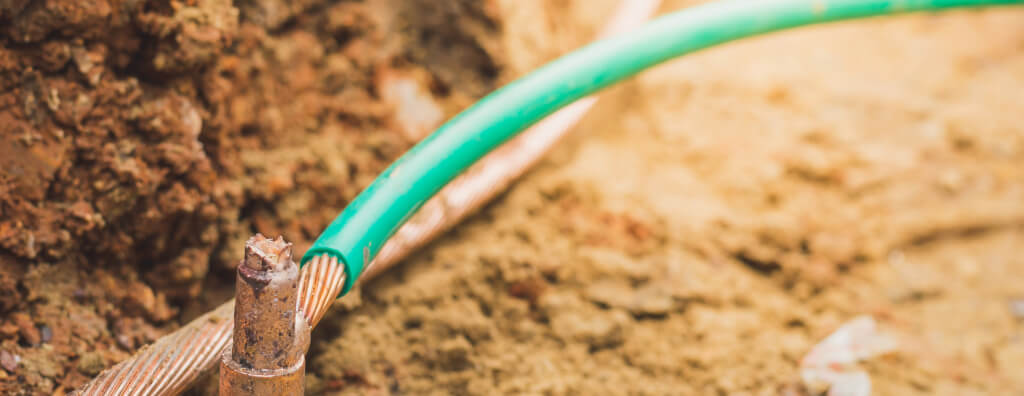
Understand electrical grounding fundamentals, grounding types, system components, standards, maintenance, and the importance of equipotential bonding for electrical protection.
Check it out!
Grounding is an electrical protection system that connects installations and equipment directly to the earth through conductors, ensuring safety by diverting unwanted currents, such as electrical discharges and faults, to the ground.
Its main function is to prevent electric shock, protect equipment, and minimize damage in situations involving voltage surges or short circuits.
[elementor-template id=”24446″]
Basic Grounding Concepts
Definition of Grounding
Electrical grounding is the process of connecting parts of an electrical system directly to earth through electrical conductors, creating a low-resistance path for the flow of unwanted electrical currents. This connection is essential to ensure that, in the event of faults or electrical discharges, current is safely diverted to earth, minimizing the risk of electric shock, fire, and equipment damage.
The grounding system acts as a zero-potential reference, stabilizing voltages in the electrical system and providing a safe environment for equipment operation and human protection. It is made up of elements such as grounding electrodes, grounding conductors, and connections that ensure the integrity of the conductive path to earth.
Importance of Grounding
Protection Against Electric Shock
One of the primary functions of grounding is protection against electric shock. In situations where an insulation fault occurs, metallic parts that should not be energized may become live. Grounding provides an alternative path for electrical current, significantly reducing the risk of a person suffering a shock when touching these metallic parts.
Stable Equipment Operation
Electrical and electronic equipment requires a stable voltage reference to operate properly. Grounding provides that reference, preventing unwanted voltage fluctuations that can cause malfunction, reduce equipment lifespan, or even lead to burnout.
Dissipation of Leakage Currents and Overvoltages
Leakage currents may arise due to insulation imperfections or the influence of external electromagnetic fields. The grounding system allows these currents to be conducted safely to earth, preventing the buildup of electrical charges that could be harmful. In addition, in cases of transient overvoltages, such as those caused by lightning or switching operations on the electrical grid, grounding helps dissipate this excess energy.
Physical Principles
Soil Resistivity
Soil resistivity is a critical factor in the design of grounding systems. It represents the difficulty the soil presents to the passage of electrical current. Soils with low resistivity, such as moist soils rich in mineral salts, are ideal because they facilitate current dissipation. Soils with high resistivity, such as rocky or dry soils, may require special solutions, such as the use of multiple electrodes or chemical treatment, to achieve adequate grounding resistance.
Distribution of Electric Potential in the Soil
When electrical current is injected into the soil through a grounding electrode, it creates a potential gradient around the electrode. This gradient decreases as the distance from the electrode increases. Understanding this distribution is essential to avoid dangerous step and touch voltages, which can occur when there are significant potential differences at nearby points, posing a risk to people and animals in the vicinity.
Leakage Currents and Overvoltages
Leakage currents are small currents that circulate through unintended paths due to imperfections in equipment insulation. Although they are usually low in magnitude, they can pose risks in environments with explosive atmospheres or for people with electrical sensitivity. Overvoltages, in turn, are temporary increases in the voltage of the electrical system and may be caused by lightning, switching operations, or faults in the grid. The grounding system, combined with protective devices such as surge protection devices (SPDs), is essential for mitigating the effects of these overvoltages.
Types of Grounding Systems
Choosing the right type of grounding system is crucial to the safety and efficiency of electrical installations. Different grounding systems meet specific protection and functional needs depending on the type of installation, the characteristics of the electrical network, and the applicable standards. In this section, we explore the main types of grounding systems used, their characteristics, and their applications.
Functional Grounding
Definition and Purpose
Functional grounding, also known as operational grounding, is used to ensure the proper operation of electrical equipment and systems. Its main purpose is to stabilize the electrical potential of the system, serving as a voltage reference for the correct performance of electronic and communication devices. This type of grounding is essential in systems where voltage stability is critical, such as measurement, control, and telecommunications equipment.
Characteristics
- Potential Reference: Provides a stable reference potential for sensitive electronic circuits.
- System Stability: Helps reduce electrical noise and electromagnetic interference, improving signal quality in communication and control systems.
- Equipment Protection: Minimizes the risk of damage to equipment due to overvoltages or abrupt voltage variations.
Practical Applications
- Telecommunications Systems: Transmission towers, telephone exchanges, and networking equipment.
- Industrial Automation Equipment: Programmable logic controllers (PLCs), sensors, and actuators.
- IT Systems: Servers, data centers, and network equipment.
Protective Grounding
Definition and Purpose
The main purpose of protective grounding is the safety of people and the protection of installations and equipment against electric shock and damage caused by electrical faults. It establishes a low-resistance path so that fault currents can be safely diverted to earth, triggering protective devices such as circuit breakers and fuses that disconnect the faulty circuit.
Characteristics
- Human Safety: Reduces the risk of electric shock by ensuring that exposed metallic parts do not reach dangerous potentials.
- Automatic Disconnection: Facilitates the effective operation of protective devices by creating fault currents high enough to trip residual-current devices or fuses.
- Fire Protection: By allowing rapid shutdown in the event of faults, it reduces the possibility of fires caused by overcurrents or short circuits.
Practical Applications
- Residential Installations: Outlets with grounding pins and household appliances.
- Industries: Industrial machines and equipment, electrical panels.
- Commercial Buildings: Lighting systems, elevators, HVAC systems.
TN, TT, and IT Systems
TN, TT, and IT systems are classifications of grounding schemes defined by international standards such as IEC 60364. Each system has specific characteristics regarding the way the neutral and the metallic parts of the installation are grounded.
TN System (Terra-Neutral)
Characteristics
- Neutral Grounded at the Source: The neutral point of the supply transformer is directly grounded.
- PE Conductor (Protective Conductor): The installation’s metallic masses are connected to the grounded neutral of the source through a protective conductor (PE).
- Subdivisions: The TN system is subdivided into TN-S, TN-C, and TN-C-S, depending on the separation or combination of the neutral (N) and protective (PE) conductors.
Applications
- Industries and Large Buildings: Where there is a need for high reliability and easy fault detection.
- Advantages: Allows high fault currents, facilitating the rapid operation of protective devices.
TT System (Terra-Terra)
Characteristics
- Neutral Grounded at the Source: Similar to the TN system, the neutral is grounded at the source.
- Locally Grounded Masses: The exposed metallic parts of the installation are grounded through a local grounding system independent of the neutral grounding.
- Insulation Between Neutral and Protective Earth: There is no direct connection between the neutral of the supply network and the installation’s metallic masses.
Applications
- Rural and Residential Areas: Where it is not feasible to establish a common protective conductor.
- Advantages: Lower risk of overvoltage propagation through the grounding system.
IT System (Isolated-Terra)
Characteristics
- Isolated Neutral or Impedance Grounding: The neutral point of the transformer is isolated from earth or grounded through high impedance.
- Locally Grounded Masses: The metallic parts of the installation are grounded in a local system.
- Low Ground-Fault Current: In the event of a fault, the currents are very low, reducing the risk of electric shock.
Applications
- Hospital Environments: Operating rooms and intensive care units, where service continuity is critical.
- Chemical and Mining Industries: Where interruption of the power supply may create additional risks.
- Advantages: Allows continued operation even in the presence of a first earth fault.
Comparison Between the Systems
| Characteristic | TN | TT | IT |
|---|---|---|---|
| Neutral Grounded at the Source | Yes | Yes | No (or through impedance) |
| Grounded Masses | Connected to the grounded neutral | Independent local grounding | Independent local grounding |
| Fault Current | High (facilitates protection) | Limited by earth resistance | Very low (difficult detection) |
| Common Applications | Industries, large buildings | Residences, rural areas | Hospitals, specific industries |
Selecting the Appropriate System
The choice between TN, TT, or IT systems depends on several factors:
- Local Standards and Regulations: Some regions or countries may have preferences or restrictions regarding the type of system.
- Nature of the Installation: Type of building, equipment used, and the importance of service continuity.
- Soil Conditions: Soil resistivity may influence the effectiveness of local grounding.
- Required Safety Level: Considering the risks associated with electric shock and operational continuity.
Components of a Grounding System
An effective grounding system is made up of several elements that work together to ensure the safety and functionality of electrical installations. The main components include grounding electrodes, grounding conductors, and the connections or terminals that ensure the electrical and mechanical integrity of the system. In this section, these components, their characteristics, types, and selection and sizing criteria are detailed.
Grounding Electrodes
Definition and Function
Grounding electrodes are conductive elements that establish the direct electrical connection between the grounding system and the soil. Their main function is to allow the safe dissipation of unwanted electrical currents, such as fault currents or lightning discharges, into the ground, reducing the risk of electric shock and damage to equipment.
Types of Grounding Electrodes
There are several types of grounding electrodes, each suitable for specific soil conditions, installation requirements, and the particular needs of the electrical installation.
Vertical Rods
- Description: Metal rods driven vertically into the soil.
- Materials: Commonly made of copper-clad steel or galvanized steel.
- Dimensions: Typical lengths range from 1.5 to 3 meters, with diameters between 12.7 mm and 19 mm.
- Applications: Used in soils with good depth and where soil resistivity allows the desired grounding resistance to be achieved with standard-length rods.
- Advantages: Relatively simple installation and affordable cost.
Grounding Plates
- Description: Metal plates buried horizontally or vertically in the soil.
- Materials: Usually copper or galvanized steel.
- Dimensions: Variable sizes, but with enough area to ensure proper contact with the soil.
- Applications: Used when soil depth does not allow the installation of long vertical rods or to increase the contact area in high-resistivity soils.
- Advantages: Greater contact area with the soil, improving current dissipation.
Buried Strips or Cables
- Description: Metal conductors (strips or cables) installed horizontally in trenches in the soil.
- Materials: Bare copper, tinned copper, or galvanized steel.
- Applications: Used to form grounding grids or rings around buildings or equipment.
- Advantages: Create a grounding system with broad coverage, reducing step and touch voltages.
Chemical Electrodes
- Description: Special electrodes that use chemical substances to reduce local soil resistivity.
- Materials: Electrodes filled with salts or hygroscopic substances that retain moisture.
- Applications: Recommended for high-resistivity soils or conditions where other electrode types cannot achieve the desired resistance.
- Advantages: Significantly improve local soil conductivity.
Materials Used in Electrodes
The choice of electrode material is essential to ensure the durability and efficiency of the grounding system.
- Copper: Excellent electrical conductor with high corrosion resistance. Used in the form of rods, plates, or bare cables.
- Copper-Clad Steel: Combines the mechanical strength of steel with the conductivity and corrosion resistance of copper.
- Galvanized Steel: Steel coated with a layer of zinc for corrosion protection. Lower cost, but shorter service life compared with copper.
- Graphite or Other Conductive Materials: Used in chemical or special electrodes for specific applications.
Criteria for Electrode Selection
- Soil Resistivity: High-resistivity soils may require longer electrodes, a greater number of electrodes, or special types such as chemical electrodes.
- Available Space: Limited areas may not allow the installation of multiple properly spaced rods.
- Desired Service Life: Corrosive environments may require materials with greater corrosion resistance.
- Costs: The initial cost must be balanced against durability and system maintenance.
Grounding Conductors
Function of Grounding Conductors
Grounding conductors are responsible for interconnecting the various components of the grounding system, from the metallic parts of electrical installations to the grounding electrodes. They must ensure a low-resistance, highly reliable path for fault currents.
Technical Specifications
- Cross-Sectional Area: It must be sized to withstand the maximum expected current without overheating or melting. Standards such as NBR 5410 provide minimum sizing guidelines.
- Material: Usually bare copper due to its excellent electrical conductivity and corrosion resistance. In some applications, aluminum or galvanized steel may be used, subject to compatibility and environmental restrictions.
- Insulation: For exposed conductors or locations subject to mechanical damage, it may be necessary to use insulated or mechanically protected conductors.
Sizing Criteria
- Short-Circuit Current: The short-circuit current that may circulate through the conductor in the event of a fault must be considered, as well as the duration of the current until disconnection by the protective device.
- Conductor Length: Longer conductors have greater electrical resistance. The length should be minimized whenever possible, or the cross-sectional area should be increased to compensate.
- Physical Installation: The conductor path should avoid sharp bends, loops, or spirals that can increase impedance or induce overvoltages.
Types of Conductors
- Solid Conductors: Bars or solid wires used in fixed installations where flexibility is not required.
- Stranded Cables: Made up of multiple thin wires twisted together, providing greater flexibility. Used where the conductor must adapt to bends and movement.
- Metal Strips: Wide and thin conductors that can be used to minimize impedance at high frequencies, such as in lightning protection systems.
Connections and Terminals
Importance of Secure Connections
Connections are critical points in a grounding system. A poorly made or corroded connection can increase system resistance, compromise its effectiveness, and represent a point of failure. Secure connections ensure electrical continuity and mechanical integrity throughout the service life of the installation.
Connection Methods
Exothermic Welding
- Description: A welding process that uses an exothermic chemical reaction to fuse metals, creating a molecularly bonded connection.
- Advantages: High electrical conductivity, mechanical strength, and corrosion resistance. It creates a permanent connection that does not loosen under vibration or temperature changes.
- Applications: Connections between conductors and electrodes in critical environments or where high reliability is required.
Mechanical Connectors
- Description: Connections made through bolts, clamps, or terminals that press conductors against each other.
- Advantages: Easy and fast installation, with the possibility of disconnection for maintenance or testing.
- Disadvantages: They may loosen over time due to vibration or thermal expansion. They require periodic inspection and maintenance.
- Applications: Temporary installations or points where frequent disconnection is required.
Compression Connections
- Description: They use connectors that are mechanically deformed by pressure to join conductors, generally with hydraulic or mechanical tools.
- Advantages: Good electrical conductivity and mechanical strength, with lower susceptibility to loosening compared to simple mechanical connections.
- Applications: Permanent installations where exothermic welding is not feasible or economical.
Connection Protection
To ensure the longevity and reliability of connections, especially in aggressive environments or exposed to the weather, it is important to protect them against corrosion and mechanical damage.
- Protective Coatings: Use of antioxidant greases, insulating tapes, resins, or specific coatings.
- Protection Boxes: Physical enclosures for exposed connections, protecting them from moisture, impact, and external interference.
- Compatible Materials: Avoid combining different metals that may cause galvanic corrosion, such as aluminum and copper.
Standards and Requirements for Connections
Technical standards such as NBR 5410 and NBR 5419 establish requirements for connections in grounding systems, including criteria for mechanical strength, electrical resistance, and corrosion protection. Compliance with these standards is essential for legal conformity and installation safety.
Grounding System Design
The design of a grounding system is a fundamental step in ensuring electrical safety and the proper functioning of installations. It involves understanding applicable standards and regulations, properly calculating grounding resistance, and considering the specific characteristics of the soil where the system will be implemented. This section addresses the main aspects to be considered during design, providing guidelines for creating effective systems that comply with technical requirements.
Standards and Regulations
Importance of Technical Standards
Technical standards establish the minimum requirements and best practices for the design, installation, and maintenance of electrical systems, including grounding systems. Following standards is essential to:
- Ensure Safety: Protect people and property against electrical hazards.
- Ensure Legal Compliance: Meet current laws and regulations.
- Standardization: Facilitate integration and interoperability between different systems and equipment.
- Quality and Reliability: Promote the implementation of efficient and durable systems.
Main Applicable Standards in Brazil
NBR 5410 – Low-Voltage Electrical Installations
- Scope: Establishes the conditions that low-voltage electrical installations (up to 1000 V AC and 1500 V DC) must meet, with the goal of ensuring safety and proper operation.
- Relevant Content:
- Requirements for protective and functional grounding systems.
- Criteria for sizing protective conductors.
- Specifications for residual-current protective devices (RCDs).
- Guidance on equipotential bonding and the interconnection of conductive elements.
NBR 5419 – Lightning Protection
- Scope: Covers lightning protection systems (LPS), including aspects related to grounding.
- Relevant Content:
- Requirements for the design of grounding systems in LPS installations.
- Criteria for minimizing step and touch voltages.
- Guidance on integrating LPS grounding with the building’s electrical system.
- Inspection and maintenance procedures.
Other Standards and Regulations
- NBR 13571 – Electrical installations in locations with high pedestrian traffic.
- NR 10 – Regulatory standard for safety in electrical installations and services.
- IEC 60364 – International standards used as a complementary reference.
Compliance with Local and International Standards
It is important to consider that, in addition to national standards, it may be necessary to comply with international or sector-specific standards, such as those for petrochemical or hospital facilities. The designer must verify the requirements applicable to the specific context of the installation.
Grounding Resistance Calculation
Importance of Proper Calculation
Grounding resistance is a critical parameter that determines the effectiveness of the system in dissipating electrical currents into the soil. High resistance values can compromise safety and the operation of protective devices.
Recommended Resistance Values
- Lightning Protection Systems: It is generally recommended that grounding resistance be lower than 10 ohms.
- Low-Voltage Electrical Systems: Typical values range between 5 and 10 ohms, but lower values may be specified for sensitive installations.
- Special Equipment: Some equipment may require grounding resistance below 1 ohm.
Calculation Methods
Empirical Formulas
For simple electrodes, such as vertical rods, empirical formulas can be used to relate grounding resistance to soil resistivity (ρ), electrode length (L), and diameter (d).
Numerical Methods and Simulation Software
For more complex systems, such as grounding grids or multiple interconnected electrodes, the use of numerical methods or specialized software is recommended so the system can be modeled and its resistance calculated more accurately.
Assessment of Real Execution Conditions
When performing calculations, the following should be considered:
- Soil Stratification: Soils with layers of different resistivity.
- Influence of Nearby Electrodes: The coupling effect between nearby electrodes.
- Installation Depth: The deeper the electrode, the lower the resistance tends to be.
Simplified Calculation Example
Suppose a 3-meter-long copper vertical rod with a diameter of 16 mm is installed in soil with resistivity of 100 Ω·m.
In this case, the grounding resistance would be approximately 34.6 Ω, which is above the recommended value, indicating the need for additional measures, such as the installation of extra rods in parallel.
Soil Considerations
Soil Resistivity Measurement
Knowing the soil resistivity is fundamental for designing the grounding system. Resistivity can vary significantly according to:
- Soil Composition: Clay, sand, rock, and similar materials.
- Moisture: Moist soils have lower resistivity.
- Temperature: Frozen soils have high resistivity.
- Mineral Salt Content: Soils rich in conductive minerals have lower resistivity.
Measurement Methods
- Wenner Method: Uses four aligned and equally spaced probes to measure the apparent resistivity of the soil.
- Procedure:
- Drive four metal pins into the soil at equal distances and shallow depth.
- Apply an electrical current between the two outer electrodes.
- Measure the potential difference between the two inner electrodes.
Soil Resistivity Improvements
When soil resistivity is high and prevents the desired grounding resistance from being achieved, measures can be adopted to improve local conductivity:
- Increasing the Number of Electrodes: Installing additional electrodes interconnected in parallel.
- Electrode Depth: Driving rods deeper to reach soil layers with lower resistivity.
- Chemical Treatment: Adding conductive chemical substances around the electrodes, such as bentonite or specific salts. The environmental impact and durability of the treatment must be considered.
- Use of Special Electrodes: Chemical electrodes or those with a larger contact area.
Influence of Environmental Conditions
- Seasonal Variation: Soil resistivity can vary with the seasons due to changes in moisture and temperature. The design should consider the worst conditions, usually during the driest period.
- Electrode Corrosion: Acidic soils or soils with high salt content may accelerate material corrosion, requiring proper material selection and additional protection.
Impact of Nearby Structures
- Interference with Other Systems: Metallic piping networks, telecommunications cables, and buried structures may influence current distribution in the soil and should be considered in the design.
- Protection Against Leakage Currents: Avoid allowing unwanted currents to circulate through structures not designed for that purpose, causing risks or damage.
Grounding System Installation
Correct installation of the grounding system is just as crucial as its design. Proper procedures ensure that the system functions as planned, delivering the desired safety and effectiveness. This section details installation procedures, special care to be observed, and considerations regarding possible interference with other installations already present on site.
Installation Procedures
Pre-Installation Planning
Before starting the installation, it is essential to carry out detailed planning that includes:
- Site Analysis: Identify soil characteristics, the presence of other underground infrastructure, and environmental conditions.
- Material Verification: Ensure that all materials, such as electrodes, conductors, and connectors, comply with the design specifications and applicable standards.
- Required Equipment: Make the proper installation tools available, such as rod-driving machines, measurement equipment, and connection tools for exothermic welding or compression.
Installation Stages
Site Preparation
- Area Cleaning: Remove debris, vegetation, and obstacles that may interfere with the installation.
- Marking Installation Points: Use stakes or paint to indicate where the electrodes will be installed according to the design.
- Excavation: Dig trenches or holes when necessary for installing plates, strips, or buried cables.
Electrode Installation
- Vertical Rods:
- Driving: Use manual or mechanical equipment to drive the rods into the soil to the specified depth.
- Alignment Check: The rods must be installed vertically, avoiding deviations that could compromise efficiency.
- Rod Coupling: When additional rods are required, use suitable connectors to ensure electrical and mechanical continuity.
- Plates and Strips:
- Positioning: Place the plates or strips at the specified depth and orientation, whether horizontal or vertical.
- Soil Backfill: Refill the excavation with screened soil, compacting it lightly to eliminate voids.
Interconnection of Components
- Conductor Connection:
- Surface Cleaning: Remove oxidation and dirt from contact surfaces.
- Connection Method: Apply the method defined in the design, such as exothermic welding, compression, or mechanical connectors.
- Connection Protection: Apply anti-corrosion coatings or mechanical protection as required.
- Interconnection with the Electrical System:
- Connection Point: Connect the main grounding conductor to the earth bar of the electrical panel or to the specified point.
- Continuity Check: Test electrical continuity between interconnected parts to ensure system integrity.
Initial Tests
- Grounding Resistance Measurement: Use earth testers to verify whether the resistance achieved is within the design values.
- Visual Inspection: Check that all connections are secure, that there is no damage to the conductors, and that the installation complies with the design.
Installation Documentation
- Installation Records: Record the procedures carried out, materials used, and test results.
- Drawing Updates: Include the exact location of electrodes and conductors on drawings or technical plans for future reference.
Special Care
Depth and Positioning of Electrodes
- Adequate Depth: Follow the design recommendations and standards, generally installing electrodes at a minimum depth of 0.5 meters to reduce the effects of surface moisture and temperature variation.
- Electrode Spacing: Multiple electrodes must be properly spaced, usually at least one electrode depth apart, to avoid mutual interference and maximize efficiency.
Corrosion Protection
- Selection of Resistant Materials: Use materials suitable for the type of soil and environmental conditions to minimize corrosion.
- Protective Coatings: Apply anti-corrosion coatings to exposed parts or in aggressive soils.
- Isolation of Dissimilar Metals: Avoid direct contact between different metals in order to prevent galvanic corrosion.
Safety During Installation
- Use of Personal Protective Equipment (PPE): Insulating gloves, safety footwear, helmets, and other PPE as required.
- Identification of Underground Hazards: Check for the presence of pipes, electrical cables, or telecommunications lines before excavating or driving rods.
- Safe Work Procedures: Follow established safety practices, such as those required by NR 10, for work on electrical installations.
Environmental Considerations
- Impact on the Soil: Avoid contaminating the soil with welding waste or chemical materials.
- Vegetation Preservation: Minimize unnecessary vegetation removal and restore affected areas when applicable.
- Respect for Protected Areas: Follow environmental regulations in preservation zones or areas with specific restrictions.
Interference with Other Installations
Identification of Existing Infrastructure
- Preliminary Mapping: Before installation, obtain plans and maps of existing underground installations.
- Consultation with Utilities: Contact the companies responsible for water, gas, sewage, and telecommunications networks for updated information.
Damage Prevention
- Marking Sensitive Areas: Delimit areas where critical infrastructure exists in order to avoid interference.
- Safe Excavation Methods: Use non-destructive techniques or manual excavation in areas with a risk of interference.
Electromagnetic Compatibility
- Interference with Telecommunications Systems: Ensure that the grounding system does not induce currents or voltages in nearby communication cables.
- Adequate Separation: Maintain minimum distances between grounding conductors and other cables or metallic piping.
Preventive Measures
- Electrical Insulation: Use insulators or dielectric materials when necessary to prevent unwanted electrical contact.
- Rerouting Conductors: Reposition conductors or electrodes to avoid crossings or excessive proximity with other installations.
Coordination with Other Disciplines
- Civil Engineering: Coordinate with foundation, structure, and drainage designs to ensure the mutual integrity of the installations.
- Urban Planning: Consider plans for future infrastructure expansion to avoid later conflicts.
Documentation
Grounding Report:
Issuing a grounding report is an essential step in ensuring that the grounding system of an installation complies with regulatory requirements, protecting property and people against the effects of lightning. This technical document is prepared based on measurements and analyses carried out in the field, considering the specifications of NBR 5419:2015 (Lightning Protection) and NBR 14039:2020 (Medium-Voltage Electrical Installations).
Main Stages for Issuing the Report
The report is prepared following a structured sequence of technical activities:
- Collection of Installation Data:
- Visual inspection of the grounding system, including grids, rods, conductors, and connections.
- Review of the electrical design to verify whether the system is sized according to technical standards.
- Field Measurements:
- Grounding Resistance: Measured with earth testers to verify whether the value is within the permitted limit, usually below 10 ohms for ordinary systems, depending on the needs of the installation.
- Soil Resistivity: Determined by methods such as Wenner or Schlumberger to analyze soil conditions and their influence on the system.
- Electrical Continuity: Verification of system interconnections to ensure connection integrity.
- Analysis of Results:
- Comparison of measurements with the limits established by the applicable standards.
- Identification of any nonconformities and proposal of corrective actions.
- Preparation of the Technical Report:
- Detailed description of the grounding system.
- Presentation of the methods used, measuring equipment, and results obtained.
- Photographic records, diagrams, and complementary analyses.
- Conclusion regarding compliance or the need for corrective measures.
- Signature by a Qualified Professional:
- The report must be signed by an Electrical Engineer registered with CREA, certifying the technical and legal validity of the document.
As Built:
Issuing the As Built documentation for the grounding system is essential for recording the installation, facilitating maintenance and technical verification throughout its service life. This documentation is prepared after installation is complete, reflecting the changes, adjustments, and adaptations made during execution compared with the original design.
Potential Equalization
Potential equalization is a fundamental concept in electrical safety and works together with the grounding system to minimize the risk of electric shock and equipment damage. It ensures that all conductive elements of an installation remain at the same electrical potential, or as close as possible, thereby reducing dangerous voltage differences in the event of faults or electrical discharges.
Concept of Potential Equalization
Definition and Objective
Potential equalization, also known as equipotential bonding, consists of electrically interconnecting all exposed conductive parts and extraneous conductive parts of an installation, connecting them to the grounding system. The objective is to ensure that, in the event of a fault or transient overvoltage, no significant potential differences arise between these parts that could cause electric shock or equipment damage.
Parts Involved in Equalization
- Exposed Conductive Parts: Metallic parts of electrical equipment that can be touched and are normally not energized, but may become energized in the event of an insulation fault, such as metallic housings of motors, household appliances, or luminaires.
- Extraneous Conductive Parts: Metallic elements that are not part of the electrical system but can conduct electricity, such as metal water and gas pipes, building metal structures, and concrete reinforcement.
Importance of Potential Equalization
- Electrical Safety: Reduces the risk of electric shock by eliminating or minimizing potential differences between metallic parts that may be touched simultaneously.
- Equipment Protection: Prevents potential differences from damaging sensitive equipment, especially systems connected to communication and control networks.
- Electrical System Stability: Helps reduce electromagnetic interference and electrical noise, improving power quality and equipment performance.
Equalization Methods
Potential equalization can be implemented through different methods and practices, as established by technical standards such as NBR 5410. The main methods include:
Equipotential Bonding Bars
- Description: Conductive metal bars to which protective conductors (PE), extraneous conductive parts, and other grounding systems are connected.
- Types of Bars:
- Main Equipotential Bonding Bar: Located near the main distribution board or service entrance and used as the central point for equipotential bonding connections.
- Supplementary Bars: Used in specific areas of the installation, such as bathrooms, kitchens, or technical rooms, to reinforce local equipotential bonding.
- Common Connections:
- Protective Conductors (PE): Connection to the grounding system of electrical equipment masses.
- Equipotential Bonding Conductors: Interconnect extraneous conductive parts, such as metallic pipes, structures, and metallic building elements.
- Connection to Other Systems: May include lightning protection systems, communication systems, and fire detection systems.
Equipotential Bonding Conductors
- Function: These conductors connect metallic parts that are not part of the electrical system to the equipotential bonding system, ensuring they remain at the same potential.
- Sizing:
- They must have the minimum cross-section specified by standards, usually not less than half the cross-section of the main protective conductor, with a minimum of 6 mm² for copper.
- Installation:
- They must be installed so as to minimize length and avoid loops or coils that may increase impedance.
- The connections must be secure and protected against corrosion.
Supplementary Potential Equalization
- Application: In locations with higher risk, such as bathrooms, kitchens, swimming pools, or industrial areas with high humidity or conductivity.
- Objective: Reinforce equipotential bonding in these areas by additionally interconnecting local equipment masses and extraneous conductive parts.
- Example:
- Interconnecting metal faucets, pipes, metal structures, and the housings of electrical equipment present in the environment.
Use of Surge Protection Devices (SPDs)
- Function: SPDs protect the electrical system against transient overvoltages by diverting them to the grounding system.
- Integration with Equalization:
- SPDs must be connected to the equipotential bonding bar to ensure that overvoltages are safely conducted to earth.
- Installation:
- They must be installed in distribution boards and, when necessary, close to sensitive equipment.
Equipotential Bonding of Communication Systems
- Relevance: Telecommunications systems, computer networks, and control systems may be affected by potential differences.
- Method:
- Interconnect the grounding conductors of communication systems to the equipotential bonding bar.
- Use shielded cables and metallic cable pathways interconnected with the equipotential bonding system.
Benefits of Potential Equalization
Proper implementation of potential equalization brings several benefits to the safety and performance of electrical installations:
Reduced Risk of Electric Shock
- Human Safety:
- By minimizing potential differences between accessible metallic parts, the risk of electric shock in the event of insulation faults or indirect contact is significantly reduced.
- This is especially important in damp or wet environments, where the electrical resistance of the human body is reduced.
Protection of Sensitive Equipment
- Reduced Overvoltages:
- Electronic equipment can be damaged by overvoltages or potential differences. Equalization protects this equipment, increasing its service life and reducing maintenance costs.
- Proper Operation:
- Stable electrical potential contributes to the correct operation of automation, control, and communication systems, preventing failures and interruptions.
Minimization of Electromagnetic Interference
- Signal Quality:
- In communication and control systems, equipotential bonding reduces electromagnetic interference, improving signal quality and system reliability.
- Industrial Environments:
- In environments with high-power or high-frequency equipment, equalization helps control electrical noise that may affect other devices.
Safety in the Event of Lightning Discharges
- Integration with the LPS:
- Potential equalization is essential for safety in installations with lightning protection systems, preventing lightning currents from causing dangerous potential differences inside the building.
- Structural Protection:
- By interconnecting metallic structures and internal systems, discharge current is safely conducted to earth, reducing damage.
Compliance with Standards and Regulations
- Meeting Legal Requirements:
- Technical standards such as NBR 5410 require the implementation of equipotential bonding systems. Following these standards is essential for legal compliance and to avoid penalties.
- Credibility and Safety:
- Installations that follow standards are seen as more reliable and safer, which can be a differentiator in commercial and industrial environments.
Grounding in Lightning Protection Systems (LPS)
Lightning discharges represent a significant risk to buildings, people, and equipment. Lightning Protection Systems (LPS) are designed to protect structures against the direct and indirect effects of lightning by safely conducting the resulting electrical current to earth. Grounding plays a crucial role in this process, ensuring efficient energy dissipation and minimizing the risk of damage and accidents.
Importance of Grounding in LPS
Protection of the Structure and of People
The main objective of an LPS is to provide a preferred low-resistance path for lightning current, diverting it away from the protected structure and from people inside or nearby. Effective grounding is essential for:
- Safe Dissipation of Current: Grounding allows the high current of a lightning strike, which can reach hundreds of kiloamperes, to be safely conducted into the soil, preventing it from passing through the structure or internal electrical systems.
- Reduction of Dangerous Voltages: By directing lightning current to earth, grounding minimizes potential differences that may occur between parts of the structure, reducing the risk of electric shock to people and animals.
- Equipment Protection: A proper grounding system protects electrical and electronic equipment against damage caused by induced or transient overvoltages associated with lightning discharges.
Avoiding Structural Damage
Without a proper grounding system, lightning current may follow unwanted paths, such as internal electrical installations, metallic piping, or even structural materials, causing:
- Fires and Explosions: The intense heating resulting from current flow may ignite combustible materials or cause explosions in environments with flammable atmospheres.
- Mechanical Damage: Rapid thermal expansion and associated electrodynamic force may cause cracks, fractures, or disintegration of structural materials.
- Material Deterioration: Electrical current may accelerate corrosive processes, reducing the service life of metallic components.
Compliance with Standards and Regulations
Technical standards such as NBR 5419 establish specific requirements for the design and implementation of LPS systems, including criteria for the grounding system. Compliance with these standards is mandatory and essential to:
- Ensure System Effectiveness: Following the normative guidelines ensures that the LPS provides the proper level of protection.
- Legal Responsibility: In the event of incidents, compliance with standards can be a determining factor in legal and insurance matters.
- Quality and Safety: Updated standards incorporate best practices and technological advances, promoting maximum safety.
Specific Components
The LPS is made up of several components that work together to capture, conduct, and dissipate lightning current. The specific components related to grounding include:
Air Terminals
- Function: Devices installed at the highest points of the structure, designed to intercept direct lightning discharges.
- Types of Air Terminals:
- Franklin Rod: Pointed metal rods used in conventional lightning rods.
- Faraday Cage: A network of horizontal conductors covering the top of the structure.
- Air Terminals with Ionization Devices: Designed to anticipate the formation of the discharge channel, subject to specific regulations.
- Installation Considerations:
- They must be positioned according to the calculated protection zones.
- They must use corrosion-resistant materials with good electrical conductivity.
Down Conductors
- Function: Conduct the electrical current captured by the air terminals to the grounding system.
- Characteristics:
- As Straight a Path as Possible: To minimize impedance and avoid sharp bends.
- Quantity: Multiple down conductors may be installed to distribute current and reduce electromagnetic effects.
- Mechanical Protection: In areas susceptible to physical damage, down conductors must be protected.
- Materials:
- Bare copper, aluminum, or other suitable materials, according to normative specifications.
LPS-Specific Grounding System
- Function: Safely dissipate lightning current into the soil, avoiding dangerous surface and internal building voltages.
- Common Configurations:
- Grounding Ring: Buried conductor around the building connected to the down conductors.
- Additional Vertical Electrodes: Rods driven into the ground at strategic points to improve dissipation.
- Grounding Grids: A network of conductors forming a mesh to reduce step and touch voltages.
- Sizing:
- It must consider soil resistivity and the maximum expected current from lightning discharges.
- The goal is to obtain the lowest possible grounding resistance, generally below 10 ohms in accordance with normative recommendations.
Special Connections and Joints
- Importance: Connections between air terminals, down conductors, and the grounding system must be highly reliable to withstand the extreme currents of lightning.
- Connection Methods:
- Exothermic Welding: Provides permanent, highly conductive connections.
- Specific Connectors: These must be certified for use in LPS installations and able to withstand high currents and harsh environmental conditions.
- Corrosion Protection:
- Use of compatible materials to avoid galvanic corrosion.
- Protective coatings when necessary.
Additional Protective Measures
- Surge Protection Devices (SPDs):
- Installed in the internal electrical system to protect equipment against overvoltages induced by lightning.
- They must be connected to the LPS grounding system.
- Electromagnetic Shielding:
- In sensitive installations, shielding of rooms or equipment may be necessary to reduce electromagnetic interference.
Integration with Potential Equalization
The integration between the LPS grounding system and potential equalization is fundamental to ensuring the safety of both installations and people. This integration prevents dangerous potential differences from being established between parts of the structure during a lightning discharge.
Need for Integrated Systems
- Minimization of Potential Differences:
- By interconnecting the LPS grounding system with the electrical installation’s grounding system and the metallic parts of the structure, all of them are kept at the same electrical potential.
- Human Safety:
- It reduces the risk of electric shocks caused by touch and step voltages, which occur when there are potential differences between the soil and accessible metallic parts.
- Equipment Protection:
- Equipotential bonding prevents overvoltages from propagating to internal systems, protecting sensitive electronic equipment.
Integration Methods
- Interconnection of Grounding Systems:
- Connect the LPS grounding system to the building’s main equipotential bonding bar.
- Use conductors with an adequate cross-section to withstand the currents involved.
- Equipotential Bonding of Metallic Structures:
- Interconnect metallic elements of the structure, such as reinforced concrete, steel columns, roofs, and facades, to the grounding system.
- Use of Equipotential Bonding Bars:
- Implement specific bars for the equipotential bonding of lightning protection systems in accordance with normative guidance.
- Electrical Isolation When Necessary:
- In some cases, it may be necessary to isolate parts of the structure or equipment to prevent lightning current from following unwanted paths.
Normative and Design Considerations
- Compliance with Technical Standards:
- NBR 5419 provides detailed guidelines for the integration of grounding and equipotential bonding systems in LPS installations.
- Risk Analysis:
- The design must include a risk analysis to determine the required level of protection and the appropriate equipotential bonding measures.
- Coordination with Other Systems:
- Integrate equipotential bonding with other systems, such as telecommunications, IT, and security systems, to ensure comprehensive protection.
Challenges and Solutions
- Structural Complexity:
- Buildings with complex designs or great height may present challenges in the implementation of equipotential bonding.
- Solution: Detailed planning and the use of advanced modeling and simulation techniques.
- Non-Conductive Materials:
- Structures built with non-conductive materials, such as wood or plastic, may require special solutions.
- Solution: Installation of additional conductors or meshes to ensure electrical continuity.
- Special Environments:
- Areas with explosive atmospheres or sensitive equipment require additional care.
- Solution: Implementation of specific measures according to the applicable standards, such as those for classified areas.
Periodic Maintenance and Testing
Regular maintenance and periodic testing of the grounding system are essential to ensure that it continues to function effectively over time. Factors such as corrosion, physical damage, changes in the soil, and loose connections can compromise system integrity, increasing the risk of electrical faults and accidents. This section addresses maintenance procedures, the importance of regular testing, and the need to keep records updated.
Visual Inspection
Objective of the Visual Inspection
Visual inspection is the first step in the maintenance of a grounding system. Its objective is to identify obvious signs of deterioration, damage, or conditions that could compromise the functionality of the system.
Inspection Procedures
- Connection Verification:
- Tightness and Integrity: Connections must be firm and show no signs of loosening. Bolts, terminals, and connectors should be inspected.
- Corrosion: Look for signs of corrosion, oxidation, or discoloration at connection points. Corrosion may increase electrical resistance and cause failures.
- Protection: Verify whether corrosion protection measures, such as coatings or antioxidant greases, remain intact and effective.
- Condition of Conductors:
- Physical Integrity: Inspect cables and strips for cuts, abrasions, deformation, or impact damage.
- Insulation: For insulated conductors, verify the condition of the insulating material, checking for cracks, splits, or wear.
- Grounding Electrodes:
- Access: If possible, verify the condition of exposed electrodes or those located in inspection pits.
- Integrity: Look for signs of corrosion or mechanical damage.
- Mechanical Protection:
- Conduits and Cable Ducts: Verify whether the protections are intact and free of obstructions.
- Signage and Identification: The areas where system components are installed must be clearly marked to avoid accidental damage.
- Changes in the Environment:
- Civil Works: Identify whether nearby construction or excavation may have affected the grounding system.
- Vegetation: Tree roots or plants may displace or damage buried components.
Inspection Frequency
- Regular Inspection: It is recommended that visual inspections be carried out at least once a year.
- After Special Events: Additional inspections should be carried out after events that may affect the system, such as severe storms, flooding, or nearby construction activities.
Grounding Resistance Measurement
Importance of Periodic Measurements
Grounding resistance can vary over time due to factors such as corrosion, changes in soil moisture, compaction, or electrode displacement. Measuring resistance regularly ensures that the system maintains its effectiveness in dissipating electrical currents.
Testing Frequency
- Annual Tests: It is recommended that grounding resistance measurements be taken at least once a year.
- Critical Installations: In sensitive installations, such as hospitals or chemical plants, semiannual or quarterly measurements may be necessary.
- After Modifications: Whenever changes are made to the grounding system or to soil conditions, new tests must be carried out.
Equipment Used
- Earth Tester: Specific equipment for measuring grounding resistance, capable of using methods such as fall-of-potential, earth loop, or methods suited to complex grounding systems.
- Measurement Probes: Used together with the earth tester to establish reference points in the soil during measurement.
Measurement Methods
Fall-of-Potential Method
- Procedure:
- Probe Installation: A current probe (H) and a potential probe (S) are driven in a straight line from the grounding electrode under test (E), at appropriate distances.
- Measurement: The earth tester injects a current between E and H and measures the potential difference between E and S.
- Resistance Calculation: The equipment calculates resistance based on the relationship between the measured current and voltage.
- Considerations:
- Adequate Distances: The probes must be placed far enough apart to minimize interference between the electrical fields.
- Environment: The soil must be free of interference such as buried cables or metallic piping.
Clamp Measurement Method (Ground Loop)
- Procedure:
- Use of Clamp Meter: Grounding resistance is measured without disconnecting the system, through a clamp that surrounds the grounding conductor.
- Limitations:
- Need for Multiple Electrodes: This method is better suited to systems with multiple interconnected electrodes.
- Accuracy: It may be less accurate than the fall-of-potential method.
Interpretation of Results
- Values Within Limits: Compare the measured values with those specified in the design or in the applicable standards.
- Significant Variations: Noticeable changes compared with previous measurements may indicate problems such as electrode corrosion or changes in soil conditions.
- Corrective Actions: If values are not within acceptable limits, measures should be taken to restore system effectiveness, such as repairs or improvements.
Documentation and Records
Importance of Documentation
Keeping detailed records of inspections, measurements, and maintenance activities is essential to:
- Performance Monitoring: Track the evolution of grounding resistance and identify trends or recurring problems.
- Maintenance Planning: Schedule preventive interventions based on historical data.
- Regulatory Compliance: Meet the requirements of technical standards and legal regulations that require record keeping.
- Evidence in Audits: Provide documentation during internal or external audits to demonstrate compliance with maintenance obligations.
Elements of the Documentation
- Inspection Reports:
- Date and Time: When the inspection was carried out.
- Responsible Party: Name of the technician or team that carried out the inspection.
- Observations: Details of findings, including photos or diagrams when necessary.
- Recommended Actions: Suggested corrective or preventive measures.
- Measurement Records:
- Method Used: Description of the measurement method applied.
- Equipment: Identification of the instruments used, including calibration information.
- Results: Measured values and comparison with acceptable limits.
- Environmental Conditions: Information about weather, soil moisture, and other conditions that may affect the measurements.
- Maintenance History:
- Interventions Performed: Description of maintenance or repair work carried out.
- Materials Used: Specification of materials and components replaced or added.
- Costs: Record of associated expenses.
- Action Plans:
- Schedules: Scheduling of future inspections, measurements, and maintenance.
- Responsibilities: Definition of who will be responsible for each activity.
Standards for Documentation
- NBR 5410 and NBR 5419: These standards establish requirements for the documentation and records related to electrical installations and lightning protection systems.
- Quality Management Standards: Standards such as ISO 9001 encourage the maintenance of detailed records to ensure process quality.
Storage and Access to Records
- Organization: Keep documents organized by date, type of activity, or location.
- Security: Ensure that records are protected against loss, damage, or unauthorized access.
- Access: Make records available to interested parties, such as maintenance teams, managers, and auditors.
Use of Technology
- Digital Systems: Use maintenance management software to facilitate the recording, storage, and analysis of data.
- Automation: Integrate measuring devices with digital systems for automatic data collection.
- Customized Reports: Generate tailored reports for different needs, such as regulatory compliance or strategic planning.
Practical Cases and Case Studies
Examples of Failures Caused by Inadequate Grounding
Case 1: Fire in a Commercial Building Due to a Grounding System Failure
Incident Description:
In a large commercial building, a fire occurred that resulted in significant material damage and interruption of business activities. The investigation found that the main cause was an electrical fault resulting from an inadequate grounding system. The grounding presented high resistance and corroded connections, making it unable to efficiently dissipate the leakage currents generated by a short circuit.
Failure Analysis:
- Insufficient Grounding: The system did not meet the minimum requirements of technical standards and had resistance far above the recommended level.
- Corroded Connections: Lack of maintenance led to corrosion in the connections, increasing resistance, compromising electrical continuity, and possibly causing sparking.
- Lack of Equipotential Bonding: The absence of equipotential bonding between the building’s metallic parts contributed to the spread of leakage currents.
Consequences:
- Material Damage: Partial destruction of the electrical installations and structural damage, resulting in high repair costs.
- Interruption of Activities: The building had to be evacuated, causing financial losses due to the shutdown of commercial operations.
- Risk to Human Life: Although there were no casualties, the incident put the safety of the occupants at risk.
Conclusion:
- Importance of Maintenance: The need for regular inspections and preventive maintenance to ensure the integrity of the grounding system.
- Compliance with Standards: Compliance with technical standards is essential for installation safety.
- Proper Equipotential Bonding: Implement potential equalization to prevent the spread of leakage currents and minimize risk.
Case 2: Damage to Electronic Equipment Caused by Transient Overvoltages
Incident Description:
In a residential area, several residents reported damage to electronic equipment such as televisions, computers, and household appliances after a storm with intense electrical activity. The affected homes had problems in their grounding systems and did not have surge protection devices (SPDs).
Failure Analysis:
- Nonexistent or Deficient Grounding: Many homes either had no grounding system or had one that was poorly sized and installed.
- Absence of SPDs: The lack of surge protection devices allowed overvoltages to reach the electronic equipment.
- Old Electrical Installations: The installations had not been updated to comply with current standards such as NBR 5410.
Consequences:
- Loss of Equipment: Irreparable damage to electronic equipment, resulting in financial losses for residents.
- Residents’ Insecurity: The incident raised concerns about the safety of residential electrical installations.
Conclusion:
- Installation Upgrading: The importance of bringing electrical installations into compliance with technical standards.
- Implementation of SPDs: The need to install surge protection devices to protect electronic equipment.
- Proper Grounding: Ensure an efficient grounding system to protect against overvoltages caused by lightning discharges.
Case 3: Electric Shock in an Industrial Plant Due to Failure in Protective Grounding
Incident Description:
At an industrial plant, an operator suffered an electric shock when touching the structure of a metallic machine. The investigation revealed that the machine was not connected to the protective grounding system and that there was an internal insulation fault.
Failure Analysis:
- Absence of Protective Grounding: The machine was not properly grounded, which caused it to remain at a different potential. Current circulated through its metallic structure, and when the operator touched the machine, the operator’s body provided an alternative path for the current to flow between the energized housing and the ground.
- Insulation Fault: An internal defect caused leakage current to reach the metallic structure of the machine.
- Lack of Equipotential Bonding: There was no proper interconnection between metallic parts and the grounding system.
Consequences:
- Injuries to the Operator: The worker suffered burns and was hospitalized, generating medical costs and absence from work.
- Production Interruption: The machine had to be shut down for repairs, affecting productivity.
- Legal Implications: The company faced penalties due to noncompliance with occupational safety standards.
Conclusion:
- Worker Safety: Protection of people depends on safe electrical installations that comply with standards.
- Implementation of Protective Grounding: All machines and equipment must be connected to the grounding system.
- Training and Safety Procedures: Need for training programs and protocols for identifying and correcting faults.
Successfully Implemented Solutions
Case 1: Modernization of the Grounding System in a Hospital
Context:
A large hospital identified the need to improve its grounding system to ensure the safety of patients and sensitive medical equipment.
Implemented Solutions:
- Customized Design: Preparation of a grounding design tailored to the specific characteristics of critical areas, following NBR 13534.
- Expanded Grounding Grid: Installation of a comprehensive grounding grid interconnecting all sectors of the hospital.
- Enhanced Potential Equalization: Implementation of equipotential bonding bars in critical areas such as surgical centers and intensive care units.
- Installation of SPDs and RCDs: Inclusion of surge protection devices and residual-current devices for additional protection.
- Monitoring System: Implementation of a system to continuously monitor grounding resistance.
Results Achieved:
- Improved Safety: Significant reduction of electrical risks, providing a safer environment for patients and staff.
- Equipment Protection: Improved operational stability of medical equipment, reducing failures and extending service life.
- Regulatory Compliance: The hospital came to fully comply with technical standards, ensuring the quality of the services provided.
Case 2: Implementation of a Grounding System in a Wind Farm
Context:
A renewable energy company was developing a wind farm in a region with high-resistivity soil, which represented a challenge for the grounding system.
Implemented Solutions:
- Detailed Soil Study: Geotechnical analyses were carried out to map resistivity at different points and depths.
- Deep and Horizontal Electrodes: Combination of deep vertical electrodes with horizontal grids to increase contact area.
- Soil Treatment: Use of conductive materials such as bentonite to reduce resistivity around the electrodes.
- Potential Equalization Between Wind Turbines: Interconnection of wind turbine towers through dedicated conductors for equipotential bonding.
- Integration with the LPS: Design of the grounding system integrated with the lightning protection system, ensuring protection against lightning discharges.
Results Achieved:
- Operational Efficiency: The wind farm began operating safely and efficiently, with no record of grounding-related problems.
- Environmental Sustainability: The implemented solutions respected the environment, avoiding soil contamination and preserving local fauna.
- Technical Recognition: The project became a reference in renewable energy, standing out for its innovation in grounding solutions.
Case 3: Grounding Retrofit in a Corporate Building
Context:
An old corporate building needed its electrical installations to be updated to comply with current standards and improve occupant safety.
Implemented Solutions:
- Assessment of Existing Installations: Full survey of the current condition of the grounding system and identification of critical points.
- Grounding System Upgrade: Replacement of corroded electrodes, installation of new grounding conductors, and improvement of connections.
- Implementation of General Equipotential Bonding: Interconnection of all metallic parts, including structures, piping, and equipment, to the grounding system.
- Installation of SPDs and RCDs: Inclusion of surge protection devices and residual-current devices in all electrical panels.
- Maintenance Training: Training of the maintenance team to carry out inspections and periodic tests, ensuring the continuity of system effectiveness.
Results Achieved:
- Improved Safety: Reduction in the risks of electric shock and fire, providing a safer environment for users.
- Legal Compliance: The building began to comply with the requirements of technical standards and municipal regulations.
- Property Appreciation: Modernization of the electrical installations increased the value of the building, making it more attractive for leasing and corporate use.
Technological Advances and Trends
New Materials and Techniques
High-Conductivity, Corrosion-Resistant Materials
Technological evolution has enabled the development of new materials for grounding systems, aiming to improve efficiency, durability, and sustainability.
- Advanced Conductors: Materials such as copper-clad steel and copper-clad aluminum combine the high conductivity of copper with the mechanical strength of steel or the lightness of aluminum, resulting in conductors that are both efficient and economical.
- Coated Electrodes: The use of special coatings on electrodes, such as copper-tin alloys, increases corrosion resistance, especially in aggressive soils, extending system service life.
- Composite Materials: Research has explored the use of composite materials, including conductive polymers and nanomaterials, for specific grounding applications, offering new possibilities in terms of flexibility and performance.
Advanced Installation Techniques
New installation techniques and equipment are being developed to improve the efficiency and quality of grounding systems.
- Directional Drilling: Allows the installation of horizontal or inclined electrodes at difficult-to-access depths and locations without the need for major excavations, minimizing environmental and structural impact.
- Deep Electrode Driving: Use of hydraulic or vibratory driving machines that allow grounding rods to be installed at greater depths, reaching soil layers with better conductivity.
- Modular Systems: Prefabricated and modular components facilitate the assembly and expansion of grounding systems, adapting them to the specific needs of each project.
Real-Time Monitoring and Diagnostics
The incorporation of monitoring technologies makes it possible to track grounding system performance in real time.
- Smart Sensors: Devices capable of measuring parameters such as grounding resistance, leakage current, and connection integrity, transmitting data to management systems.
- Internet of Things (IoT): Integration of sensors into IoT networks, enabling remote monitoring and early detection of faults or system degradation.
- Data Analytics and AI: Use of artificial intelligence algorithms to interpret collected data, predict trends, and optimize preventive maintenance.
Impact of Renewable Energy
Grounding in Photovoltaic Systems
With the growing adoption of solar power systems, specific grounding challenges arise.
- Technical Challenges:
- Overvoltage Protection: Photovoltaic systems are exposed to lightning and induced surges, requiring efficient grounding and dedicated surge protection devices.
- Leakage Currents: The presence of inverters and other electronic equipment may generate leakage currents that need to be properly managed.
- Specific Standards:
- NBR 16690: Establishes requirements for the electrical installations of photovoltaic systems, including grounding and equipotential bonding guidelines.
- Integration with the LPS:
- Integrated Protection: The grounding system of photovoltaic panels must be coordinated with the building’s lightning protection system to ensure comprehensive protection.
Grounding in Wind Power Systems
Wind power plants have particular characteristics that influence grounding design.
- Tower Height:
- Exposure to Lightning: Due to their height, wind turbines are prone to direct lightning strikes, making both the LPS and grounding critical components.
- Soil Resistivity:
- Special Solutions: Wind farms are often located in remote areas with high-resistivity soils, requiring advanced techniques such as deep electrodes and chemical soil treatment.
- Sensitive Equipment:
- Protection of Power Electronics: Inverters and control systems require proper grounding to prevent damage from overvoltages and electromagnetic interference.
Integration of Energy Storage
The use of batteries and energy storage systems brings new grounding challenges.
- Hybrid Systems:
- Grounding Complexity: The integration of multiple energy sources, such as solar, wind, and batteries, requires a grounding system that considers the characteristics of each component.
- Electrical Safety:
- Management of Leakage Currents: High-capacity batteries may generate significant leakage currents, requiring solutions to avoid shock and fire risks.
Digitalization and Industry 4.0
Smart Monitoring Systems
Digitalization enables the development of advanced monitoring and control systems.
- Remote Monitoring:
- Online Platforms: Systems that make it possible to monitor grounding performance in real time over the internet, facilitating preventive maintenance.
- Predictive Analytics:
- Big Data and AI: Use of large volumes of data and artificial intelligence to predict failures and optimize operation.
Integration with Management Systems
- Industrial Automation:
- Integration with SCADA: Grounding systems integrated with supervisory control and data acquisition platforms, enabling a holistic view of the electrical infrastructure.
- Cybersecurity:
- Data Protection: With increasing connectivity, it is crucial to protect monitoring systems against cyber threats.
Sustainability and Environmental Responsibility
Sustainable Materials and Practices
- Recyclable Materials:
- Use of Recycled Copper: Promotes the circular economy and reduces environmental impact.
- Reduced Environmental Impact:
- Non-Toxic Treatments: Development of soil treatment and anti-corrosion protection methods that do not harm the environment.
Environmental Standards and Compliance
- Regulatory Compliance:
- ISO 14001: Implementation of environmental management systems that include sustainable practices in the design and maintenance of grounding systems.
- Impact Assessments:
- Environmental Studies: Prior analysis of the environmental impacts of installations and adoption of mitigation measures.
Future Challenges and Opportunities
Urbanization and Limited Space
- Grounding Systems in Dense Urban Areas:
- Compact Solutions: Development of systems that require less space, such as deep electrodes and foundation grounding.
- Integration with Existing Infrastructure:
- Use of Metallic Structures: Taking advantage of concrete reinforcement and other structures as part of the grounding system.
Global Standardization and Harmonization
- Harmonization of Standards:
- International Cooperation: Work to align national standards with international ones, facilitating trade and technology deployment.
- Continuous Updating:
- Periodic Standard Review: Ensure that standards keep pace with technological evolution and best practices.
Education and Professional Training
- Technical Education:
- Specialized Courses: Offering educational programs focused on grounding systems and electrical protection.
- Professional Certifications:
- Professional Qualification: Certifications that ensure technical competence in grounding projects and installations.
- Knowledge Dissemination:
- Conferences and Publications: Encouraging research and the dissemination of information on advances and innovations in the field.
Who Can Prepare a Grounding Design?
The professional legally qualified to prepare and sign an LPS and grounding design is an Electrical Engineer duly registered with the Regional Council of Engineering and Agronomy (CREA) of the corresponding state. According to Brazilian law, specifically Law No. 5,194/1966, which regulates the practice of engineering professions, only professionals with training and legal attributions in the electrical field may assume technical responsibility for electrical designs and installations, including grounding systems.
Conclusion
Electrical grounding is fundamental to the safety and proper performance of electrical installations. Throughout this article, we covered the basic principles of grounding, highlighting its importance in protection against electric shock, equipment stability, and the dissipation of unwanted currents. We explored the different types of grounding systems, such as TN, TT, and IT, and emphasized the need to select the appropriate system for each specific application.
We discussed the essential components of a grounding system, including electrodes, conductors, and connections, and emphasized the importance of a well-developed design that considers technical standards, accurate grounding resistance calculation, and soil characteristics. Correct installation, with proper procedures and special care, is crucial to ensuring the effectiveness and durability of the system.
Potential equalization was highlighted as a key element for minimizing dangerous potential differences, contributing to human safety and the protection of sensitive equipment. In the context of Lightning Protection Systems (LPS), we saw how grounding plays a vital role in the safe dissipation of lightning current and in integration with equipotential bonding.
Regular maintenance and periodic testing are essential to ensure that the grounding system continues to function effectively over time. The practical cases presented illustrated the consequences of inadequate grounding and the benefits of well-implemented solutions. Technological advances and current trends point toward the adoption of new materials, advanced installation techniques, and integration with digital technologies, especially in the context of renewable energy and Industry 4.0.
Acknowledgments.
Thank you for your attention and interest in this article about electrical grounding and the importance of potential equalization. We hope the information presented has enriched your knowledge and can be applied in your professional or academic activities.
We encourage you to put the concepts covered into practice, contributing to electrical safety and the well-being of everyone. Share this knowledge with colleagues and collaborators, and continue to stay updated on best practices and technological advances in the electrical field. Together, we can promote safer, more efficient, and more sustainable installations.
If you are facing grounding issues, equipment burnout, or need to regularize your LPS documentation and update your LPS inspection and maintenance report, contact our Engineering Department.
