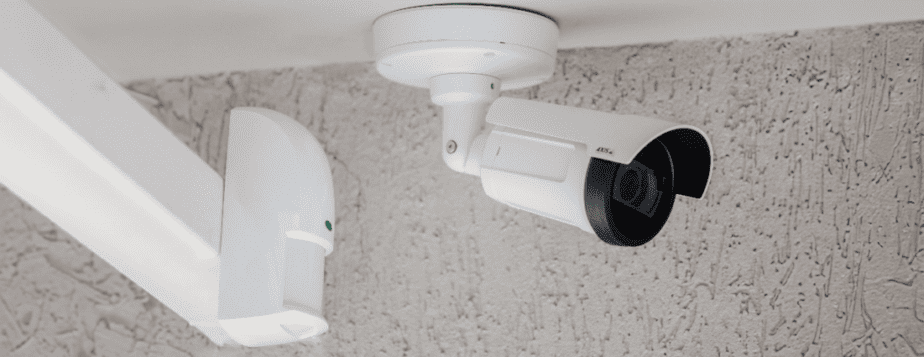
Understand the role of structured cabling in CCTV projects, including transmission quality, bandwidth, transfer rate, scalability, and best practices for integrated security networks.
Check it out!
Structured cabling plays a fundamental role in CCTV (Closed-Circuit Television) projects. An efficient monitoring system requires a stable, high-performance network infrastructure to transmit high-definition images.
In this article, we will explore how structured cabling has become fundamental to the performance of CCTV systems, which increasingly require bandwidth and network stability to perform their role satisfactorily in corporate security, and how a well-designed project can directly influence the efficiency and scalability of the system.
[elementor-template id=”24446″]
The Importance of Structured Cabling in CCTV
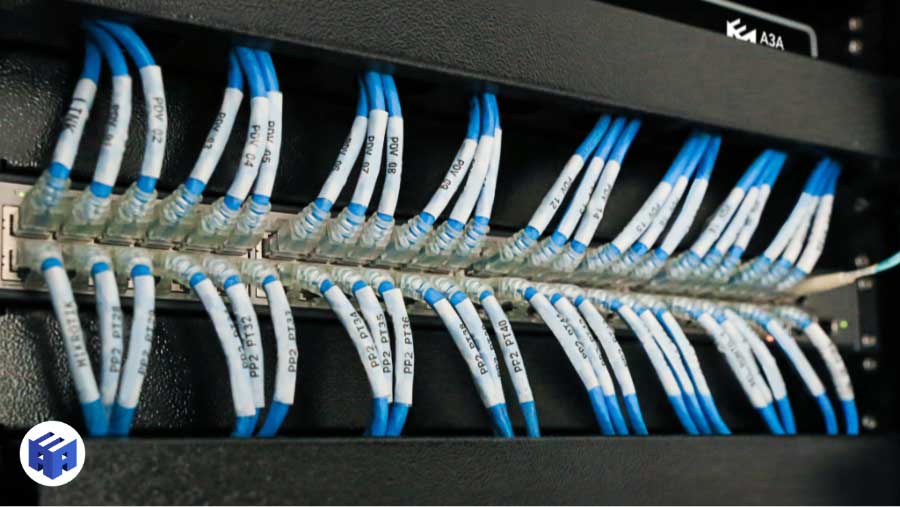
A3A Engenharia de Sistemas Archive
Structured cabling is responsible for organizing and standardizing the entire cabling infrastructure of a CCTV system, connecting cameras to network video recorders (NVRs) or recording servers, depending on the technology and scope of the solution.
One of the main differentiators of structured cabling is its scalability, which allows the system to be expanded whenever necessary. With a properly designed infrastructure, camera data transmission becomes stable, allowing images to be captured and transmitted without interruptions.
Structured cabling also makes it possible to integrate different types of cameras and devices, accommodating both IP cameras and analog cameras, which allows migration from analog to digital according to the needs of the company’s security team. This enables the CCTV system to be highly flexible, evolving as technology advances and needs change.
Advantages of Structured Cabling in CCTV Projects
- Quality and Stability of Video Transmission:
In CCTV systems, image quality is fundamental to ensuring security and efficient monitoring. Structured cabling ensures that cameras can transmit high-definition images (HD, 4K) without signal drops or interference. This translates into clearer and more reliable recordings and live transmissions. - Ease of Maintenance and Expansion:
A CCTV system may require maintenance or expansion as new cameras are added or infrastructure is updated. Structured cabling makes the maintenance process much simpler, allowing quick identification of cables and equipment. In addition, it facilitates the addition of new devices without the need to restructure the entire network. - Reduced Interference and Signal Loss:
In environments with high electromagnetic interference, such as industrial areas, cabling quality is crucial to avoid signal loss. Structured cabling, when well planned and implemented with proper shielded cables, significantly reduces the impact of this interference, ensuring that the CCTV system operates with maximum efficiency.
Best Practices in Structured Cabling Design for CCTV
- Planning for Future Expansion:
When designing structured cabling for CCTV, it is important to consider medium- and long-term expansion needs. The system should be sized to support the addition of more cameras and devices without requiring changes to the original infrastructure. - Choosing Appropriate Cables and Components:
The correct choice of cables is fundamental to project success. CAT6 network cables are widely recommended for CCTV systems that use IP cameras, and it is often necessary to specify shielded cables in electrical environments subject to electromagnetic interference. - Implementing Redundancy to Ensure Security and Reliability:
Redundancy is a recommended practice to ensure that the CCTV system continues operating in the event of failures. This may include the use of alternative cable paths or the creation of redundant circuits so that, if one part of the network fails, another can take over without compromising system operation.
Importance of Specialized Consulting

Implementing a CCTV system with structured cabling requires detailed technical analysis and the involvement of qualified professionals. Hiring a specialized consulting firm is a fundamental step to ensure project success. Engineers specialized in network infrastructure can ensure that the project is properly sized, taking into account both current and future needs of the company. In addition, specialized consulting ensures that the system complies with technical and security standards.
Transfer Rate vs. Bandwidth
In projects involving integrated security solutions, such as CCTV, access control, and alarm systems, transfer rate and bandwidth are crucial factors to ensure that systems operate efficiently and in sync. An undersized network infrastructure can compromise the integrity and performance of all subsystems, resulting in communication failures, data loss, and even temporary interruption of essential functions.
Transfer Rate: Quality and Efficiency of Security Systems
Transfer rate refers to the amount of data that can be transmitted over the network within a given period of time. In security projects, this metric is especially important because each subsystem generates a specific volume of data that must be processed and transmitted continuously. For example:
- CCTV with high-definition cameras requires a high transfer rate to transmit real-time video with consistent quality, especially in systems with multiple cameras or those using resolutions such as 4K.
- Access control systems depend on a fast network so that credentials can be verified without delays, ensuring that doors and barriers grant or deny access in real time.
- Alarm systems and intrusion sensors need to send alerts instantly to monitoring centers, and an inadequate transfer rate can delay the response to critical incidents.
An integrated security project must ensure that network transfer rate is sized according to the needs of each subsystem, ensuring that all devices can operate simultaneously without compromise.
Bandwidth: Support for Data Traffic
Network bandwidth refers to the total data transmission capacity over a given period. In a security project with integrated solutions, bandwidth must be sufficient to support traffic from all devices and systems at the same time. This means considering both the data volume from CCTV cameras and the traffic generated by access control readers and alarms.
Insufficient bandwidth can cause network congestion, resulting in:
- Packet loss, which compromises the image quality of CCTV cameras.
- Delays in communication among access control devices, affecting system effectiveness.
- Failures in alarm alert transmission, which may compromise facility security.
Transfer rate and bandwidth are critical elements for ensuring the success of projects with integrated security solutions. They ensure that CCTV, access control, and alarm systems operate efficiently, with performance and without interruptions.
Correctly sizing the network from the outset allows security systems to maintain expected performance, offering reliable protection and continuous integrated operation.
Conclusion
Projects with integrated security solutions, such as CCTV, access control, and alarm systems, depend on a well-sized network to ensure efficiency and reliability. Two fundamental aspects of this infrastructure are transfer rate and bandwidth. Transfer rate ensures that large volumes of data, such as high-definition video and access control data, are transmitted in real time without quality loss or delays. Bandwidth, in turn, ensures that the system supports simultaneous traffic from multiple devices, avoiding congestion and operational failures.
A network with an inadequate transfer rate may result in compromised video, slow response in access control systems, and failures in security alerts. Likewise, insufficient bandwidth may overload the network, compromising the operation of security subsystems. Therefore, properly sizing the network is essential to ensure efficient operation of all integrated systems.

Final Considerations
For integrated security projects to operate at maximum efficiency, it is crucial that the network be properly designed to support the volume of data generated by each subsystem. A stable, well-sized network ensures the continuous functionality of security systems and guarantees scalability for future expansions. Investing in a network infrastructure project is an essential step to ensure a robust and reliable long-term security solution.
Acknowledgements
Thank you for taking the time to read this article. We hope the information shared has been useful and has provided valuable insights into the importance of structured cabling in integrated security projects. If you have any questions or would like to know more about the topic, we are available to help.
Suggested reading:
Wired Network vs. Wireless Network
Overt Monitoring vs. Active Monitoring
