
Understand the main types of computer networks, their classification criteria, architectures, connection technologies, and practical applications in different environments.
Check it out!
The types of computer networks represent the different ways to structure and organize a network, taking into account criteria such as the technology used, purpose, topology, and communication method between devices. Understanding these different types is essential for planning efficient, secure solutions suited to the needs of each environment, whether domestic, corporate, or large-scale. Among the classification criteria, geographic scope is well known, but this article focuses on presenting the main categories of computer networks, their characteristics, and their practical applications.
Computer Networks are systems that interconnect devices so they can access data, share resources, and communicate with one another.
[elementor-template id=”24446″]
If you are looking for details about the classification of computer networks by geographic scope, such as LAN, MAN, WAN, and others, we recommend reading our dedicated article: Classification of Computer Networks by Geographic Scope. That way, you can explore this specific criterion in greater depth before or after learning about the different types of networks presented in this guide.
Although the terms “network types” and “network classification by scope” are often used as synonyms, in practice they have different focuses. Network types refer to different forms of organizing and applying computer networks, considering criteria such as purpose, technology employed, communication method, or topology. Classification by geographic scope, on the other hand, deals specifically with the territorial extent covered by the network, as in local area networks (LAN), metropolitan area networks (MAN), and wide area networks (WAN). In other words, scope is only one of the possible classification criteria for computer network types.
Now that it is clear that “network types” and “network classification by scope” are complementary subjects, we can move on to the focus of this article: the main types of computer networks and their practical applications. If you still have any doubts about the differences between these concepts, we recommend reading our specific article on classifying networks by geographic scope to further explore that criterion.
“Understanding the difference between network types and their classification by scope is essential for correctly specifying a communication infrastructure. The right choice directly affects efficiency, security, and system expansion capacity, making the project more efficient and aligned with the needs of each environment.”
– Eng. Altair Galvao, specialist in networks and structured cabling
The Main Network Types Are:
1. LAN (Local Area Network):
- Description: A local network that covers a small geographic area, such as an office, school, or home.
- Characteristics: High communication speed, low installation cost, and use of Ethernet cables or Wi-Fi. It is usually managed by an internal network administrator.
- Examples: Computer networks in a company, home networks.
2. WAN (Wide Area Network):
- Description: A network that covers a large geographic area, connecting multiple LANs that may be located in different cities, countries, or continents.
- Characteristics: Uses technologies such as dedicated lines, satellites, and internet connections. It is slower than LANs because of distance and connection type.
- Examples: The internet is the largest WAN in existence.
3. MAN (Metropolitan Area Network):
- Description: A network that covers a metropolitan area, such as a city or a university campus.
- Characteristics: Larger than a LAN but smaller than a WAN. It may use fiber-optic technologies for high-speed connections.
- Examples: Networks interconnecting several branches of a company within a city.
4. PAN (Personal Area Network):
- Description: A personal network used to connect devices close to a person, usually within a range of a few meters.
- Characteristics: Wireless connections such as Bluetooth and Wi-Fi Direct to connect devices such as smartphones, tablets, and headphones.
- Examples: A connection between a mobile phone and a smart watch.
5. WLAN (Wireless Local Area Network):
- Description: Similar to a LAN, but it uses wireless communication (Wi-Fi) instead of cabling.
- Characteristics: Offers mobility and is easy to expand and configure. It may suffer from interference and requires closer attention to security.
- Examples: Wi-Fi networks in companies, homes, and coffee shops.
6. SAN (Storage Area Network):
- Description: A network dedicated to data storage, connecting servers and storage devices at high speed.
- Characteristics: Focused on high performance and the management of large data volumes. It uses technologies such as Fibre Channel or iSCSI.
- Examples: Data center storage networks.
7. CAN (Campus Area Network):
- Description: A network that connects several buildings within a campus, such as universities, companies, or military facilities.
- Characteristics: It covers a larger area than a LAN, but a smaller one than a MAN, using a combination of fiber-optic cabling and wireless connections.
- Examples: University networks connecting classroom buildings, libraries, and student residences.
8. VPN (Virtual Private Network):
- Description: A virtual network that allows secure connections between devices over a public network (such as the internet).
- Characteristics: It creates an encrypted tunnel to ensure data privacy and security, and is widely used for remote access to corporate networks.
- Examples: Remote employee access to internal company systems.
These networks vary in size, complexity, and purpose, and can be classified into different types based on specific criteria.
Classification Criteria
The classification of computer networks can be carried out based on a series of technical criteria that analyze different aspects and characteristics of networks:
Architecture
Network Architecture refers to the structured organization of the components of a network, defining how devices are interconnected, how they communicate, and how they share resources.
A Network Architecture Design involves several critical aspects, including defining the Network Topology, carefully selecting hardware and software, choosing the transmission media to be used, specifying communication protocols, as well as installation and technical documentation.
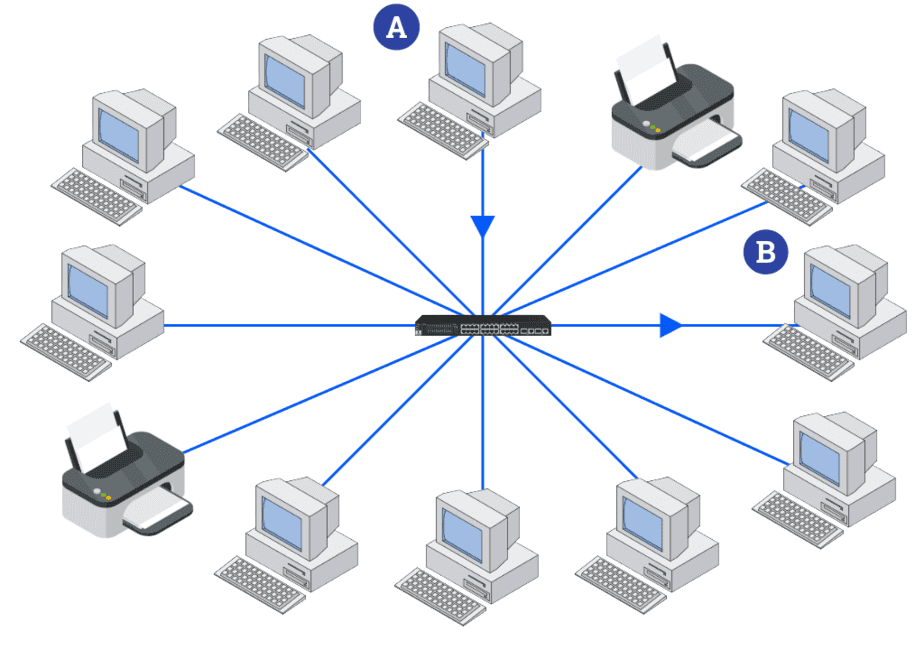
A3A Engenharia de Sistemas collection
In general, networks can be classified into two fundamental architecture models:
Client-Server Networks
Client-server architecture consists of dividing responsibilities between two main components: the client and the server, which communicate through a network.
In this model, the server is responsible for managing, processing, and providing resources, while the client requests them.
Communication between client and server is based on network protocols, which define the format, sending, and receiving of messages. This ensures that both sides correctly understand and process requests and responses.
A practical example of this architecture is an IP Video Monitoring System.
In this case, the server, equipped with video management software (VMS), centralizes the cameras, stores recordings, processes events, and provides access to real-time video.
The client can be a viewing application on a computer or mobile device, interacting with the server to access the system’s features.
This architecture allows centralized data management and analysis, offering advantages such as scalability and the ability to implement robust security and access-control measures.
Within this architecture, there are more specific variations, such as multi-tier architecture and cloud architecture. These approaches expand the capabilities of client-server architecture to meet more specific needs and scenarios.
Peer-to-Peer (P2P) Networks
Peer-to-peer (P2P) architecture is a distributed network model in which all connected devices simultaneously act as clients and servers, eliminating the need for a central server.
In a P2P network, each node (or peer) can provide and consume resources, such as files, bandwidth, or processing power, in a decentralized way. This allows each device to share resources with others on the network without depending on a centralized server to manage operations.
In the context of home networks and small businesses, P2P architecture simplifies network configuration by eliminating the need for dedicated servers. Each device can share resources such as files and printers directly with other devices on the network through individual settings.
On the internet, P2P networks are widely used in file-sharing systems. In these systems, files are broken into smaller blocks that are distributed among various participating devices.
The decentralization characteristic of P2P networks offers simple and efficient deployment, especially in environments where configuration complexity and security concerns are lower.
Bandwidth management, as well as data integrity and authenticity, are critical issues that must be addressed in P2P implementations, especially in large-scale scenarios or where security is a concern.
Ownership
The concept of ownership in networks refers to the control and administration of network resources, whether they are managed by a public or private entity. This control may include the physical infrastructure, such as cables, routers, and servers, as well as the data traveling through the network.
Network ownership determines who has the authority to manage, configure, and maintain the infrastructure, as well as define security, access, and update policies.
Depending on the entity that holds ownership, networks can be classified as public or private, each with its own operational characteristics and purposes.
Public Networks
Public networks are accessible to the general public and maintained by government entities or private companies operating telecommunications services.
Common examples of public networks include the internet and mobile phone networks.
These networks are designed to accommodate a large number of simultaneous users, offering high scalability and broad geographic coverage.
The architecture of these networks must support intense data traffic, ensuring availability and adequate performance for different types of applications and services.
However, because they are open, public networks are more vulnerable to security threats, such as cyberattacks and data breaches.
Protecting these networks requires complex security management, including the implementation of robust security protocols, data encryption, and continuous monitoring to detect and mitigate potential threats.
Private Networks
Private networks are configured and maintained by organizations or individuals for exclusive use. Examples include internal corporate networks, educational institution networks, and home networks.
This type of network offers greater control over resources and data, allowing the implementation of customized security policies.
The infrastructure of a private network may consist of owned or leased equipment, and management is carried out internally by the organization’s IT team or by a company specialized in IT services.
Private networks are more secure compared to public networks because of restricted access control and the ability to apply security measures tailored to the organization’s needs.
Application
The concept of application in networks refers to the purpose and context in which a network is used, determining the functionalities and technical requirements it must meet.
Each application imposes a specific set of demands, such as data transmission capacity, security, availability, and performance, which define the network’s architecture and design.
The application of a network directly influences its characteristics, such as the type of technology employed, the chosen topology, and the adopted communication protocols.
Residential Networks
Residential networks use technologies such as Wi-Fi and Ethernet to interconnect devices within a residence, providing efficient communication and internet access.
The typical configuration of these networks involves installing a router, usually provided by the telecommunications provider, which acts as the central distribution point for the internet connection.
This router can be complemented by switches, which expand the number of available ports for wired connections, and access points (APs), which increase the reach and coverage of the Wi-Fi signal in larger or difficult-to-cover areas.
These networks are designed to ensure constant and reliable connectivity, supporting a broad range of activities, from web browsing and media streaming to controlling IoT (Internet of Things) devices such as security systems, smart thermostats, and virtual assistants.
Network efficiency depends on choosing the right devices and optimizing system configuration, ensuring low latency and high bandwidth to support multiple simultaneous connections without degrading performance.
Enterprise Networks
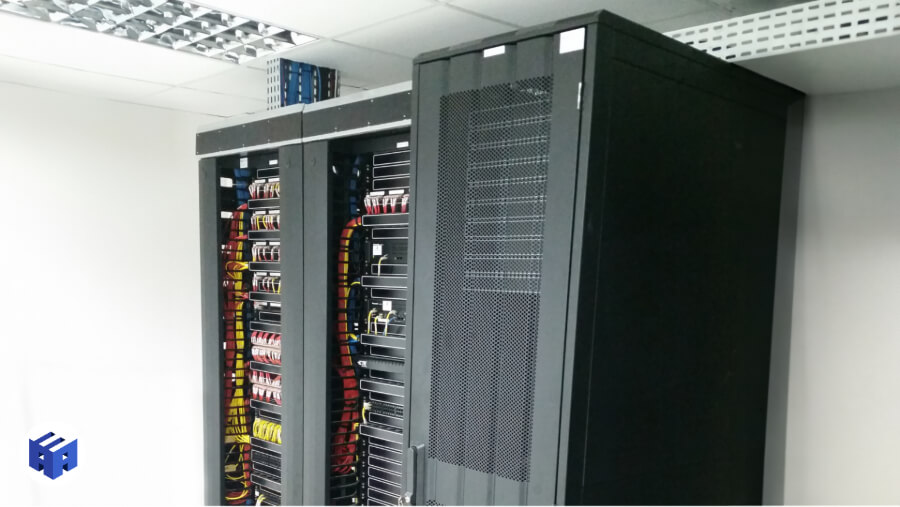
Enterprise networks are complex infrastructures designed to support communication and data flow within medium- to large-sized organizations.
They use a combination of advanced routing technologies and protocols to connect devices such as servers, workstations, and printers, ensuring security, performance, and scalability.
The architecture of an enterprise network generally includes managed switches, routers, access points (APs), firewalls, and, in many cases, PBX systems for telephony.
Network segmentation, through VLANs (Virtual Local Area Networks), is widely used to isolate different departments or systems within the company, increasing efficiency in data transmission.
In addition, enterprise networks are often integrated with data centers and cloud services, enabling the hosting of critical applications and secure remote access through VPNs (Virtual Private Networks).
Continuous monitoring and implementation of strict security policies, including the use of firewalls, intrusion prevention systems (IPS), and network segmentation, are crucial for protecting against cyber threats and ensuring the availability, integrity, and confidentiality of corporate data.
Industrial Networks
Industrial networks connect equipment and automation systems in manufacturing and production environments.
They use specific protocols such as Modbus, Profibus, and Ethernet/IP, designed for reliable, real-time communication between programmable logic controllers (PLCs), sensors, actuators, and supervisory control and data acquisition (SCADA) systems.
Industrial networks prioritize low latency and high availability, which are essential for automation and control processes. Security is critical, with strict measures to protect against cyberattacks that could compromise industrial operations.
Industrial networks also support integration with corporate systems for data analysis and process optimization.
Storage Networks (SAN)
Storage Networks (Storage Area Networks – SAN) are designed to connect servers to data storage devices, such as disk arrays and tape libraries, in order to consolidate and centralize storage.
They use technologies such as Fibre Channel and iSCSI to provide high speed and low latency in data transfer. SANs offer benefits such as high availability, scalability, and efficient management of large data volumes.
They are critical in environments that demand high performance and reliability, such as data centers, where they support enterprise applications, backup and disaster recovery systems, and cloud storage services.
SAN administration involves advanced management tools to monitor performance, allocate storage resources, and ensure data security.
Connection Technology
Wired networks use physical cables for data transmission, offering a stable and reliable connection.
The most common technology is Ethernet, which uses twisted-pair cables, such as Cat5e, Cat6, Cat6a, and Cat7, to connect devices in a local area network (LAN). These cables support speeds of up to 10 Gbps and are widely used in corporate and residential environments.
Another technology is coaxial networking, which uses coaxial cables for data transmission and is often employed in internet and cable TV services, although it is less common in new installations.
Wired Networks
Wired networks use physical cables for data transmission, offering a stable and reliable connection.
The most common technology is Ethernet, which uses twisted-pair cables such as Cat5e, Cat6, Cat6a, and Cat7 to connect devices in a local area network (LAN).
These cables support speeds of up to 10 Gbps and are widely used in corporate and residential environments.
Another technology is coaxial networking, which uses coaxial cables for data transmission and is often employed in internet and cable TV services, although it is less common in new installations.
Metallic Networks

Metallic networks refer to technologies that use metallic conductors to transmit electrical signals. Twisted-pair cables are widely used in Ethernet networks and are made up of pairs of insulated wires twisted together to reduce interference and crosstalk. Coaxial cables, on the other hand, consist of a central copper wire and a shielding layer, and are used mainly for broadband and television connections.
Fiber-Optic Networks
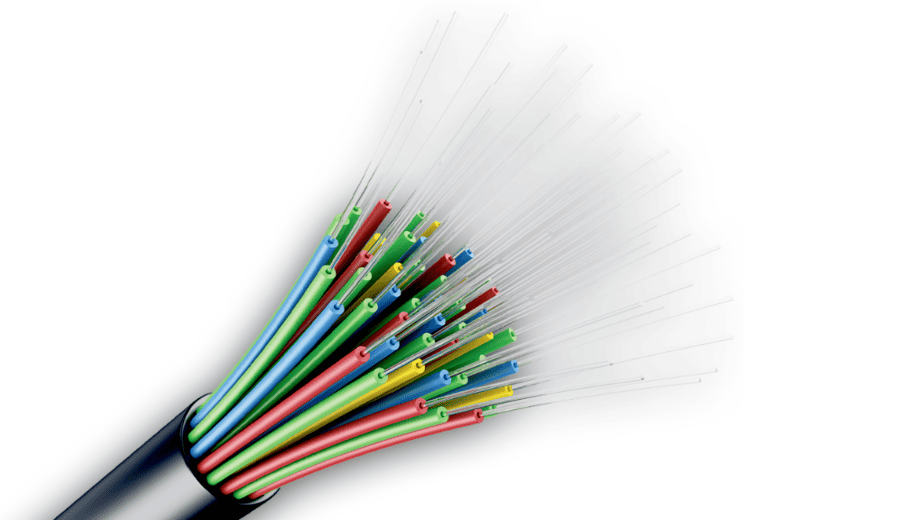
Fiber-optic networks use glass or plastic strands to transmit data as light pulses. This type of network offers high bandwidth, supporting extremely high speeds, which is ideal for applications that demand large volumes of data, such as data centers and long-distance communications. In addition, fiber optics have lower attenuation over long distances compared with metallic cables, ensuring more efficient and higher-quality communication.
Wireless Networks

Wireless networks transmit data through radio waves, offering flexibility and mobility. Wi-Fi, based on IEEE 802.11 standards, allows devices to connect to a local network without cables, with newer versions such as Wi-Fi 6 and Wi-Fi 6E providing improvements in speed, capacity, and efficiency. Bluetooth is another wireless technology used for short-range communication between devices, ideal for accessories and mobile devices, with lower data rates compared with Wi-Fi but efficient for specific applications.
Geographic Area Covered
Classifications can range from extremely small networks on the nanometer scale to vast global networks such as the Internet. Each type of network has distinct characteristics and is used for different applications.
Personal Area Networks (PAN)
Personal Area Networks (PAN) are networks designed to connect devices in a very limited area, usually around a single individual. The most common technologies used in PANs include Bluetooth and Zigbee. These networks are ideal for communication between personal devices such as smartphones, tablets, and laptops, allowing data exchange and file synchronization over short distances. The typical range of a PAN is a few meters, and its configuration is often wireless, using radio frequencies for communication.
Local Area Networks (LAN)
Local Area Networks (LAN) cover a limited geographic area, such as an office, a home, or a university campus. These networks allow multiple devices to be connected within a restricted area, providing high speed and low latency. LANs can be implemented using Ethernet cables for wired connectivity or Wi-Fi for wireless connectivity. Ethernet technology is common in corporate and residential LANs, while Wi-Fi is widely used for wireless connectivity. A LAN setup enables the sharing of resources such as printers and files among connected devices.
Campus Area Networks (CAN)
Campus Area Networks (CAN) cover a larger area than a LAN, usually a university campus or a corporate building complex. These networks interconnect multiple LANs within a geographically defined area, supporting data communication between different buildings and sectors. A CAN infrastructure may include high-capacity switches and routers, as well as fiber-optic links to ensure the high bandwidth and low latency required to support communication between internal and external networks.
Metropolitan Area Networks (MAN)
Metropolitan Area Networks (MAN) cover a larger area than a CAN, typically a city or metropolitan region. These networks connect different CANs and local networks within an urban area, enabling large-scale data communication. MANs are often implemented using fiber-optic and microwave technologies to support high transmission speeds and large data volumes. They are used by internet service providers and companies to provide connectivity between different geographically dispersed locations within a metropolitan area.
Wide Area Networks (WAN)
Wide Area Networks (WAN) cover large geographic areas, often spanning countries or continents. WANs connect local and metropolitan networks in different locations, enabling global communication. WAN technology may include transoceanic fiber-optic links, satellites, and cellular communication networks to ensure long-distance connectivity. WANs are fundamental to the internet infrastructure, enabling data exchange between servers and clients on a global scale and supporting communication and collaboration between companies and organizations located in different parts of the world.
Conclusion
Computer networks play a fundamental role in communication and information sharing in the modern world, connecting everything from personal devices to complex enterprise and government infrastructures. Understanding the main network types, such as LAN, WAN, MAN, PAN, and others, helps in choosing the best configuration for each application, ensuring efficiency, security, and connectivity suited to specific needs.
Each type of network has unique characteristics that make it more suitable for certain scenarios, whether to connect personal devices, manage large data volumes in companies, or provide secure access to corporate networks via VPN. Choosing the right network type is crucial for overall performance and communication security, highlighting the importance of proper planning and implementation of these technologies in any environment.
In summary, computer networks not only facilitate the exchange of information and resources, but also drive technological innovation by connecting people and systems around the world in an increasingly integrated and efficient manner.
Acknowledgements
Thank you for taking the time to learn more about computer networks with us. We hope the information has been useful to you.
If you need more guidance or are ready to take your connectivity to the next level, our team is here to help.

Frequently Asked Questions
The main standards that regulate structured cabling are ABNT NBR 14565 (Brazil), ISO/IEC 11801 (international), and ANSI/TIA-568 (USA).
In Brazil, structured cabling designs should mainly consider two standards: ABNT NBR 14565 and ABNT NBR 16869.
ABNT NBR 14565 is the main standard and establishes the general requirements for the design, installation, administration, and performance of structured cabling systems in commercial, industrial, and residential environments. It addresses aspects such as topology, cable categories, identification, documentation, and good practices to ensure network efficiency and interoperability.
ABNT NBR 16869 complements NBR 14565 by bringing detailed guidelines for infrastructure planning, test execution, configuration of optical and metallic links, and requirements for automated infrastructure management. It is especially relevant for high-complexity environments, such as data centers and large corporate facilities, but it can be applied in
ABNT NBR 14565 is the Brazilian standard that establishes requirements and best practices for the design, installation, and administration of structured cabling systems in commercial, industrial, and residential environments. It addresses points such as topology, performance, identification, and documentation of cabling systems.
In addition to NBR 14565, ABNT has other important standards for network infrastructure, such as NBR 16264 (optical cabling), NBR 16415 (cabling systems for residential buildings), NBR 5410 (low-voltage electrical installations), among others related to infrastructure and safety.
ISO/IEC 11801 is the main international standard for structured cabling, specifying standards for design, installation, and performance of cabling systems in commercial buildings, industrial environments, and data centers. It serves as a global reference and a basis for several national standards.
ANSI/TIA-607 is an American standard that addresses grounding and bonding requirements in structured cabling systems. It defines practices to ensure electrical safety and minimize electromagnetic interference in network systems.
Classification by scope (LAN, MAN, WAN, etc.) is only one of the criteria used to organize computer networks, taking into account the area covered by each network. Network types, on the other hand, consider other aspects, such as the technology used, purpose, topology, and communication methods.
The main types include: LAN (Local Area Network), MAN (Metropolitan Area Network), WAN (Wide Area Network), PAN (Personal Area Network), WLAN (Wireless LAN), SAN (Storage Area Network), and hybrid networks.
The choice depends on the size of the environment, speed requirements, security, mobility, budget, and expansion possibilities. A well-sized design evaluates all of these factors.
Peer-to-peer networks distribute functions equally among devices. In client-server networks, servers centralize resources and services for clients.
Topology determines how devices are interconnected, impacting performance, resilience, and ease of maintenance. Common topologies include star, bus, ring, and mesh.
Maintaining performance, ensuring security, avoiding bottlenecks, planning future capacity, making different technologies compatible, and ensuring scalability without affecting operations.
Relevant Links
eBook – Why hire a Structured Cabling Design?
Technical Standards for Structured Cabling
Network Certification for Structured Cabling Systems
Consulting on Structured Cabling Designs
Structured Cabling Installation
How to avoid common problems in Structured Cabling Systems?
Main benefits of Structured Cabling
Standards References
“NBR 14565 – Structured Cabling for Commercial Buildings” – ABNT (Brazilian Association of Technical Standards)
“ISO/IEC 11801 – Generic Cabling for Customer Premises” – ISO/IEC (International Organization for Standardization) & (International Electrotechnical Commission)
“ANSI/TIA 568 – Generic Telecommunications Cabling for Customer Premises” – ANSI/TIA (American National Standards Institute) & (Telecommunications Industry Association)
“What are structured cabling services and their corresponding technical responsibilities?” – CREA (Regional Council of Engineering and Agronomy)
“Structured Cabling Systems: the Fact File” – CommScope
