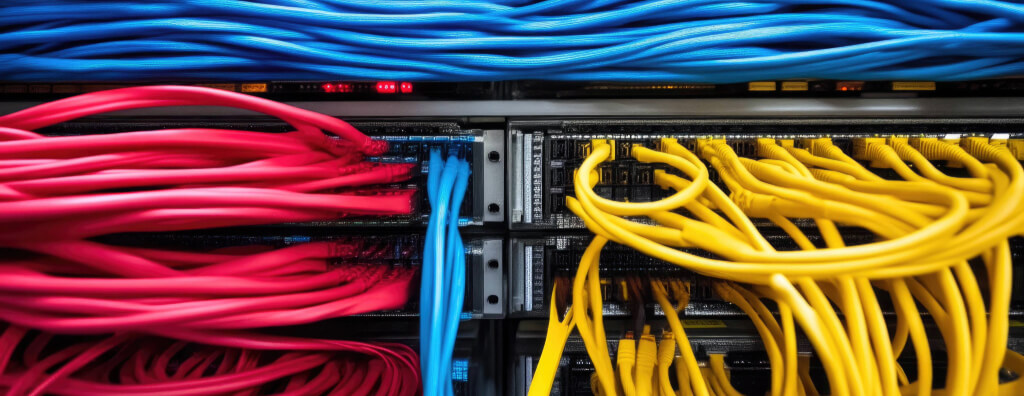
Structured cabling installation is one of the most critical factors for the performance and reliability of corporate networks. Far beyond simply “running cables,” a correct installation depends on technical criteria, rigorous standards, and a professional approach at every stage. In this article, you will discover what sets a high-quality installation apart, how to avoid common […]
Check it out!
Structured cabling installation is one of the most critical factors for the performance and reliability of corporate networks. Far beyond simply “running cables,” a correct installation depends on technical criteria, rigorous standards, and a professional approach at every stage.
In this article, you will discover what sets a high-quality installation apart, how to avoid common market pitfalls, and why relying on a specialized team is essential to protect your investment and ensure system performance.
[elementor-template id=”24446″]
Structured Cabling Installation: Operational Risks and Strategic Impacts
When structured cabling installation fails to follow professional criteria, the risks go far beyond isolated connectivity issues. Companies that neglect proper technical practices may face unexpected outages, performance degradation, high rework costs, and even direct impacts on business operations.
Intermittent failures, maintenance difficulties, network slowdowns, and expansion challenges are recurring symptoms in poorly executed infrastructures. Furthermore, the lack of documentation and technical accountability makes audits difficult, compromises information security, and can create legal obstacles in regulated sectors.
That is why every stage of the installation must be led by specialists, taking into account not only the current scenario but also the technological evolution and future business requirements.
Technical Standards and Criteria for a Professional Installation
To ensure performance, safety, and legal compliance, every structured cabling installation must strictly follow the technical standards recognized in the market. In Brazil, the main references are:
- ABNT NBR 14565 – Structured cabling systems for commercial buildings
- ANSI/TIA-568 – International standard for telecommunications cabling
- ISO/IEC 11801 – General requirements for cabling in data centers, offices, and industrial environments
These standards determine material specifications and quality, maximum distances, installation methods, cable organization, testing criteria, physical safety, and documentation requirements.
To understand each standard and its requirements in detail, read our full article:
Structured Cabling Technical Standards: ABNT, TIA, and ISO
What Sets a Professional Structured Cabling Installation Apart
A truly professional structured cabling installation goes far beyond the physical execution of cables. It involves rigorous processes, technical accountability, and the assurance of auditable results.
Here are the main criteria that should be required in any serious project:
- Approved technical design and ART
Every installation must begin with a detailed executive design, approved and accompanied by a Technical Responsibility Annotation signed by a licensed engineer. - Certified and approved materials
Exclusive use of cables, connectors, patch panels, and accessories from recognized brands, in compliance with technical standards. - Physical planning and organized routes
Definition of the best routes, avoiding risk areas (heat, EMI, humid zones) and respecting minimum bend radius and maximum distances. - Cable organization, labeling, and functional separation
Use of trays, guides, tags, and clear identification to facilitate maintenance and future expansions. - Testing and certification of all network points
All points must be tested with certified equipment (e.g., Fluke), including a technical compliance report and performance metrics. - Complete as-built documentation
Delivery of all documentation, floor plans, test reports, and updated network maps of the installed cabling. - LSZH-rated cables in critical areas
Protection against flame propagation and compliance with safety requirements in sensitive environments. - Qualified team and continuous technical supervision
Specialist engineer supervision throughout the entire project and final technical validation upon delivery.
Improvised installations without these criteria frequently result in losses, rework, and outages, compromising IT infrastructure and business operations.
What to Require from a Professional Structured Cabling Installation
To ensure system performance and longevity, it is essential to hire a specialized company for structured cabling installation. Among the criteria that should be required from the vendor:
- Qualified and certified team
Supervision by a licensed electrical engineer, technicians with proven training, and formal technical accountability (ART). - Certified materials and components
Use of certified cables, connectors, and accessories, strictly in compliance with technical standards. - Auditable processes and rigorous documentation
Delivery of executive design, test reports, as-built floor plans, and complete documentation of all network points. - Physical planning and execution following best practices
Definition of the best routes, compliance with bend radius, use of trays, cable organization, and labeling. - Testing and certification of 100% of network points
Performance testing, continuity, attenuation measurement, and issuance of technical compliance reports. - Commitment to standards and safety
Full compliance with regulatory requirements (ABNT, TIA, ISO), use of LSZH cables in critical areas, and prevention of environmental risks. - Post-deployment support and technical follow-up
Availability for future adjustments, maintenance, and guidance for network expansion.
Choosing a specialized company makes all the difference in quality, safety, and return on IT infrastructure investment.
Proper Material Selection
The selection of materials for a structured cabling installation must strictly follow what was defined in the structured cabling executive design.
Certified cables, connectors, and accessories are essential to ensure performance and longevity, but the technical decision on categories and specifications is a design-stage matter — not an execution-stage one.
The durability of a structured cabling system begins with the choice of quality materials. Low-quality cables or inadequate connectors can result in premature degradation, signal loss, and the need for frequent replacements.
Note: If your company does not yet have a structured cabling executive design, we recommend reading our comprehensive article on the topic, where we explain how to ensure that every stage of your infrastructure complies with best practices and technical standards.
Structured Cabling Project: Complete Guide to Stages, Costs, and Documents
Physical Infrastructure Planning
Good planning is essential to ensure both the durability and organization of the cabling. Defining adequate routes for cable runs, avoiding areas with interference or excessive heat, extends the system’s service life.
Plan cable routes that avoid areas with sources of electromagnetic interference (EMI) and heat, such as proximity to power cables and industrial equipment. Use conduits and ducts that protect cables and facilitate maintenance.
Essential criteria to ensure durability and performance:
- Proper use of cable trays, conduits, and raceways:
Cables must be routed through cable trays, conduits, or specific tubing, avoiding areas of excessive heat, electromagnetic interference (EMI), and humidity. - Compliance with minimum bend radius:
The recommended bend radius, as defined by technical standards, is at least 4 times the cable’s outer diameter for UTP/FTP/STP cables. Tighter bends can damage the internal structure of the pairs and compromise signal performance. - Maximum fill ratio:
- Conduits (closed ducts): maximum fill of 40% of the available internal cross-section, per standard.
- Ventilated cable trays: up to 50% fill is acceptable, due to better thermal dissipation and ventilation, allowing greater flexibility in cable organization.
The maximum fill must not exceed 40% of the available internal cross-section, to prevent crushing, impaired heat dissipation, and to maintain space for future maintenance.
- Ease of access and organization:
Ensure accessibility for inspections, maintenance, and expansions — always using labels and separating cables by function or sector, as defined in the infrastructure plan.
Attention to these technical parameters during installation is decisive for the longevity, safety, and scalability of the structured cabling system.
Cable Management: Organization and Labeling
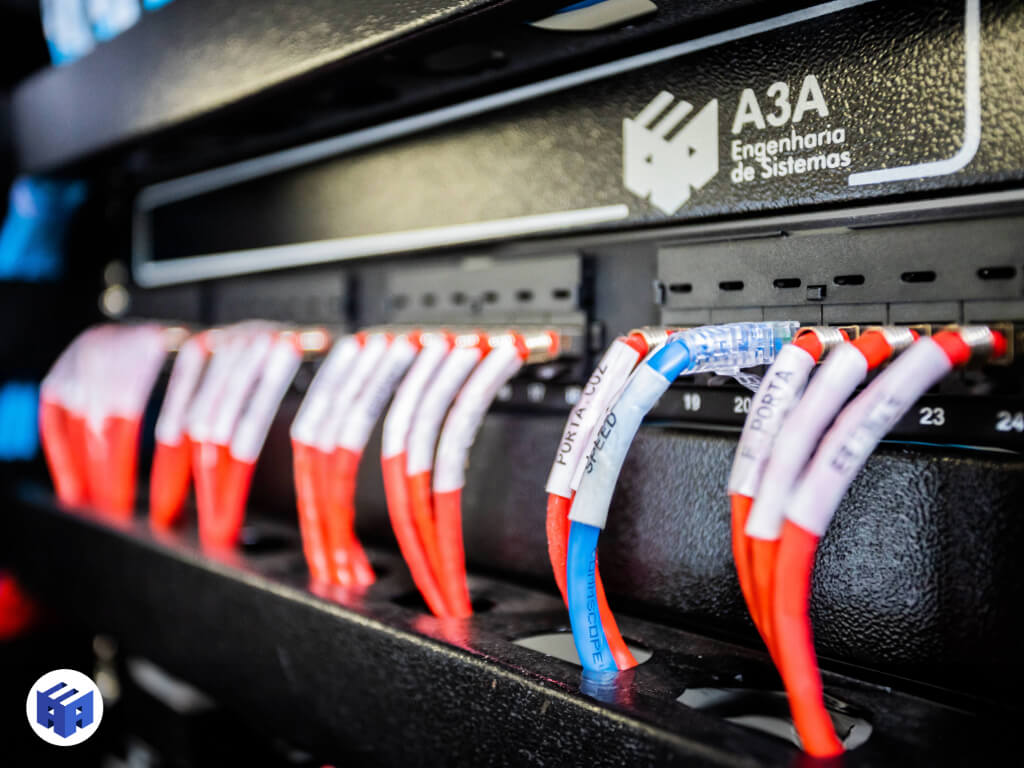
Execution: A3A Systems Engineering
In a professional structured cabling installation, the organization of cables inside racks, cable trays, and conduits is decisive for ease of maintenance, rapid fault identification, and the ability to expand without rework.
Best practices for cable management include:
- Use of horizontal and vertical cable managers in racks
- Physical separation of cables by function (data, voice, CCTV, etc.)
- Clear and standardized labeling with durable tags
- Proper bundling without excess, avoiding cable crushing
- Ease of access for visual inspection and targeted interventions
Correct identification and organization of cables significantly reduces response time for service calls and prevents failures caused by accidental disconnections or unplanned movements.
Proper cable organization not only facilitates maintenance but also extends system life by preventing physical damage. Keeping cables organized, labeled, and separated by function is an essential practice in any installation.
Use horizontal and vertical cable guides, trays, and cable ties to keep cables organized and in order. Clear identification of each cable through labels allows future adjustments or expansions to be carried out quickly and accurately, without causing system interruptions.
Use of Shielded Cables in Specific Environments
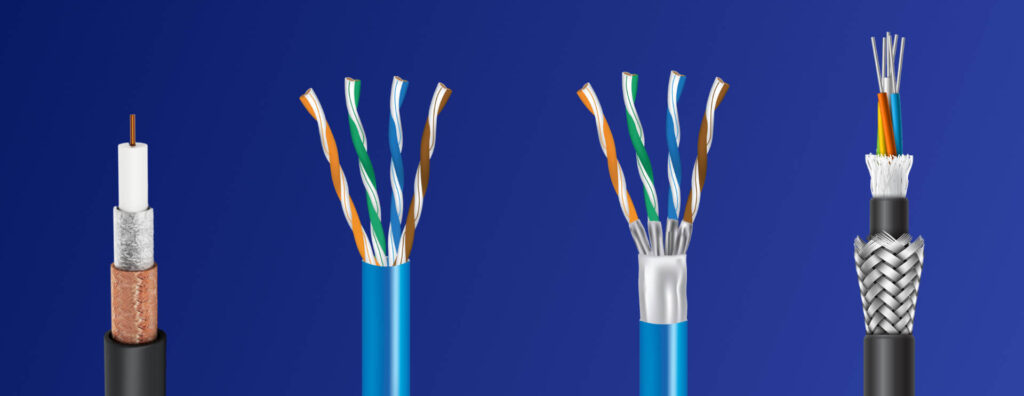
In certain environments — especially industrial areas or locations near high-power electrical equipment — electromagnetic interference (EMI) can compromise network performance.
In such situations, the use of shielded cables (STP/FTP) or fiber optic is essential to preserve signal integrity and ensure reliable communication.
Best practices for environments with EMI risk include:
- Use of properly grounded shielded cables, in accordance with technical specifications and applicable standards
- Preference for fiber optic in segments with greater sensitivity or requiring full immunity to electrical noise
- Avoid sharing conduits and cable trays with medium/high-power electrical cables whenever possible
These measures protect the system against performance losses, intermittent failures, and future rework, contributing to infrastructure availability and safety.
Want to know more about applications, advantages, and limitations of shielded cables?
Read our complete article on shielded cables
In certain environments, such as factories or locations with heavy electrical equipment, cables are exposed to high levels of electromagnetic interference, which can affect signal quality and compromise network performance.
Use shielded cables (STP) or fiber optic in environments with high interference risk, ensuring that the system maintains signal integrity even under adverse conditions.
Prevention of Cable Bends and Tension
The physical integrity of cables is a determining factor for the longevity and performance of any structured cabling installation.
During execution, it is essential to respect the mechanical limitations of the materials to avoid invisible damage that can cause signal loss or intermittent failures.
Principles to avoid problems:
- Maintain the minimum bend radius:
Do not bend cables beyond the recommended limit (at least 4 times the cable’s outer diameter, as per technical standards). - Avoid excessive tension:
During cable pulling, do not stretch cables beyond the manufacturer’s specifications. Excessive pulling tension can damage the internal structure and reduce service life. - Take care at connection and entry points:
Exercise extra caution at rack entry points, trays, and conduits — tight bends and accumulated tension at these points are common causes of failures. - Use appropriate accessories:
Guides, supports, and clips help keep cables organized, preventing weight accumulation on connectors and protecting against accidental damage.
These practices ensure that the network delivers the performance specified in the design and avoid rework or unexpected outages.
Complete Installation Documentation
A structured cabling installation is only considered professional when it includes detailed documentation of all executed stages.
The absence of up-to-date records makes maintenance more difficult, increases the risk of errors during expansions, and can even prevent technical audits or compliance certifications.
Key documents to be required at the end of installation:
- As-built floor plans and diagrams:
Accurate records of cable routes, network point locations, rack identification, patch panels, and connections. - Test and certification reports:
Detailed results for all installed points, including continuity, attenuation, crosstalk measurements, and compliance with technical standards. - Cable identification mapping:
A list of all network points with their labels and network function, facilitating any future intervention. - Installation descriptive report:
Technical summary of the solutions adopted, cable categories, accessories used, and methods applied.

System Testing and Certification
After completing a structured cabling installation, it is essential to carry out detailed technical tests to validate system performance and ensure compliance with applicable standards.
After completing the structured cabling installation, tests must be performed and reports issued. System certification ensures that cables were installed correctly and are operating within the expected technical parameters, without failures or performance issues.
Hire an engineering firm to conduct an inspection and certify the network using a cable certification analyzer to test each installed network point. This includes continuity, crosstalk, attenuation, and resistance tests. Certification provides the client with assurance that the system was installed correctly and is operating in accordance with standards.
Main steps of structured cabling certification:
- Continuity testing and mapping:
Confirmation that each cable is correctly connected and identified throughout the infrastructure. - Electrical parameter measurement:
Assessment of attenuation, crosstalk, resistance, and other metrics defined by technical standards (ABNT, TIA, ISO). - Use of certified instruments:
The use of approved instruments (e.g., Fluke analyzers) is essential to generate reliable reports accepted in audits. - Issuance of technical certification report:
A detailed document presenting the test results for each network point, proving that the installation meets the specified performance and quality requirements.

Source: A3A Systems Engineering
Want to know more about the process and importance of structured cabling certification?
Read our complete article on network certification
Preventive Maintenance
Even a structured cabling installation executed in accordance with the best technical practices requires periodic preventive maintenance to ensure ongoing performance, availability, and network safety.
Main recommended actions:
- Regular visual inspection:
Check the integrity of cables, connectors, patch cords, and organization in racks and cable trays. - Cleaning and organization:
Remove dust and debris from cable trays and racks, preventing accumulation that can affect performance. - Monitoring of critical points:
Quickly identify and correct wear, loose connectors, and signs of oxidation. - Periodic performance testing:
Conduct spot or sample measurements to confirm that the network continues to meet the technical and operational requirements defined in the design. - Scheduled patch cord replacement:
Replace heavily used patch cords or those showing signs of wear, ensuring signal quality.
Conduct periodic inspections to check the condition of cables, connections, and racks. Look for signs of wear or physical damage and correct any issues before they compromise network operation.
Preventive maintenance reduces unexpected failures, facilitates expansions, and extends the service life of the IT infrastructure investment.
Regular Visual and Physical Inspection
- Connector and Cable Inspection: Visually inspect cables and connectors periodically to identify signs of wear, physical damage, or disconnections. In industrial environments, the presence of dust, vibration, and high temperatures can accelerate component deterioration.
- Organization and Labeling: Check cable organization to ensure that cables are properly bundled, labeled, and arranged in cable trays or racks, avoiding tangles or excessive bends that can cause performance degradation.
Performance Testing
- End-to-End Certification: Conduct periodic certification tests using specific equipment to verify cable performance against cabling standards (such as Cat5e, Cat6, etc.). This ensures the system still meets throughput and latency requirements.
- Throughput Measurement: Throughput tests should also be performed to measure the actual data transfer rate in the system, identifying possible performance drops that may indicate cable or connection issues.
Patch Cord and Connection Maintenance
- Patch Cord Replacement: Patch cords, being removable connectors, are susceptible to wear from constant handling. Periodic replacement, especially in high-use racks, helps maintain signal quality.
- Connector Retightening: In high-vibration environments (such as industrial plants), RJ45 connectors can loosen over time. Checking and retightening critical connections helps prevent connectivity failures.
Cable Tray and Conduit Inspection
- Cable Tray Cleaning and Maintenance: Clean cable trays and conduits, removing dust, debris, or any obstruction that could damage cables. Also ensure there is no excessive heat buildup that could affect cable insulation.
- Grounding and Equipotential Bonding: Regularly check the integrity of the cable tray grounding system and equipotential bonding, ensuring protection against electromagnetic interference and surges.
Continuous Monitoring
- Network Monitoring System: Use monitoring tools to observe network performance in real time. This allows identification of performance fluctuations or outages that may indicate imminent cabling failures.
- Redundancy Allocation: Ensure that the structured cabling design includes redundancies at critical points. Regularly test these redundancies to ensure the system can bypass failures efficiently.
Replacement of Obsolete Components
- Replacement of Aging Cables: Identify and replace cables that no longer support throughput demands or are approaching end of service life. Upgrading to higher categories (such as Cat6a or Cat7) may be necessary as data demand increases.
- Patch Panel and Connector Upgrades: In high-performance networks, replacing older patch panels and jacks can significantly improve network efficiency.
Preventive maintenance is essential to avoid unexpected downtime and ensure the long-term stability of the structured cabling infrastructure, especially in industrial environments where adverse conditions can accelerate system deterioration.
Conclusion
A professionally executed structured cabling installation is the foundation for IT infrastructure performance, security, and scalability in any company.
Complying with technical standards, ensuring complete documentation, certifying all network points, and investing in preventive maintenance are not just differentiators — they are fundamental requirements for protecting the investment and avoiding future losses.
Relying on a specialized company ensures that every stage — from design to execution and post-deployment — is conducted with technical rigor and a focus on actual business needs.
Does your company need to deploy, expand, or is it experiencing network performance issues?
Count on the expertise of A3A Systems Engineering. With 29 years of experience, a certified multidisciplinary team, and hundreds of completed projects, we offer comprehensive technical diagnostics, advanced troubleshooting, and tailored solutions to ensure maximum performance and security in structured cabling.
Talk to our specialists and request a professional assessment to identify the root cause of issues, propose improvements, and ensure robust, reliable infrastructure ready for the future.
Regulatory References
“NBR 14565 – Structured Cabling for Commercial Buildings” – ABNT (Brazilian Association of Technical Standards)
“ISO/IEC 11801 – Generic Cabling for Customer Premises” – ISO/IEC (International Organization for Standardization) & (International Electrotechnical Commission)
“ANSI/TIA 568 – Generic Telecommunications Cabling for Customer Premises” – ANSI/TIA (American National Standards Institute) & (Telecommunications Industry Association)
“What are the structured cabling services and respective Technical Responsibilities?” – CREA (Regional Council of Engineering and Agronomy)
“Structured Cabling Systems: the Fact File” – CommScope
Frequently Asked Questions
Slowdowns can be caused by physical cabling issues, excessive improvised connections, inadequate cable categories, electromagnetic interference, poorly made connections, or even incorrect settings on active equipment. Accurate diagnosis requires physical inspection, performance testing with certified equipment, and detailed infrastructure analysis by specialists.
The ideal approach is to hire a specialized networking company to perform a site survey and technical diagnosis. This consulting service includes on-site inspection, professional analyzer tests (such as Fluke), assessment of cable conditions, racks, organization, and documentation, plus a comprehensive report with correction and improvement recommendations.
If your network shows slowdowns, frequent drops, difficulty adding new network points or equipment, or lacks up-to-date documentation, it is a sign that the system may be outdated and needs professional assessment.
The supplier must deliver as-built floor plans, a certification report for all network points (e.g., Fluke test), a descriptive report, and all technical documentation related to the design and execution.
Installations performed without technical criteria increase the risk of failures, rework, operational losses, and may even compromise the company’s security. Only a specialized company guarantees compliance with standards, technical accountability (ART), and post-deployment support.
Environments with high electromagnetic interference (EMI), the presence of industrial machinery, or long distances require the use of shielded cables or fiber optic to ensure performance and reliability.
In industrial environments, in addition to technical standards, there are specific requirements for mechanical protection, grounding, more robust materials, and stricter certification. This prevents damage from dust, vibration, heat, and interference.
The specialized company performs a physical inspection, performance tests (with certified instruments), route assessment, rack organization analysis, and review of existing documentation, delivering a comprehensive report with improvement recommendations.
Correct execution goes far beyond IT knowledge. Professional installation requires mastery of technical standards, technical accountability (ART), use of certification equipment, and hands-on infrastructure experience. Therefore, the safest approach is to hire a specialized company to ensure quality, performance, and legal compliance.
Beyond frequent failures and rework, there are risks of non-compliance with standards, audit issues, warranty problems, and even legal liability for accidents. Only specialized companies deliver complete documentation, certified tests, and post-installation technical support.
Yes. Technical certification is the only way to guarantee that all network points were installed correctly and comply with standards. Without it, there is no way to prove infrastructure quality — and only specialized companies have the equipment and qualifications required to issue market-recognized reports.
Relevant Links
eBook – Why Hire a Structured Cabling Project?
Structured Cabling Technical Standards
Network Certification for Structured Cabling Systems
Structured Cabling Project Consulting
Structured Cabling Installation
How to Avoid Common Problems in Structured Cabling Systems?
Main Benefits of Structured Cabling