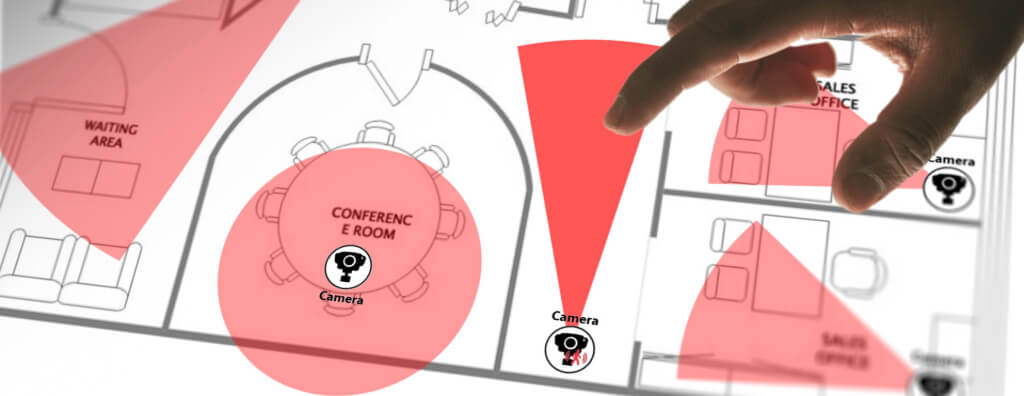
Learn how a professional CCTV design is structured, from scope definition and camera sizing to standards, storage, analytics, and compliance.
Check it out!
CCTV Design: what it is and why to hire it
A CCTV (Closed-Circuit Television) design is the technical planning that ensures the highest performance, security, and compliance of a video surveillance system. The project defines everything from camera choice and positioning to network infrastructure, storage, and integration with other security systems, following all applicable technical standards (NBR 16264, DORI/IEC 62676, NBR 14565).
Who needs a CCTV design?
- Companies, industries, residential complexes, schools, hospitals, and any organization that needs to protect people, assets, and data.
- Organizations looking to prevent losses, theft, intrusion, fraud, or that need reliable evidence for audits and compliance.
- Those who already have a camera system but face failures, poor images, blind spots, or non-compliance with audits and insurers.
To prepare a CCTV design it is necessary to involve specialized professionals with proven experience. The first step in the design of a CCTV system is to clearly define the purpose of the system and the expectations of the stakeholders involved in the project.
Need a professional CCTV design? Talk to a specialist engineer
In this article, we explore the main aspects that must be considered when preparing a CCTV design. Our goal is to show that, in order to guarantee an efficient and reliable system, it is essential to rely on a specialized team.
A well-developed CCTV design ensures ideal coverage of points of interest and also proper integration with other security systems, adequate image storage, and compliance with current standards.
The goal here is not to teach you how to create a project on your own, but to provide an overview of the critical stages, highlighting the importance of relying on a specialized engineering company to carry out the work.
By the end of this article, you will understand why choosing qualified professionals is the difference that turns an ordinary CCTV system into a true security solution.
[elementor-template id=”24446″]
Why not install a CCTV system without a design?
Systems installed without a proper design often show:
- Coverage failures
- Low image quality
- Lack of documentation for insurers and audits
- Non-compliance with standards and technical responsibility requirements
How much does a CCTV design cost?
Cost varies according to size, complexity, technology, and number of cameras. For companies, the project value is usually 5% to 10% of the total system value. Request a quotation with no obligation.
Main stages of CCTV design development
Project scope definition – Aligning system goals with client expectations
Defining the objectives of the CCTV system is one of the most critical stages of the project, because all subsequent decisions are based on it. This phase involves meetings with the client to understand specific needs and expectations regarding the surveillance system.
Main aspects to consider:
- Identification of security problems:
- Start by understanding which security issues the client wants to solve. This may include theft prevention, monitoring of restricted areas, access control, and similar concerns.
- Determination of areas of interest:
- Survey the site to map the areas that need monitoring. This includes entrances and exits, outdoor areas, high-traffic points, loading and unloading zones, and other critical locations.
- Desired monitoring type:
- Define whether monitoring will be continuous or triggered by specific events such as motion detection or intrusion alerts. Establish whether the client needs 24/7 recording or coverage only during certain periods.
- Required image detail level:
- Determine camera resolution based on the need to identify people, vehicles, or fine details. The more detail required, the higher the resolution and therefore the greater the storage requirement.
- Integration with other security systems:
- Check whether the client wants CCTV integrated with other security systems such as alarms, access control, or building automation. This integration can increase overall security efficiency, but it requires specialized technical planning.
- Remote monitoring expectations:
- Assess whether the client wants remote access to the system, allowing real-time monitoring through smartphones or computers. This is essential for continuous control and operational flexibility.
- Budget and investment:
- Although the guide should not focus only on “spending less,” it is important to understand the available budget in order to propose solutions aligned with the investment the client is willing to make without compromising quality and security.
- Compliance and standards requirements:
- Some projects may require compliance with specific standards, security regulations, privacy laws, or internal company guidelines. It is crucial to identify these requirements from the beginning.
- Forecast for growth and expansion:
- Consider whether the system will need to be scalable in the future. The possibility of adding more cameras or integrating new systems should be anticipated in the project to avoid complete restructuring later.
Click here and simulate a custom project.
Why is correct objective definition important?
Correctly defining the client’s objectives and expectations ensures that the CCTV design meets specific needs exactly, avoiding investments in inadequate or undersized solutions. This initial alignment also makes the work of engineers easier during planning and execution, reducing rework and improving client satisfaction.
Hardware and Software Definition
Archive: A3A Engenharia de Sistemas
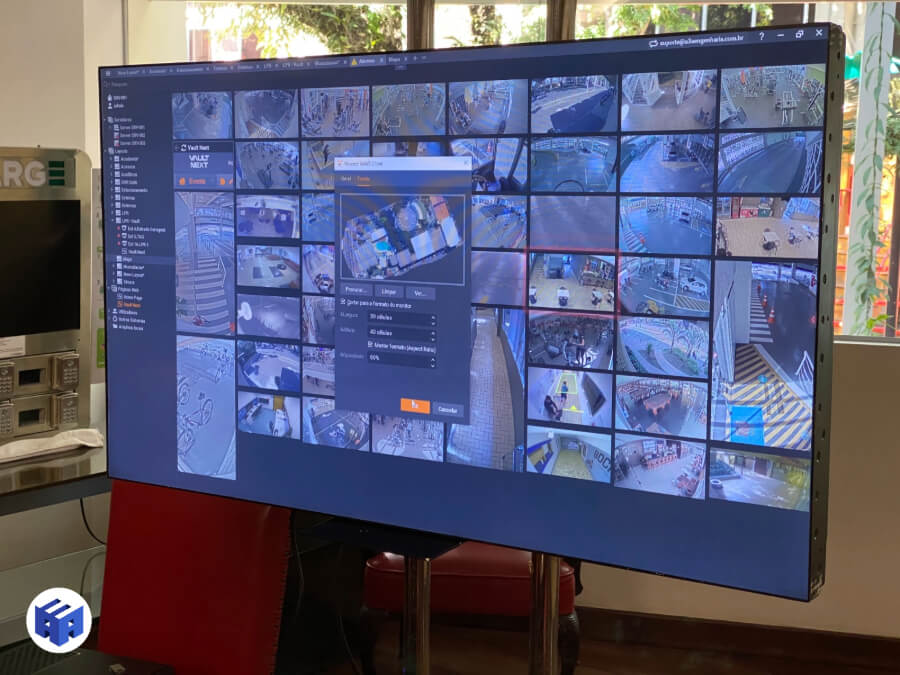
After defining with the client which security needs the project must solve, it is necessary to define the system to be adopted and its architecture.
This is when important project points are defined, such as image management software, video analytics, and possible integrations with other systems. In the same way, the hardware is specified so that it meets both the architectural demands of the project and the image performance requirements of the system.
Based on the site analysis performed in the previous stage, cameras are then defined according to the surveyed points and lighting conditions.
Camera Selection
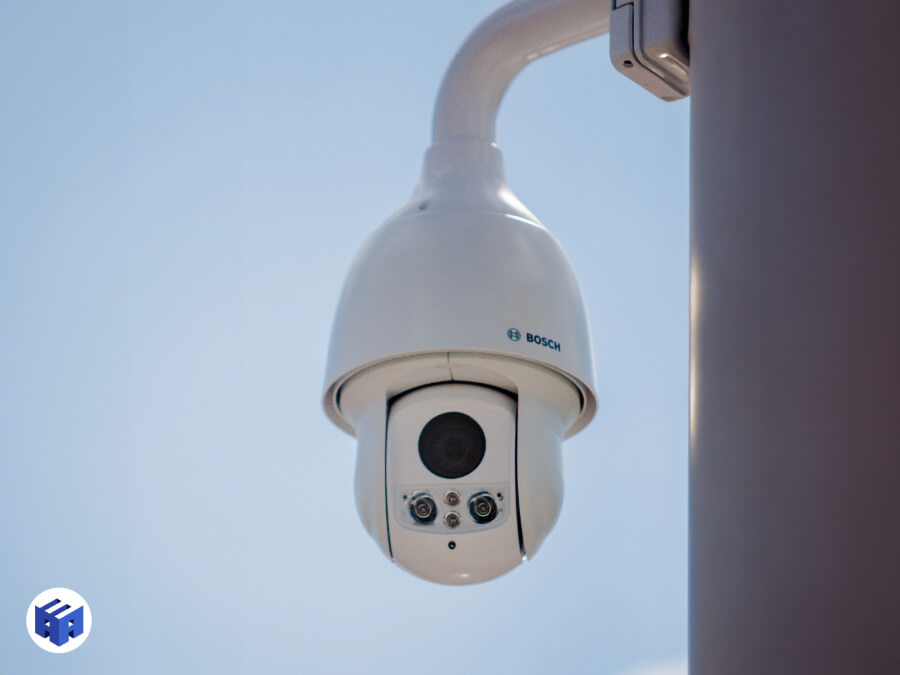
At this stage, cameras are specified according to the specific need of each monitoring point, and may include Bullet, Dome, or PTZ models.
Archive: A3A Engenharia de Sistemas
At this stage of the project, it is important to correctly define the lens type, resolution, and lighting because these factors directly affect system performance. That is why a company with expertise in design and installation is indispensable.
Camera Positioning and Coverage
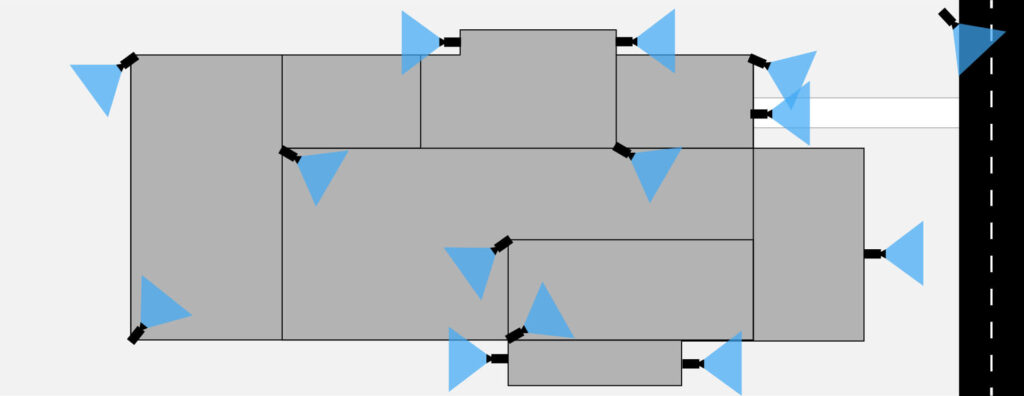
After analyzing the site and defining the monitoring points, it is important to validate whether there are blind spots or poorly lit areas that could compromise system performance.
Cabling Infrastructure Design
Once the monitoring points are defined, it is time to think about the network infrastructure that will route the cables, define the type of cable to be used (usually CAT6 or higher and fibre optics), and also specify consolidation points and technical cabinets.
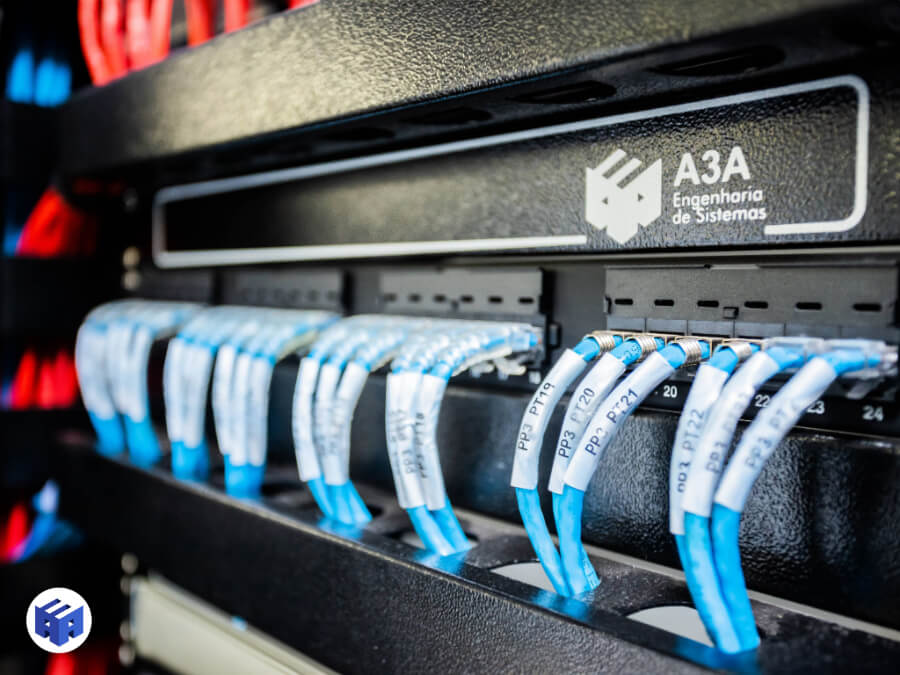
Archive: A3A Engenharia de Sistemas
Cabling must be designed by specialists, preferably engineers, because latency and communication failures can compromise CCTV system performance.
Storage and Data Management
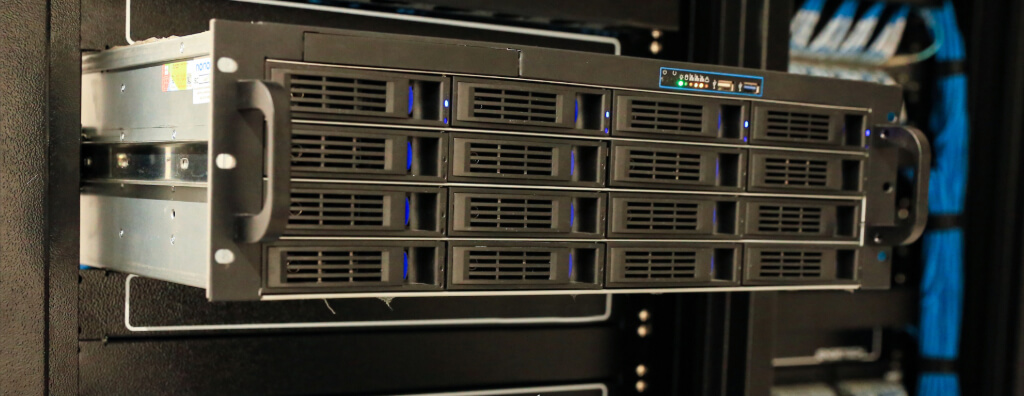
Archive: A3A Engenharia de Sistemas
Defining the image storage system is also a crucial point in a CCTV design, since image retention time may vary from client to client and in some cases may reach 180 days, requiring a robust and reliable system.
Image storage can be done on DVRs and NVRs in simpler systems, or on recording servers and dedicated storage in more complex systems. This will depend on project demands.
Another important factor is redundancy and backup of recordings to avoid losing important images. Therefore, the project should include regular image backup and follow good storage practices.
System resilience is also very important, because quick recovery after a problem helps keep the system operational. In this scenario, some precautions should be foreseen in the project, such as a failover server, cloud backup, edge recording, and disk recording arrays (the well-known RAID configurations).
Integration with Other Security Systems
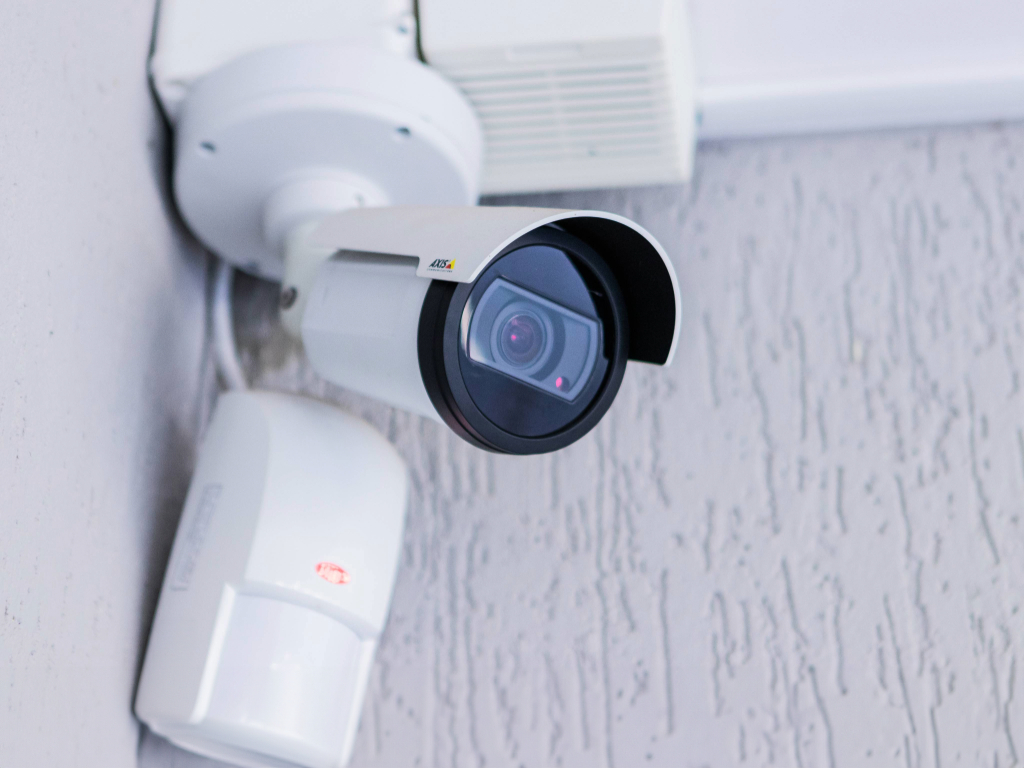
Archive: A3A Engenharia de Sistemas
At this stage, the focus is to ensure that the CCTV system does not operate in isolation, but rather integrated with other security systems, forming a more efficient and intelligent protection system.
Integration with solutions such as facial recognition and video analytics, access control, intrusion alarms, fire detection, and building automation is essential to create a reliable security environment, where each component contributes to a faster and more effective response to critical events.
Video Analytics
Video analytics are software solutions that use image-processing algorithms to analyze and interpret, in an automated way, the content captured by surveillance cameras. These systems are designed to extract relevant information from live video or recordings, generating alerts or reports based on predefined criteria.
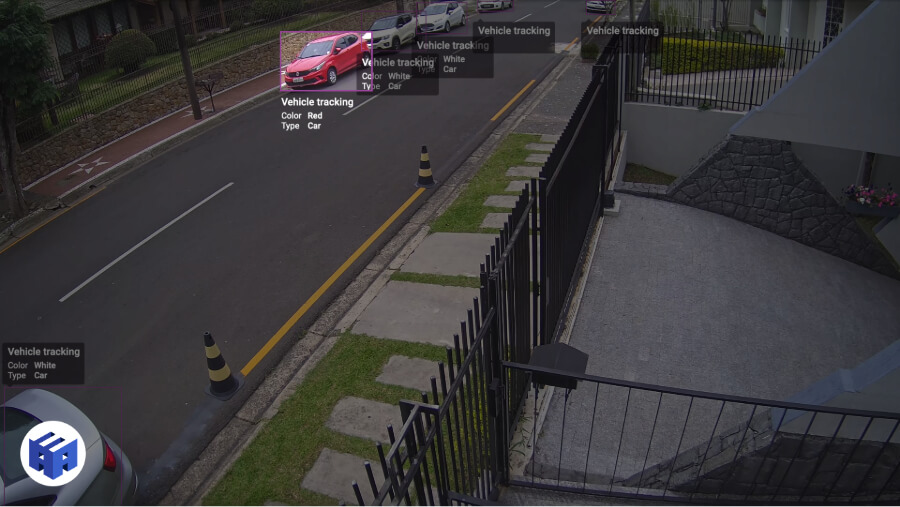
Archive: A3A Engenharia de Sistemas
Video analytics transform raw footage into searchable, actionable, and measurable video. Learn more by reading the article on Forensic Search.
The purpose of video analytics is to increase security efficiency by automatically detecting suspicious events or behaviors, reducing the need for constant supervision by human operators. They can identify complex movement patterns, abandoned or removed objects, violated perimeters, and other events of interest.
Below are some of the most widely used analytics in video surveillance systems:
Motion Detection
- One of the most basic and common analytics, it identifies changes in predetermined areas within the camera’s field of view. It can be used to trigger alerts whenever motion is detected in a monitored zone.
Intrusion Detection (Perimeter Breach)
- Monitors restricted areas or virtual lines to alert when a person or object crosses a defined limit. This analytic is widely used to protect perimeters in sensitive facilities such as airports and industrial plants.
Abandoned or Removed Objects
- This analytic identifies when an object is left in an area, such as a suitcase in an airport, or when a previously present object is removed. It is essential in high-traffic places to help mitigate threats like suspicious abandoned items.
Facial Recognition
- Uses advanced algorithms to identify the faces of people passing in front of the cameras. It can be integrated with databases to verify identities and support access control, as well as search for specific individuals in security events.
People or Vehicle Counting
- Analyzes the flow of people or vehicles at a specific entry or exit point. Widely used in stores, events, and parking areas, it helps optimize crowd control and space management.
Automatic License Plate Recognition (LPR)
- License plate recognition analytics capture and recognize vehicle plates in real time. They are used in toll systems, parking facilities, public security applications, and more.
Suspicious Behavior Detection
- Advanced analytics can identify behavior outside the standard pattern, such as running, falls, fights, or crowd disturbance, helping operators react more quickly to dangerous situations.
Smoke and Flame Recognition
- These analytics detect visual signs of smoke or flames even before a traditional alarm system is activated, allowing faster fire response.
Crowd or Gathering Detection
- This analytic monitors the accumulation of people in a certain area and generates alerts when excessive crowding occurs. It is useful for large-event control and public-area safety.
Wrong Direction
- Detects when an object or person moves in the opposite direction from what is allowed in a monitored area, such as entering through an emergency exit route or driving the wrong way.
Sound Detection
- Although related to audio processing, this analytic can be integrated with video monitoring systems to detect anomalous sounds such as explosions, breaking glass, or screams associated with potential security incidents.
Filtering by Color or Size
- Allows objects or people to be filtered and identified based on specific characteristics such as clothing color or vehicle size, making later searches and investigations easier.
Conclusion
Developing a CCTV design goes far beyond simply installing cameras. It is a complex process that requires prior study, detailed planning, technical knowledge, and an integrated approach to achieve objectives efficiently and reliably.
Investing in a professional CCTV design means investing in peace of mind, efficiency, and protection of your assets. The involvement of specialized engineers is essential in this context.
These professionals bring not only technical knowledge, but also the ability to benchmark solutions and practices used in similar projects, bringing excellence and expertise so the system is tailored to your needs with maximum performance and reliability while avoiding common mistakes that can compromise efficiency.
Acknowledgements
Thank you for taking the time to read this article. We hope the information presented has been useful and contributes to your understanding of the subject. If you have any questions or want to know more about the topic, feel free to contact us.
If you are planning a high-performance monitoring project with high-definition cameras and video analytics, consult our Engineering Department!
Relevant Links (Complementary Technical Materials)
Intelligent CCTV
Applications of Video Analytics
Video Analytics with Artificial Intelligence
Network Design
Structured Cabling Design – Complete Guide
Technical Standards for Structured Cabling
Fibre Optic Cable
Indoor Optical Distributor (IOD)
Testing and Performance
Regulatory Requirements: NBR IEC 62676
Network Certification for Structured Cabling Systems
Structured Cabling Installation
Dry Infrastructure / Cable Tray
Topology and Architecture
Network Architecture and Topology – How to Ensure Performance
Network Topology: Types and Applications in Telecommunications Networks
Services
Frequently Asked Questions
A CCTV design is the detailed technical planning of the entire video surveillance system, including camera positioning, infrastructure, cabling, recording, remote access, and integration with other security systems. It is essential to guarantee proper coverage, operational efficiency, and compliance with standards.
The main ones are ABNT NBR 16264 (CCTV systems – Requirements for design and installation), as well as structured cabling standards (NBR 14565), electrical safety standards (NBR 5410), and equipment manufacturer recommendations.
Sizing is based on risk analysis, monitoring objectives, site layout, critical areas, and coverage needs. Camera types (fixed, PTZ, infrared), resolution, range, viewing angles, and required storage are then defined.
A professional design guarantees full coverage, avoids blind spots, correctly defines the infrastructure, and specifies equipment compatible with the real needs. Installations carried out without a technical design often show failures, lack documentation, deliver low performance, and may not meet standards or legal requirements.
Yes. Ideally, a technical compliance report and/or ART should be issued, proving that the installation was carried out according to the design, technical standards, and best practices – which is essential for audits, bids, and legal support.
A Structured Cabling System (SCS) is a standardized infrastructure of cables, connectors, racks, cable trays, patch panels, and network equipment that provides the base for a telecommunications network to operate efficiently.
It is the main cabling that connects telecommunications rooms, data centers, or buildings to each other. It normally uses higher-capacity media such as optical fibre or higher-category copper cabling.
Normative References
“NBR 14565 – Structured Cabling for Commercial Buildings” – ABNT (Brazilian Association of Technical Standards)
“ISO/IEC 11801 – Generic Cabling for Customer Premises” – ISO/IEC (International Organization for Standardization) & (International Electrotechnical Commission)
“ANSI/TIA 568 – Generic Telecommunications Cabling for Customer Premises” – ANSI/TIA (American National Standards Institute) & (Telecommunications Industry Association)
IEC 62676 (DORI standard): this standard defines criteria for Detection, Observation, Recognition, and Identification (DORI), determining technical parameters such as resolution, minimum pixel density, frame rate, field of view, and focal distance in CCTV projects to ensure accurate identification of people and objects.