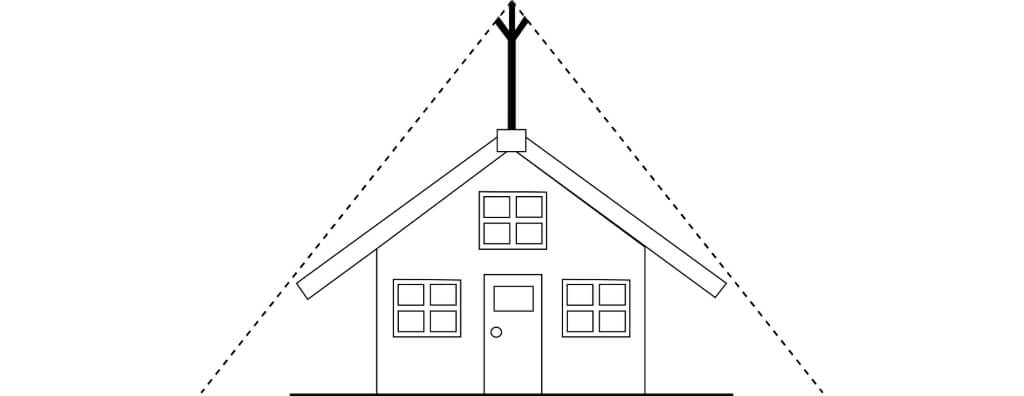
Understand what an LPS is, its main protection methods, subsystems, documentation requirements, and legal obligations under NBR 5419.
Check it out!
LPS: what is it and what are the main types according to NBR 5419?
[elementor-template id=”24446″]
What is an LPS?
The LPS (Lightning Protection System), more commonly known as a lightning rod system, is a set of components installed on a building or structure to intercept, conduct, and safely dissipate the electrical current of a lightning discharge into the ground. The LPS has the following main functions:
- Structural Protection: Prevent physical damage to the building, such as ruptures, fires, or damage to construction materials.
- Protection of People and Equipment: Prevent electric shock risks and protect electrical and electronic equipment against overvoltages.
- Potential Equalisation: Minimise differences in electrical potential within the structure, avoiding dangerous electric arcs.
Types of LPS
Lightning protection systems may be classified according to the methodology and components used to capture and conduct lightning discharges. According to ABNT NBR 5419:2015, the accepted and recognised LPS types are:
1. Franklin Lightning Rod
Description:
- The Franklin lightning rod is an LPS type built with pointed metallic rods, called air terminals or lightning rods, installed at the highest points of the building.
- The rods are connected to a down-conductor and grounding system that conducts the lightning current into the soil.
Operation:
- The Franklin air terminal creates a preferred path for the atmospheric discharge, intercepting the lightning strike before it directly hits the structure.
- It is based on the principle that sharp points intensify the electric field, attracting the discharge.
Applications:
- Used on tall buildings, telecommunications towers, chimneys, and other elevated structures.
- Suitable where specific capture points can be defined.
2. Faraday Cage Lightning Protection
Description:
- Faraday cage lightning protection is built from a network of metallic conductors arranged around and/or over the building, forming a kind of cage.
- The horizontal and vertical conductors are interconnected, creating a mesh that covers the entire structure.
Operation:
- The Faraday cage distributes the discharge current along the conductors, reducing the impact on any specific point.
- The electric field inside the cage is neutralised, protecting the interior of the building.
Applications:
- Suitable for buildings with large roof areas, such as industrial plants, warehouses, and commercial buildings.
- Recommended where broad and uniform protection is required.
3. Horizontal Conductor System (Mesh Method)
Description:
- Similar to the Faraday cage system, but focused on installing horizontal conductors at the top of the structure.
- A mesh is formed with specific dimensions according to the required protection level.
Operation:
- The horizontal conductors intercept atmospheric discharges, distributing the current through the down-conductors and grounding system.
Applications:
- Used on flat roofs or roofs with slight slope.
- Common in medium-sized residential and commercial buildings.
4. Shield Wire System (Catenary)
Description:
- It consists of conductive cables installed above the structure to be protected, supported by masts or towers.
- It forms a protected zone below the cables.
Operation:
- The shield wires intercept atmospheric discharges that would otherwise occur over the protected area.
- The current is conducted through the masts to the grounding system.
Applications:
- Common on electric power transmission lines.
- Can be used to protect open areas, such as storage yards.
Comparison Between LPS Types
| Criterion | Franklin Rod | Faraday Cage | Mesh Method | Shield Wires |
|---|---|---|---|---|
| Installation Complexity | Low | High | Medium | High |
| Cost | Low | High | Medium | High |
| Efficiency in Large Areas | Limited | High | Medium | High |
| Aesthetics | Visual Impact | Discrete | Discrete | Visual Impact |
| Applicability | Tall Structures | Large Buildings | Flat Roofs | Open Areas |
LPS Subsystems (Lightning Protection System)
The Lightning Protection System (LPS) is composed of subsystems that work together to protect a building against the effects of lightning discharges. According to ABNT NBR 5419:2015, the LPS is divided into the following main subsystems:
1. Air-Termination System
The air-termination system is responsible for intercepting direct lightning discharges, preventing them from striking the structure of the building. It is installed at the top of the building and is composed of:
- Franklin Air Terminals: Pointed metallic rods installed at the highest points.
- Faraday Cages: A conductor network surrounding the building.
- Horizontal Conductors: Meshes or cables arranged on top of the structure.
Function
- Lightning Interception: Provides a preferred path for lightning current, avoiding direct damage to the structure.
Design and Sizing Methods
- Rolling Sphere Method
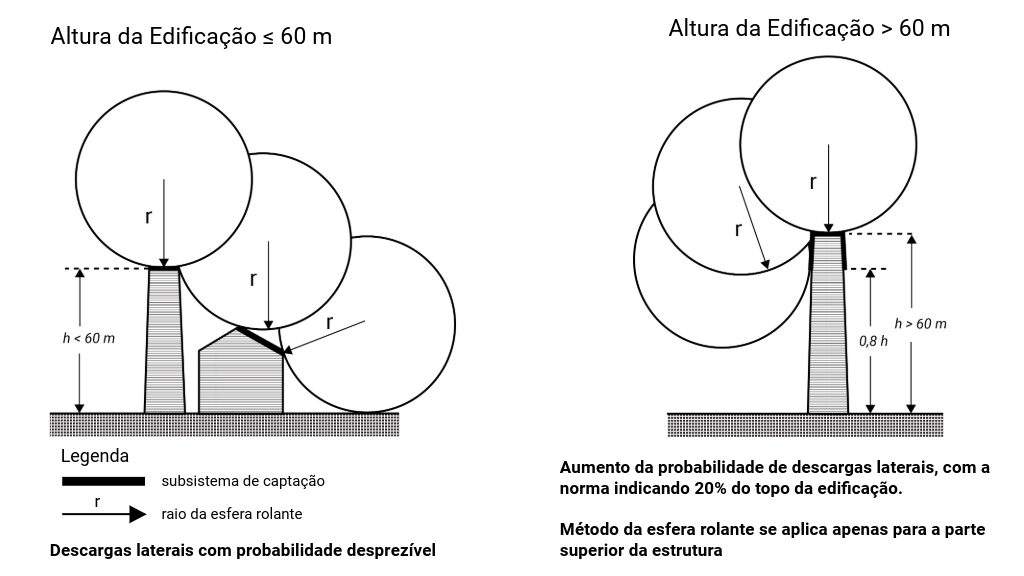
Protection of Structures Against Lightning Discharges
- Protection Angle Method
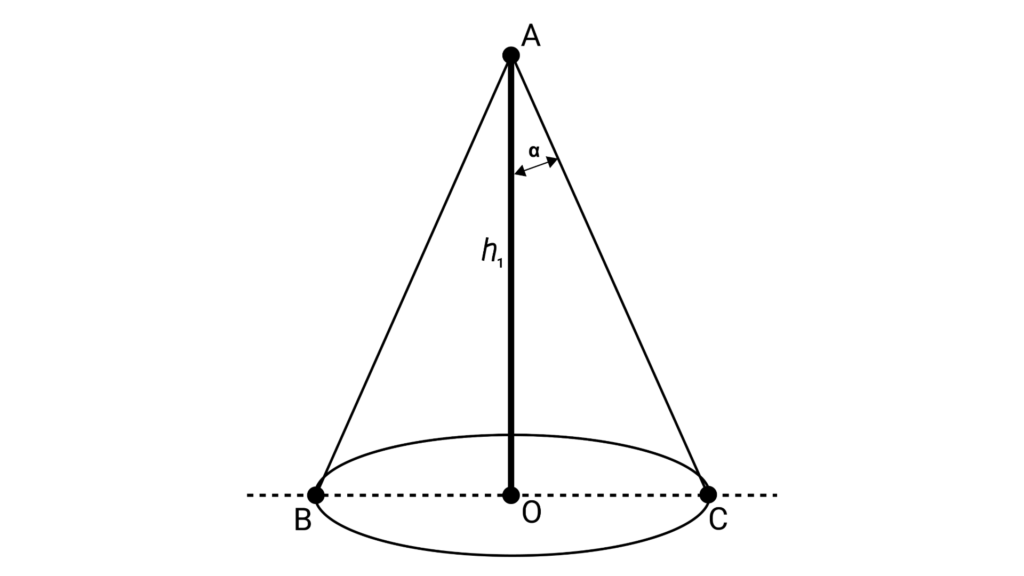
Protection of Structures Against Lightning Discharges
- Mesh Method
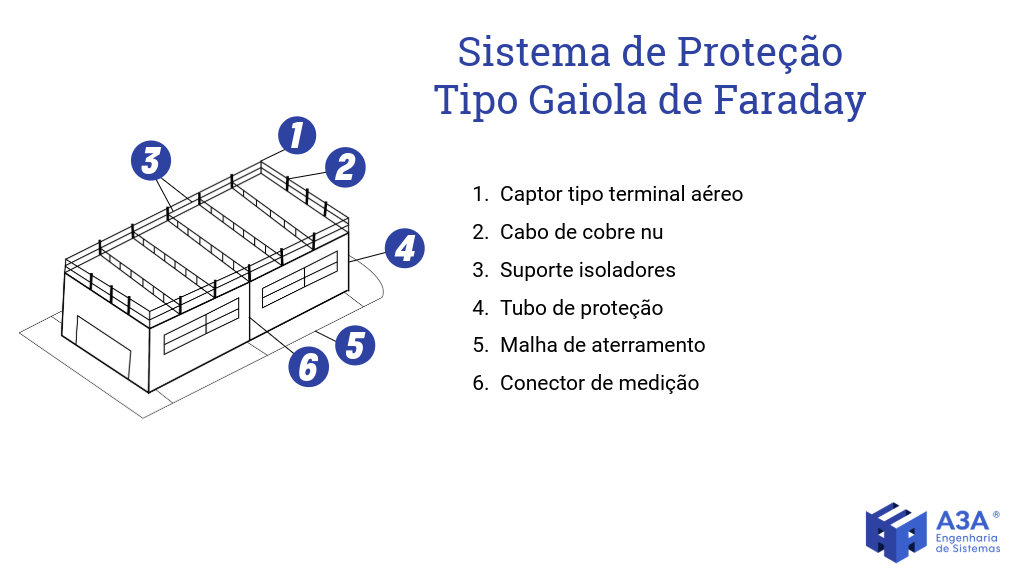
2. Down-Conductor System
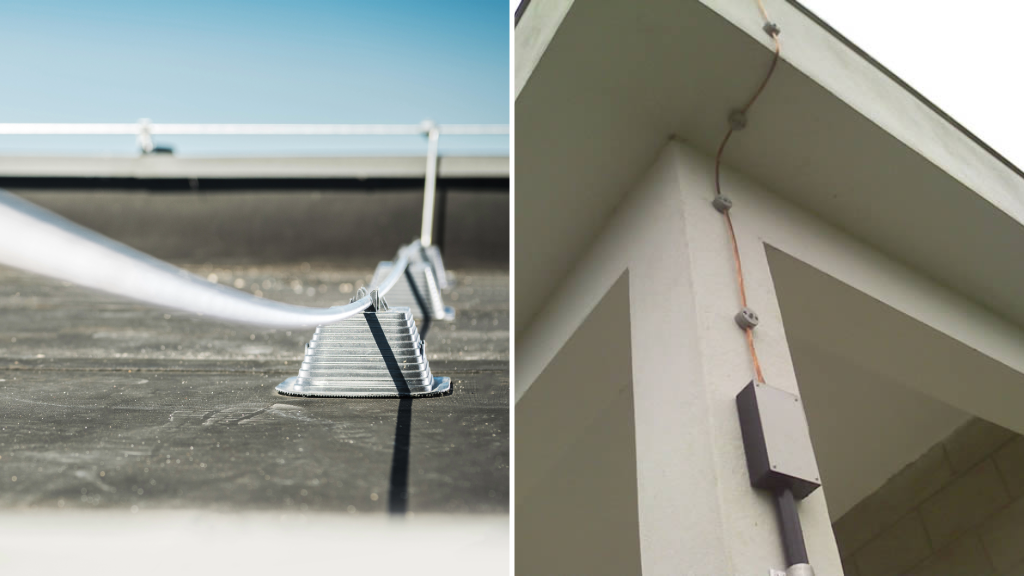
The down-conductor system consists of conductors that connect the air-termination system to the grounding system. The down-conductors may be:
- External: Installed on the outside of the building.
- Internal: Integrated into the structure, such as metallic reinforcement in reinforced concrete.
Function
Safe Current Conduction: Carries the lightning current from the capture point to the grounding system, minimising risks of sparking and fire.
3. Grounding System
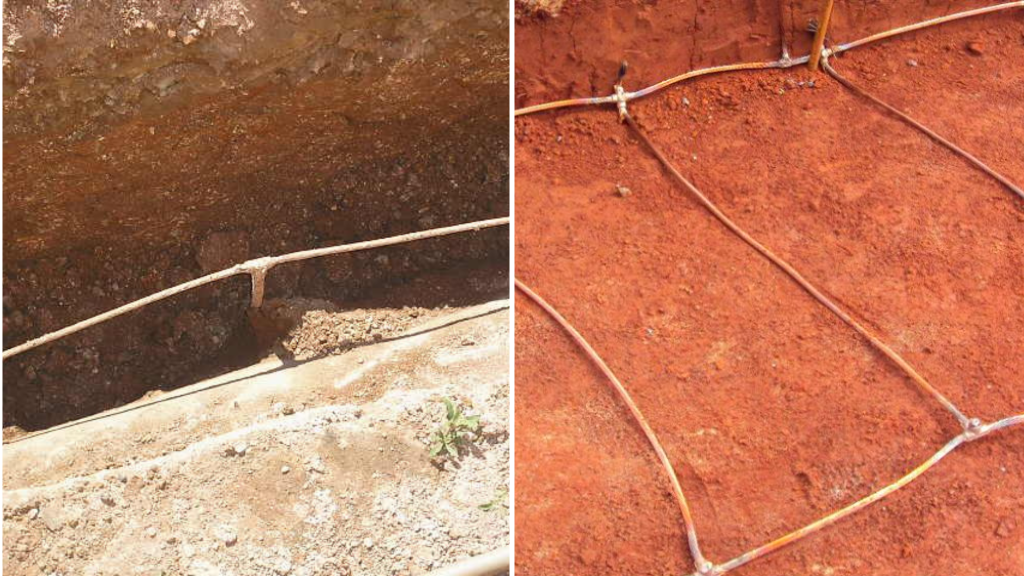
The grounding system is the part of the LPS that safely dissipates the lightning current into the soil. It is composed of:
- Grounding Electrodes: Metallic rods or plates buried in the soil.
- Grounding Conductors: Connect the down-conductors to the electrodes.
Function
- Electrical Current Dissipation: Ensures that lightning energy is dispersed into the soil without causing damage to the structure or risk to people.
LPS Documentation and Legal Issues
Required Documentation for an LPS:
LPS Design: It must be developed by a qualified professional (electrical engineer) registered with the CREA (Regional Council of Engineering and Agronomy) and must comply with the technical standards established by ABNT, mainly NBR 5419 (Lightning Protection), which is the main standard governing LPS installation.
ART (Technical Responsibility Record): The ART must be issued by the engineer responsible for the design, execution, or maintenance of the LPS, formally establishing technical responsibility for the installation.
Inspection and Maintenance Report: After installation, a technical report must be issued by a qualified professional certifying that the system was installed according to the design and is operating properly. Periodic maintenance must also be documented.
Measurement Report: Reports must document grounding resistance measurements and LPS integrity. These measurements must be performed according to NBR 5419 recommendations.
Operation and Maintenance Manual: It must be prepared to guide periodic and preventive maintenance procedures for the system.
Authorities Responsible for Inspection:
CREA (Regional Council of Engineering and Agronomy): CREA inspects the professional practice, ensuring that LPS designs and installations are carried out by qualified professionals. It also verifies the existence of properly registered ART records.
Fire Department: In many states, the Fire Department verifies the existence and proper maintenance of LPS systems as part of the requirements for issuing the Fire Department Inspection Certificate (AVCB). The AVCB is a mandatory document for buildings to comply with safety regulations.
Municipal Governments and Works Departments: They may require compliance with LPS standards as part of the conditions for granting operating or construction permits.
LPS in Compliance
Which document must companies present in the event of an inspection?
The document that demonstrates that a company’s LPS is in proper operating condition and can be presented during inspection is the LPS Inspection and Maintenance Report.
LPS Inspection and Maintenance Report:
The LPS report is a technical document proving that the lightning protection system (LPS) has been inspected and is in compliance with current standards, especially NBR 5419, and in adequate operating condition.
Validity of the LPS Report According to NBR 5419
The validity of an LPS inspection and maintenance report depends on the building risk class and environmental conditions as defined by NBR 5419. The standard does not establish a universal fixed deadline for all reports, but it recommends specific inspection and maintenance intervals based on the characteristics of the building.
- Building Risk Class:
- NBR 5419 classifies buildings into four classes (I, II, III, and IV), with Class I being the highest risk. The building class directly influences the inspection frequency and therefore the report validity period.
- Recommended Inspection Frequency:
- Class I: Annual inspection.
- Class II: Inspection every 2 years.
- Class III: Inspection every 3 years.
- Class IV: Inspection every 5 years.
- Special Conditions:
- If there are changes to building characteristics, such as renovations, modifications to protected areas, or changes to LPS equipment, a new inspection must be carried out regardless of the previous deadline.
- Aggressive environments (chemical industries, coastal areas, etc.) or locations with accelerated degradation of LPS components may also require shorter inspection intervals.
Qualified Professional to Issue the LPS Report
The professional qualified to issue the LPS Inspection and Maintenance Report is a registered electrical engineer with CREA (Regional Council of Engineering and Agronomy). This professional has the training and technical qualifications required to design, install, inspect, and maintain lightning protection systems, ensuring compliance with current technical standards, especially NBR 5419.
Can a technician, technologist, or electrician issue the report?
Only a registered electrical engineer with CREA is authorised to sign the LPS Inspection and Maintenance Report. Neither electrotechnical technicians nor electricians, even when highly qualified, have the legal authority to issue and sign this type of technical report.
Reasons why only an Electrical Engineer may sign the report:
Professional Duties Regulated by CREA:
- CREA (Regional Council of Engineering and Agronomy) regulates the professional duties of engineers, technologists, technicians, and other engineering professionals. Only the electrical engineer, by virtue of their training and CREA registration, has the legal competence to design, install, inspect, and issue reports for lightning protection systems (LPS).
Level of Technical Responsibility:
- The LPS report involves a complex analysis that goes beyond the competences assigned to technicians or electricians. It requires a deep understanding of technical standards such as NBR 5419, as well as specific knowledge about lightning behaviour, grounding, and correct assessment of protection systems.
ART Requirement (Technical Responsibility Record):
- The issuance of an ART is mandatory for the legal validation of the report, and only CREA-registered engineers may issue ART records. The ART is a document that formalises the engineer’s technical responsibility for the service performed, and its absence or signature by an unqualified professional may invalidate the report, in addition to causing legal sanctions.
Legal and Compliance Implications:
- In the event of inspections, audits, or incidents, the report must be able to demonstrate that the LPS was assessed by a professional with the competence required by law. Only the electrical engineer has the legal responsibility and technical support to answer for any irregularity or failure in the system.
Therefore, to ensure compliance with technical standards and legal requirements, the LPS report must always be signed by an electrical engineer. Electrotechnical technicians and electricians may assist with inspections and measurements, but final responsibility and signature belong exclusively to the engineer.
Final Considerations on LPS
Installing and maintaining an LPS in accordance with NBR 5419 is not merely a technical responsibility, but also a legal obligation inspected by CREA and the Fire Department, which must be taken seriously by all companies and building owners. Hiring a specialised engineering company with qualified electrical engineers capable of issuing technical reports and ensuring system efficiency is essential to keep the LPS in proper operating condition.
Regular maintenance and periodic inspection are essential steps to keep the LPS effective and capable of performing its protective function. Technical documentation, such as inspection reports and ART records, must always be up to date and available, especially during inspections or audits.
Thanks
Thank you for taking the time to read this article about Lightning Protection Systems (LPS).
We hope the information presented has been useful and enlightening, helping you understand the importance of proper LPS installation and maintenance for the safety of buildings and people.
Ensure your building’s safety and keep your documentation up to date.
A3A Engenharia offers specialised consulting services, complete designs, issuance of technical reports, and regularisation of LPS works with CREA.
With a broad technical background and a specialised engineering department, we are ready to meet your needs.
Talk to our Technical Department.