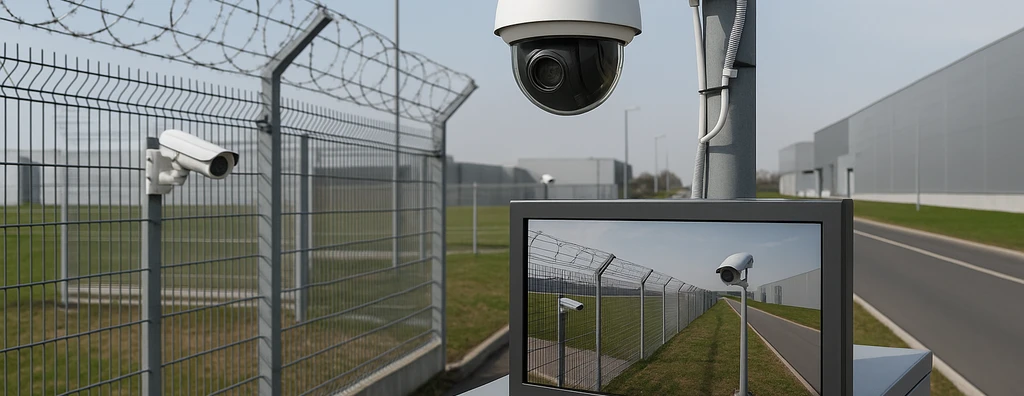
Understand the main challenges, technologies, and technical standards involved in perimeter surveillance projects for critical and sensitive areas.
Check it out!
Perimeter surveillance projects play a strategic role in protecting sensitive, industrial, logistics, and institutional areas, acting as the first line of defense against intrusions, trespassing, and other threats. The evolution of threats requires highly reliable solutions that use advanced monitoring capabilities, system integration, and video analytics intelligence to mitigate risks and provide robust evidence for investigation. However, implementing efficient perimeter surveillance systems involves significant challenges related to scalability, interoperability, data management, privacy, and continuous updates in response to evolving intrusion methods and available technologies.
This article takes an in-depth look at the main challenges involved in designing and implementing perimeter surveillance projects, the technologies currently employed, the best practices for subsystem integration, essential regulatory aspects, performance requirements, and guidelines to ensure compliance and operational security.
Check it out!
[elementor-template id=”24446″]
Fundamentals of Perimeter Surveillance
Perimeter surveillance consists of using technological resources to detect, deter, and document events of interest in the boundary areas of a facility. At its core, a system of this type is based on cameras, sensors, physical barriers, intrusion detection systems, as well as management and analytics software.
- Structural elements: The fundamental pillars include image and data capture, transmission, storage, processing, and display. The architecture of these systems requires compatibility among devices, scalability, and continuous availability.
- Application typologies: Perimeter surveillance systems range from small restricted areas to extensive industrial or border installations, requiring technical adaptations related to the number of devices, network topologies, and environmental requirements.
- Interfaces and integration: Efficient integration among access control, video surveillance, intrusion detection, and complementary systems such as lighting and alarms enhances operational efficiency and reduces response times.
Technical Standards Applicable to Perimeter Surveillance
ABNT NBR IEC 62676 – General and Performance Requirements
Standardization is a critical element for ensuring interoperability, reliability, and security in perimeter surveillance systems. The ABNT NBR IEC 62676 series, especially parts 1-1 (General Requirements) and 1-2 (Performance Requirements for Video Transmission), details technical guidelines for:
- Defining minimum system performance requirements;
- Classification by security grades and environmental classes;
- Video transmission and storage parameters;
- Specification of mandatory functionalities for operation in different scenarios;
- Requirements for interoperability and integration with other physical security systems.
Compliance with regulatory requirements provides better alignment among end users, integrators, manufacturers, consultants, and regulatory bodies, enabling clear specification of needs and promoting consistency across projects of different sizes.
Technical Challenges in Perimeter Surveillance Projects
Implementing perimeter surveillance systems presents considerable technical challenges across multiple dimensions:
- Perimeter coverage: Defining the surveillance area directly affects the choice of the number and location of cameras, sensor types, lighting control, and the identification of blind spots.
- Adverse environmental conditions: Interference caused by weather variations, lighting conditions, vegetation, and topography influences sensor performance and requires robust technologies with adaptive compensation and expanded dynamic ranges.
- Infrastructure sizing: Structured cabling, redundant power, poles, towers, and access elements must be specified to ensure availability, electrical safety, and protection against vandalism and sabotage.
- Scalability and integration: Modular systems that support expansion and allow native integration with other subsystems are mandatory, especially in environments with evolving needs and multi-user operations.
- Maintenance and updates: Keeping the scene and equipment properly adjusted, according to regulatory guidelines, is necessary to preserve monitoring quality and prevent vulnerable points resulting from environmental changes or equipment wear.
Technologies Used in Perimeter Surveillance
IP Video Surveillance Solutions
- Network cameras: Used with compression features, resolution adjustment, dynamic compensation, and a wide range of motorization, optical zoom, and infrared capabilities.
- Video transmission over IP: The protocols used must comply with performance and fault detection requirements according to the minimum standards established by NBR IEC 62676-1-2 for indoor and outdoor environments.
- Distributed storage and processing: Redundant storage arrays (NAS/SAN), application servers, and edge data processing ensure efficiency, resilience, and scalability.
- Video analytics systems: Embedded artificial intelligence platforms add features such as automatic detection, metadata generation, adaptive monitoring, and notifications based on field conditions.
Integration and Interoperability
- ONVIF-based interoperability, promoting compatibility among different manufacturers;
- Open APIs for customized integration with management software and other systems;
- Access control, intrusion detection, and intercom through native integration or middleware;
- Embedded audio systems, behavioral analytics, and detection of specific events.
Design Considerations: Privacy, Cybersecurity, and Ethics
In addition to technical requirements, every perimeter surveillance project requires attention to privacy and personal integrity. Balancing security and respect for individual rights requires actions such as:
- Careful application of local data protection legislation;
- Implementation of anonymization, masking, and access control for data;
- System design to prevent leaks and unauthorized access to captured material;
- Adoption of solutions with integrated cybersecurity features, such as IP filtering, centralized account management, and proactive firmware maintenance;
- Use of embedded analytics and metadata generation for additional privacy protection.
Infrastructure, Installation, and Sizing
The design of physical and logical infrastructure is essential to ensure system performance, availability, and security:
- Cabling and networks: System planning must include structured cabling according to telecommunications standards, the use of optical networks or mesh radios, and redundant solutions for resilient transmission.
- Power supply and protection: Uninterruptible power supplies (UPS), dedicated distribution, and electrical surge protection ensure continuity of operations even under critical conditions.
- Installation and positioning: Camera positioning must take into account access, maintenance regularity, exposure to weather, and should facilitate field-of-view adjustments following technical recommendations established to maintain monitoring quality.
- Integration with existing structures: Building control systems, lighting, industrial automation, and RF systems can be interconnected through standardized interfaces, promoting technological convergence and greater operational efficiency.
Operational Management, Monitoring, and Maintenance
The operation and maintenance of perimeter surveillance systems are decisive for the useful life and effective performance of the solution:
- Continuous monitoring of the health status of devices, links, and servers;
- Regular audit and testing procedures for capture and transmission systems;
- Readjustment of coverage angles and monitored areas to keep pace with environmental changes;
- Management of user permissions, access tracking, and recording of technical interventions;
- Scheduled updates of firmware, hardware, and software to maintain compliance with security and performance requirements.
Practical Cases and Recommendations for Perimeter Surveillance Projects
Projects should adopt a risk-oriented approach, using analytical tools to map vulnerabilities, threat scenarios, and the client’s operational requirements. The typical workflow includes the following stages:
- Detailed technical survey of the target perimeter;
- Definition of regulatory, functional, and performance requirements aligned with the operational context;
- System sizing focused on scalability, robustness, and maintainability;
- Specification of devices and associated infrastructure, including redundancy and integration;
- Commissioning, operational training, and delivery of systematic technical documentation.
It is also recommended to prioritize open, sustainable solutions with continuous technical support. This approach enables the reduction of recurring costs, facilitates future technological adaptations, and maximizes the useful life of investments in electronic security.
Conclusion
Implementing perimeter surveillance systems requires advanced mastery of technical standards, in-depth knowledge of technology integration, and rigor in maintaining security, privacy, and performance requirements. When facing challenges inherent to coverage, scalability, and interoperability, it is essential to adopt a systemic approach that prioritizes operational resilience together with respect for legislation and ethics. The convergence of regulatory requirements, state-of-the-art technologies, and robust management practices makes it possible to maximize solution efficiency, reduce exploitable failures, and provide agile and effective responses to contemporary threats.
Final Considerations
In summary, perimeter surveillance projects represent an essential vector of organizational and asset protection when grounded in consolidated standards, current technologies, and qualified management. Thank you for reading this article, and we invite you to follow A3A Engenharia de Sistemas on social media, where updates, technical analyses, and integrated solutions for electronic security, networks, and critical infrastructure are shared.
