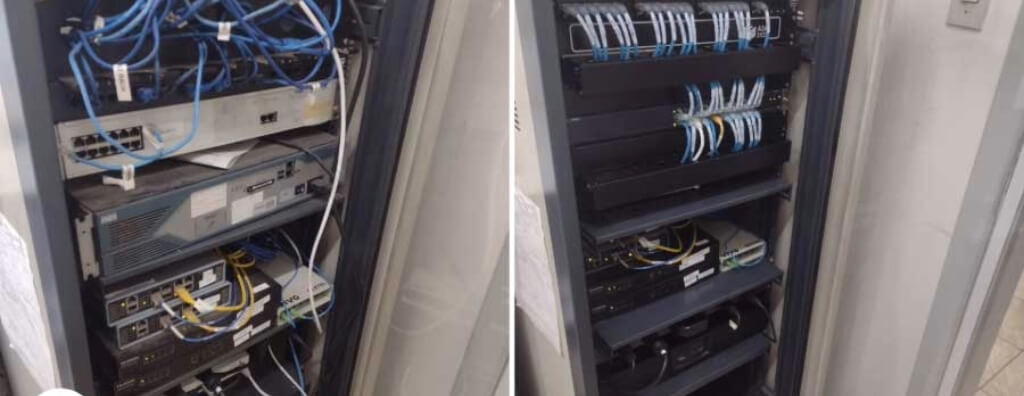
Network maintenance is essential to prevent performance drops, data loss, and connectivity problems.
Check it out!
Network maintenance is essential to prevent performance drops, data loss, and connectivity problems.
Keeping a network operating efficiently is essential to ensure continuity of operations and productivity in any organization.
Problems in the network infrastructure, both in the physical layer and in the logical layer, can seriously compromise performance and generate significant losses.
In this article, you will understand how regular maintenance and a well-designed network infrastructure can solve common problems such as packet loss, slowness, interference, and lack of performance.
We will highlight the importance of carrying out precise diagnostics and relying on a specialized company to provide complete solutions, from testing and certification to remediation projects and corrective maintenance.
[elementor-template id=”24446″]
1. Common Problems in Network Infrastructure
Before discussing the importance of maintenance, it is essential to identify the most common problems that affect network performance:
Packet Loss: Data packets that do not reach their destination, causing failures in critical applications such as video conferencing systems and VoIP.
Slowness and Delays: Inconsistent performance in data transfer, directly affecting productivity.
Electromagnetic Interference: Crosstalk problems (NEXT, FEXT) and external interference that may affect the cabling.
Physical layer failures: Inadequate installations, poorly made terminations, and the use of low-quality cables.
Logical Configuration Failures: Problems such as poorly configured QoS or poorly segmented VLANs can cause congestion and loss of efficiency.
2. The Importance of Network Maintenance
Network maintenance involves a series of practices that ensure the integrity and performance of the cabling infrastructure and the equipment. Maintenance may be preventive or corrective, and both are essential to ensure continuous network operation.
Preventive Maintenance
Preventive maintenance consists of identifying problems before they occur, avoiding downtime and performance losses. This includes:
- Regular Cabling Inspection: Checking for physical wear, damaged cables, or interference.
- Updating and Certifying Network Points: Ensuring that the cabling supports the speeds and performance required by current and future applications.
- Performance Monitoring: Tracking the network in real time to identify possible bottlenecks and act before the problem affects users.
Corrective Maintenance
Corrective maintenance, on the other hand, is triggered when failures have already been detected and requires immediate actions to restore network functionality. Some examples include:
- Correction of Cabling Errors: Replacement of defective cables or connectors that are causing packet loss or slowness.
- Equipment Reconfiguration: Adjusting routers, switches, or QoS systems to optimize data flow and ensure the quality of essential services.
3. Complete Diagnosis and Certification Tests
A3A Engenharia de Sistemas Collection
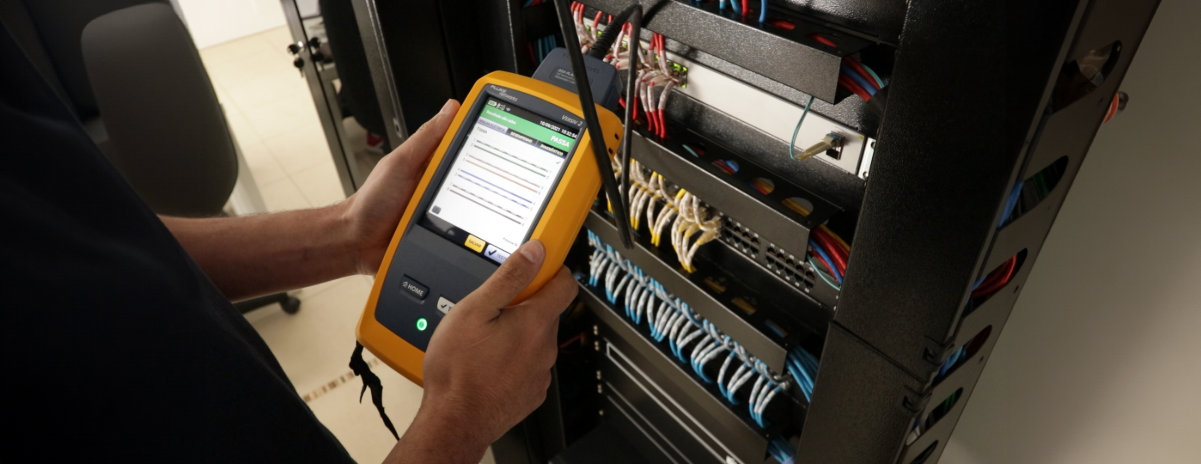
Network maintenance begins with a complete diagnosis. This includes tests that verify the integrity of the structured cabling and the efficiency of network devices.
Certification Tests
Collection: A3A Engenharia de Sistemas
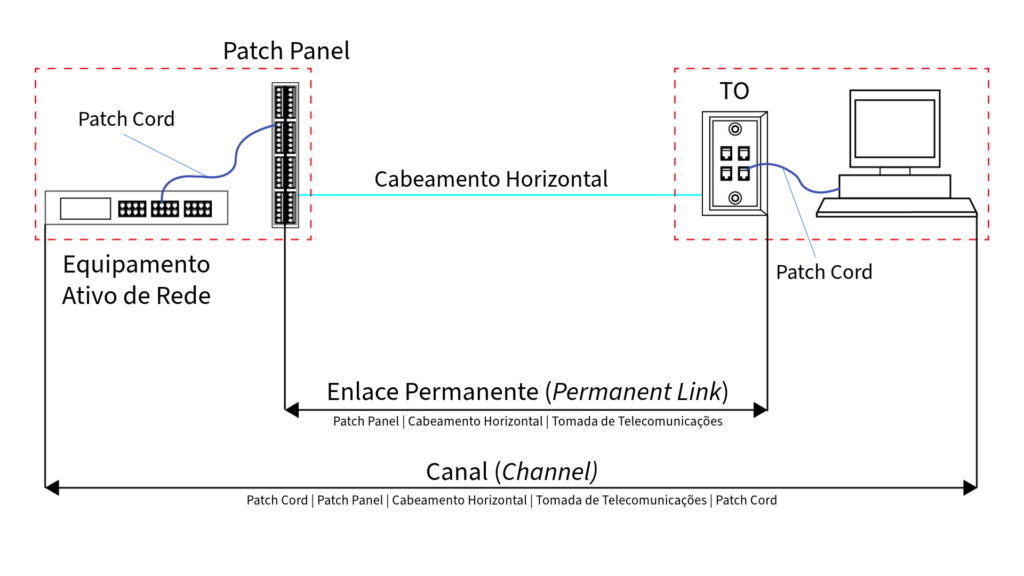
Certification tests ensure that the installed cabling meets the established standards.
During these tests, factors such as the following are analyzed:
- NEXT and FEXT (Near-End and Far-End Crosstalk): To ensure that there is no interference between cable pairs.
- Attenuation: Checks signal strength loss along the cable.
- Return Loss: Identifies impedance problems that may cause signal reflections.
- PS NEXT: Cumulative measurement of the crosstalk each pair suffers due to the other pairs.
- Propagation Delay: The time the signal takes to travel the length of the cable.
- Delay Between Pairs: The difference in propagation time between the fastest and slowest pairs.
- Alien Crosstalk: Interference between adjacent different cables, not just between pairs in the same cable.
- Excess Length: Checks whether the cable length is within the limits specified by the standards.
- Poorly Made Connections: Problems in cable termination at connectors, patch panels, or outlets.
- Temperature and Environmental Degradation: Evaluates the impact of adverse environmental conditions on cabling performance.
If any of the problems listed above is detected, the network point does not pass the test and therefore is not certified, but it is possible to issue a complete report with the diagnosis of the problem for correction.
Certification is essential not only to guarantee performance, but also to attest to the quality of the installation, which may be required in audits and expansion projects or simply to ensure good operating conditions, considering that practically everything depends on the network.
Technical Reports – Complete diagnosis
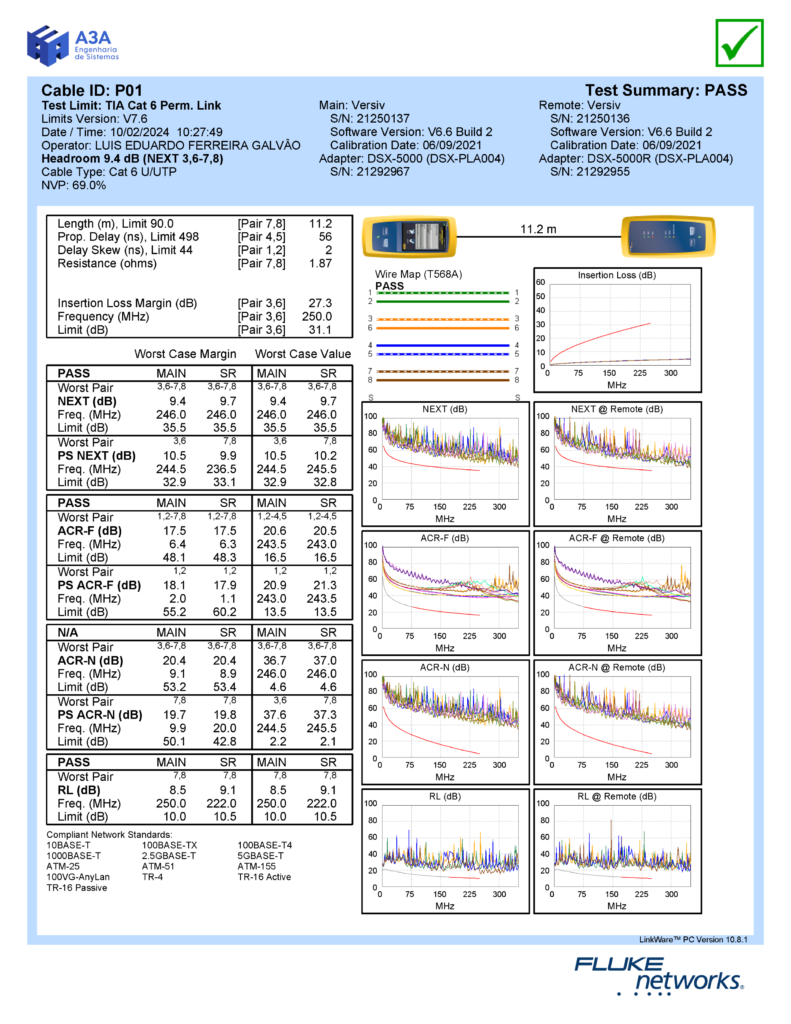
After the tests, a detailed technical report is generated, describing the problems found and suggesting the necessary corrections.
Collection: A3A Engenharia de Sistemas
The company hired to perform the tests or network maintenance must present a technical remediation proposal, suggesting the changes required to solve the detected problems.
💡 Tests such as Permanent Link and Channel Test are essential for an accurate diagnosis of network infrastructure. The former checks the quality of the permanent link between the patch panel and the outlet, while the latter evaluates the complete channel, including patch cords. Both follow the ANSI/TIA-1152-A standard criteria and make it possible to identify losses, imbalances, and nonconformities that directly affect network performance. Want to understand how technical certification works and which standards should be followed?
Read the full article about Structured Network Certification.
Consulting Services and Network Remediation Projects
Once the problems have been identified, it is time to act based on a network remediation project. This may involve:
- Replacement or Reorganization of Cabling: Adapting the existing cabling to correct problems and support new technologies and demands, such as Gigabit or 10 Gigabit Ethernet speeds.
- Reconfiguration of VLANs and QoS: Adjusting logical settings to ensure that the most important traffic, such as voice and video, is prioritized.
- Equipment Upgrades: Implementing more efficient switches and routers that support the new configurations and ensure greater security and performance.
Benefits of Hiring a Specialized Engineering Company
Keeping the network fully operational is not something that can be solved with simple adjustments alone. Hiring a specialized engineering company to provide support at this stage is the best option to ensure that the network infrastructure operates with the expected performance.
By hiring specialized consulting, you ensure:
- Accurate Diagnostics: Use of advanced tools to identify problems, such as certification devices from Fluke Networks.
- Detailed Reports: Complete documentation to understand the current state of the network and the corrective measures required.
- Customized Solutions: Tailored remediation projects based on the specific needs of your company.
- Professional Certification: Professionals certified by the leading manufacturers in the market and with proven experience in other projects bring tested solutions to your project.
Projects, Corrective Maintenance, and Network Certification
Are you facing slowness or interruptions in your network? Do not let invisible failures compromise your company’s productivity.
Our team of specialists is ready to perform a complete diagnosis and propose customized solutions.
Make sure your network is ready for the future. Certify your network points and ensure that your infrastructure is operating with maximum efficiency.
A3A Engenharia offers complete support for network remediation, from testing and diagnostic services to execution of the correction plan.
With more than 29 years in the market, an extensive technical archive, a certified team, and proven experience in infrastructure projects.
- Network and Structured Cabling Projects: We plan, design, and implement tailor-made network solutions.
- Specialized Consulting: Complete diagnosis and consulting to adapt your network to your business needs.
- Corrective and Preventive Maintenance: Constant monitoring to ensure your network operates perfectly.
- Network Testing and Certification: We ensure that your network meets quality standards, guaranteeing performance and reliability.
Speak with our Engineering Department
Relevant Links
Solutions
Books and Standards
eBook – Why Hire a Structured Cabling Project?
Technical Standards for Structured Cabling
Standard 14565 – Brazilian Structured Cabling Standard
Engineering Services
Specialized Structured Cabling Services
Network Certification for Structured Cabling Systems
Consulting for Structured Cabling Projects
Structured Cabling Installation
Educational Content
How to Avoid Common Problems in Structured Cabling Systems?
