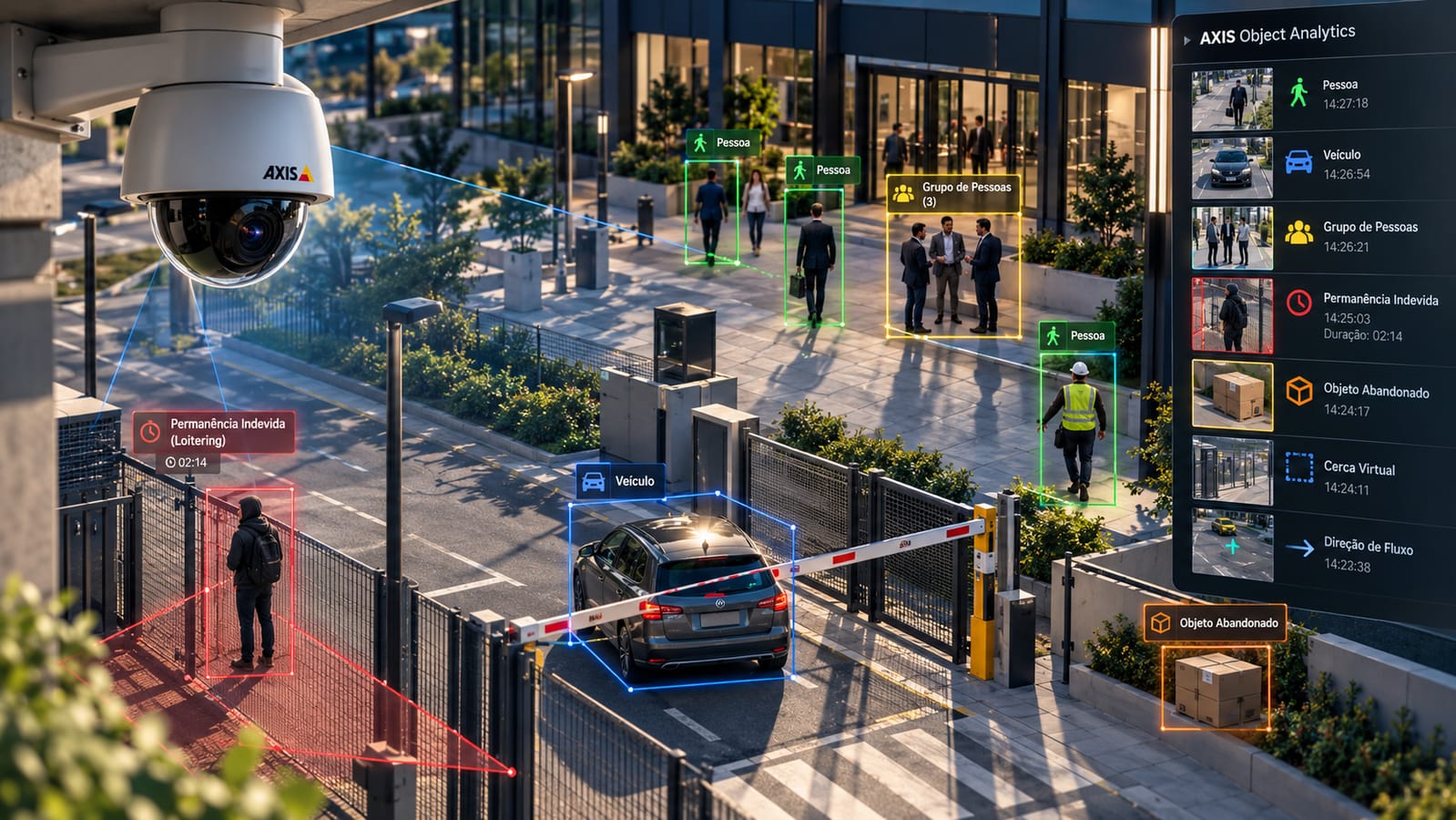
The AXIS Loitering Guard is a video analytics application embedded in AXIS cameras, designed to detect behaviors characterized by prolonged presence (loitering) in pre-defined areas, identifying objects (such as people or vehicles) that exceed a configurable dwell time or period of inactivity.
[elementor-template id=”24446″]
How Does It Work?
The AXIS Loitering Guard algorithm analyzes each video frame looking for pixel changes that indicate motion. When significant changes are detected, the affected pixels are grouped to form objects that the system can identify, such as people or vehicles.
After identifying an object, the algorithm tracks its position and behavior over time, monitoring whether it remains in the area of interest longer than allowed or whether it is inactive.
If the conditions configured by the user are met, such as exceeding the dwell time, the system generates an event to trigger predefined actions. To avoid false alarms, the algorithm applies configurable filters, ignoring small or fast movements, such as foliage in the wind or small animals.
This method does not use learning or automatic adaptation to environmental changes. Instead, its logic is based on deterministic rules, configured manually.
Therefore, AXIS Loitering Guard is not considered an artificial intelligence system, but a robust solution based on classical video processing algorithms.
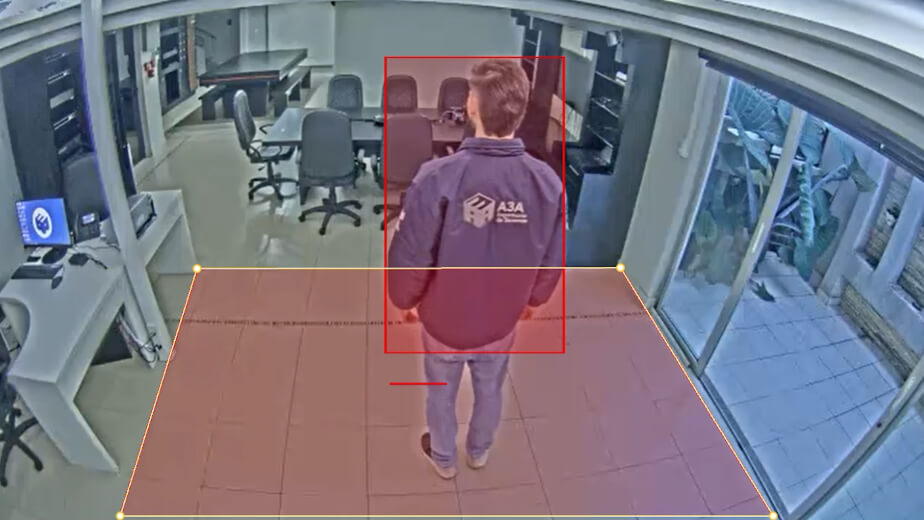
A3A Engenharia de Sistemas Archive.
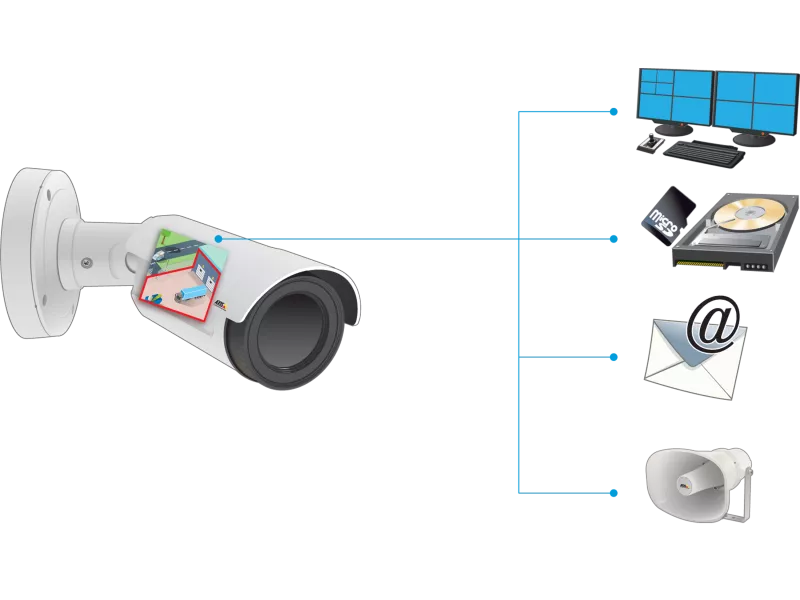
When these conditions are met, an event is generated and can trigger predefined actions, such as video recording, sending notifications, or alerting security teams.
AXIS Loitering Guard integrates with the leading video management software (VMS) platforms, expanding its functionalities and allowing greater operational flexibility.
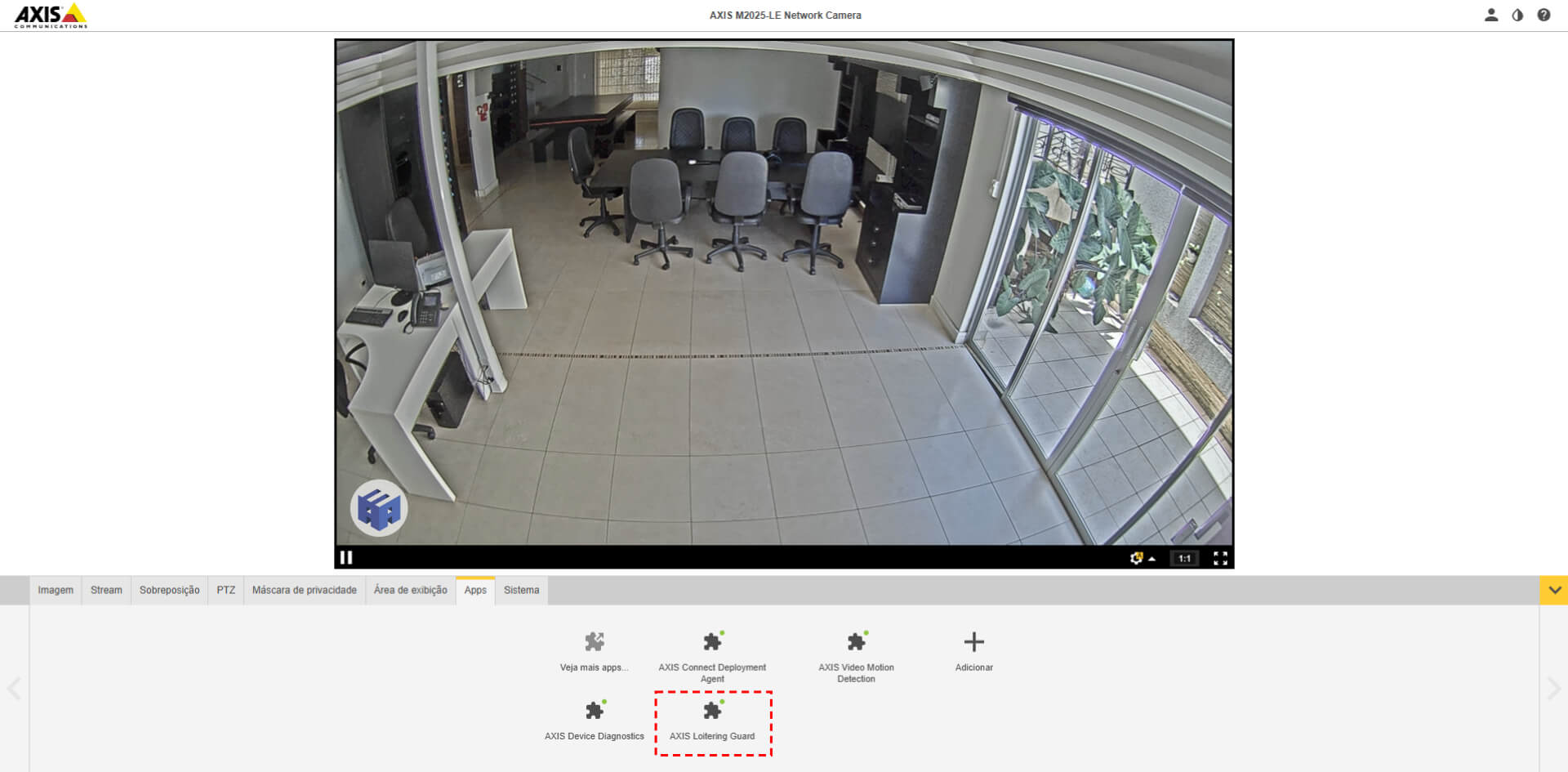
Configuration
Monitoring parameters, including detection time and areas of interest, are user-configurable through the camera’s web interface.
Profile-Based Structure
The operation of AXIS Loitering Guard is based on profiles.
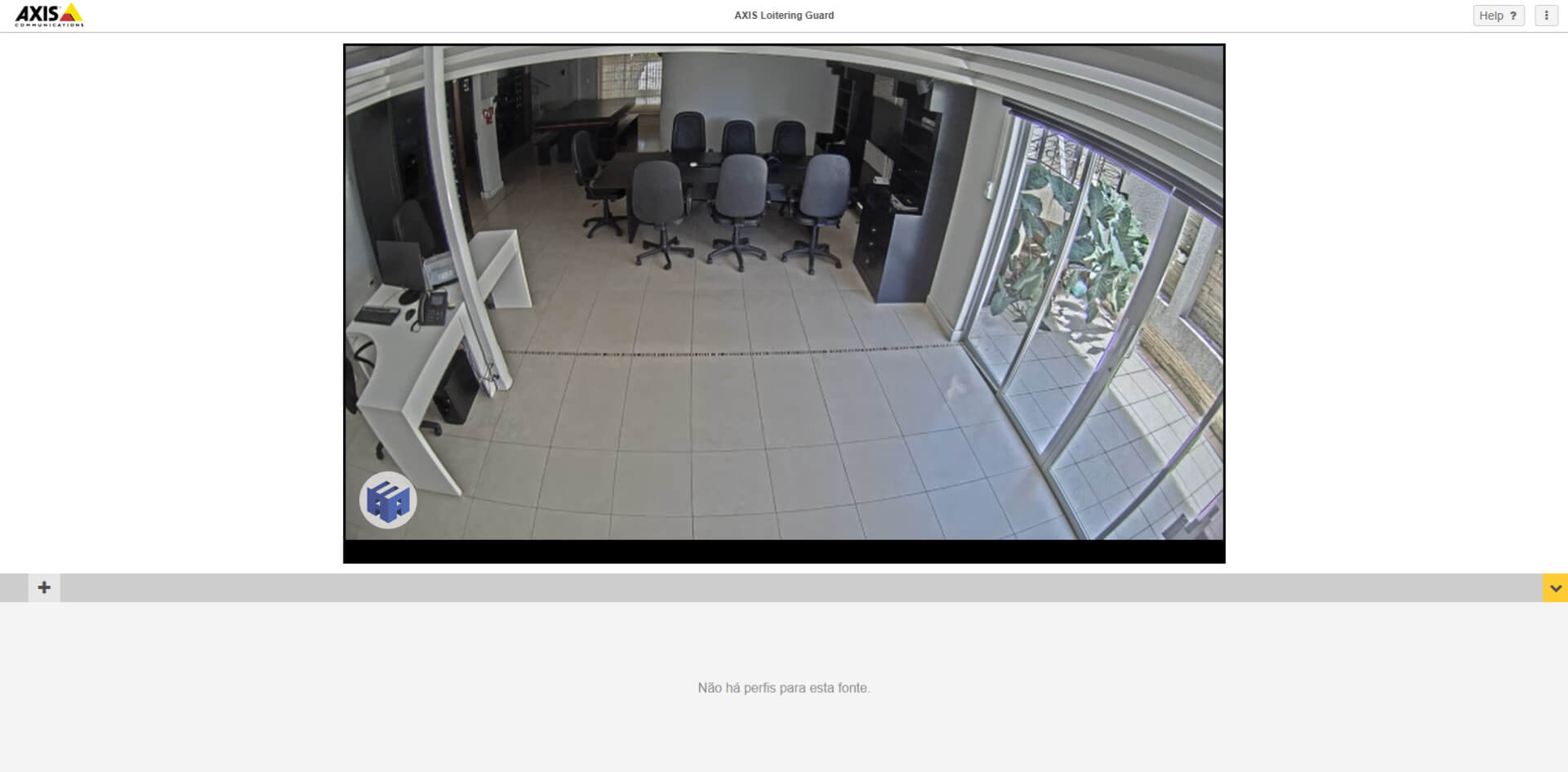
Each profile contains a set of specific rules and parameters, which can be configured for different scenarios, such as daytime and nighttime monitoring or distinct areas within the same scene.
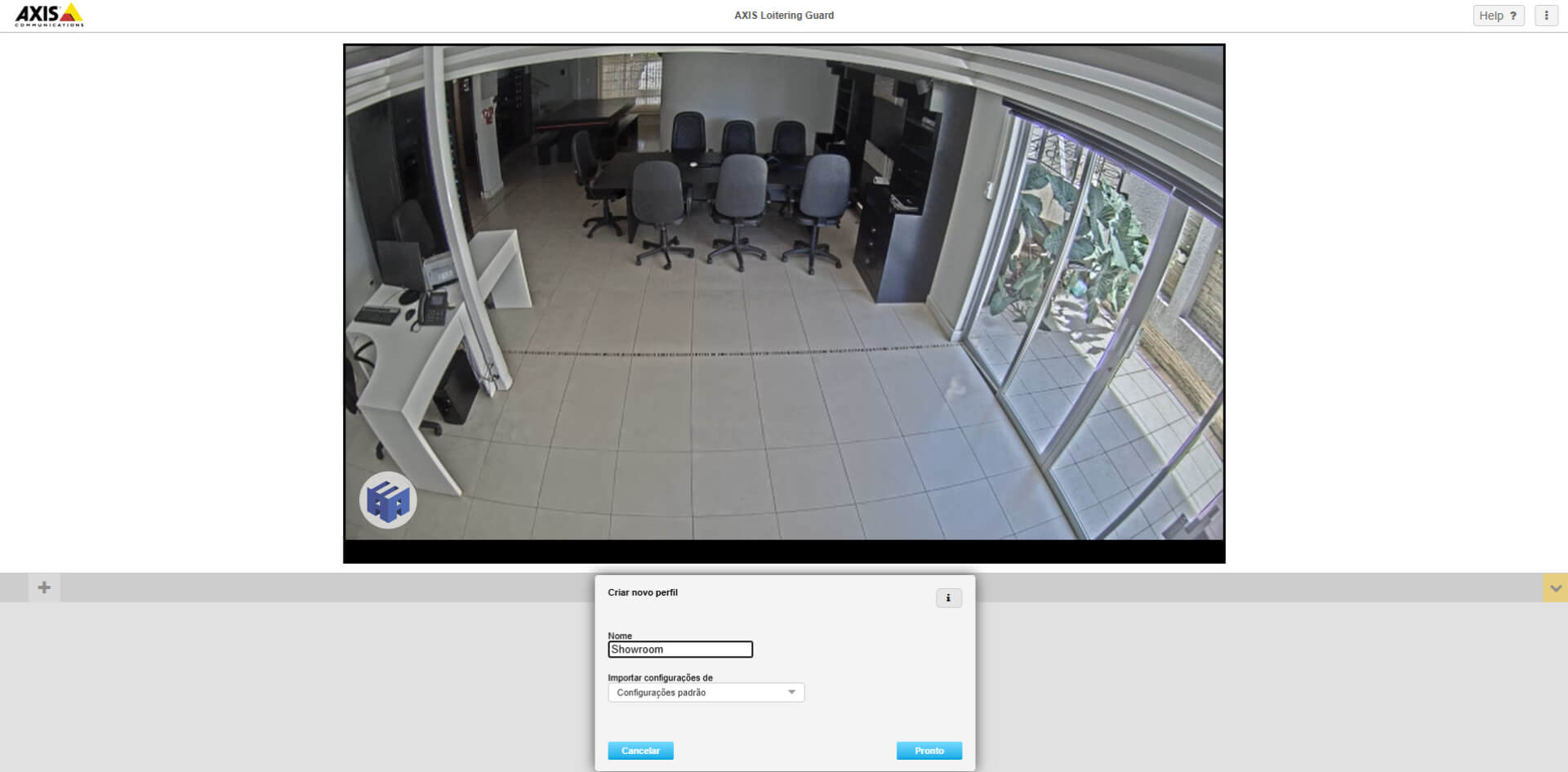
Existing profiles can be reused or modified, making it easier to standardize configurations.
Defining Areas of Interest
After creating or selecting a profile, it is necessary to define the areas of interest.
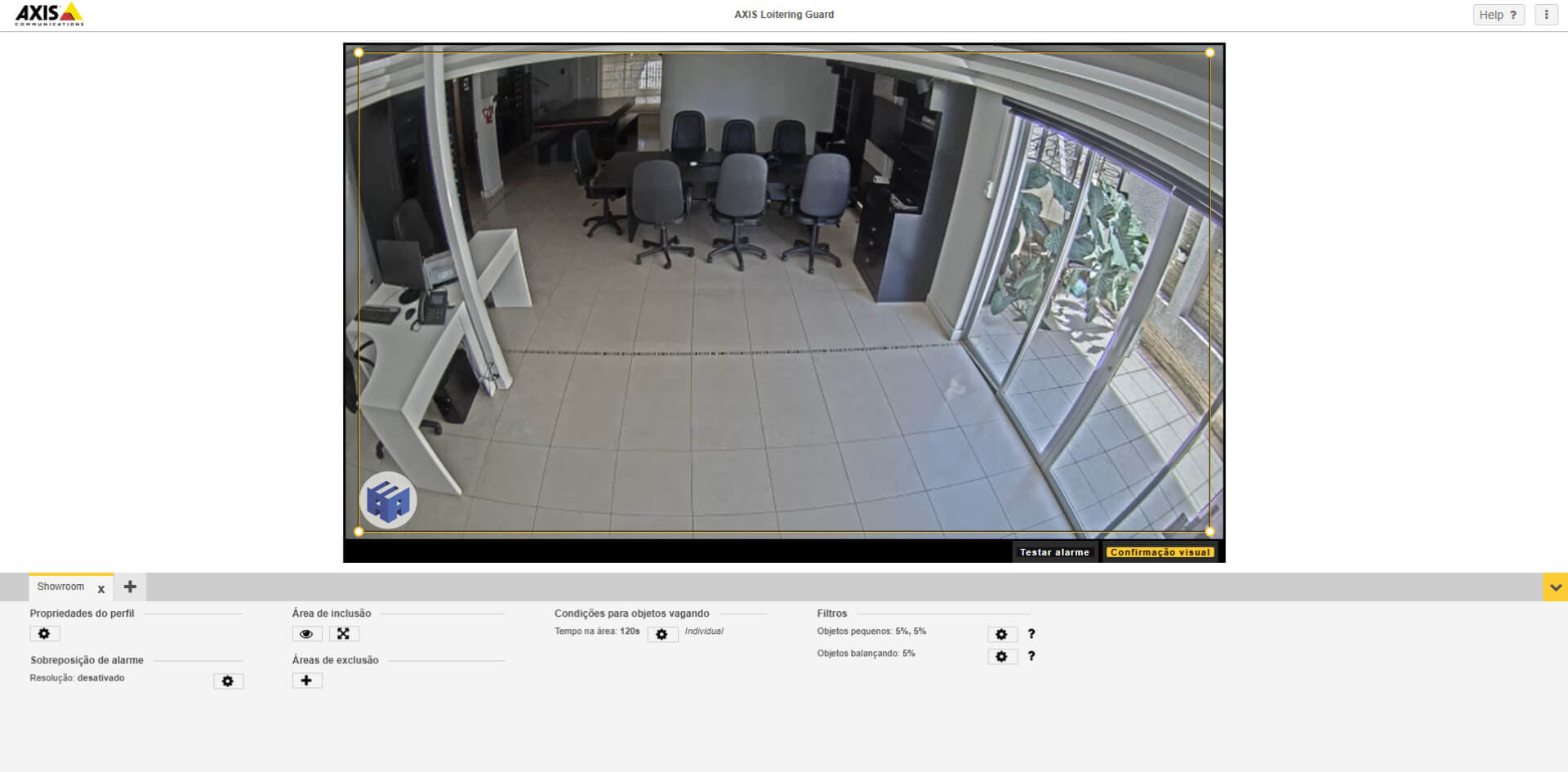
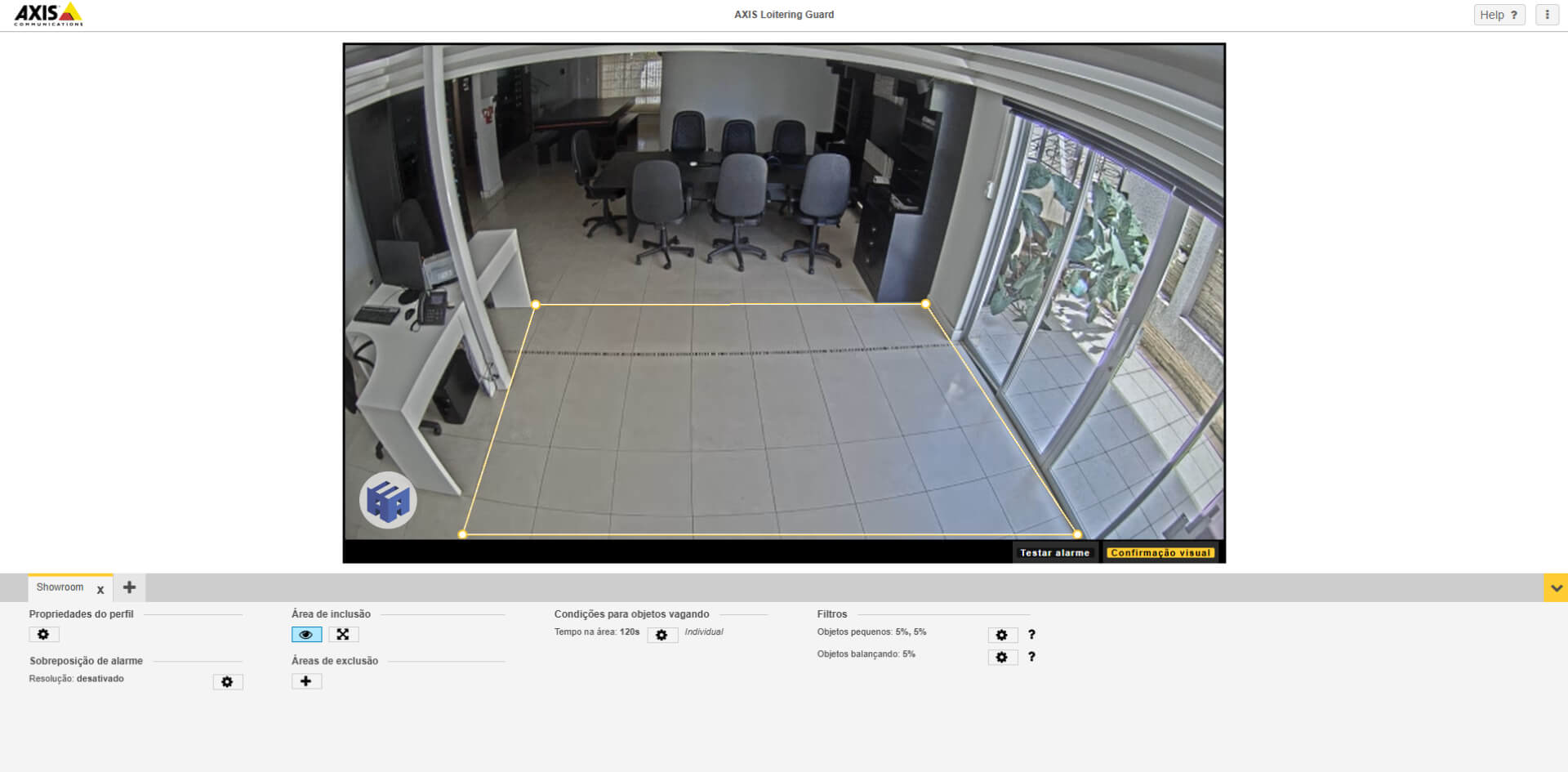
The interface displays a view of the scene captured by the camera, allowing the user to manually draw the areas where monitoring will be applied.
The areas can be adjusted in shape and size, ensuring that only the relevant locations are monitored.
Parameter Configuration
With the area of interest defined, the detection parameters can be adjusted:
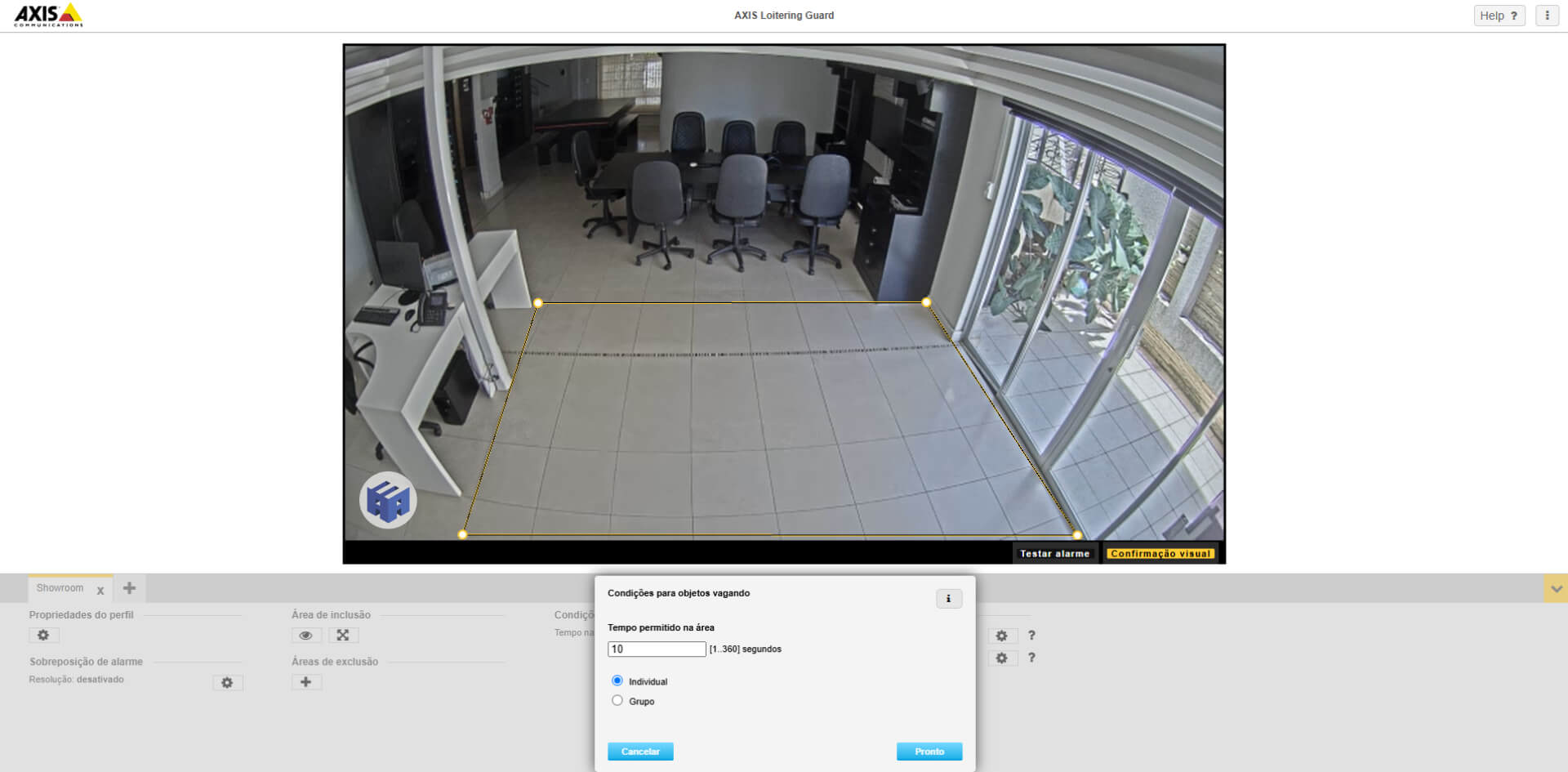
- Detection Time: Defines the minimum time an object must remain in the area of interest to be considered as “loitering.” In the example, a time of 10 seconds was configured. This value can be adjusted according to the expected behavior at the monitored location.
- Individual or Group Configuration: The system allows parameters to be applied to individual objects (e.g., one person) or groups of objects (e.g., multiple people or clustered vehicles). This enables greater flexibility in monitoring.
Demo Video
Final Considerations
The AXIS Loitering Guard is a video analytic that uses algorithms based on motion detection through pixel variation. Its application is broad and varied, depending on the quality of the configuration performed and the complexity of the monitored scene.
The decision to use it must take into account the environment and the specific performance requirements, evaluating, when necessary, the possibility of opting for more sophisticated systems, such as those based on artificial intelligence.
Among the analytics that employ pixel motion detection, the AXIS Loitering Guard stands out for its high precision, attributed to an efficient algorithm and the inclusion of advanced filters that significantly reduce false alarms.