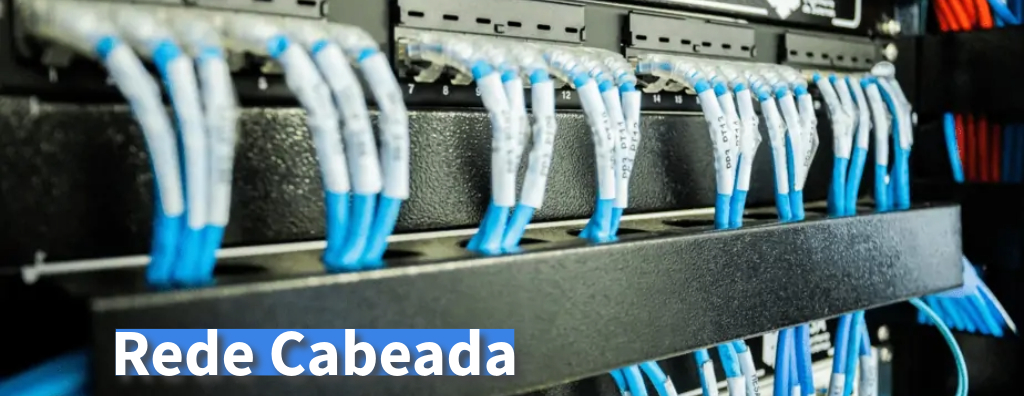
A wired network is a communication system that uses physical cables to connect and transmit data between hardware devices.
Check it out!
What is a Wired Network?
A wired network is a communication system that uses physical cables to connect and transmit data between hardware devices.
Unlike wireless networks, which depend on radio signals to transmit information, wired networks use cables as the medium for data transport, offering greater stability, security, and performance in many cases.
Although wireless networks, such as Wi-Fi, have become popular due to their convenience, wired networks remain essential in many applications because of their ability to transmit large volumes of data reliably.
In this article, we will talk about what a wired network is, its components, how it works, and the main benefits it offers in terms of performance, security, and stability.
In addition, we will look at its most common applications in corporate environments and security systems, and how choosing a wired network can directly impact the efficiency of your IT infrastructure.
[elementor-template id=”24446″]
Wired networks are indispensable in many applications because of their stability, security, and ability to transmit large volumes of data reliably, and they are widely used in corporate environments and data centers, where performance and security are priorities.
As the name suggests, a wired network uses physical cables, such as twisted-pair and fiber optic cables, to connect devices, enabling fast, low-latency data transmission. While wireless networks are ideal for mobility, wired networks continue to be the preferred choice in applications that require high performance and reliability.
Components of a Wired Network
A wired network is composed of several elements, the main ones being:
End Devices: Computers, servers, printers, IP cameras, and other equipment connected to the network, which exchange data among themselves and with the outside world.

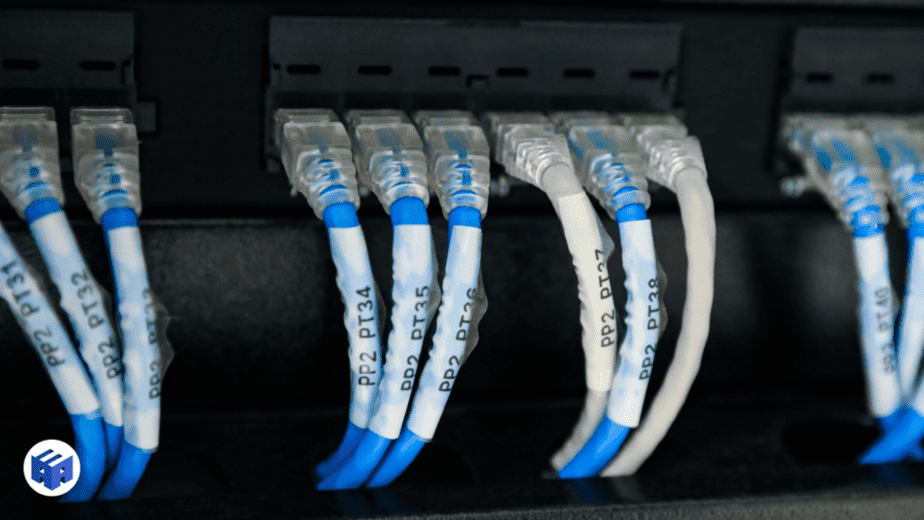
Network Cables: These are the physical media through which data travels. The most common types include twisted-pair cables (such as Cat5e, Cat6, and Cat6a) and fiber optic cables. The chosen cable type directly affects transmission speed and the distance data can travel without loss of quality.
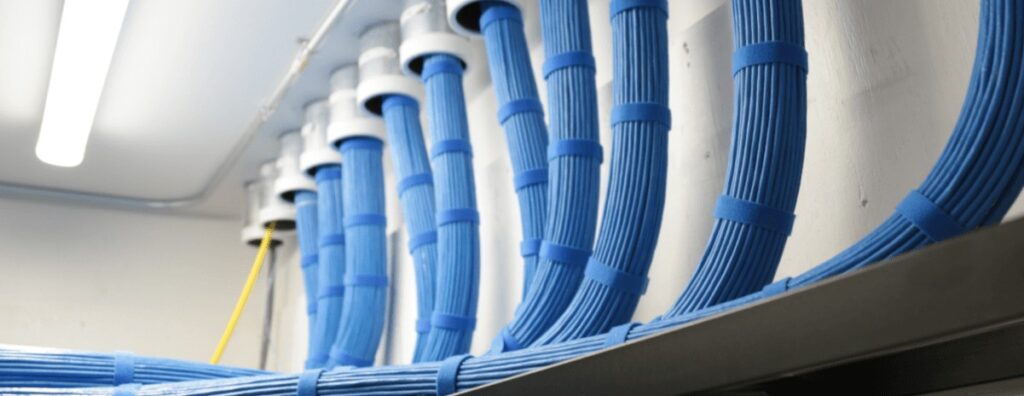
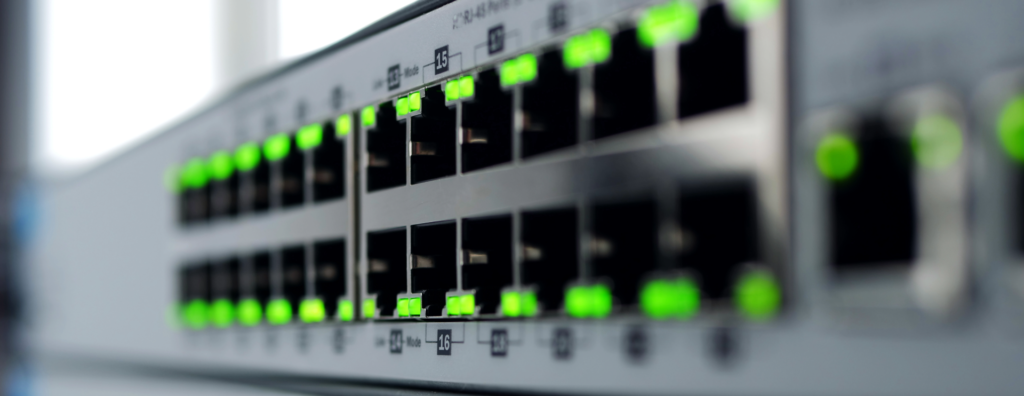
Switches: Devices that act as data distribution centers, connecting various network devices to one another and ensuring that information reaches the correct destinations.
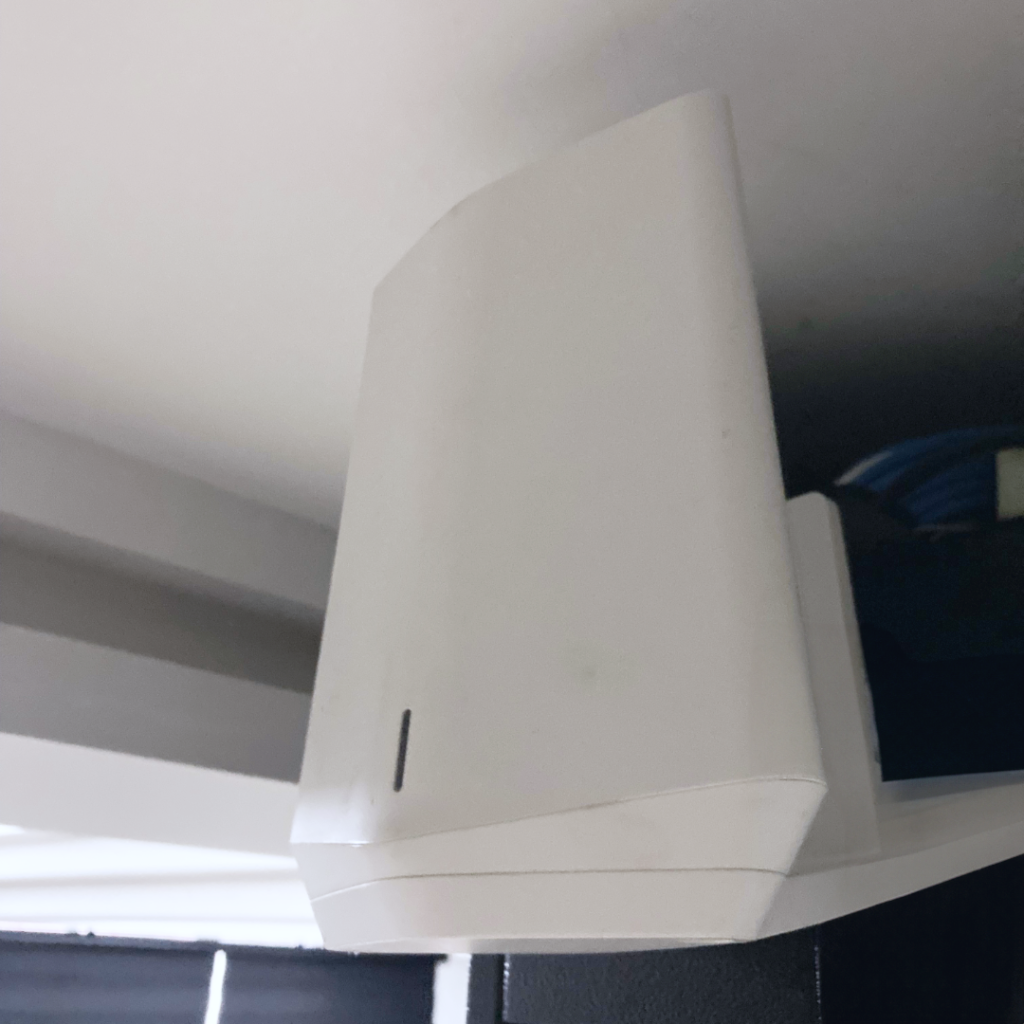
Routers: They are responsible for connecting the local network to the internet or other external networks, as well as managing data traffic.
How Does a Wired Network Work?
In a wired network, data travels through the cables that connect devices to the switch, which in turn forwards the data to the correct destination. The switch manages the connections between internal network devices, while the router enables communication with external networks, such as the internet.
Twisted-pair cables, such as Cat5e and Cat6 cables, are the most widely used in wired networks. They are built from pairs of twisted copper wires to minimize electromagnetic interference and ensure more efficient data transmission.
For high-speed transmission over long distances, fiber optic cable is the best option due to its greater bandwidth capacity and resistance to interference.
Benefits of a Wired Network
- Performance: Wired networks generally offer higher and more stable speeds compared to wireless networks. With the appropriate infrastructure, they can support Gigabit connections and even higher, depending on the technology used.
- Security: Because data travels through physical cables, intercepting information is more difficult, making wired networks more secure against intrusion than Wi-Fi networks.
- Stability: Wired networks are less susceptible to interference, such as physical barriers or signals from other electronic devices, ensuring a more stable and reliable connection.
- Low Latency: Latency in wired networks tends to be lower, which is especially important in applications that demand fast response, such as video conferencing, online gaming, and financial services.
Applications of Wired Networks
Archive: A3A Engenharia de Sistemas
- Corporate Environments: Due to their high capacity and security, wired networks are widely used in offices, data centers, and factories, where the constant exchange of large volumes of data is essential.
- Homes: Although wireless networks are popular in homes, many users still rely on wired networks to connect devices such as computers, gaming consoles, and TVs, where stability and speed are priorities.
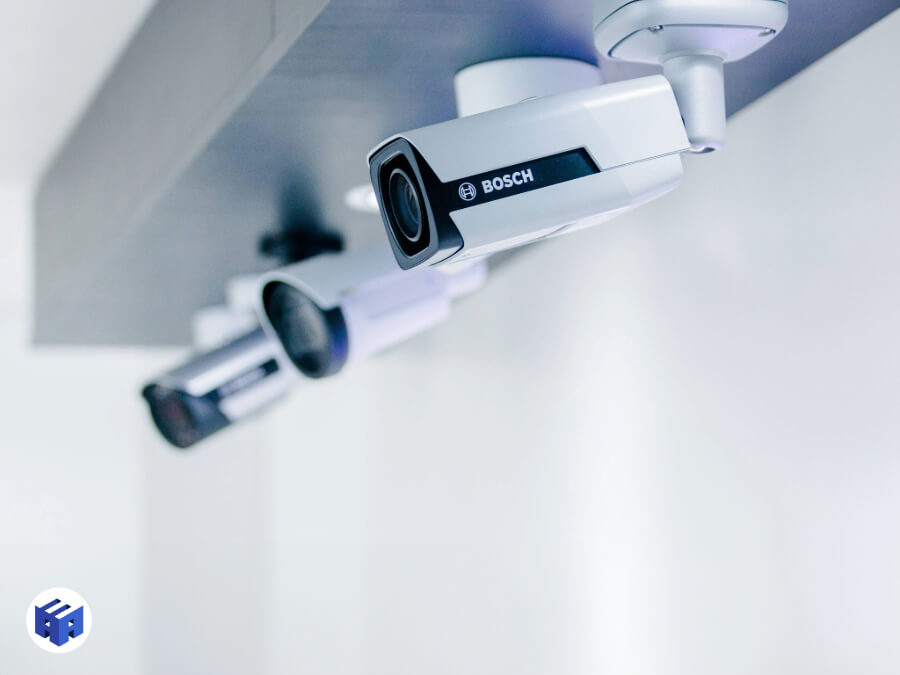
- Security Systems: Wired networks are common in CCTV (closed-circuit television) systems, where it is important to ensure a reliable and secure connection for IP cameras.
Archive: A3A Engenharia de Sistemas
Evolution of Network Cables
- Over the years, network cables have gone through several evolutions. Category 5e (Cat5e) enabled speeds of up to 1 Gbps, while Cat6 and Cat6a increased capacity to 10 Gbps. Fiber optics, in turn, is the best option for long distances and networks that require high transmission rates.
Wired networks use different types of cables, each designed to support different transmission speeds, operating frequencies, and maximum distances.
Here are the main categories of twisted-pair cables most commonly used in wired networks and their characteristics:
1. Cat5e (Category 5e)
- Performance: Cat5e (Enhanced Category 5) was developed to correct crosstalk problems present in Cat5. It supports speeds of up to 1 Gbps (Gigabit Ethernet).
- Supported Frequency: Operates at frequencies of up to 100 MHz.
- Maximum Distance: Supports distances of up to 100 meters for transmitting data at 1 Gbps.
- Applications: Widely used in local networks for small and medium-sized businesses and residential environments that require a stable transfer rate without the need for higher speeds.
2. Cat6 (Category 6)
- Performance: Cat6 is a significant improvement over Cat5e, supporting speeds of up to 10 Gbps, although that speed is only achieved over short distances.
- Supported Frequency: Operates at frequencies of up to 250 MHz, providing greater bandwidth.
- Maximum Distance:
- Up to 100 meters for 1 Gbps.
- Up to 55 meters for 10 Gbps, due to increased attenuation and interference over longer distances.
- Applications: Ideal for corporate networks, data centers, and environments requiring higher transmission rates, especially in high-density data environments.
3. Cat6a (Category 6a)
- Performance: Cat6a (“a” stands for “augmented”) was designed to support 10 Gbps over greater distances than Cat6.
- Supported Frequency: Operates at frequencies of up to 500 MHz, twice that of Cat6, which further reduces crosstalk and external interference.
- Maximum Distance: Supports up to 100 meters for speeds of 10 Gbps.
- Applications: Ideal for large corporations and data centers that require greater bandwidth and longer distances for high-speed data transmission.
4. Cat7 (Category 7)
- Performance: Cat7 supports speeds of up to 10 Gbps and offers even greater protection against interference with the addition of individual shielding for each wire pair.
- Supported Frequency: Operates at frequencies of up to 600 MHz.
- Maximum Distance: Supports distances of up to 100 meters for 10 Gbps.
- Applications: Used in environments where external interference is a greater problem, such as high-performance data centers and industrial installations.
5. Fiber Optics
- Supported Frequency: Fiber optics are not limited by frequencies like copper cables, since they transmit data through light pulses.
- Maximum Distance:
- Single-mode fiber: Can transmit data over distances of up to 40 km or more, without amplifiers.
- Multimode fiber: With distances of up to 500 meters for high-speed transmissions (10 Gbps and above).
- Applications: Ideal for interconnection between buildings, long distances, and networks that require high bandwidth and reliability, such as internet providers and data centers.
Security in Wired Networks
- Wired networks offer an additional layer of physical security, since access to the network depends on a direct connection to the cabling. Unlike wireless networks, where the signal can be intercepted remotely, a wired network is much more difficult to access without authorization.
- Implementing security policies in the wired infrastructure, such as VLANs, can help segment traffic and increase internal network security.
Maintenance and Durability of Wired Networks
- One of the main aspects that contributes to the longevity of wired networks is preventive maintenance. Wired networks require less maintenance over time compared to wireless networks, which may require constant firmware updates and channel adjustments.
- Well-planned structured cabling reduces the need for frequent reorganizations, minimizing the risk of service interruptions and the need for future adjustments.
Impact on Implementation Cost
- Wired networks usually have a higher initial cost compared to wireless networks, mainly due to the physical infrastructure (cables, switches, routers, etc.). However, lower long-term maintenance costs and greater reliability often offset the initial investment.
Each cable category meets different needs and budgets. Cat5e is ideal for smaller networks with few users and moderate speed requirements, while Cat6 and Cat6a are better for high-performance networks and long-term growth. For environments with extreme bandwidth needs and long distances, fiber optics is the recommended choice.
Final Considerations
Wired networks continue to play a crucial role in various applications, offering high performance, security, and reliability.
Although wireless networks are practical, wired networks are still the best choice for scenarios where speed, stability, and security are priorities.
If you are thinking about implementing or improving your wired network infrastructure, contact our team of specialists for a detailed assessment and customized solutions for your needs.
Related articles:
Network Troubleshooting: How to Diagnose and Solve Problems
Network Maintenance – Everything to keep your Network performing
Structured Cabling for Companies – How to implement it successfully
Consulting in Structured Cabling Projects – Design, consulting, and installation of Structured Cabling
Engineering Projects: Understand how an Engineering Project works
Acknowledgements:
Thank you for taking the time to read this article. We hope the information presented has been useful in helping you better understand wired networks and their applications.
If you have questions or need more details about how to improve your network infrastructure, we are available to help.
Contact us if you need support and consulting for your Structured Cabling Project.
