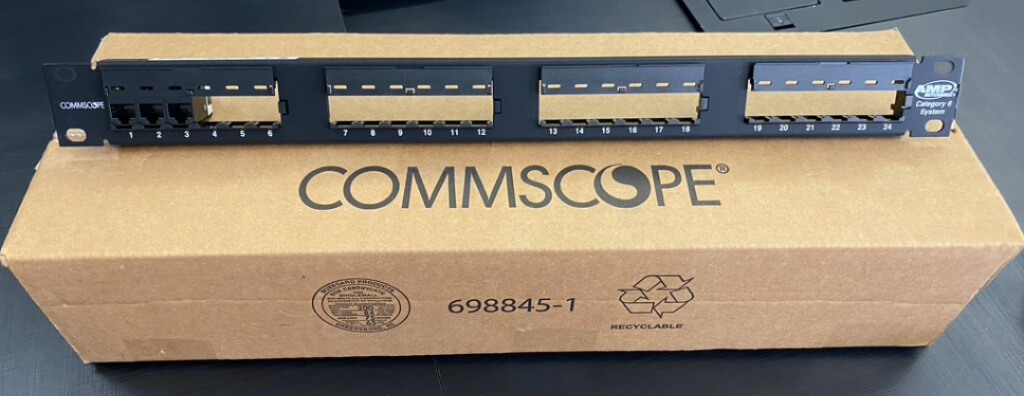
Introduction. A patch panel is a device used in structured cabling systems whose function is to organize, connect, and manage cables within a network infrastructure. The patch panel acts as a central point where all network cables in a system — such as those running from workstations, servers, and other devices — converge and interconnect […]
Check it out!
Introduction.
A patch panel is a device used in structured cabling systems whose function is to organize, connect, and manage cables within a network infrastructure. The patch panel acts as a central point where all network cables in a system — such as those running from workstations, servers, and other devices — converge and interconnect with network equipment such as switches and routers.
Proper organization of structured cabling is fundamental to the success of a well-designed network project, and in this context it is essential to highlight the importance of one of the key components of that system: the Patch Panel.
The function of a patch panel is to receive and properly organize the cables arriving at the rack, and to identify them in a way that supports efficient management of the structured cabling system. Without efficient management, network users can face performance issues, throughput degradation, and even outages.
In this article, we will discuss the importance of the patch panel, highlighting its role in organizing, managing, and maintaining telecommunications networks.
Check it out!
[elementor-template id=”24446″]
What Is a Patch Panel?
A patch panel is a device used in structured cabling systems to receive, connect, and identify cables in an organized manner.
A patch panel, or connection panel, is equipment used in structured cabling systems to organize, connect, and manage copper network cables, such as Ethernet cables (CAT5e, CAT6, CAT6A, CAT7).
The architecture of a patch panel is designed to provide a modular and organized structure, allowing easy access and management of network connections. It consists of a series of modular ports embedded in a chassis and mounted in racks or cabinets, enabling interconnection between network devices such as switches, routers, and servers.
Patch Panel Components:
Modular Structure (Chassis):
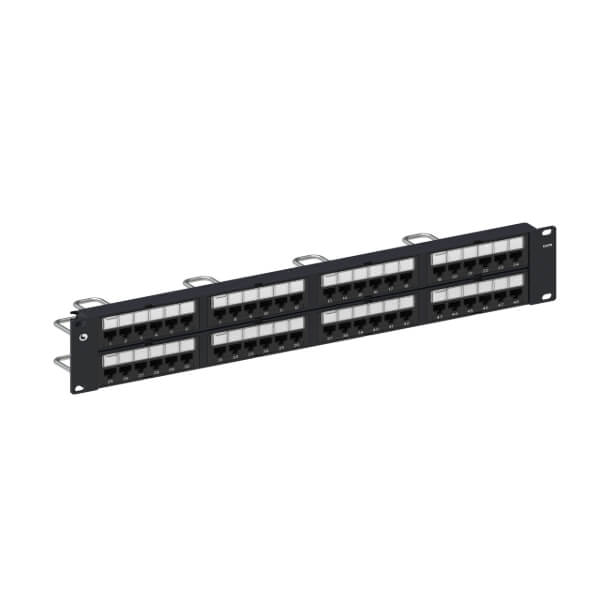
- The patch panel structure is typically metallic and designed for mounting in 19-inch racks — the standard format for data center racks and telecommunications rooms.
- The modular design allows the patch panel to be easily integrated into other network infrastructures, accommodating different port counts (12, 24, 48).
Connection Ports:
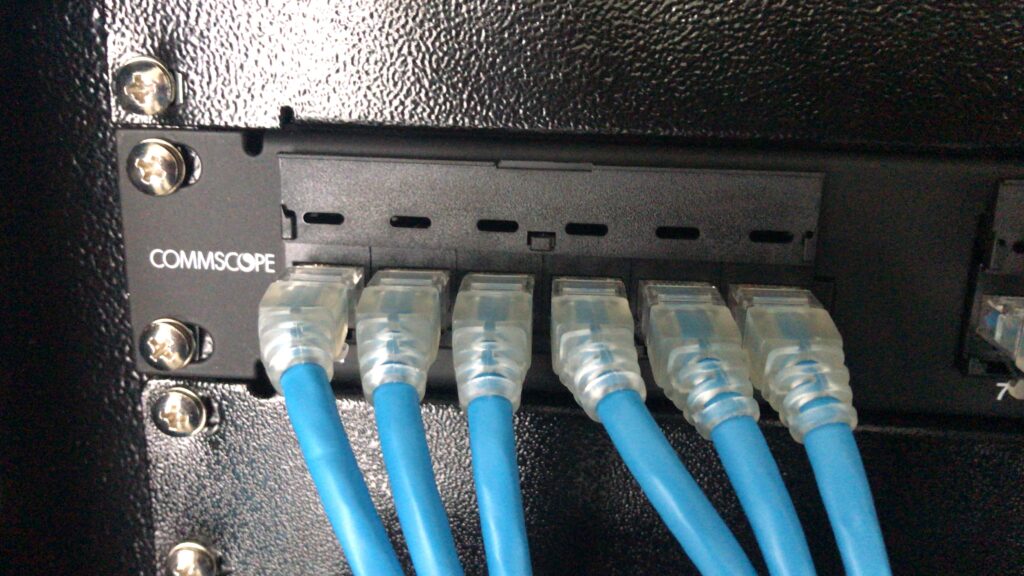
- The connection ports are the front-facing part of the patch panel where patch cords are plugged in to reach network devices such as switches and routers.
- These ports are RJ45 type for copper cables (CAT5e, CAT6, CAT6A, CAT7), each numbered for easy identification and organization.
Rear Panel with IDC (Insulation Displacement Connection) Blocks:
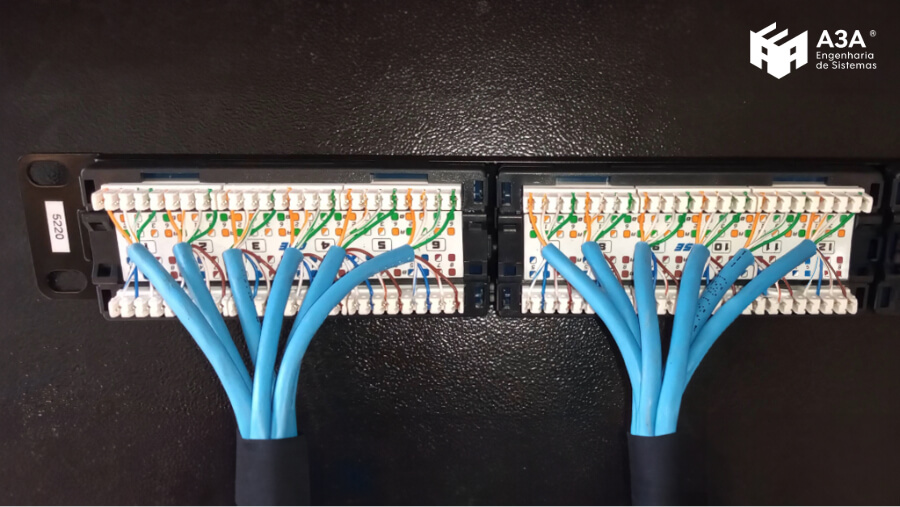
- The rear of the patch panel features IDC blocks where the primary cables (horizontal cabling) are terminated. These blocks provide a secure, solder-free connection: the cable is inserted and firmly pressed to make contact.
- This connection method simplifies installation, reduces labor time, and ensures efficient and stable electrical continuity.
Labels and Identification:
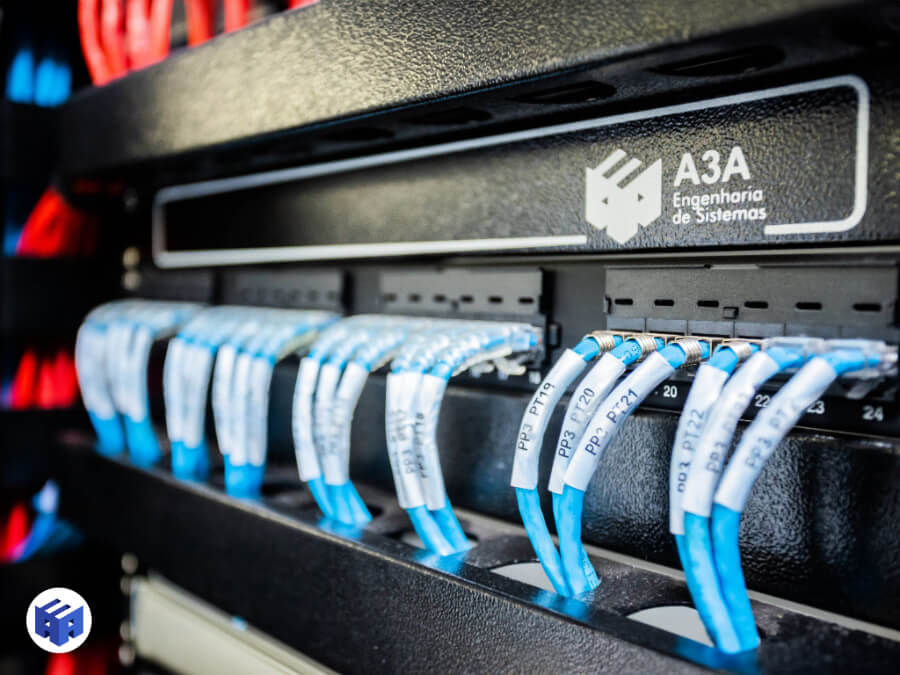
- Patch panels typically feature dedicated label areas or identification slots, allowing each port to be clearly marked. This is critical for cable management, where identifying each connection is essential for troubleshooting and maintenance.
- Labels can be customized to reflect the network layout, such as location identifiers, port numbers, or specific functions.
Construction Material:
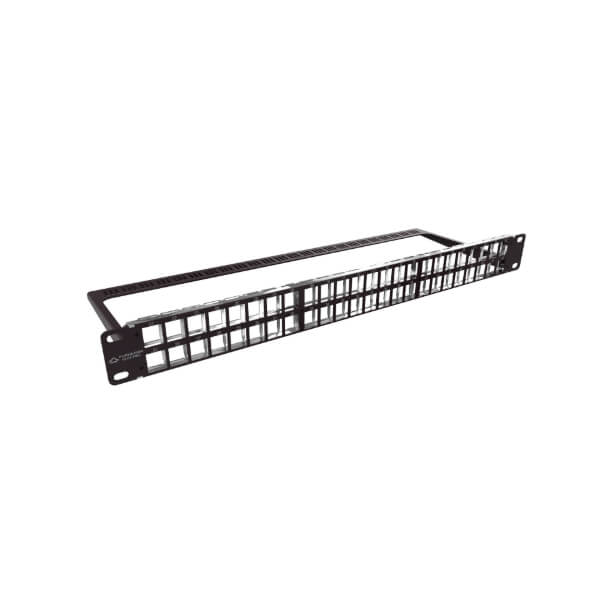
- Built from steel or other robust metals, patch panels are designed to last and withstand high-utilization environments.
- Connectors are typically plated with gold, copper, or another conductive material to ensure excellent electrical performance and corrosion resistance.
Grounding Terminal:
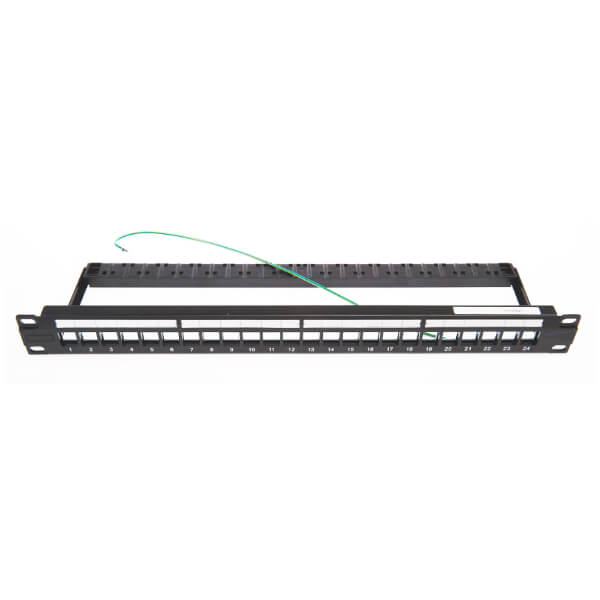
- Patch panels must include grounding points to ensure electrical safety and minimize electromagnetic interference (EMI). This is especially important in sensitive environments such as high-density data center installations.
The modular and organized architecture of the patch panel provides a clean installation and simplifies network cabling maintenance, contributing to operational efficiency. The ability to enable or disable network points simply by moving patch cords on the front ports — without touching the primary cabling — ensures that changes are made quickly and safely, minimizing the risk of disruptions and failures.
In addition, the use of labels and integrated cable management helps keep the structured cabling system clear and accessible, which is essential for service continuity and network reliability.
Patch Panel Functions:
Cable Organization: It keeps cables connected, organized, and properly identified, which simplifies management and significantly reduces troubleshooting time.
Ease of Maintenance and Changes: It allows cables to be connected and disconnected easily without touching the primary cabling, reducing downtime during network maintenance and reconfigurations.
Flexibility and Expansion: The patch panel offers flexibility to add, remove, or change connection points as needed, without major modifications to the cable infrastructure.
Interference Reduction: By keeping cables organized and in good condition, the patch panel helps minimize interference issues and ensures signal integrity.
Patch Panel Types and Their Applications
Patch panels are designed to serve different types of copper cabling networks, varying primarily in terms of the cable category used in the project.
Selecting the correct type of patch panel is essential to ensure the efficiency and performance of the structured cabling system.
Patch Panel for Metallic Cabling: CAT5e, CAT6, CAT6A, and CAT7
- Description:
- These patch panels are categorized according to the type of network cable used in the project. They feature RJ45 ports and are the most common in Ethernet networks.
- The key difference between these categories lies in their ability to support different transmission speeds and operating frequencies. For example, CAT5e supports up to 1 Gbps, while CAT6A can support up to 10 Gbps.
- Applications:
- CAT5e: Ideal for small businesses with few network points, offices, and residences where speeds up to 1 Gbps are sufficient.
- CAT6: Used in business environments that require higher bandwidth and lower levels of interference.
- CAT6A: Preferred in data centers and high-performance networks demanding speeds up to 10 Gbps and longer transmission distances without significant signal loss.
- CAT7: Indicated for environments that require high protection against electromagnetic interference, such as industrial installations.
Shielded Patch Panel (STP/FTP)
- Description:
- These patch panels are designed for use with shielded cables (Shielded Twisted Pair — STP or Foiled Twisted Pair — FTP), which include an additional protective layer to reduce electromagnetic interference.
- Applications:
- Industrial environments or locations with high exposure to electromagnetic interference, such as machine rooms or facilities near heavy equipment.
High-Density Patch Panel
- Description:
- Designed to maximize the number of connections within a reduced space, these patch panels offer more ports per rack unit — ideal for installations where space is a limited resource.
- Applications:
- Data centers and large offices with high port counts, where organization and space optimization are top priorities.
PoE Patch Panel (Power over Ethernet)
- Description:
- These patch panels allow both data and power to be transmitted over the same Ethernet cable, supporting the connection of PoE-enabled devices such as IP cameras, VoIP phones, and wireless access points.
- Applications:
- Installations where remote powering of network devices is required without additional power cables — such as security systems, access control, and Wi-Fi networks.
Modular Patch Panels
Environments that require flexibility and customization, such as conference centers, educational facilities, and dynamic IT environments.
Description:
These patch panels use removable keystone modules, allowing ports to be configured as needed and supporting different connector types (RJ45, HDMI, USB).
Applications:
Cable Organization: Enables efficient organization of network cables, preventing tangling and making connection tracing straightforward.
Installation Flexibility: The modular design allows different connector types — such as RJ-45, fiber optic, HDMI, and others — to be installed within a single patch panel, adapting to the specific needs of the network.
Ease of Maintenance and Expansion: With replaceable modules, it is easy to add, remove, or change connections without replacing the entire patch panel, making the system more adaptable to evolving requirements.
Conclusion:
The patch panel plays a fundamental role in structured cabling, serving as the central point for connecting and organizing the entire network infrastructure. The choice of patch panel directly impacts system efficiency, maintenance, and expansion — making it a key component for a well-structured, high-performance network.
If you need guidance or a custom project, contact us by email or WhatsApp — talk to our specialist consultants.
