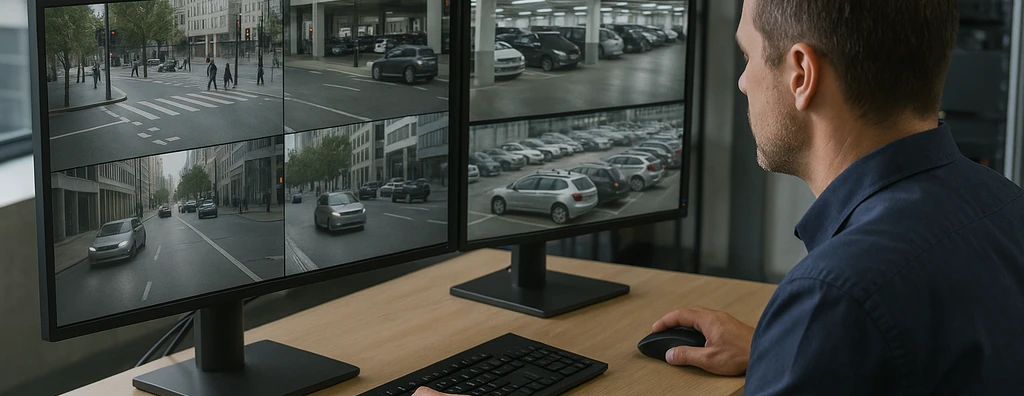
Video forensic search involves the detailed processing and analysis of audiovisual records to extract relevant information for investigating critical events, supporting decision-making, and meeting regulatory security requirements. The increasing complexity of urban scenes, exponential data growth, and the need for real-time operational response pose substantial technical and operational challenges to video surveillance systems.
Check it out!
Video forensic search is characterized by the detailed processing and analysis of audiovisual records to extract relevant information for investigating critical events, supporting decision-making, and meeting regulatory security requirements. The increasing complexity of urban scenes, the exponential growth of data volumes, and the need for real-time operational response pose substantial technical and operational challenges to video surveillance systems. In this context, applying systematic methods and dedicated algorithms, anchored in international standards, is fundamental to ensuring robustness, traceability, and efficiency in forensic analysis.
This article covers the main methods and algorithms used in video forensic search, metadata extraction concepts, system architectures for forensic processing, technical aspects for integration, operational workflow, limitations, and practical results—always through the lens of current regulatory and operational requirements. The content serves as a technical reference for projects, proposals, audits, and consultations in electronic security and video analysis.
Check it out!
[elementor-template id=”24446″]
Fundamentals of Video Forensic Search
Video forensic search consists of systematic techniques to identify, track, and correlate events, objects, and patterns within previously recorded or real-time audiovisual streams. This approach requires applying algorithms capable of interpreting complex scenarios and providing descriptive metadata, essential for fast and traceable searches.
- Information Extraction: Algorithms process video, audio, and metadata to detect events, objects (vehicles, people), movements, license plates, and other scene characteristics.
- Purpose: System integrity, fact reconstruction, automatic alarm triggering, and forensic evidence production in compliance with regulatory requirements.
International standards, such as IEC 62676, define parameters for the secure analysis, storage, and retrieval of video data, ensuring the traceability and integrity of the analyzed material.
Metadata and Automation in Forensic Analysis
Modern forensic analysis uses algorithms to transform video, audio, and other data into actionable information. Metadata generated from detected objects and events are essential for efficient searches in large video volumes and have multiple applications:
- Analysis Automation: Automated systems make it possible to replace hours of manually inspected video with automatic extraction of events of interest.
- Object Classification: Detailed detection and classification of people, vehicles, and suspicious behaviors enhance the precision of forensic searches.
- Operational Use: Metadata allow for generating statistics, predictive analyses, and supporting decision-making in reduced time.
This capability to automate data triaging increases operational efficiency, making it possible to respond immediately to critical incidents with real-time alerts and notifications.
System Architecture for Forensic Search
Architecture for video forensic analysis systems can be distributed between edge devices (cameras), centralized servers, or cloud services. Each approach presents specific characteristics in terms of performance, privacy, latency, and scalability:
- Edge Processing: Allows for analyzing uncompressed data (better quality), issuing real-time alerts, ensuring scalability through computational distribution, and enhancing privacy by transmitting only anonymous metadata.
- Server-based Processing: Used when processing load is high or requires greater integration capacity, which may introduce latency but facilitates cross-referencing historical data and integration with other systems.
Standard Operational Flow
- Image capture by cameras installed in the monitored environment.
- Local analysis for preliminary detection of relevant events and metadata generation.
- Transmission of data and metadata to centralized analysis servers.
- Secure data storage according to applicable regulatory requirements.
- Execution of search and correlation algorithms based on objective parameters (e.g., date, time, event type, identified object).
- Report generation and export of critical segments for investigative agencies or audits, with tracking trails and integrity records.
Compliance with open standards facilitates the deployment of integrated architectures where video systems, access control, and building management share events and correlate evidence, expanding the forensic investigation spectrum.
Algorithms Used in Video Forensic Search
Forensic analysis relies on advanced algorithmic models for detection, tracking, and classification of events and objects. The use of deep learning has made automated identification of scene elements possible with extremely high precision.
- Motion Detection: Algorithms monitor pixel changes, standardize noise, and isolate relevant occurrences.
- Object Tracking: After detection, routines follow the movement of objects or individuals over time, recording trajectories and interactions.
- Pattern Recognition: Features like Automatic Number Plate Recognition (ANPR/LPR), facial identification (per regulation), and database correlation add forensic value.
- Event and Alarm Generation: Automatic actions are triggered based on predefined conditions, such as entering restricted areas, atypical loitering, or crowds.
The robustness of these algorithms allows flexible search criteria, applying filters by specific attributes and accelerating practical results for investigative agencies.
Operational Workflow in Forensic Environments
The effectiveness of video forensic search depends on a well-defined operational workflow, integrating capture, storage, processing, and efficient data query. A typical workflow consists of the following stages:
- Data Acquisition: Obtaining video and audiovisual records in multiple formats, respecting resolution, frame rate, and file integrity specifications.
- Validation and Preservation: Checking origin parameters, handling control, and preserving digital chains of custody, meeting legal requirements for use as evidence.
- Computational Analysis: Applying described algorithms, extracting and categorizing events of interest.
- Search and Correlation: Using specific interfaces for forensic search. Metadata and events are accessed under multiple criteria for rapid location of relevant material.
- Reporting and Data Export: Generating technical reports, exporting critical segments in protected modules (with hashes and audit trails), and meeting requirements from regulatory and criminal prosecution agencies.
Standardizing this workflow ensures traceability, auditability, and adherence to established international standards for video forensic analysis.
Practical Results, Limitations, and Implementation Challenges
Recent advances in video forensic search methods and algorithms have allowed substantial gains in performance, precision, and speed in triaging large volumes of audiovisual data. Practical results include:
- Reduced Investigation Time: Automation of triaging eliminates the need for extensive manual inspection.
- Rapid Identification of Criminal Patterns: Automated correlation of multiple events over time and space.
- Real-time Operational Response: Possibility of activating teams and contingency protocols immediately after automated incident detection.
However, technical challenges and limitations inherent to system architecture and regulatory restrictions persist:
- Image Quality: Edge processing requires uncompressed, high-quality images. Compression or low resolution can hinder algorithm effectiveness.
- Computational Capacity: Advanced algorithms require high processing power, especially in large camera networks.
- Privacy and Regulation: Implementation must harmonize automated resources with data anonymization and respect for current legislation.
- System Integration: Interoperability between different platforms and databases can still require high-cost customizations and specific projects.
These limits motivate rigorous standard adoption, continuous analysis technology updates, and training for operation and digital forensics teams.
Best Practices and Regulatory Requirements
To ensure video forensic search effectiveness and compliance, some best practices are recommended:
- Use of Open Standards: Facilitates integration and interoperability between capture, analysis, and evidence management systems.
- Chain of Custody Preservation: All video access, handling, or export must be documented, with digital integrity controls and robust authentication.
- Adherence to International Standards: Alignment with recognized standards for video surveillance and storage, such as IEC 62676, is indispensable.
- Personal Data Protection and Anonymization: In sensitive environments, priority is given to anonymizing information that can identify individuals without compromising forensic analysis accuracy.
- Continuity Plan and Technological Update: Periodic reviews of infrastructure, algorithms, and protocols to keep the system resilient against technological evolutions and cyberattacks.
Rigorously following these practices increases forensic process credibility and reduces legal vulnerability for those involved.
Conclusion
Video forensic search has become a central element in electronic security investigations, thanks to analytical method evolution, regulatory standardization, and advances in applied artificial intelligence. The rigorous application of detection, tracking, and classification algorithms, combined with distributed system architecture and systematic metadata use, enables fast and accurate triaging of large data volumes.
However, achieving excellence in forensic analysis demands constant alignment with technical, regulatory, and operational requirements, plus continuous investment in team training and infrastructure updates. By adopting recommended best practices and standards, engineers, managers, and security specialists ensure reliable, traceable, and legally valid results in video forensic search.
Final Considerations
Video forensic analysis, when executed according to rigorous technical principles and aligned with international standards, consolidates itself as a fundamental pillar for high-criticality security projects. The A3A Engineering team thanks you for reading this article and recommends following our technical content and news on social media to stay informed about best practices in security systems engineering.