
What is Video Analysis? Video analysis is a technology that automatically processes images captured by surveillance cameras, applying pattern recognition algorithms and artificial intelligence. The goal is to detect and identify relevant events, such as suspicious movements, abandoned objects, perimeter intrusions, among others, without the need for intensive monitoring. How Does Video Analysis Work? Video […]
Check it out!
What is Video Analysis?
Video analysis is a technology that automatically processes images captured by surveillance cameras, applying pattern recognition algorithms and artificial intelligence.
The goal is to detect and identify relevant events, such as suspicious movements, abandoned objects, perimeter intrusions, among others, without the need for intensive monitoring.
[elementor-template id=”24446″]
How Does Video Analysis Work?
Video analytics are software programs that use image processing algorithms to automatically analyze and interpret the content captured by video surveillance cameras.
These systems are designed to extract relevant information from real-time video or recordings, generating alerts or reports based on predefined criteria.
The goal of video analytics is to increase security efficiency by automatically detecting suspicious events or behaviors, reducing the need for constant supervision by human operators. They can identify complex movement patterns, objects left or removed, breached perimeters, among other events of interest.
The video analysis process involves the following steps:
Image Capture: Security cameras capture video in real time.
Video Processing: Video analysis software uses algorithms based on artificial intelligence and computer vision to process images and recognize specific patterns.
Event Detection: Based on predefined parameters, the system detects unusual events or suspicious actions, such as a person’s behavior in a restricted area.
Automatic Event Notification: When an event is detected, the system sends automatic alerts to the security team, allowing for a rapid response.
Technologies Used in Video Analysis
Video analysis relies on a combination of advanced technologies that increase the system’s accuracy and efficiency. Some of the main ones include:
2.1 Computer Vision
Computer vision is responsible for “interpreting” captured images, recognizing objects, movements, and patterns. It allows the system to identify the presence of people, vehicles, objects left or removed, among other elements, with high precision.
2.2 Artificial Intelligence (AI)
AI, especially through techniques such as deep learning and machine learning, allows the video analysis system to learn and improve its ability to identify events based on past data. These algorithms can be trained to differentiate normal situations from anomalies, such as a person’s atypical behavior.
2.3 Facial and Object Recognition
Advanced video analysis systems can include facial recognition algorithms, which identify specific individuals, or object recognition algorithms, which detect vehicles or abandoned items in a scene. These technologies are essential in high-security environments, such as airports and military installations.
2.4 Cloud Processing
Cloud processing offers scalability and flexibility for video analysis systems. It allows data to be processed and stored remotely, eliminating the need for robust local infrastructure and facilitating integration with other security technologies.
Main Applications of Video Analysis
Video analysis has a wide range of applications, from public security to corporate administrative management.
Below, we detail some of the main areas where this technology can be applied.
3.1 Perimeter Security
In environments such as factories, military bases, and airports, video analysis can detect perimeter intrusion attempts, automatically activating response systems, such as alarms or sending alerts to the security team.
3.2 Traffic and Urban Infrastructure Monitoring
Video analysis is widely used in traffic monitoring, identifying congestion, accidents, or traffic violations, such as illegal lane use. In addition, it is used to monitor urban infrastructure and improve the planning of smart cities.
3.3 Detection of Abandoned or Removed Objects
In high-traffic areas, such as airports or shopping centers, video analysis can detect when an object has been left or removed from a monitored area, alerting security to potential threats, such as suspicious packages.
3.4 People Counting and Crowd Control
At large events, malls, or stadiums, people counting is used to monitor visitor flow and control venue capacity. Video analysis can identify the number of people in an area and alert when the occupancy limit is exceeded.
3.5 Administrative and Marketing Management
In retail, video analysis is used to understand customer behavior, such as the time they spend in certain areas of the store or which products attract more attention. This helps companies optimize store layouts and improve marketing strategies.
Suspicious behavior analysis and queue counting are also very useful features in retail stores.
Advantages of Video Analysis
Video analysis offers a series of advantages, both for security and for process automation.
Among the main benefits are:
4.1 Proactive Monitoring
With video analysis, monitoring transitions from a reactive to a proactive activity. Instead of reviewing hours of recordings after an incident, the technology allows suspicious events to be identified and responded to in real time.
4.2 Reduction of Operational Costs
By automating the monitoring process, video analysis reduces the need for large security teams to supervise footage. This lowers operational costs without compromising monitoring quality.
4.3 Accuracy and Consistency
The technology offers a level of accuracy that would be impossible to achieve with human supervision alone. It monitors continuously without fatigue, ensuring that critical events are consistently detected.
4.4 Data-Driven Decision Making
Data generated by video analysis can be used to make informed decisions in several areas, such as security, traffic management, and even in planning marketing strategies. This allows companies and authorities to optimize resources and respond more efficiently to events.
Challenges in Implementing Video Analysis
Despite the benefits, there are some challenges in implementing video analysis that must be considered.
5.1 Lighting and Environmental Conditions
The quality of captured images depends on the lighting conditions and cameras used. In low-light environments or with low-quality cameras, the accuracy of video analysis may be compromised. Choosing the right equipment is crucial to ensuring the system’s success.
5.2 Privacy Concerns
Because video analysis involves capturing and processing images of people, it is essential to ensure that the systems comply with data protection regulations, such as the GDPR or the LGPD (General Data Protection Law) in Brazil.
5.3 Integration with Other Systems
Integrating video analysis with other security and automation systems can be complex, especially in companies that already have legacy solutions. Careful planning and choosing vendors with integration experience are essential to avoiding problems.
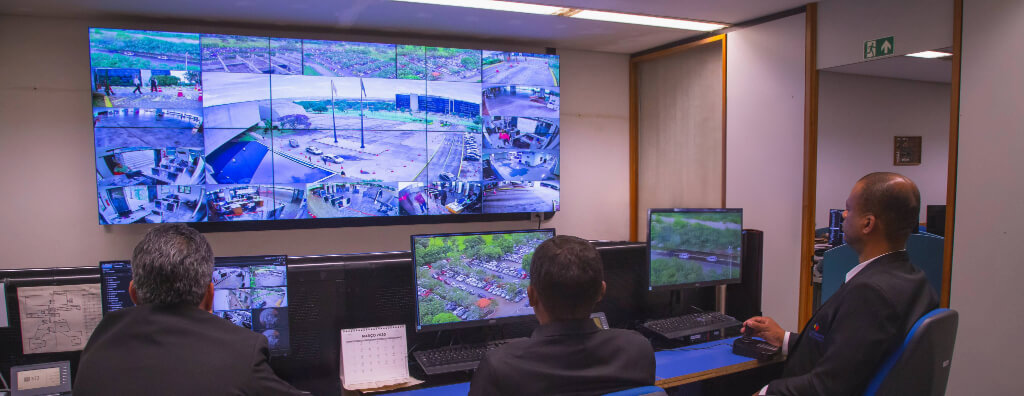
Integration of Video Analysis Solutions in Monitoring Systems
Source: A3A Systems Engineering
The integration of video analysis solutions into CCTV (Closed-Circuit Television) systems can be done in different ways, depending on project needs, adopted technology, and existing infrastructure.
Below are some of the most common ways to perform this integration:
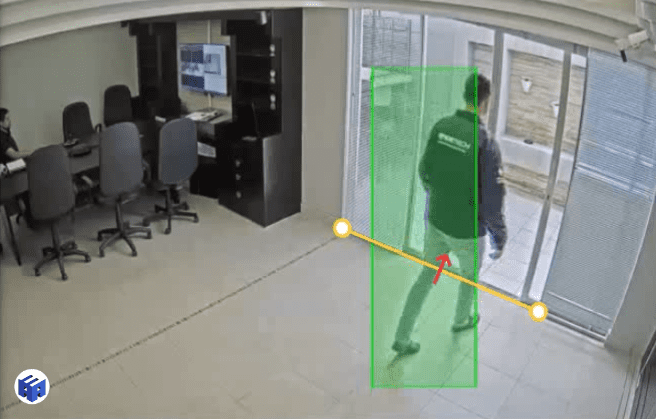
1. Cameras with Embedded Analytics – Edge Processing
Source: A3A Systems Engineering
- Description: Some IP cameras come with video analytics embedded in the hardware, such as motion detection, facial recognition, among others.
- How it works: The camera itself processes the analysis at the edge and sends metadata to the server running the VMS (Video Management System), thereby reducing the processing load on the Recording Server.
- Application: Ideal for projects requiring smart real-time monitoring but needing to balance server processing.
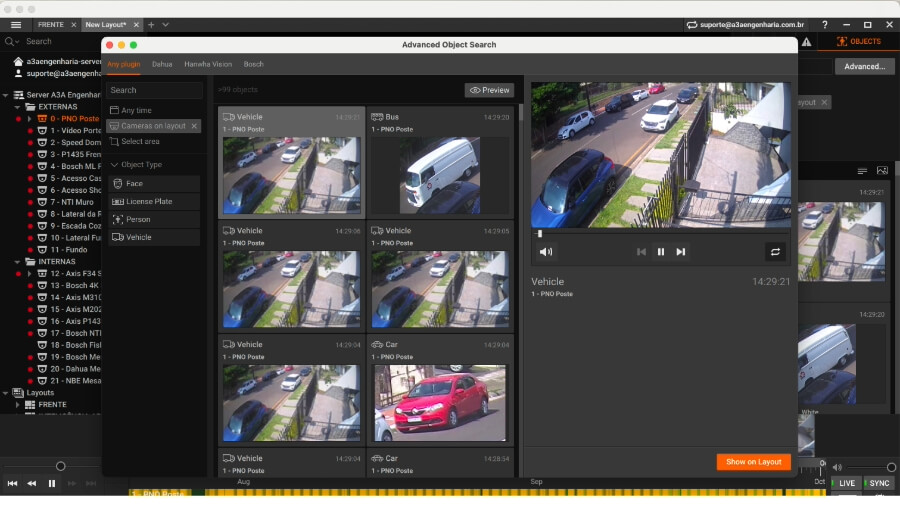
2. Integration via VMS (Video Management System)
Source: A3A Systems Engineering
- Description: The VMS is a centralized platform that receives and manages camera footage. It can integrate and process video analytics from IP cameras or dedicated servers.
- How it works: The VMS receives video data packets from cameras and performs centralized processing via integrated third-party software within the VMS, or in some cases, the VMS itself handles image processing. The advantage is that the VMS offers a unified interface for viewing, configuring, and managing alerts generated by video analyses.
- Application: Used in larger-scale projects where multiple cameras and subsystems need to be managed in a single platform.
3. Dedicated Server for Analytics Processing
- Description: Some solutions use external servers dedicated to processing video analytics, working alongside CCTV cameras and the VMS.
- How it works: Cameras send video data packets to a dedicated server with video analysis software that processes the analytics and returns the results to the central system (usually the VMS). This enables more complex analyses, such as facial recognition, license plate reading, suspicious behavior detection, and perimeter protection.
- Application: Used in systems requiring more robust analysis and where there is sufficient infrastructure to support separate processing.
4. Integration with Access Control Systems
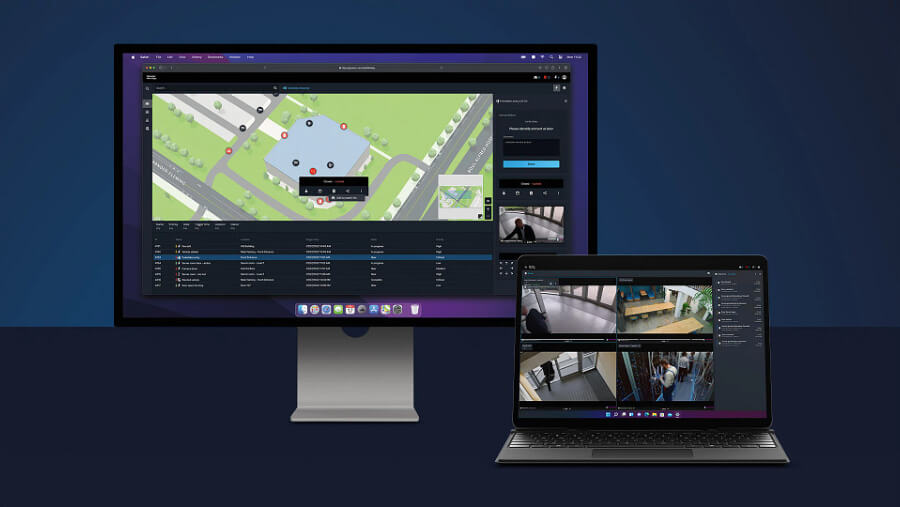
- Description: Video analysis solutions can be integrated into access control systems, enabling, for example, automatic door unlocking based on facial recognition.
- How it works: CCTV cameras monitor access areas, and based on analytical data (such as facial recognition or license plate reading), the access control system is automatically triggered.
- Application: Widely used in corporate buildings, parking lots, and restricted areas in industrial facilities.
5. Cloud Integration
- Description: Some CCTV and video analytics solutions can be hosted in the cloud, with remote data processing.
- How it works: Cameras send data to a cloud service, which processes the analytics and returns results or alerts. This reduces the need for robust local infrastructure but may require a reliable, high-speed internet connection.
- Application: Used in environments that prefer SaaS (Software as a Service) CCTV solutions to reduce local hardware costs.
6. Integration with Alarm Systems
- Description: Video analytics can be integrated with alarm systems to generate automatic alerts when pre-configured events are detected, such as intrusions or objects left in prohibited areas.
- How it works: When analytics detect a pre-configured event, the alarm system is triggered, sending notifications to operators, emails, or mobile devices.
- Application: Used in high-security environments, such as banks, military installations, and urban control centers.
7. Integration with Artificial Intelligence and Machine Learning
- Description: Video analysis based on AI and machine learning can be integrated to improve the accuracy of alerts and detections.
- How it works: AI algorithms trained on large volumes of data can be integrated to identify patterns, anomalous behaviors, or even predict events before they happen. These systems continuously learn from new data, improving over time.
- Application: Used in complex environments where security needs to evolve and learn from new scenarios, such as smart cities and public safety.
Forensic Search
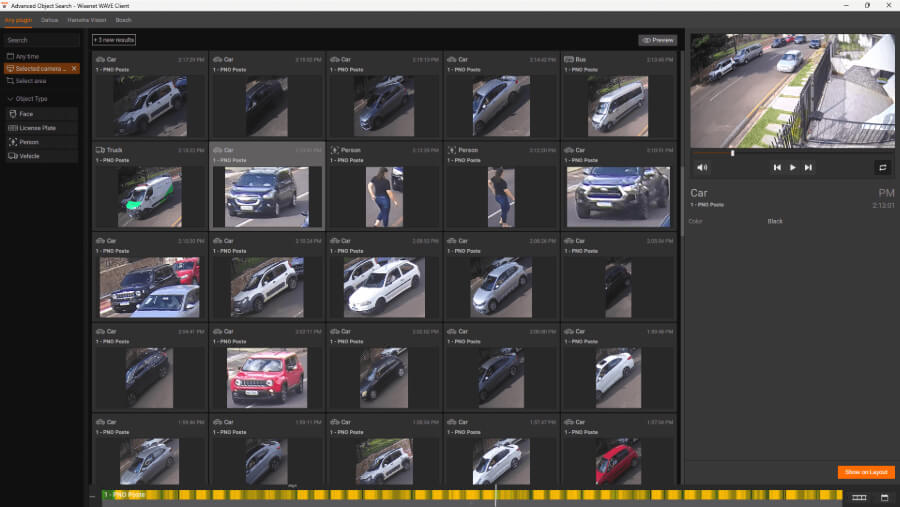
Forensic search refers to the detailed analysis of recorded videos, aimed at identifying and extracting specific information, such as people, objects, events, or behaviors, after an incident has occurred. This search can be performed manually or, more efficiently, with the help of automated tools that use video analytics to streamline the process.
Source: A3A Systems Engineering
Benefits of Forensic Search with Video Analytics:
- Speed and Efficiency: Automating video analysis via analytics allows hours of footage to be reviewed in minutes, focusing only on relevant events or behaviors.
- Precision: With advanced algorithms, analytics minimize the possibility of human error and detect details that might go unnoticed in a manual review.
- Better Investigation: Forensic search makes investigations more comprehensive, providing high-quality visual evidence to resolve security cases or internal incidents.
The primary benefit of forensic search is its efficiency in analyzing large volumes of video recordings.
With the help of video analytics, forensic search allows the rapid identification of relevant events, objects, or individuals amidst hours or even days of recordings. This drastically reduces the time needed to investigate incidents, increasing accuracy and speed in obtaining critical information for resolving security cases, audits, or internal investigations.
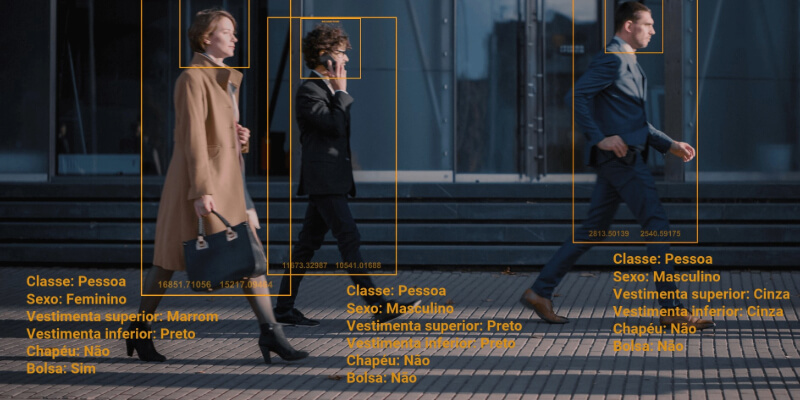
This efficiency is particularly important in environments with multiple surveillance cameras, where manual review would be impractical and time-consuming.
Video Analysis Trends
Video analysis continues to evolve as new technologies are developed.
Some trends that can optimize the use of this technology include:
6.1 Advanced Use of AI and Deep Learning
With the evolution of AI and deep learning, video analysis systems will become increasingly intelligent, capable of identifying not only objects and people, but also behaviors, contexts, and even emotions, increasing monitoring effectiveness.
6.2 Smart Cities
Video analysis will be a key component in smart city solutions, with applications ranging from public security to optimizing urban infrastructure and mobility, contributing to the creation of more efficient and safer environments.
6.3 Real-Time Video Analysis
Real-time data processing will allow for an even faster response to critical events, especially in applications such as traffic monitoring, public safety, and large events.
Conclusion
Video analysis is a technology that is transforming the way we monitor and manage security across various sectors.
With the use of artificial intelligence and machine learning, it offers automation, precision, and efficiency, allowing companies to respond to critical events in real time.
While challenges such as integration and privacy must be considered, the future of video analysis promises to bring even more advancements and applications, especially in smart cities and high-security environments.
Acknowledgements
Thank you for taking the time to read this article. We hope the information presented was useful and clarifying.
If you have any questions or want to learn more, we are at your disposal to help!