
Learn the main types of computer networks, including LAN, WAN, MAN, PAN, WLAN, SAN and VPN, plus classification by architecture, application, ownership and geographic scope.
Check it out!
Computer network types represent the different ways a network can be structured and organized according to criteria such as technology, purpose, topology, and communication method. Understanding these types is essential for planning efficient, secure solutions suited to residential, enterprise, and large-scale environments. Geographic scope is one well-known classification criterion, but this article focuses on the main categories of computer networks, their characteristics, and practical applications.
Computer Networks are systems that interconnect devices so they can access data, share resources, and communicate with one another.
If you are looking for details on classifying computer networks by geographic scope — such as LAN, MAN, WAN, and others — see our dedicated article on Computer Network Classification by Geographic Scope. It provides a deeper treatment of this specific criterion alongside the network types presented in this guide.
Although “network types” and “network classification by geographic scope” are often used as synonyms, they address different aspects. Network types encompass different forms of organization and application based on purpose, technology, communication method, or topology. Geographic-scope classification deals specifically with the area covered by the network, as with LAN, MAN, and WAN. Geographic scope is therefore only one possible criterion for classifying computer networks.
With the distinction between network types and classification by geographic scope established, this article now focuses on the main types of computer networks and their practical applications. The dedicated geographic-scope article provides further detail on that criterion.
“Understanding the difference between network types and their classification by scope is fundamental to correctly specifying a communications infrastructure. The right choice directly affects efficiency, security, and expansion capability, making the design better aligned with each environment’s needs.”
— Eng. Altair Galvão, network and structured cabling specialist
The Main Network Types Are:
1.LAN (Local Area Network):
- Description: Local network covering a small geographic area such as an office, school, or home.
- Characteristics: High communication speed, relatively low implementation cost, and use of Ethernet or Wi-Fi. Typically managed by an internal network administrator.
- Examples: Enterprise computer networks and home networks.
2. WAN (Wide Area Network):
- Description: Network covering a large geographic area and connecting multiple LANs across cities, countries, or continents.
- Characteristics: Uses technologies such as dedicated circuits, satellite links, and Internet connections. Latency and performance depend on distance and transport technology.
- Examples: The Internet is the largest WAN.
3. MAN (Metropolitan Area Network):
- Description: Network covering a metropolitan area such as a city or university campus.
- Characteristics: Larger than a LAN but smaller than a WAN; often uses fiber-optic technologies for high-speed connectivity.
- Examples: Networks interconnecting multiple company sites within a city.
4. PAN (Personal Area Network):
- Description: Personal network used to connect devices near an individual, generally within a few meters.
- Characteristics: Wireless technologies such as Bluetooth and Wi-Fi Direct connecting smartphones, tablets, and headsets.
- Examples: Connection between a smartphone and smartwatch.
5. WLAN (Wireless Local Area Network):
- Description: Similar to a LAN but uses wireless communication, typically Wi-Fi.
- Characteristics: Provides mobility and flexible expansion. It is subject to radio interference and requires careful security design.
- Examples: Wi-Fi networks in companies, homes, and public venues.
6. SAN (Storage Area Network):
- Description: Dedicated storage network connecting servers and storage devices at high speed.
- Characteristics: Designed for high performance and large data volumes, using technologies such as Fibre Channel or iSCSI.
- Examples: Data-center storage networks.
7. CAN (Campus Area Network):
- Description: Network connecting multiple buildings within a campus, such as universities, enterprises, or military facilities.
- Characteristics: Covers an area larger than a LAN but smaller than a MAN, often combining fiber-optic and wireless links.
- Examples: University networks interconnecting academic buildings, libraries, and residences.
8. VPN (Virtual Private Network):
- Description: Virtual network enabling secure connections over a public network such as the Internet.
- Characteristics: Creates encrypted tunnels to protect data and is widely used for secure remote access to enterprise networks.
- Examples: Remote employee access to internal enterprise systems.
These networks vary in size, complexity, and purpose and can be classified using different technical criteria.
Classification Criteria
Computer networks can be classified according to several technical criteria that examine different network characteristics:
Architecture
Network Architecture refers to the structured organization of network components, defining how devices are interconnected, communicate, and share resources.
A Network Architecture Design involves several critical aspects, including the definition of Network Topology, careful selection of hardware and software, choice of transmission media, specification of communication protocols, installation, and technical documentation.
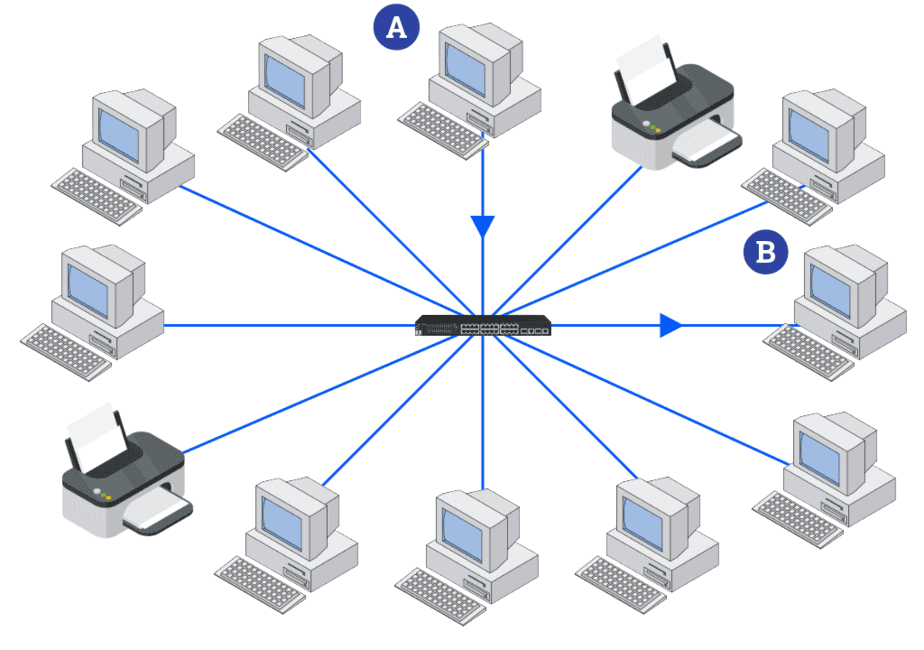
A3A Engenharia Collection
In general, networks can be classified into two fundamental architectural models:
Client-Server Networks
Client-server architecture divides responsibilities between two main components: the client and the server, which communicate over a network.
In this model, the server manages, processes, and provides resources while the client requests them.
Client-server communication is based on network protocols that define message format, transmission, and reception, ensuring requests and responses are correctly processed.
A practical example of this architecture is an IP Video Surveillance System.
In this example, a server running Video Management Software (VMS) centralizes cameras, stores recordings, processes events, and provides real-time video access.
The client may be viewing software on a computer or mobile device that interacts with the server to access system functions.
This architecture centralizes management and data analysis, supporting scalability and robust security and access-control measures.
More specific variants include multilayer and cloud architectures, which extend the client-server model to address different requirements and scenarios.
Peer-to-Peer Networks (P2P)
Peer-to-peer (P2P) architecture is a distributed network model in which connected devices can act as both clients and servers, eliminating the need for a central server.
In a P2P network, each node or peer can provide and consume resources such as files, bandwidth, or processing power in a decentralized manner. Devices can share resources directly without depending on a centralized server.
In home and small-business networks, P2P can simplify deployment by removing the need for dedicated servers. Devices can directly share resources such as files and printers.
On the Internet, P2P networks are widely used for file sharing, where files can be divided into smaller blocks distributed among participating devices.
The decentralized nature of P2P networks can provide simple and efficient implementation, especially where configuration complexity and security requirements are limited.
Bandwidth management, data integrity, and authenticity are critical issues in P2P implementations, especially at scale or where security is important.
Ownership
Network ownership refers to control and administration of network resources by a public or private entity. This may include physical infrastructure such as cabling, routers, and servers, as well as data carried by the network.
Ownership determines who has authority to manage, configure, and maintain the infrastructure and to define security, access, and update policies.
Depending on ownership, networks may be classified as public or private, each with distinct operational characteristics and purposes.
Public Networks
Public networks are accessible to the general public and are maintained by government entities or private telecommunications providers.
Common examples include the Internet and mobile networks.
These networks are designed to accommodate large numbers of simultaneous users, offering high scalability and broad geographic coverage.
Their architecture must support high traffic volumes while maintaining suitable availability and performance for many applications and services.
Because they are open, public networks are more exposed to threats such as cyberattacks and data breaches.
Protecting them requires robust security protocols, data encryption, and continuous monitoring to detect and mitigate threats.
Private Networks
Private networks are configured and maintained by organizations or individuals for exclusive use. Examples include internal enterprise, educational, and home networks.
They provide greater control over resources and data, enabling tailored security policies.
Private-network infrastructure may use owned or leased equipment and may be managed by the organization’s IT team or a specialized service provider.
Private networks can provide stronger access control and organization-specific security measures than public networks.
Application
Network application refers to the purpose and context in which a network is used, determining the functions and technical requirements it must support.
Each application imposes specific requirements for capacity, security, availability, and performance that shape network architecture and design.
The application directly influences technologies, topology, and communication protocols.
Residential Networks
Residential networks use technologies such as Wi-Fi and Ethernet to connect devices within a home and provide Internet access.
A typical setup uses a router, often supplied by the service provider, as the central point for Internet connectivity.
Switches can expand wired ports, while access points (APs) extend Wi-Fi coverage into larger or difficult areas.
These networks support activities ranging from web browsing and media streaming to Internet of Things (IoT) devices such as security systems, smart thermostats, and virtual assistants.
Network efficiency depends on suitable devices and optimized configuration to provide low latency and sufficient bandwidth for multiple simultaneous connections.
Enterprise Networks
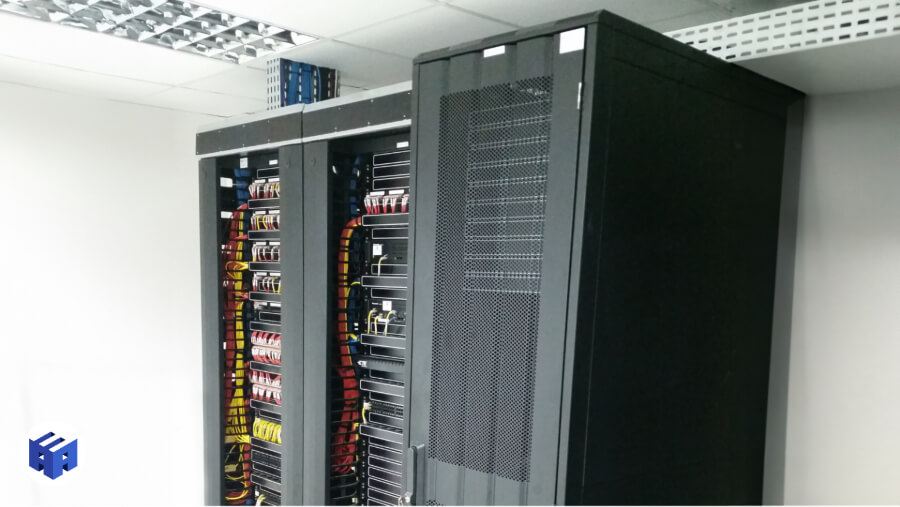
Enterprise networks are complex infrastructures designed to support communications and data flows in medium and large organizations.
They combine technologies and routing protocols to connect servers, workstations, printers, and other devices while supporting security, performance, and scalability.
Enterprise architectures commonly include managed switches, routers, access points (APs), firewalls, and, in some cases, PBX systems.
Network segmentation through VLANs is widely used to isolate departments or systems and improve traffic control.
Enterprise networks are also commonly integrated with data centers and cloud services, supporting critical applications and secure remote access through VPNs.
Continuous monitoring and strong security policies, including firewalls, intrusion prevention systems (IPS), and segmentation, are critical to protect corporate data and services.
Industrial Networks
Industrial networks connect automation equipment and systems in manufacturing and production environments.
They use protocols such as Modbus, Profibus, and EtherNet/IP for reliable communications among PLCs, sensors, actuators, and SCADA systems.
Industrial networks prioritize low latency and high availability for automation and control. Cybersecurity is critical because incidents can affect industrial operations.
They also integrate with enterprise systems for data analysis and process optimization.
Storage Area Networks (SAN)
Storage Area Networks (SANs) connect servers to storage systems such as disk arrays and tape libraries to consolidate and centralize storage.
They use technologies such as Fibre Channel and iSCSI to provide high-speed, low-latency data transfer, supporting availability, scalability, and efficient management of large data volumes.
SANs are critical in high-performance environments such as data centers, supporting enterprise applications, backup and disaster recovery, and storage services.
SAN administration uses specialized tools to monitor performance, allocate storage resources, and protect data.
Connection Technology
Wired networks use physical cabling for data transmission, providing stable and reliable connectivity.
Ethernet is the most common technology, using twisted-pair cabling such as Cat5e, Cat6, Cat6A, and Cat7 in LANs. Depending on category and application, these cables can support speeds up to 10 Gbps and are widely used in enterprise and residential environments.
Coaxial networks use coaxial cable for data transmission and remain common in broadband and cable-TV systems, although they are less common in new LAN installations.
Wired Networks
Wired networks use physical cabling for data transmission, providing stable and reliable connectivity.
The most common technology is Ethernet, which uses twisted-pair cabling such as Cat5e, Cat6, Cat6A, and Cat7 to connect devices in a local area network (LAN).
These cables can support speeds up to 10 Gbps depending on category and application and are widely used in enterprise and residential environments.
Coaxial networks use coaxial cable for data transmission and remain common in broadband and cable-TV systems, although they are less common in new LAN installations.
Copper Networks

Copper networks use metallic conductors to carry electrical signals. Twisted-pair cables are widely used in Ethernet and consist of insulated wire pairs twisted together to reduce interference and crosstalk. Coaxial cables use a central conductor and shielding and are commonly used for broadband and television connections.
Fiber-Optic Networks
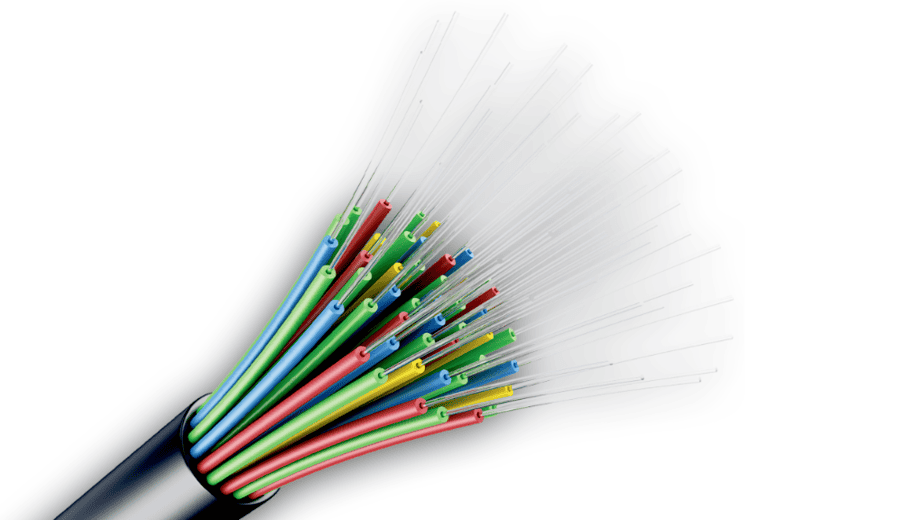
Fiber-optic networks use glass or plastic fibers to transmit data as light pulses. They provide high bandwidth and are well suited to data centers and long-distance communications. Fiber also has lower attenuation over long distances than copper cabling.
Wireless Networks
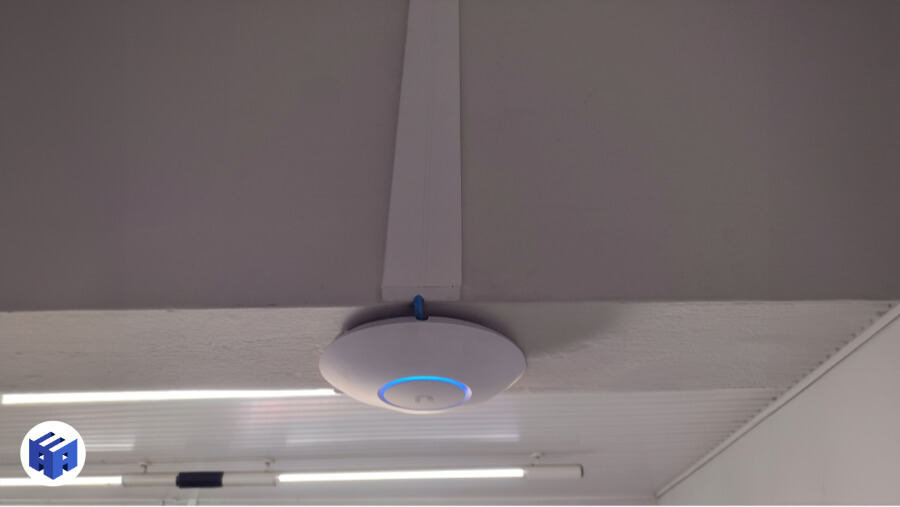
Wireless networks transmit data through radio waves, providing flexibility and mobility. Wi-Fi, based on IEEE 802.11 standards, connects devices to LANs without cabling, while newer generations such as Wi-Fi 6 and Wi-Fi 6E improve speed, capacity, and efficiency. Bluetooth supports short-range device communication and is suitable for peripherals and mobile devices.
Geographic Coverage
Network classifications range from very small personal-scale networks to vast global networks such as the Internet. Each type serves different applications.
Personal Area Networks (PAN)
Personal Area Networks (PANs) are designed to connect devices within a very limited area, typically around a single person. Common PAN technologies include Bluetooth and Zigbee. They support short-range communication among personal devices such as smartphones, tablets, laptops, and peripherals, usually over wireless radio links.
Local Area Networks (LAN)
Local Area Networks (LANs) cover a limited geographic area such as an office, home, or building. They connect multiple devices with high speed and low latency using wired Ethernet, Wi-Fi, or both, and enable shared access to resources such as printers and files.
Campus Area Networks (CAN)
Campus Area Networks (CANs) cover an area larger than a LAN, typically a university campus or corporate building complex. They interconnect multiple LANs through high-capacity switches, routers, and often fiber-optic links to provide high-bandwidth, low-latency communications across buildings and areas.
Metropolitan Area Networks (MAN)
Metropolitan Area Networks (MANs) span a city or metropolitan region and interconnect local and campus networks across an urban area. They often use fiber-optic or microwave technologies and are used by service providers and enterprises to connect geographically dispersed sites.
Wide Area Networks (WAN)
Wide Area Networks (WANs) cover large geographic areas, often spanning countries or continents. They interconnect LANs and MANs through long-distance technologies such as fiber-optic links, satellites, and cellular networks and are fundamental to global Internet infrastructure.
Conclusion
Computer networks are fundamental to modern communication and information sharing, connecting everything from personal devices to complex enterprise and government infrastructures. Understanding major network types helps select the right architecture for each application.
Each network type has characteristics that suit specific scenarios, from personal-device connectivity to enterprise data management and secure VPN access. Correct selection and implementation are essential to performance and security.
Computer networks not only enable information and resource sharing but also support technological innovation by connecting people and systems globally.
Acknowledgments
Thank you for taking the time to learn more about computer networks with us. We hope this information has been useful.
If you need additional guidance or are ready to improve your connectivity infrastructure, our team is available to help.

Technical references
[1] IEEE. IEEE Std 802.3 — Ethernet. Available at: https://standards.ieee.org/ieee/802.3/7071/.
[2] IEEE. IEEE Std 802.11 — Wireless LAN Medium Access Control and Physical Layer Specifications. Available at: https://standards.ieee.org/ieee/802.11/7028/.
[3] IETF. RFC 1918 — Address Allocation for Private Internets. Available at: https://www.rfc-editor.org/info/rfc1918/.
[4] ISO; IEC. ISO/IEC 11801-1:2017 — Information technology — Generic cabling for customer premises — Part 1: General requirements. Available at: https://www.iso.org/standard/66182.html.
[5] ABNT. ABNT NBR 14565 — Structured cabling for commercial buildings.
[6] TANENBAUM, Andrew S.; WETHERALL, David J. Computer Networks. Pearson. Available at: https://www.bvirtual.com.br/NossoAcervo/Publicacao/redes-de-computadores-2610.
[7] KUROSE, James F.; ROSS, Keith W. Computer Networking: A Top-Down Approach. Pearson. Available at: https://loja.grupoa.com.br/redes-de-computadores-e-a-internet-p1017629.
Frequently asked questions
The best-known types include PAN, LAN, CAN, MAN, WAN, WLAN, SAN, and VPN. Networks can also be classified by architecture, application, ownership, topology, and transmission medium.
When classification is based on geographic scope, the four most commonly cited types are PAN, LAN, MAN, and WAN. Some models also include CAN between LAN and MAN.
Network types is a broad concept covering architecture, application, ownership, technology, and topology. Classification by scope considers only the geographic area covered, such as PAN, LAN, MAN, and WAN.
PAN connects devices near a person; LAN covers a local area; MAN interconnects networks across a metropolitan area; and WAN connects networks over long distances.
WLAN is a wireless local network based on technologies such as Wi-Fi. LAN is the broader local-network concept and may use wired Ethernet, Wi-Fi, or both.
A SAN is a network dedicated to storage access, connecting servers and storage systems through high-capacity technologies such as Fibre Channel or iSCSI.
In client-server architecture, servers centralize services, permissions, and resources. In peer-to-peer networks, devices can provide and consume resources directly without a mandatory central server.
The decision should consider users, applications, coverage area, availability, security, capacity, mobility, integration with other sites, growth, and operation and maintenance requirements.
Complementary technical materials
Fundamentals and classification
- Network Classification by Geographic Scope — explores PAN, LAN, CAN, MAN, and WAN without mixing other criteria.
- Local Area Networks (LANs) — details local-network components, operation, and applications.
- Telecommunications: systems, networks, and infrastructure — places networks within the broader communications-system context.
Topology, architecture, and logical organization
- Network Topology — compara estrela, anel, barramento, árvore e malha.
- Architecture de Rede Corporativa — covers layers, modules, segmentation, capacity, and availability.
- Logical Network — explains VLANs, subnets, zones, and separation between physical and logical organization.
Design, infrastructure, and operations
- Network Design — covers assessment, architecture, documentation, implementation, and validation.
- Network Infrastructure — connects cabling, racks, power, equipment, and technical spaces.
- Managed Switch — explores switching, security, management, and specification criteria.
Availability and further reading
- Spanning Tree — explains loop prevention and convergence in Ethernet networks.
- LACP and Link Aggregation — covers link aggregation, redundancy, and load balancing.
- Guia de Architecture de Redes — consolidates the fundamentals and links to specialized content.