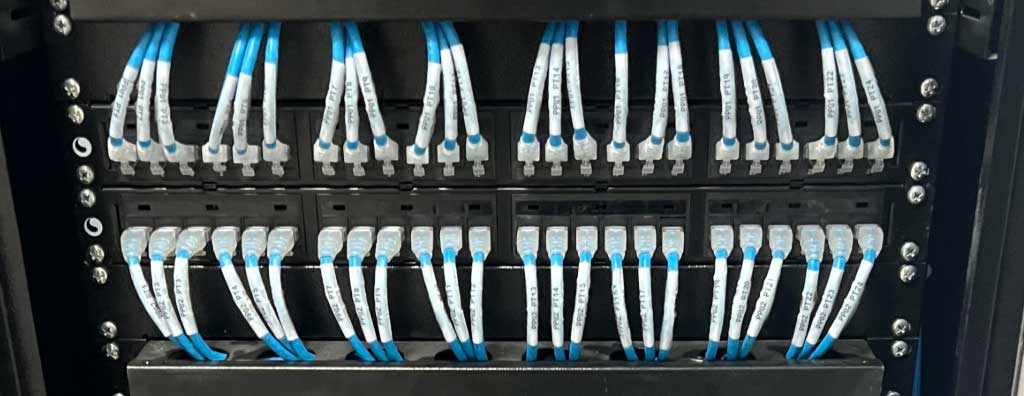
Telecommunications Rack Organization is a service focused on correcting and restructuring the cabling inside telecom cabinets. This aspect is often overlooked, yet it is essential for the proper functioning of any network infrastructure. In corporate environments, data centers, and even small businesses, the way racks are assembled and organized can directly impact network efficiency, security, […]
Check it out!
Telecommunications Rack Organization is a service focused on correcting and restructuring the cabling inside telecom cabinets. This aspect is often overlooked, yet it is essential for the proper functioning of any network infrastructure.
In corporate environments, data centers, and even small businesses, the way racks are assembled and organized can directly impact network efficiency, security, and maintainability.
Disorganized racks — with tangled cables, poor planning, and absent labeling — generate failures, make diagnosis difficult (a process that can take hours or even days), and compromise overall system performance.
Beyond improving the aesthetics of the environment, a well-organized rack provides tangible benefits: reduced downtime for maintenance, improved airflow for equipment cooling, and greater ease when accommodating future expansions.
In this article, we discuss the importance of rack organization and the key benefits this service can bring to your business.
[elementor-template id=”24446″]
What Is Rack Organization and Why Is It Essential?
Rack organization involves the careful arrangement of cables to facilitate the management of the network and telecommunications equipment inside IT racks.
This work goes far beyond simply “tidying up” cables — it is about implementing an efficient structure that ensures optimal performance and ease of network maintenance.
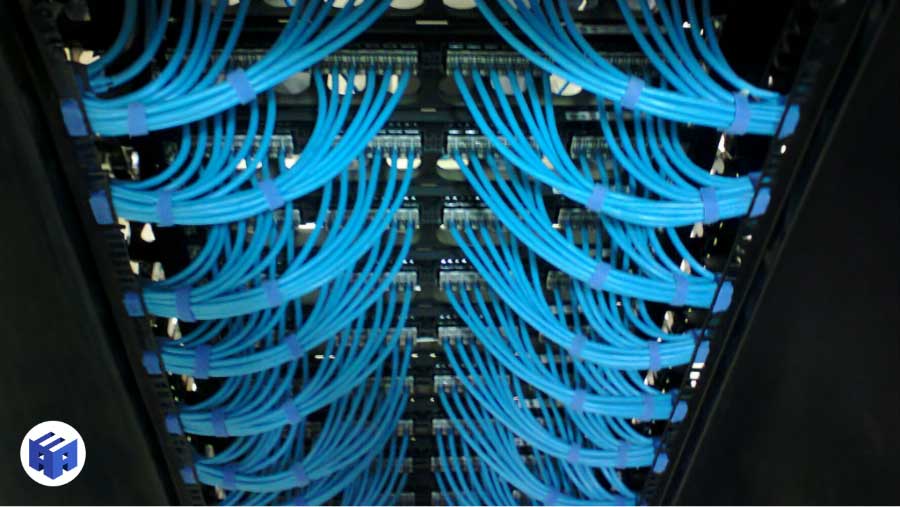
Benefits of a Well-Organized Rack:
Operational Efficiency: An organized rack allows technicians to quickly access the required components, reducing maintenance time and minimizing the risk of accidentally disconnecting the wrong cable.
Assured Network Performance: Properly routed and connected cables maintain connection quality and reduce the incidence of interference and latency in data transfer.
Risk Reduction: An organized infrastructure reduces the risk of equipment overheating, decreases the likelihood of failures, and prevents accidents that could cause significant operational losses.
Ease of Expansion: With an organized structure, adding new equipment or performing network upgrades becomes much faster and easier, saving time and reducing restructuring costs.
Professional Image and Credibility: A well-organized IT environment demonstrates professionalism and care for the infrastructure — especially important during client visits, audits, and quality certifications.
Steps of the Rack Organization Service:
To clarify the services performed, we describe each phase in detail below.
Initial Assessment and Rack Audit
- A detailed evaluation of the current infrastructure to identify issues such as tangled cables, poor equipment distribution with no room for airflow, and imminent disconnection risks creating operational hazards.
Reorganization Planning
- Development of a customized plan that includes the ideal layout, separation of power and data cables, and proper equipment placement to optimize space and airflow.
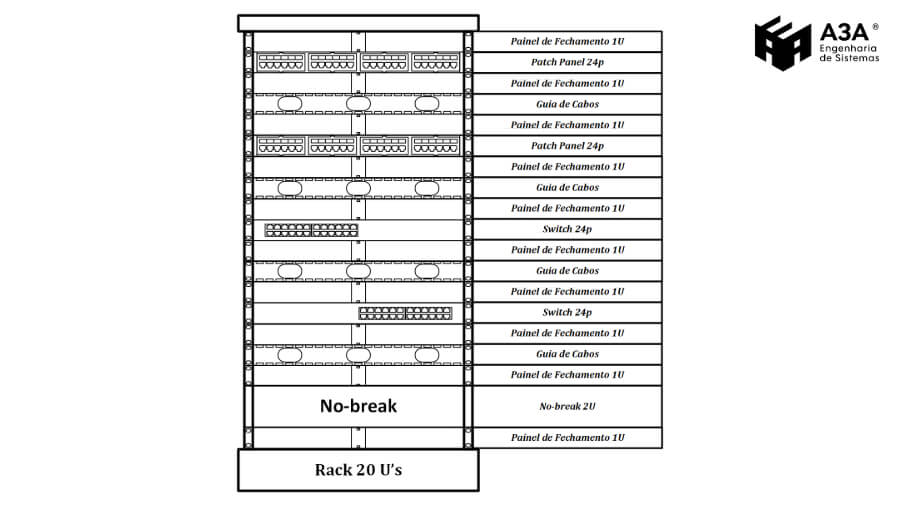
- Presentation of recommendations and design of the new Rack Face (Front Panel Layout).
Cable Reorganization
- Initial mapping to locate and validate active and inactive network points.
- Continuity testing.
- Disconnection of existing cables, reorganization, and replacement of damaged cables in accordance with project specifications.
Cable Management Guide and Accessory Installation
- Installation of cable management guides, trays, blanking panels, and other accessories that help organize the patch and distribution cables and efficiently allocate space within the rack.
Equipment Reorganization and Mounting
- Repositioning of servers, switches, patch panels, PDUs, and other devices to facilitate maintenance and maximize space utilization.
Cable Restructuring and Crimping
- Custom cutting and crimping of cables, adjusting lengths to reduce excess and avoid tangles, improving connection efficiency.
Labeling and Identification
- Clear labeling of each cable and port, facilitating maintenance and preventing disconnection errors in future interventions.
Power Management and PDU Installation
- Organization of power distribution using strategically positioned PDUs to ensure safety and efficiency in rack power management.
Connectivity and Performance Testing
- Testing to validate all connections and ensure the network is operating correctly within expected performance standards.
Complete Project Documentation
- Delivery of detailed documentation including rack layout diagrams, connection lists, and maintenance guidelines for future reference.
Maintenance Guidelines and Ongoing Support
- Provision of guidelines to maintain rack organization, with ongoing support availability for adjustments or infrastructure expansions.
Complementary Services
Network Point Certification
What Is Network Certification?
Network certification is the process of testing and validating network points to ensure that cables and connections meet the required performance and quality standards. Using specialized equipment, certification verifies parameters such as speed, signal integrity, and absence of interference, ensuring that the network infrastructure is operating correctly and supporting the company’s operational needs.
How Is Network Certification Performed?
Network certification involves a series of tests performed with specialized equipment to ensure that cables and connections comply with required standards (such as TIA/EIA and ISO/IEC).
The equipment used for these tests is a cable certifier, such as the Fluke Networks DSX Series or equivalent models from other manufacturers.
Why Is Network Point Certification Necessary?
Structured cabling rack organization goes far beyond a cosmetic concern.
While an organized appearance facilitates maintenance and reduces diagnosis and troubleshooting time, true network efficiency is only guaranteed when organization is combined with network point certification.

By integrating rack organization with network point certification, you get a complete troubleshooting solution that ensures both the physical organization and the technical quality of the structured cabling.
Advantages of Integrating Both Services
- Quality and Performance Assurance: Rack organization corrects the physical disposition of cables and facilitates management. Network certification goes further, testing each point to ensure it meets performance standards such as transmission rate, attenuation, and signal integrity — validating the quality of the entire infrastructure.
- Problem Identification and Immediate Correction: During certification, points that do not meet standards are identified and can be corrected immediately — whether by replacing defective cables, adjusting connections, or re-crimping.
- Continuous Infrastructure Improvement: For points that do not pass certification, our team is prepared to perform the necessary corrections — including cable repositioning, connection adjustments, or component replacement — ensuring maximum network quality.
- Complete and Reliable Documentation: At the end of the service, complete certification documentation is delivered alongside photographic reports of the rack organization, providing a clear record of the work performed and serving as a reference for future maintenance or expansions.
- Safety and Compliance: Network point certification ensures that the cabling infrastructure is not only organized but also in compliance with ABNT NBR 14565 (commercial buildings) and international standards such as ISO/IEC 11801 and ANSI TIA/EIA-568. This is particularly important for audits, information security, and ensuring the network is prepared to support high-demand applications.

Common Network Management Challenges
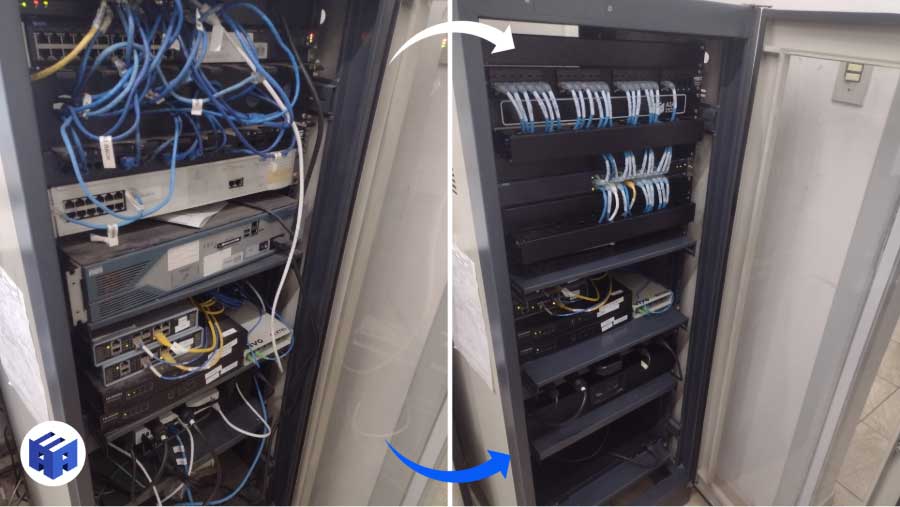
If you work in IT, you have certainly encountered connectivity and network performance issues — and when you went looking for the root cause, you found a rack in this condition.
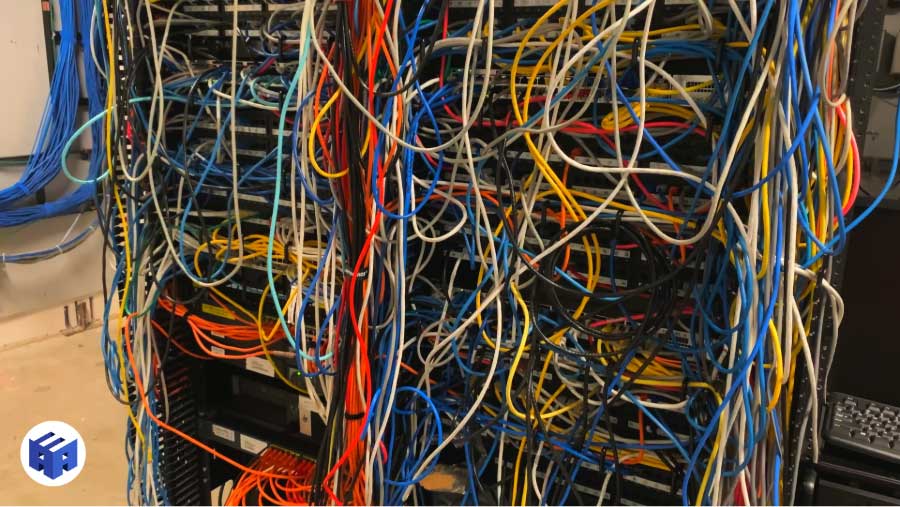
Rest assured — this is extremely common, and it is precisely in this scenario that rack organization and certification services will help resolve all your connectivity problems.
Here are some of the problems that are easily corrected through proper infrastructure remediation:
Reduced Troubleshooting Time:
- With organized racks and properly identified and certified network points, the time spent locating the failure point is significantly reduced. Problems are diagnosed and resolved faster, minimizing the impact on business operations.
Increased Network Reliability:
- Network point certification ensures that every connection meets the required quality and performance standards, eliminating hidden failures such as interference, signal loss, or faulty connections. The result is a more stable and reliable network.
Easier Maintenance and Expansion Management:
- Organized racks and clearly identified points make future maintenance, addition of new network points, or workstation relocations much simpler. The organized structure provides a clear view of the cabling, making changes fast and straightforward.
Improved Documentation and Network Mapping:
- Rack organization naturally leads to more accurate and up-to-date network documentation. With each network point mapped and certified, the IT team has a clear reference for troubleshooting and maintenance, reducing human error.
Fewer Interruptions and Connection Drops:
- By certifying network points, it is possible to identify and correct issues before they affect end users. The result is fewer interruptions, a smoother network experience, and increased employee productivity.
Improved Cable Management and Airflow:
- Rack organization, with the correct cable routing, improves not only aesthetics but also airflow within the racks, reducing the risk of equipment overheating and extending component lifespan.
Easier Detection of Unauthorized Access:
- With organized racks and identified network points, it becomes easier to monitor and control physical access to the infrastructure, helping maintain network security and preventing unauthorized connections.
Reduced Stress and Improved IT Team Efficiency:
- An organized and certified infrastructure reduces stress for IT professionals, who can focus on more strategic tasks instead of spending time on recurring, slow-to-resolve issues.
Solving Network Problems
Managing a telecommunications network involves a wide range of challenges that impact operational efficiency and security — from difficulty diagnosing problems quickly to rack disorganization and lack of network point certification. These obstacles can turn infrastructure administration into a real nightmare, wasting valuable time and IT team resources.
To address these challenges effectively, it is essential to seek professional assistance and invest in specialized consulting that offers a structured approach encompassing both physical rack organization and network point certification. With the support of specialized consultants, it is possible to map, identify, and certify the entire infrastructure, ensuring a well-organized, reliable network ready to meet your company’s demands.
Solving network challenges requires a combination of strategic planning defined through a solid project, technical expertise, and the right tools — transforming a disorganized environment into an efficient, high-performance network.
Where to Start?
Start by seeking professional help. Engaging a specialized company to define the scope and plan the activities is fundamental. Having qualified professionals at this stage is essential — whether to execute the necessary changes or to provide consulting and guidance on the best path forward.
A specialized company will perform a detailed analysis of your network, identify critical points, and help plan all stages of organization, layout changes, and certification. They have the technical knowledge, appropriate tools, and experience to ensure your network is optimized in a safe and effective manner.
Seek specialized consulting to guide your actions and ensure your network is ready to meet demands with maximum efficiency.
When possible, hire a company capable of acting at every stage of the process — from consulting and project design through service delivery — since these services require experience, technical expertise, and specialized equipment such as crimping tools, label makers, test devices, and above all, network certification equipment. In other words, a well-structured organization.
Specialized Consulting
How to Hire?
To ensure the success of a network remediation and certification project, the IT manager should look for a company capable of providing complete professional support — not just technical execution. Here are the most important criteria to consider:
- Proven Knowledge and Technical Specialization:
- The company must demonstrate deep knowledge of structured cabling projects and deployments, rack organization, and network certification. Look for certifications, professional qualifications, and a technical track record that validates the team’s expertise, ensuring the work will be performed to the highest standards.
- Specialized Engineering Department:
- An important differentiator is the presence of an in-house Engineering Department responsible for performing detailed technical analyses, planning customized solutions, and overseeing project execution. The involvement of specialized engineers provides a higher level of precision and efficiency in planning and implementation.
- Technical Portfolio and Proven Experience:
- Evaluate the company’s technical portfolio, including accumulated experience in similar projects and the capacity to execute in compliance with current standards. Companies with a robust technical portfolio offer greater security, as they have faced diverse challenges and have tested, consolidated solutions for each type of infrastructure.
- Success Stories and Client Testimonials:
- Validation through success stories is fundamental. Review projects already completed by the company, looking for examples similar to your context. Satisfied client testimonials and proven results are clear indicators of a reliable company with the capacity to deliver.
- Consulting and Strategic Planning:
- The company must offer specialized consulting capable of accurately diagnosing the current network state and proposing a strategic plan for reorganization and certification. The focus should be on customizing solutions to meet the specific needs of your IT environment.
- Operational Structure for Service Delivery:
- Verify that the company has a physical and operational structure that inspires confidence, and that it possesses the equipment necessary for the work — such as Fluke Networks certifiers or equivalents — capable of guaranteeing test precision and conformity with international standards. This is crucial for ensuring network quality after service execution.
- Technical Documentation and Detailed Reports:
- The company must provide complete documentation of the reorganized infrastructure (as-built drawings with photos) and certification test reports, which will serve as the basis for future maintenance and technical support.
- Post-Execution Support and Quality Guarantee:
- Beyond service execution, the company must offer ongoing support and quality guarantees for the work performed. Commitment to preventive maintenance and post-project assistance is a differentiator that ensures the network’s longevity and efficiency.
Conclusion
The Importance of Hiring a Project Consultancy — Not Just a Service Provider
Hiring a company to organize racks and certify network points goes beyond simply purchasing technical services. It is essential to seek a project consultancy that offers not just execution, but a complete strategic plan led by specialized professionals.
A project consultancy involves an in-depth analysis of the current infrastructure, identification of the main challenges, and development of a customized plan tailored to your company’s specific network needs. Unlike a simple technical service, a consultancy includes the support of a qualified Engineering Department that designs custom solutions, manages the project, and supervises execution to ensure every stage aligns with project specifications, applicable norms, and technical standards.
Companies offering specialized consulting bring proven knowledge, a robust technical portfolio, and success stories that validate their experience. They also use appropriate equipment and provide documentation for each project phase, ensuring compliance and quality throughout the reorganized and certified infrastructure.
Thank You
Thank you for taking the time to read this article.
We hope the information presented has been useful in understanding the importance of a strategic approach to network management. Partnering with specialized consultants can make all the difference in the efficiency and reliability of your IT infrastructure.