
Introduction Project or Consulting: Understand the differences and how these services make all the difference for companies constantly seeking efficiency, cost reduction, and quality. Hiring consulting, project, or both services is an essential decision for the success of any implementation, whether it involves infrastructure or systems. Many professionals in the fields of project management and […]
Check it out!
Introduction
Project or Consulting: Understand the differences and how these services make all the difference for companies constantly seeking efficiency, cost reduction, and quality. Hiring consulting, project, or both services is an essential decision for the success of any implementation, whether it involves infrastructure or systems.
Many professionals in the fields of project management and information technology still understand these services as additional expenses, but this perception is far from reality. Consulting and projects are indispensable services that guarantee assertiveness and quality, preventing failures and waste that can compromise the execution and results of any successful implementation.
Another important factor is that the costs of these services represent a small percentage of the acquisition and installation values. Based on market values practiced by Specialized Engineering Companies, consulting and project fees can reach a maximum of 10% of the total cost of project execution, whether for infrastructure or systems implementation (often less than that). Conversely, the economic gains provided can generate up to a 25% reduction in overall costs. This savings is achieved through more assertive choices based on benchmarking, efficient planning, and execution without rework, resulting in optimized and high value-added projects.
Consulting and project services can be hired together or separately, but they complement each other. While consulting offers a strategic diagnosis to guide decisions, a project transforms these guidelines into detailed technical planning for implementation. Understanding the importance and synergy between these services is the first step in turning challenges into successful and economically viable solutions.
In this article, we will explain in detail the benefits and differences between consulting and projects, show how these services complement each other, and explain what kind of need each one meets to ensure the success of system or infrastructure implementations. We will also address the ideal times to hire consulting and/or projects, and how these decisions help avoid unnecessary costs, increase efficiency, and achieve the expected results.
By understanding the advantages and complementarity of these services, you will be prepared to make strategic decisions that turn challenges into growth opportunities, whether in infrastructure, systems, or other business solutions.
Follow along and discover how consulting and projects can add value and savings to your business!
[elementor-template id=”24446″]
Definition and characteristics of Consulting
Consulting is a specialized service focused on strategic analysis, problem diagnosis, and identifying opportunities within a specific context of the company’s structure. Unlike a project, which is focused on the execution and delivery of specific solutions, consulting provides a broad and structured view of the challenges faced by the client, offering recommendations that guide decision-making.
Characteristics of Consulting:
- Personalized Diagnosis: Consulting starts with a detailed analysis of the environment, identifying specific problems, risks, and areas for improvement.
- Strategic Solutions: Recommendations are based on data, benchmarking, and market best practices, providing a clear direction for future actions.
- Flexibility: Consulting can be hired for various purposes, such as optimizing processes, diagnosing failures, planning investments, or validating strategies.
Benefits of Consulting:
- Risk Reduction: Detailed analysis helps avoid wrong decisions and unnecessary investments.
- Basis for Assertive Decisions: With the diagnosis in hand, the company makes decisions based on consolidated information, aligned with its real needs and objectives.
- Medium and Long-Term Savings: By identifying the best solutions, consulting avoids rework and unexpected new costs, providing economic viability to the project.
- Focus on Priorities: Consulting helps clearly define priorities, optimizing resources and time.
When to Hire Consulting?
- When identifying problems that affect operations and require a technical diagnosis.
- When there are doubts about the viability of a solution or strategy.
- Before making large investments in infrastructure, systems, or processes.
- To ensure that strategic decisions align with business needs and market best practices.
Practical Example:
A company realizes that its network infrastructure frequently experiences slowness and failures. Hiring consulting will allow identifying whether the problem is related to hardware, cabling, systems, or processes, offering a clear solution before investing in unnecessary changes.
Consulting not only guides decisions but also paves the way for the efficient execution of a project, should it be necessary. As a result, the client reduces costs, increases efficiency, and gains security in their initiatives.
Characteristics of Consulting:
- Personalized Diagnosis: Consulting starts with a detailed analysis of the environment (Site Survey), identifying specific problems, risks, and points for improvement.
- Strategic Solutions: Recommendations are based on data and market best practices, providing a clear direction for future actions.
- Flexibility: Consulting can be hired for various purposes, such as optimizing processes, diagnosing failures, planning investments, or validating strategies.
Criteria for Hiring a Consulting and/or Project Service
Offering consulting and project services requires more than technical expertise; it requires a combination of skills, methodologies, and values that ensure the delivery of strategic and reliable solutions.
A company able to provide these services must meet the following criteria:
Proven Experience and Technical Knowledge
- The company must demonstrate technical mastery in the segment in which it operates, with qualified and certified professionals.
- Practical market experience is indispensable for identifying problems, proposing solutions, and anticipating potential challenges.
Clear and Structured Methodology
- It must have well-defined processes for analysis, diagnosis, and delivery of recommendations.
- The use of frameworks, analysis tools, and standardized methodologies (such as ITIL, PMI, or ISO, depending on the sector) ensures consistency and credibility in the work.
Multidisciplinary Team
- Consulting requires professionals with diverse skills capable of analyzing problems from different perspectives.
- Engineers, analysts, managers, and other experts must work in an integrated manner to deliver complete solutions.
Efficient Communication and Customization
- The company must be able to listen to the client, understand their needs, and adapt the service to the specific characteristics of the business.
- Reports, presentations, and meetings must be clear, objective, and accessible, facilitating the client’s understanding of the results.
Independence and Impartiality
- The consulting should be guided by the client’s best interests, without favoring specific brands, suppliers, or solutions.
- Recommendations should be based on data and the company’s real needs, not on commercial partnerships.
Compliance with Standards and Best Practices
- The company must be up to date with regulations, technical standards, and best practices applicable to the sector (such as ABNT, ISO, TIA/EIA, among others).
- Consultancies that operate in compliance with recognized standards add credibility and security to the client.
Technical Portfolio (Case Studies)
- Presenting previous successful projects helps demonstrate the company’s ability to deliver tangible and reliable results.
- Testimonials and case studies strengthen the consultancy’s reputation.
Commitment to Measurable Results
- A good consulting firm not only presents diagnoses but also defines success metrics and monitors the impact of implemented recommendations.
- Providing the client with a clear action plan and concrete results is essential.
Ethics and Confidentiality
- The company must adopt rigorous ethical practices, respecting the confidentiality of the information shared by the client.
- Trust is an essential pillar for a successful partnership in consulting services.
Ability to Offer Continuous Support
- In addition to the initial diagnosis, the company must be available to clarify doubts, review recommendations, or monitor the implementation of solutions.
- Post-delivery support strengthens the relationship with the client and ensures the success of the recommended actions.
Definition and Characteristics of a Project
A project is a technical and structured service that focuses on the planning and execution of a specific solution, with a well-defined beginning, middle, and end. It transforms the needs identified in a consulting phase along with the direct demands of the client into a detailed and viable plan, ensuring that the implementation occurs in an organized, efficient manner, and in accordance with expectations.
Characteristics of a Project:
- Scope Definition: The project starts with a clear objective, outlining what will be delivered, how it will be done, and the resources required.
- Detailed Technical Plan: Includes technical specifications, drawings, schedules, and execution guidelines.
- Focus on Results: Every project is geared towards achieving a final result that meets the specific needs of the client.
- Determined Deadline: Unlike consulting, the project has defined deadlines for each stage and for the final delivery.
Benefits of a Project:
- Execution Efficiency: A project ensures that all stages are followed in an organized manner, avoiding delays and rework.
- Predictability: With a detailed schedule, the client knows exactly what to expect, when, and how it will be delivered.
- Cost Reduction: Technical planning prevents waste, inappropriate choices, and last-minute adjustments.
- Compliance: Structured projects ensure compliance with applicable technical standards and regulations.
- Greater Control: The client monitors all stages of the process, ensuring that the deliverables align with their expectations.
When to Hire a Project?
- New Implementations: When the company needs a solution from scratch, such as new infrastructure, system, or process.
- Expansions or Upgrades: To expand or modernize something existing with efficiency and planning.
- Execution Based on Consulting: To transform the recommendations of a consultancy into concrete actions.
- Complex Solutions: When execution involves multiple stages, resources, and knowledge areas, requiring a detailed plan.
Practical Example:
After hiring a consulting service to diagnose problems in its network infrastructure, the company identified that the slowness and frequent failures were related to disorganized cabling that was incompatible with current demands. Based on the consulting recommendations, the company decides to hire an engineering project to restructure its structured cabling network.

In this project, a detailed technical plan is developed that includes:
- Mapping the site and specific needs;
- Specifying the appropriate materials, such as high-performance cables and connectivity equipment;
- Designing the cabling layout, indicating connection points and telecommunications cabinets;
- The execution schedule, with deadlines for each stage;
- Compliance with Technical Standards, ensuring safety and performance.
With the project in hand, the company now has a clear plan to implement the improvements recommended by the consulting, ensuring that the work is carried out efficiently, on time, and with quality results.
Expected Results of a Project:
- Quality Delivery: The planned solution is implemented accurately, meeting the client’s expectations.
- Operational Efficiency: The project results in tangible improvements for the company, such as increased productivity and reduced costs.
- Foundation for Sustainability: A well-executed project prepares the company for future demands, avoiding the need for rework.
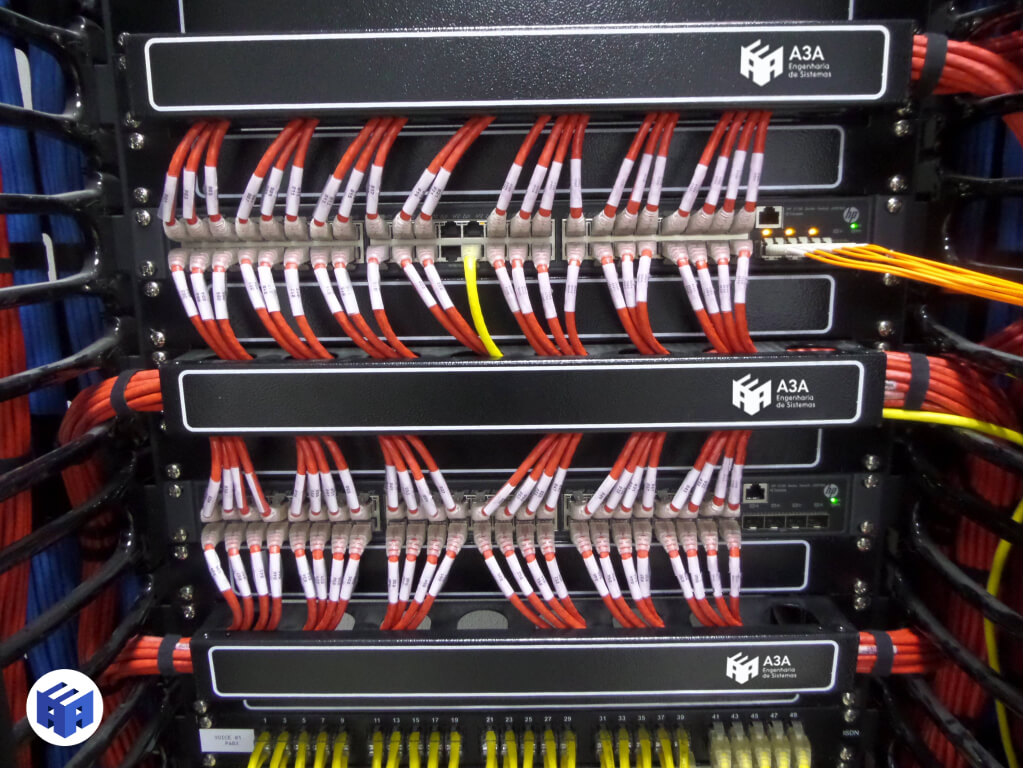
Continuity Relationship between Consulting and Project
Consulting and projects are complementary services. While consulting identified the problems in the existing infrastructure and pointed out the best solutions to solve them, the project transformed these recommendations into a detailed and executable technical plan.
This continuity is essential to ensure the success of the initiative. Without consulting, the company could implement changes without an adequate diagnosis, running the risk of investing in the wrong solutions. Without the project, the consulting recommendations could be poorly executed, resulting in wasted resources and subpar results.
By hiring both services, the company obtains:
- Precise Diagnosis: Clear identification of problems and strategic direction.
- Technical Planning: Guarantee that the solutions will be implemented efficiently and with quality.
- Tangible Results: Cost reduction, improved performance, and greater operational reliability.
This synergy between consulting and project not only solves problems but also prepares the company for future challenges, ensuring that each stage of the implementation is carried out with maximum assertiveness and economic efficiency.
Main Differences between Consulting and Project
Although consulting and projects are services that frequently complement each other, they have different characteristics and objectives. Understanding these differences is essential to hiring the appropriate service for the time and needs of your business.
Consulting: Diagnosis and recommendations
- Objective: Identify problems, opportunities, and direct the best actions to be taken.
- Focus: Strategic analysis and recommendations based on data and experience.
- Deliverables: Diagnostic reports, improvement suggestions, and action plans.
- Deadline: Generally shorter, depending on the scope of the diagnosis.
- Role: The work is focused on identifying what needs to be done, without executing the solution directly.
Project: Planning and Execution
- Objective: Develop a detailed technical plan to execute specific solutions efficiently and structurally.
- Focus: Transform recommendations into concrete and viable actions.
- Deliverables: Technical documentation, schedules, drawings, and detailed guidelines.
- Deadline: More extensive, as it covers planning and, in some cases, supervision of execution.
- Role: Focused on implementation, management, or guidance so that execution is carried out as planned.
Direct Comparison between Consulting and Project:
| Aspect | Consulting | Project |
|---|---|---|
| Objective | Diagnosis and strategic direction. | Technical planning and execution. |
| Focus | Identify problems and recommend solutions. | Structure and detail solutions for implementation. |
| Deadline | Short, depending on the scope. | Longer, with detailed stages. |
| Deliverables | Reports, action plans, and recommendations. | Technical documentation, schedules, and layouts. |
| Ideal Time | Before major decisions or investments. | When the solution is defined and needs to be implemented. |
| Complementarity | Provides the foundation for an efficient project. | Transforms consulting recommendations into concrete actions. |
When to Hire Each Service?
- Consulting:
- When it is necessary to understand the problem before making decisions.
- When the company seeks to validate strategies or alternatives.
- Before major investments in infrastructure or systems.
- Project:
- When the problem has already been identified and a technical plan is needed to solve it.
- To plan new implementations or readjustments.
- To ensure that solutions are executed with efficiency and quality.
How Do They Complement Each Other?
Consulting and projects are services that often work as stages of the same process:
- The consulting identifies problems and recommends the most appropriate solutions.
- The project transforms these recommendations into a detailed plan for execution.
By hiring both, the client obtains a complete approach, from diagnosis to implementation, ensuring greater assertiveness, cost reduction, and results aligned with expectations.
An analogy for Consulting and Project would be: Consulting diagnoses the illness and the Project prescribes the treatment.
Common Benefits: Why Invest in Consulting or Project?
Consulting and project, although distinct in their objectives and approaches, share important benefits for the success of a business initiative. Both are essential to avoid mistakes, optimize resources, and ensure high-quality results. Investing in these services is not only a strategic decision but also a proven way to achieve economic viability, quality, and assertiveness.
Reduction of Unnecessary Costs
- Consulting identifies problems and points out appropriate solutions, avoiding investments in resources or technologies that do not meet real needs.
- The project plans and organizes execution, avoiding waste, rework, and delays that could generate additional costs.
Greater Efficiency and Productivity
- Both services ensure that time and resources are used in the best possible way, optimizing processes and increasing productivity.
- Well-planned and implemented solutions reduce the impact of failures and interruptions in operations.
Quality and Compliance
- Consultancies and projects are conducted by specialized professionals, who ensure that solutions are aligned with best practices and applicable technical standards.
- Compliance with regulations minimizes legal and operational risks, protecting the client from future penalties or problems.
More Assertive Decisions
- Consulting offers a detailed analysis and recommendations based on data, helping the client make informed and safe decisions.
- The project details the actions needed to execute these decisions, transforming them into concrete results.
Customization and Adaptation
- Both services are adapted to the specific needs of the client, considering factors such as budget, deadline, existing infrastructure, and long-term objectives.
- This customization ensures that the delivered solutions are practical, viable, and appropriate to the company’s reality.
Return on Investment (ROI)
- Investing in consulting and projects is economical in the medium and long term. While the costs of these services represent a small fraction of the total budget, the benefits generated, such as cost reduction and increased efficiency, can reach up to 25% savings in the project.
- Assertive planning avoids unnecessary expenses and increases the durability and effectiveness of the implemented solutions.
Support for Growth and Innovation
- Consulting identifies opportunities for improvement and innovation, preparing the company for future challenges.
- The project creates a solid foundation for expansions and modernizations, ensuring that the infrastructure or system keeps pace with business growth.
Why Invest in Knowledge?
By investing in consulting or projects, the client is not just buying a technical service. They are ensuring:
- Significant savings in resources and time.
- Predictability and control over deliverables.
- High value-added results, aligned with strategic objectives.
These benefits make consulting and projects not only necessary but also advantageous for companies seeking competitiveness, efficiency, and success in their initiatives.
Expected Results: What Does the Client Gain?
Project and consulting services represent a very small cost compared to the total value of a solution, whether in the infrastructure area or in the implementation of a system. Although the values of consulting and projects rarely exceed 10% of the overall investment, the benefits provided, such as quality, assertiveness, and savings, can generate cost reductions that reach 25% or more, making these services indispensable to guarantee the success and efficiency of any implementation.
Significant Savings in Total Costs
- The precise diagnosis of consulting and the detailed planning of the project eliminate waste and prevent unnecessary investments.
- The savings generated by optimizing resources and preventing rework can easily reach 25% of the overall project cost, while the contracted services represent a fraction of that.
Guaranteed Quality and Efficiency
- With planned and well-executed solutions, the client avoids failures, delays, and interruptions that could negatively impact operational performance.
- Projects and consultancies deliver optimized results aligned with the specific needs of the client, ensuring that every resource is well utilized.
Risk Reduction
- Consulting anticipates problems and offers recommendations that mitigate risks, avoiding wrong decisions or misdirected investments.
- The project details all stages of execution, ensuring compliance with standards and best practices, reducing the chances of errors.
Compliance with Standards and Sustainability
- Both the project and the consulting ensure that the solutions are in compliance with technical regulations, increasing the reliability and security of what is implemented.
- The planned solutions are sustainable and prepared for future demands, extending their lifespan and reducing maintenance costs.
Increased Productivity and Return on Investment (ROI)
- The efficient implementation of well-planned solutions reduces execution time, streamlines processes, and increases productivity.
- The financial return is noticeable in the short term, with savings that quickly offset the amounts invested in consulting and projects.
Practical Example:
A company decides to modernize its IT infrastructure, investing R$ 1 million in a new connectivity solution. By hiring consulting and project services, which represented in this case only 5% of the total value, that is, R$ 50,000.00, the company managed to:
- Save 25% (R$ 250,000.00) in the overall execution cost of the project, eliminating waste in materials and optimizing labor.
- Guarantee an implementation 100% aligned with its needs, without delays or rework.
- Reduce failures and maintenance by 30% in the first year, increasing system efficiency and operational reliability.
Clear and Tangible Benefits
Investing in consulting and projects is not an extra expense, but a strategy that generates significant savings, increases efficiency, and delivers high-quality results. The cost of these services in relation to the overall value of the solution is amply compensated by the benefits provided, transforming them into fundamental pillars for the success of any implementation.
In the end, the client does not just carry out an implementation – they gain a more efficient, economical solution prepared to support growth and future demands.
When to Hire Each Service?
The choice between consulting and project depends on the stage the company is at and the specific needs of each demand. Although they can be hired separately, the two services complement each other, forming a continuous process that goes from strategic analysis to practical execution.
When to Hire Consulting?

Consulting is ideal for moments of analysis and decision-making, when the client needs an accurate diagnosis or strategic direction before moving on to execution.
Common situations to hire consulting:
- Problem Diagnosis: When the company faces operational, technical, or strategic challenges and needs to identify the source and the most appropriate solution.
- Strategic Planning: Before major investments in infrastructure or systems, to validate viability and available options.
- Resource Optimization: To review existing processes or solutions and propose improvements.
- Risk Mitigation: When there are doubts about compliance with standards or about the impacts of certain decisions.
Example: A company notices frequent crashes in its management system but does not know if the problem is related to the physical infrastructure, the cabling, or the system. The consulting service performs a diagnosis and points out the areas that need adjustments, in addition to proposing specific solutions.
When to Hire a Project?

A project is essential when the solution has already been defined and needs to be implemented in a structured and efficient manner. It is the next step after consulting or the ideal service when the client already knows what needs to be done, but needs a detailed technical plan.
Common situations to hire a project:
- Solution Execution: When the client already has clarity about the need and requires a detailed plan to implement.
- New Implementations: For the construction or installation of infrastructure or systems from scratch.
- Readjustment or Expansion: When it is necessary to modernize or expand something existing.
- Guarantee of Compliance and Quality: To ensure that the execution follows technical standards and best practices.
Example: After the diagnosis made by the consulting, the company decides to restructure its IT infrastructure. A project is developed to specify materials, deadlines, schedules, and an execution plan that guarantees efficiency and quality.
When to Hire Both Services?
Although they can be hired separately, consulting and project frequently work as integrated stages. Hiring both offers a complete approach:
- Consulting identifies problems, opportunities, and directs the best actions.
- The project transforms these recommendations into a viable and detailed technical plan for execution.
Example: A company wants to modernize its IT infrastructure. Consulting analyzes the current environment, identifies problems, and proposes solutions. The project then structures the implementation of these solutions, ensuring that everything is done on time, on budget, and with high quality.
How to Know Which Service to Hire?
- Hire consulting if: You need to understand the problem or define the strategy before executing.
- Hire a project if: The solution is already clear and you need a technical plan to implement it.
- Hire both if: You want a complete approach, from initial analysis to detailed execution.
Final Considerations:
Consulting and Projects are Strategic Investments
Consulting and projects are not just technical services, but strategic investments that guarantee the success of any implementation, whether it involves infrastructure, systems, or processes.
Throughout this article, we demonstrated that:
- Consulting provides strategic diagnosis and assertive recommendations, ensuring decisions are well-founded and aligned with business needs.
- Project transforms these decisions into a detailed technical plan, structuring execution efficiently and with high-quality results.
- Both complement each other, creating an integrated approach that ensures quality, assertiveness, and savings at each stage of the process.
Talk to our Engineering Department.
Proven Benefits
Investing in consulting and projects represents only a small fraction of the overall value of a solution, but the gains provided are significant:
- Savings of up to 25% in the total cost of the project, eliminating waste and preventing rework.
- Compliance with technical standards and best practices, reducing legal and operational risks.
- Efficiency in execution and greater productivity, with solutions tailored to the client’s specific demands.
- Preparation for future growth, with sustainable and scalable projects.
By hiring consulting and project services, the client is not only acquiring specific services but building a solid foundation for the success of their initiatives. The strategic analysis of the consulting and the structured execution of the project create a value cycle that optimizes resources, reduces costs, and delivers results aligned with the business objectives.
