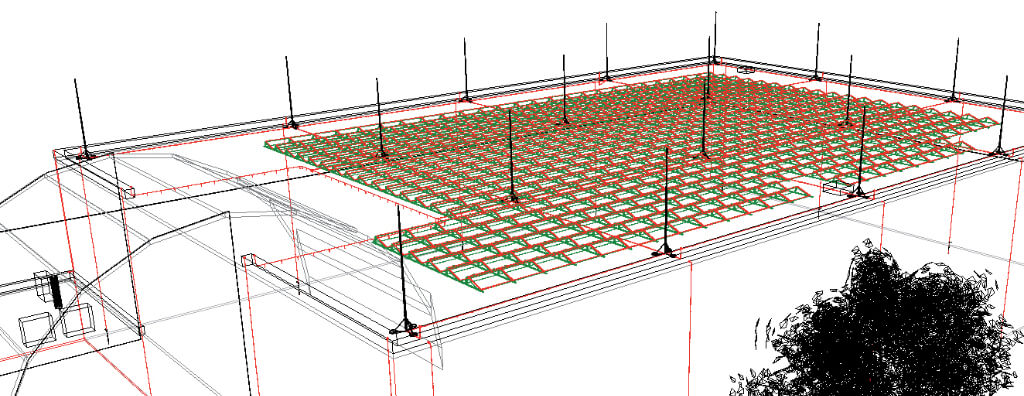
Understand the stages, technical criteria, standards, and documentation involved in an LPS design project and why qualified engineering is essential.
Check it out!
A Lightning Protection System (LPS) Design Project consists of preparing a detailed plan that defines the technical specifications, implementation methodology, and operating parameters required to protect structures, people, and equipment against the direct and indirect effects of lightning discharges.
In this article, we will cover the fundamental concepts related to the preparation of an LPS Design Project, highlighting the importance of hiring a specialised Engineering company to ensure system effectiveness.
Let’s dive in.
[elementor-template id=”24446″]
Why hire an LPS design project?
Hiring an LPS Design Project (Lightning Protection System) is essential to ensure safety, compliance, and efficiency in protecting buildings against the devastating effects of lightning discharges.
It is during the design phase that installation errors, waste of materials, time, personnel, and possible failures in component specification are prevented.
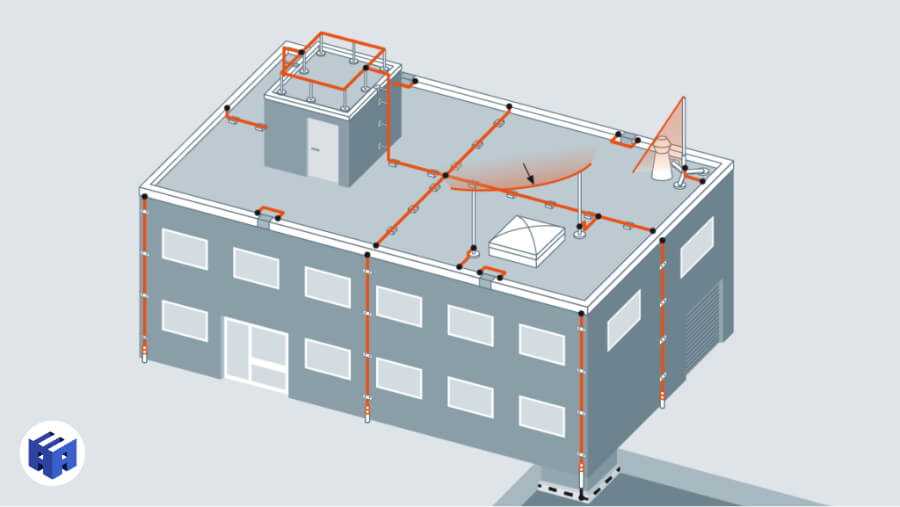
The technical documentation generated during the project serves as a reference for installation and for periodic maintenance, such as visual inspections, grounding resistance measurements, and component replacement, ensuring the system’s continuous efficiency.
The absence of a project may result in critical vulnerabilities, exposing the building to major material damage, interruption of activities, and compromised occupant safety.
What are the stages of an LPS design project?
An LPS Design Project follows a series of defined stages to guarantee the reliability of the system to be implemented.
- Data Collection and Initial Planning:
- Initial meetings;
- Site survey;
- Project Development:
- Risk analysis;
- Basic design;
- Technical and financial consulting;
- Executive design;
- Documentation Delivery:
- Technical descriptive report;
- Drawings and diagrams;
- Bill of Materials (B.O.M.);
- Analytical, synthetic, and summary budget worksheets;
- Technical Responsibility Annotation;
Data Collection and Initial Planning
At first, a study is carried out of the environment’s needs and technical requirements, identifying the elements that will influence project development.
Initial Meetings
The initial meetings are held with the objective of aligning expectations between the technical team and the client.
Physical, operational, and regulatory constraints are identified, in addition to the documentation required to open the project.
Site Survey
The Site Survey consists of a technical visit to the site where the LPS will be installed, with the objective of checking the building’s physical characteristics, evaluating the surroundings, and analysing the existing systems, such as electrical infrastructure, data networks, and electronic security.
This allows the technical team to anticipate possible problems and adapt project preparation to the site’s real conditions.
Project Development
Based on the collected data, the project development process begins:
Risk Analysis
Initially, a risk analysis is carried out consisting of a careful assessment of various building characteristics, such as its use, for example industrial, commercial, or hospital, the flow of people, vulnerability of equipment and internal systems, and potential financial losses resulting from lightning discharges.
This analysis is fundamental to defining the appropriate protection level and, consequently, determining the LPS class to be implemented.
Protection Levels
The standards define four protection levels for system sizing, from I to IV.
For each protection level, a set of maximum and minimum lightning current parameters is established.
This classification determines the distances between conductors, the thickness of metallic elements, and the capacity of surge protective devices, in order to ensure controlled dissipation of residual voltages and electrical currents.
LPS Classes
The definition of the LPS Class is made through calculations based on the particularities of each building.
In general terms, the relationship between classes and typical applications may be presented as follows:
| LPS Class | Application |
|---|---|
| I | Industrial facilities with high fire or explosion risk, environments with a large concentration of people, and critical electronic equipment such as industrial automation systems, data centres, and hospital infrastructure. |
| II | Tall commercial and residential buildings, schools, structures with sensitive electronic equipment, or medium-sized data centres. |
| III | Less complex buildings, medium-sized commercial establishments, and industrial areas with a lower density of sensitive electronic equipment. |
| IV | Small buildings, rural areas, sheds or warehouses with low risk, and simple structures in regions with moderate lightning incidence. |
It is important to note that the table above serves only as a general reference.
The definition of the LPS class must be based on risk-analysis calculations, considering specific factors such as construction characteristics, risk components, location, and building operating conditions.
This makes it possible to ensure compliance with current technical standards, providing legal support to the responsible professional and the property owner in the event of incidents resulting in material damage, revenue loss, or risks to people’s physical integrity.

Basic Design
The Basic Design establishes the general parameters and the fundamental technical assumptions for implementation, defining the most appropriate protection method.
With the protection method and LPS class defined, the quantity and spacing of down conductors are determined. These conductors are responsible for connecting the air-termination system to the grounding system that dissipates lightning discharges.
Calculations are performed to specify the grounding system and surge protection measures, according to the specifications of the equipment and internal systems, ensuring protection and stability of the electrical infrastructure.
Technical and Financial Consulting
After completion of the Basic Design, the document is submitted to the client for review.
During this stage, the client evaluates the design, and any requests for changes or adaptations, whether due to financial issues or preservation of specific building aspects, are discussed with the technical team.
Any necessary modifications are evaluated in terms of financial impact and technical feasibility.
Only after consensus and approval of the adaptations does the project move to the next phase.
Executive Design
The Executive Design consolidates the definitions established in the previous stages and transforms them into a set of documents and procedures that guide installation and maintenance of the Lightning Protection System:
- Technical descriptive report;
- Drawings and diagrams;
- Bill of Materials (B.O.M.);
- Analytical, synthetic, and summary budget worksheets;
- Technical Responsibility Annotation (ART);
Documentation Delivery
After project completion and approval, the client receives the full set of files and technical records required to proceed with system execution, including:
Technical Descriptive Report
The Technical Descriptive Report presents all system aspects, such as adopted technologies, installation methods, reference standards, and testing procedures foreseen in the project.
This document describes both the technical foundations, the “why”, and the practical guidelines, the “how”, supporting each choice, enabling the client and the teams involved to clearly understand the criteria and parameters guiding design and implementation.
Drawings and Diagrams
Technical layouts are developed through detailed drawings representing system installation, covering floor plans, sections, and elevations.
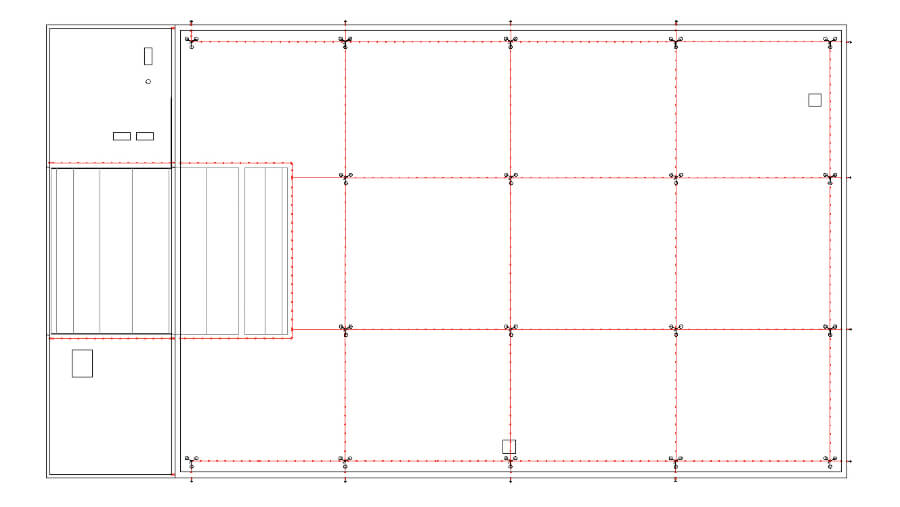
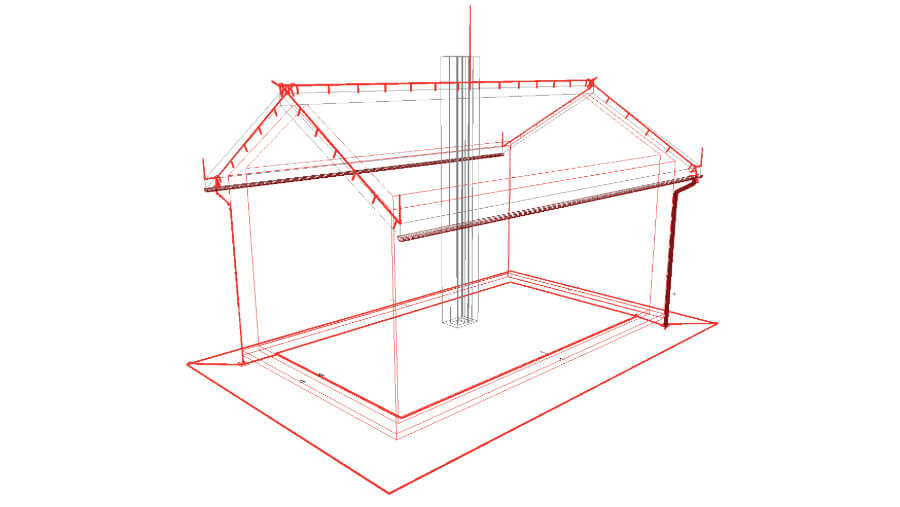
These graphic representations accurately map the arrangement of each system component, serving as an essential tool for guiding the installation team and reducing possible errors during execution.
Bill of Materials (B.O.M.)
The Bill of Materials contains the detailed list of all components and materials to be used in system implementation.
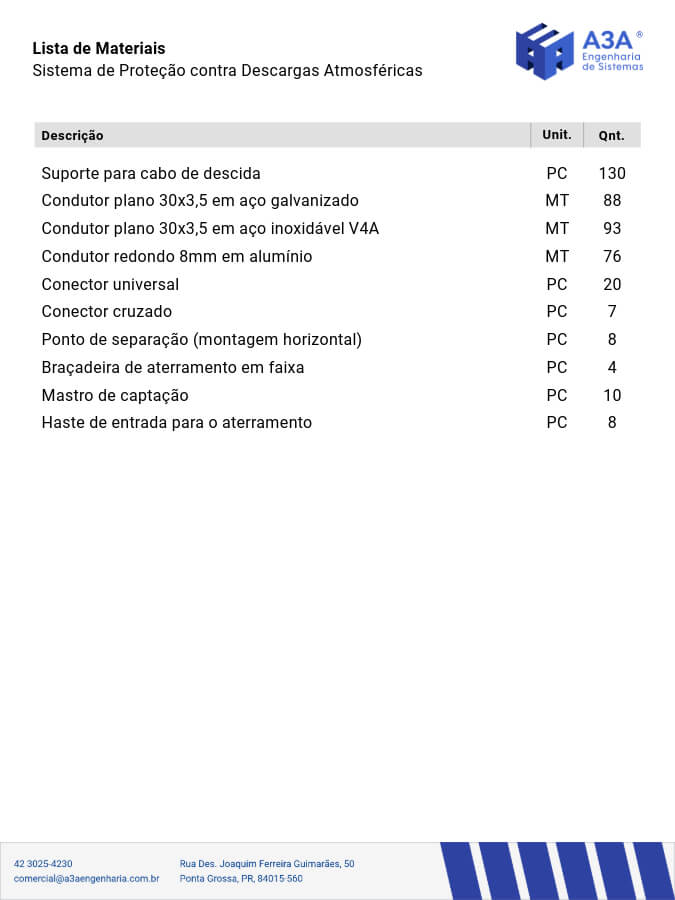
Example of a Bill of Materials for an LPS, for illustration only.
This document facilitates control and procurement of the required inputs, allowing accurate resource management and correct project execution.
Analytical, Synthetic, and Summary Budget Worksheets
The technical budget worksheets, prepared at three levels of detail, analytical, synthetic, and summary, enable precise analysis of the costs associated with each project component, covering materials, equipment, labour, and any additional services.
Technical Responsibility Annotation (ART)
The Technical Responsibility Annotation consists of the formal project registration with the Regional Council of Engineering and Agronomy, assigning legal responsibility to the qualified professional who signs it.
This instrument ensures that the project and its execution comply with technical standards and applicable legislation, providing legal backing and validating the competence of the professional responsible for preparing and implementing the engineering services.
The Importance of Relying on a Specialised Engineering Company
The development of LPS projects requires technical grounding and compliance with current standards to guarantee system efficiency and structural safety, preserving lives and ensuring continuity of operations.
Unfortunately, there are unqualified professionals who, through misleading promises and prices below market practice, offer miraculous and inadequate lightning protection solutions, exposing buildings to unnecessary risks.
Expertise and Technical Background
By hiring a specialised Engineering company, the client ensures that the LPS Design Project will be developed with the required technical excellence and within legal requirements.
Specialised companies rely on electrical engineers with experience and in-depth knowledge of design standards and practices, ensuring that the protection system is correctly dimensioned and will operate efficiently.
Professional Attributions and Technical Responsibility
Project development, exclusively under the responsibility of an Electrical Engineer licensed by CREA, is mandatory by regulatory and legal determination.
Attempting to prepare an LPS Design Project without proper licensing constitutes illegal professional practice, an offence provided by law that may result in severe penalties for both the person carrying out the work and the person hiring it.
Hiring an unlicensed professional or any individual who does not hold the qualification of Electrical Engineer is a direct violation of legislation and represents a significant legal risk.
This practice may be punished with fines, embargoes, and even legal proceedings in the event of incidents arising from failures in the protection system.
Compliance with Technical and Legal Standards
Hiring an LPS Design Project is fundamental to ensuring that the system complies with the established technical standards, which aim to standardise and guide the execution of safe and efficient systems.
Compliance with regulations is a legal requirement that avoids penalties and ensures that the lightning protection system functions correctly.
Non-compliant projects imply invalidated certifications and exposure to legal action for negligence, under Article 18 of Law No. 8.078/90.

Precision and Efficiency in Planning
An Engineering company provides technical support throughout the entire process, from data collection to project completion, ensuring that all stages are carried out accurately.
Hiring qualified professionals is an investment in the safety, legality, and quality of the lightning protection system.
Final Considerations
The LPS Design Project is an essential stage to guarantee efficient protection against lightning discharges in buildings. It not only fulfils regulatory requirements but also ensures the safety of people, assets, and structural integrity. Preparing an LPS project requires specific technical knowledge and responsibility, requirements that can only be fulfilled by a licensed Electrical Engineer.
Hiring a specialised Engineering company is an indispensable step to ensure that the project is prepared accurately, following all technical and legal guidelines. Only with the support of qualified professionals is it possible to ensure that the lightning protection system operates efficiently and safely, preventing risks and minimising possible losses.
In addition, the backing of a professional registered with CREA and the issuance of the ART, Technical Responsibility Annotation, offer the necessary legal certainty, linking the project to a specialist who is legally accountable for the quality and compliance of the work. This technical responsibility not only protects the client but also adds value to the property, certifying it as a safe building in line with the best Engineering practices.
Conclusion
Thank you for taking the time to understand the importance of an LPS Design Project and how fundamental it is to your building’s safety. Protecting people and assets against lightning risks is a responsibility that requires technical knowledge and commitment to the best Engineering practices.
Contact our Engineering department for a specialised consultation. Our professionals are ready to guide you through every project phase, ensuring effective protection against lightning discharges.

References
NBR 5419 – Lightning Protection – ABNT, Brazilian Technical Standards Association
IEC 62305 – Protection against Lightning – IEC, International Electrotechnical Commission
NFPA 780 – Standard for the Installation of Lightning Protection Systems – NFPA, National Fire Protection Association
Lightning Protection Guide 3rd Edition – DEHN International
CREA recommends hiring an Electrical Engineer for LPS installation – CREA, Regional Council of Engineering and Agronomy
Map of lightning incidence in Brazil – INPE, National Institute for Space Research
Frequently Asked Questions
What is an LPS Design Project?
An LPS Design Project is a technical document that defines the components, methods, and specifications for installing a Lightning Protection System. It includes details such as air-terminal locations, conductor sizing, grounding system, equipotential bonding, and integration with the existing structure, ensuring regulatory compliance and operational safety.
How do you prepare an LPS Design Project step by step?
Preparing an LPS Design Project includes stages such as risk analysis, according to Annex A of NBR 5419, definition of the protection method, calculation of protection zones, specification of materials such as conductors, connectors, and grounding electrodes, integration with subsystems, electrical and telecommunications, and issuance of a descriptive report with installation diagrams. Validation by a qualified professional, electrical engineer or occupational safety engineer, is mandatory by law.
Where is an LPS mandatory?
The requirement for an LPS is determined by the risk analysis defined in NBR 5419, considering factors such as building height, above 30 metres, geographic location with high lightning density, and the presence of flammable materials or critical structures such as hospitals, chemical industries, and data centres.
Who needs to have an LPS Report?
An LPS Report is required for structures with a high risk of lightning incidence or where system failures may generate critical consequences, such as healthcare facilities, industrial installations, public buildings, data centres, and telecommunications infrastructure. It is also mandatory for obtaining occupancy permits in new buildings or significant renovations, according to Fire Department and municipal requirements.
