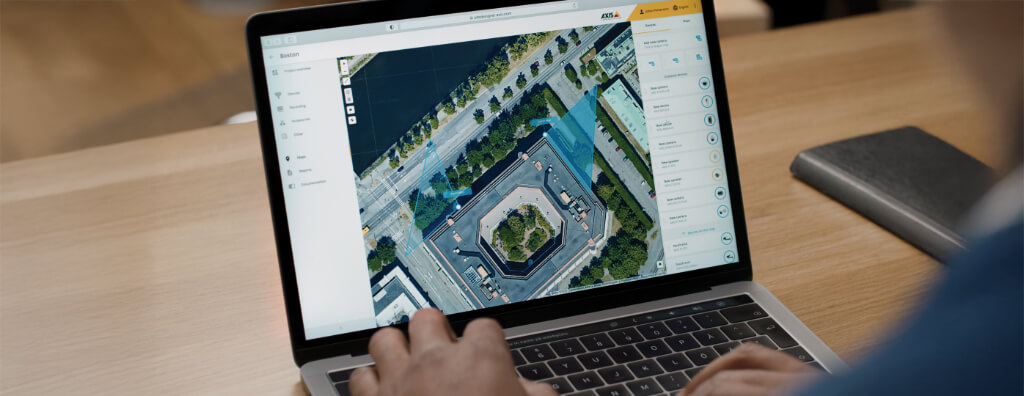
Video Surveillance Systems (VSS) play a crucial role in protecting assets, environments, and people, being widely adopted in critical infrastructure projects, access control, and asset risk management.
Check it out!
Video Surveillance Systems (VSS) play a crucial role in protecting assets, environments, and people, being widely adopted in critical infrastructure projects, access control, and asset risk management. The technological evolution of these systems has brought additional challenges ranging from interoperability with external platforms to the need to ensure high levels of integrity, availability, and confidentiality of video information, especially in high-risk applications. Strictness in defining functional and regulatory requirements is decisive for ensuring operational effectiveness, robustness against vulnerabilities, and compliance with electronic security standards.
In this article, the fundamental functional blocks that make up a VSS architecture will be detailed, addressing everything from image capture and manipulation to systemic management, data security, and integration with other systems. The objective is to present a comprehensive analysis of the functional structure of video surveillance systems, highlighting their functions, relationships, and critical requirements according to nationally recognized standards.
Check it out!
[elementor-template id=”24446″]
Functional Blocks of a VSS System
According to technical standardization, the functional structure of a video surveillance system is conceived from interrelated functional units known as functional blocks. This approach abstracts the need for defining specific devices, prioritizing essential functions required for monitoring, recording, and incident response.
A VSS can be represented by functional blocks that include:
- Video Environment: Aggregates devices and functions intended for capturing, transmitting, storing, displaying, and processing images.
- System Management: Responsible for the configuration, control, auditing, and maintenance of VSS components and data.
- System Security and Integrity: Encompasses mechanisms aimed at protection against failures, intentional attacks, and unauthorized access, ensuring the authenticity and availability of records.
- Interface with Other Systems: Allows VSS interoperability with external platforms, such as alarm systems, access control, building automation, among others.
Each functional block is outlined to address specific requirements defined in standards, providing flexibility and scalability for different application scenarios.
Video Environment: Capture, Transmission, and Image Manipulation
The video environment constitutes the functional core of a VSS, organized into three main functions:
- Video Image Generation (Image Capture): Responsible for obtaining monitored scenes, using optical sensors and electronic devices that ensure quality, resolution, and information fidelity.
- Transmission and Routing of Signals (Interconnections): Encompasses communication infrastructure, protocols, and physical media intended for transmitting images and control signals between system devices. It includes both wired and wireless connections, requiring quality of service control and synchronization.
- Presentation, Storage, and Analysis (Image Manipulation): Includes devices and systems aimed at real-time display, event recording, data indexing, forensic research, and the application of video analysis algorithms for automatic detection of events or anomalous behaviors.
All these processes comprise the so-called video environment, being designed to ensure not only the efficient transmission of data but also its reliability and continuous availability.
Video Surveillance System Management
Management of a VSS comprises the configuration and control of all system devices and functions, as well as the administration of data originated and manipulated during operation. According to regulatory requirements, management activities must allow for:
- Definition and control of operator profiles and access levels;
- Monitoring the operation and performance of subsystems;
- Systematic recording of events in a system log, covering dates, times, causes, and interventions performed;
- Execution of backup, restoration, and data auditing policies;
- Support for remote updates and planned maintenance of system components.
Efficient VSS management requires mechanisms for early detection of failures, automatic generation of notifications, and standardized incident handling, ensuring recovery time and operational continuity.
Functional Security, System, and Data Integrity
VSS protection is based on three main pillars:
- System Integrity: Refers to the physical security of components and strict access control, preventing unauthorized actions, sabotage, or changes to devices.
- Data Integrity: Encompasses mechanisms for identification, authentication, and protection, aiming to avoid improper changes, deletions, or insertions of records, as well as unauthorized access to the database.
- System Security: Encompasses the ability to detect tampering (unauthorized physical or electronic access), vandalism, and failures, as well as enabling complete recovery of the system and data, especially in high security grade VSS.
Common VSS architecture must offer resources for detailed tracking of operations, allowing for the reconstruction of previous activities from event logs (system log). Additionally, routines for secure data copy and restoration must be implemented, ensuring operations meet the various security grades defined in high-risk projects.
Security Classification and VSS Protection Grades
Video surveillance systems are classified according to security grades based on operational risk and potential consequences of incidents in each scenario. The classification must consider:
- The probability of incidents occurring;
- The impact associated with unauthorized access, sabotage, or failures;
- Project requirements for availability, confidentiality, and event traceability.
According to recognized technical standards, each VSS function may require different security grades within the same system. Defining the overall security grade is fundamental to baseline the minimum requirements throughout the project, mainly regarding:
- Authentication and authorization of users and external systems;
- Cryptographic protection of video flows and records;
- Adoption of advanced failure and anomalous event detection mechanisms;
- Tamper-proof recording of audits and interventions.
Such measures form the basis for compliance with corporate, legal, and standardization requirements in sensitive environments.
Interconnection and Interfaces with Other Systems
The VSS interface with external systems, such as access control, alarms, and building automation, is carried out in a controlled manner, observing the security principles defined to avoid breaches and unauthorized access. For this purpose, access levels granted to the external system must be compatible with those required by the VSS, preventing excessive or inconsistent privileges between interoperable platforms.
During the integration process, the VSS should treat the external system as a user, implementing rights control, authentication, and function segregation policies, ensuring that:
- There is no inadvertent provision of elevated access to the VSS;
- Data exchanges follow established security standards;
- Specific audit and monitoring routines are applied for intersystem operations.
Proper configuration of these interfaces contributes to VSS resilience and compliance with current regulations.
Auditing, Event Logging, and Reconstruction of Activities
Operational traceability of the VSS depends on maintaining comprehensive chronological records (system log), allowing for the faithful reconstruction of all relevant activities. These records must cover:
- Date and time of events;
- Identification of operators and devices involved;
- Detailed description of occurrences, configuration changes, and accesses made;
- Digital signatures or authentication methods;
- Corrective measures applied, if any.
Data must be stored securely, with mechanisms that prevent retroactive manipulation and unauthorized access, allowing reliable recovery for investigation purposes, fulfilling external audits, and following legal requirements.
Additional Requirements for High-Level Security Systems
Systems classified with security grade 3 or 4, intended for critical applications, require advanced redundancy and recovery features:
- Full Data Copy and Restoration: Ability to generate, maintain, and restore complete and reliable copies of database and operational records.
- Proactive Failure Detection: Implementation of mechanisms for automatic identification of systemic failures and immediate generation of notifications or alarms.
- Physical and Logical Equipment Protection: Adoption of means to prevent physical and logical tampering with system assets.
These requirements aim to preserve service continuity and information reliability in the face of attempts to exploit vulnerabilities or high-gravity incidents.
The functional structure of a Video Surveillance System (VSS) is based on interconnected blocks and systemically defined functions, ensuring flexibility, resilience, and adherence to technical standards. Thorough understanding of video environments, management, security, and interfaces projects VSS as an essential pillar in operational risk mitigation and critical infrastructure protection. The effectiveness of a VSS lies in the rigorous implementation of access controls, integrity policies, and regulatory audit mechanisms, these being essential recommendations for professionals responsible for the design, deployment, and operation of video surveillance solutions in corporate, industrial, or institutional environments. In highly sensitive projects, careful analysis of security grades and controlled integration with external systems consolidate not only legal compliance but also the robustness necessary to sustain long-term physical and electronic security policies.
