
What is video analytics? Understand how Video Content Analysis works, the technologies involved, applications, benefits, implementation challenges, forensic search, and trends.
Check it out!
What Is Video Analytics?
Video analytics is a technology that automatically processes images captured by surveillance cameras using pattern-recognition and artificial-intelligence algorithms.
Its purpose is to detect and identify relevant events such as suspicious movement, abandoned objects, perimeter intrusions, and other conditions without requiring constant manual monitoring.
[elementor-template id=”24446″]
How Does Video Analytics Work?
Video analytics are software functions that use image-processing algorithms to automatically analyze and interpret content captured by video-surveillance cameras.
These systems are designed to extract relevant information from live video or recordings, generating alerts or reports based on predefined criteria.
The objective of video analytics is to improve security efficiency by automatically detecting events or suspicious behavior and reducing the need for continuous human supervision. They can identify complex movement patterns, objects left or removed, perimeter violations, and other events of interest.
The video-analytics process involves the following steps:
Image Capture: Security cameras capture video in real time.
Video Processing: Video-analytics software uses artificial intelligence and computer vision algorithms to process images and recognize specific patterns.
Event Detection: Based on predefined parameters, the system detects unusual events or suspicious actions, such as a person entering or remaining in a restricted area.
Automatic Event Notification: When an event is detected, the system sends automatic alerts to the security team, enabling a faster response.
Technologies Used in Video Analytics
Video analytics relies on a combination of technologies that improve system accuracy and efficiency. Key technologies include:
2.1 Computer Vision
Computer vision is responsible for interpreting captured images and recognizing objects, movement, and patterns. It allows the system to identify people, vehicles, objects left or removed, and other scene elements.
2.2 Artificial Intelligence (AI)
AI, particularly through techniques such as deep learning and machine learning, can improve the system’s ability to identify events based on prior data. Algorithms can be trained to distinguish normal conditions from anomalies, such as atypical behavior.
2.3 Facial and Object Recognition
Advanced video-analytics systems may include facial-recognition algorithms for configured identity-matching workflows or object-recognition algorithms that detect vehicles or abandoned items in a scene. These technologies are used in high-security environments such as airports and critical facilities.
2.4 Cloud Processing
Cloud processing can provide scalability and flexibility for video-analytics systems. It allows data to be processed and stored remotely, reducing some local infrastructure requirements and facilitating integration with other security technologies.
Main Applications of Video Analytics
Video analytics has a wide range of applications, from public safety to corporate operations.
Below are some of the main areas where this technology can be applied.
3.1 Perimeter Security
In environments such as factories, military facilities, and airports, video analytics can detect perimeter intrusion attempts and trigger response workflows such as alarms or alerts to the security team.
3.2 Traffic and Urban-Infrastructure Monitoring
Video analytics is widely used in traffic monitoring to identify congestion, accidents, or configured traffic events such as restricted-lane incursions. It can also support urban-infrastructure monitoring and smart-city planning.
3.3 Detection of Abandoned or Removed Objects
In high-traffic locations such as airports or shopping centers, video analytics can detect when an object has been left or removed from a monitored area, alerting security teams to events requiring investigation.
3.4 People Counting and Crowd Management
At large events, malls, or stadiums, people counting can be used to monitor visitor flow and venue capacity. Video analytics can estimate the number of people in an area and generate alerts when configured occupancy thresholds are exceeded.
3.5 Operations and Marketing
In retail, video analytics can be used to understand customer behavior, such as dwell time in particular areas and traffic patterns. These data can support store-layout optimization and marketing analysis.
Suspicious-behavior detection and queue counting can also be useful functions in retail environments.
Advantages of Video Analytics
Video analytics offers several advantages for both security and process automation.
Key benefits include:
4.1 Proactive Monitoring
With video analytics, monitoring can move from a reactive to a more proactive model. Instead of reviewing hours of recordings after an incident, configured events can be detected and presented to operators in real time.
4.2 Operational Efficiency
By automating parts of the monitoring workflow, video analytics can reduce repetitive operator tasks and improve the efficiency of security teams.
4.3 Consistency and Repeatability
Automated analytics can apply configured detection criteria continuously and consistently, complementing human operators who remain responsible for contextual assessment and response.
4.4 Data-Driven Decision-Making
Data generated by video analytics can support decision-making in areas such as security, traffic management, and operational planning, allowing organizations to allocate resources and respond to events more effectively.
Challenges in Implementing Video Analytics
Despite its benefits, video-analytics implementation presents challenges that should be considered during design and deployment.
5.1 Lighting and Environmental Conditions
Captured-image quality depends on lighting conditions and camera performance. In low-light environments or with inadequate imaging, analytics accuracy can be compromised. Appropriate camera selection, positioning, optics, and scene design are therefore important to system performance.
5.2 Privacy Considerations
Because video analytics involves capturing and processing images of people, systems must comply with applicable data-protection requirements, including Brazil’s LGPD where relevant.
5.3 Integration with Other Systems
Integrating video analytics with other security and automation systems can be complex, especially in environments with legacy platforms. Careful architecture, interface definition, and integration testing are essential to avoid interoperability problems.
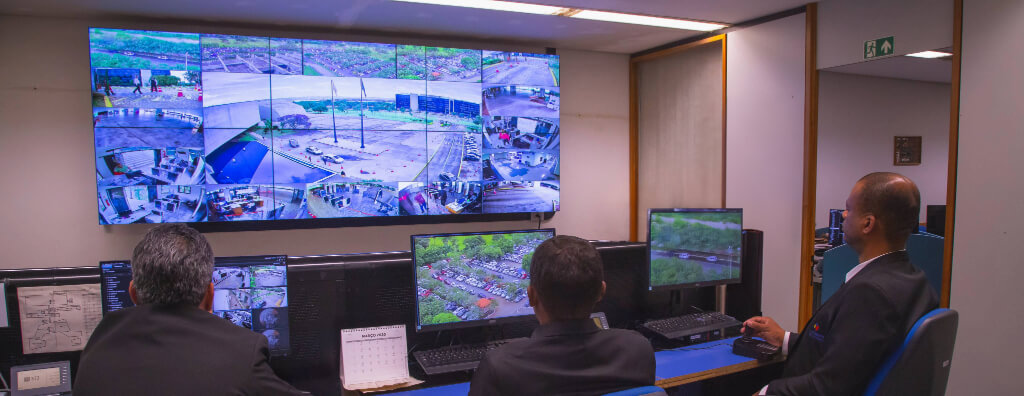
Integration of Video Analytics Solutions into Monitoring Systems
Collection: A3A Engenharia
Video analytics can be integrated into CCTV systems in different ways depending on project requirements, the technology adopted, and the existing infrastructure.
Some of the most common integration approaches are described below:
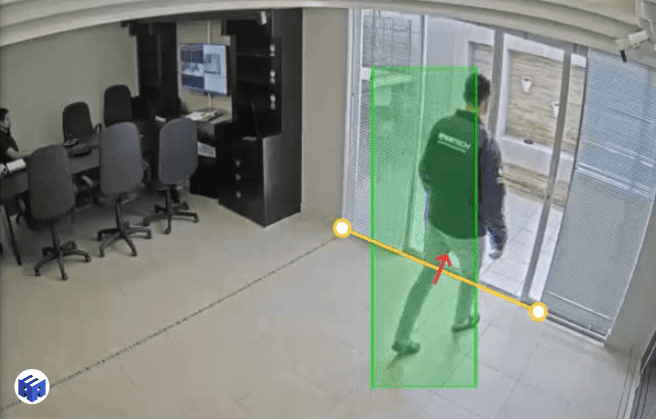
1. Cameras with Embedded Analytics – Edge Processing
Collection: A3A Engenharia
- Description: Some IP cameras include embedded video analytics such as motion detection, object classification, or other scene-analysis functions.
- How it works: The camera processes analytics at the edge and sends metadata and events to the VMS (Video Management System), reducing some centralized processing requirements.
- Application: Suitable for projects requiring real-time intelligent monitoring while distributing processing away from central servers.
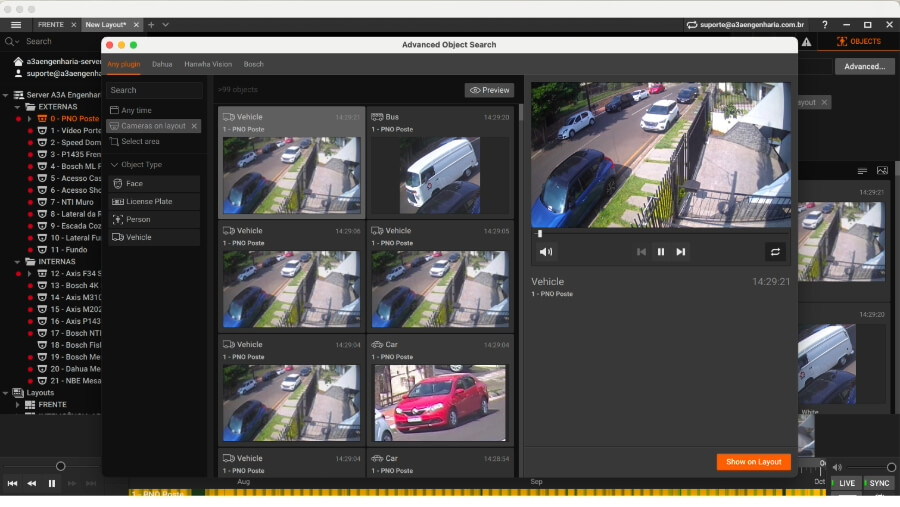
2. Integration via VMS (Video Management System)
Collection: A3A Engenharia
- Description: The VMS is a centralized platform that receives and manages camera video. It can integrate analytics from IP cameras or dedicated analytics servers.
- How it works: The VMS receives camera streams and may process analytics through integrated third-party software or native functions. Its key role is to provide a unified interface for viewing, configuring, and managing analytics-generated events and alerts.
- Application: Used in larger projects where multiple cameras and subsystems must be managed through a single platform.
3. Dedicated Analytics Processing Server
- Description: Some solutions use external servers dedicated to video-analytics processing and integrated with CCTV cameras and the VMS.
- How it works: Cameras send video streams to a dedicated server running analytics software, which processes the data and returns metadata, events, or results to the central system, typically the VMS. This architecture can support more computationally intensive analytics such as facial matching, license plate recognition, behavior analysis, and perimeter protection.
- Application: Used in systems requiring more intensive analytics where infrastructure supports separate processing.
4. Integration with Access Control Systems
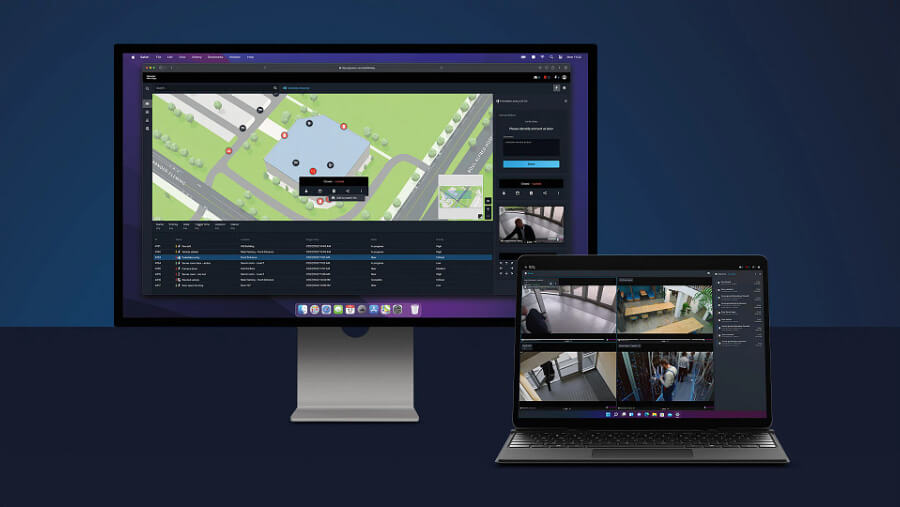
- Description: Video-analytics solutions can integrate with access-control systems to support workflows such as identity verification or vehicle authorization.
- How it works: CCTV cameras monitor access areas and, based on configured analytics data such as facial matching or license plate recognition, can trigger an access-control workflow.
- Application: Used in corporate buildings, parking facilities, and restricted areas in industrial sites.
5. Cloud Integration
- Description: Some CCTV and video-analytics solutions can be hosted in the cloud with remote data processing.
- How it works: Cameras send data to a cloud service that processes analytics and returns results or alerts. This can reduce local infrastructure requirements but may require reliable connectivity, bandwidth, cybersecurity controls, and appropriate latency.
- Application: Used in environments adopting SaaS-based video-surveillance models to reduce or redistribute local infrastructure requirements.
6. Integration with Alarm Systems
- Description: Video analytics can integrate with alarm systems to generate automatic alerts when configured events are detected, such as intrusion or objects left in restricted areas.
- How it works: When analytics detect a configured event, the alarm workflow can trigger notifications to operators, email, mobile devices, or other integrated systems.
- Application: Used in high-security environments such as banks, critical facilities, and urban-control centers.
7. Integration with Artificial Intelligence and Machine Learning
- Description: AI- and machine-learning-based video analytics can be integrated to improve alert and detection accuracy.
- How it works: AI models trained on large datasets can identify patterns and anomalous behaviors. Depending on the application, models may be retrained or updated over time as new data and scenarios become available.
- Application: Used in complex environments where analytics must adapt to new scenarios, including smart-city and public-safety applications.
Forensic Search
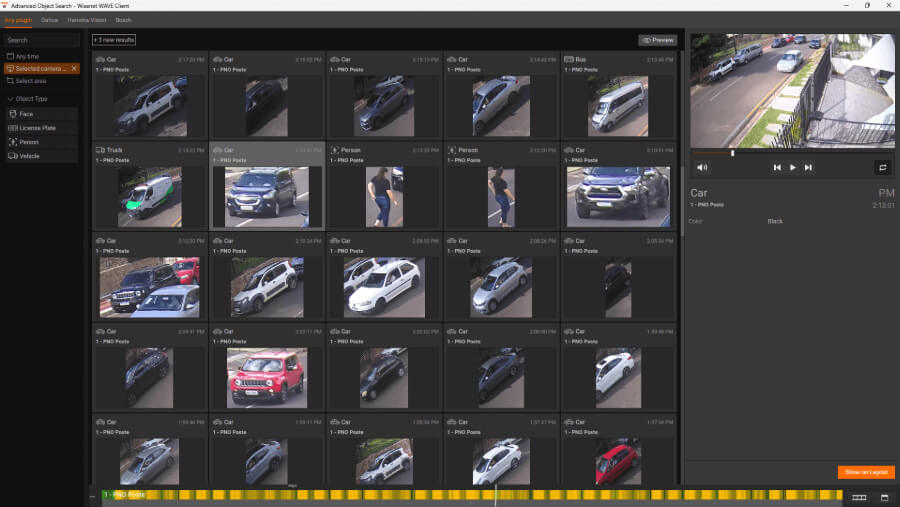
Forensic search refers to detailed analysis of recorded video to identify and extract specific information such as people, objects, events, or behaviors after an incident. It can be performed manually or accelerated with automated tools that use video analytics and metadata.
Collection: A3A Engenharia
Benefícios da Forensic Search com Analíticos de Vídeo:
- Speed and Efficiency: Automated analytics can reduce the amount of footage that operators need to review by filtering recordings according to relevant events, objects, or behaviors.
- Consistency: Analytics can consistently apply configured search criteria and help operators locate details that may be difficult to find through purely manual review.
- Improved Investigation: Forensic search can make investigations more efficient by correlating relevant video and metadata for security incidents or internal investigations.
The main benefit of forensic search is greater efficiency when analyzing large volumes of recorded video.
With video analytics, forensic search can quickly filter events, objects, or people of interest across hours or days of recordings. This can substantially reduce investigation time and improve access to relevant evidence for security cases, audits, or internal investigations.
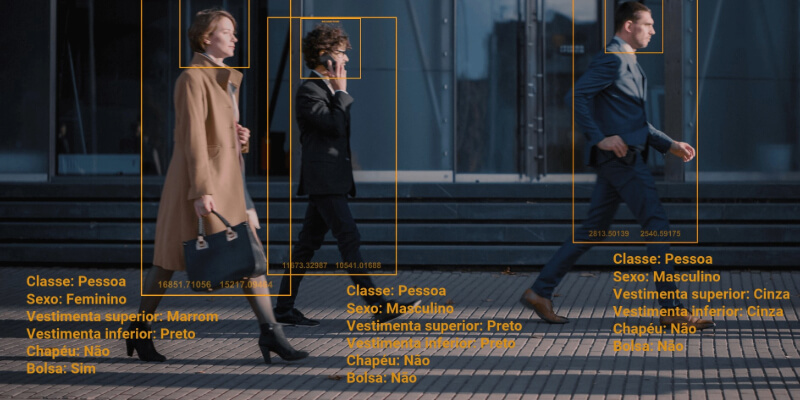
This efficiency is particularly important in environments with many surveillance cameras, where purely manual review can be impractical and time-consuming.
Video Analytics Trends
Video analytics continues to evolve as new technologies are developed.
Some trends that may improve the use of this technology include:
6.1 Advanced Use of AI and Deep Learning
As AI and deep learning evolve, video-analytics systems can improve object classification, scene understanding, behavior analysis, and contextual detection, increasing the usefulness of monitoring workflows.
6.2 Smart Cities
Video analytics can play an important role in smart-city solutions, with applications ranging from public safety to urban-infrastructure and mobility management.
6.3 Real-Time Video Analytics
Real-time processing can support faster response to critical events, particularly in applications such as traffic monitoring, public safety, and large events.
Conclusion
Video analytics is transforming how security monitoring and operational video are managed across multiple sectors.
With artificial intelligence and machine learning, it can add automation, consistency, and efficiency, helping organizations respond to critical events in real time.
Although integration, privacy, image quality, and governance must be considered, video analytics continues to expand in smart cities, critical infrastructure, and high-security environments.
Acknowledgments
Thank you for taking the time to read this article. We hope the information has been useful and clear.
If you have questions or would like to learn more, our team is available to help.
