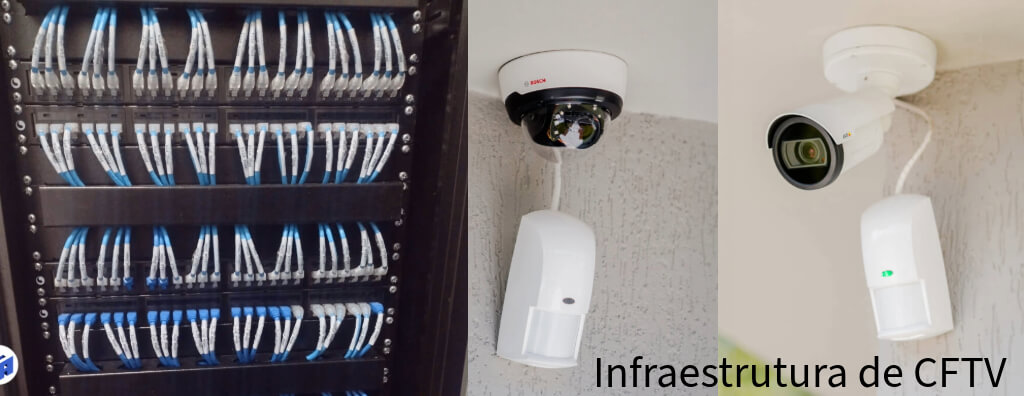
Network Infrastructure for IP CCTV Systems – everything needed for an IP CCTV system to operate with performance and efficiency. In this article, we will discuss the network infrastructure required to implement IP-based CCTV systems. Unlike traditional analog systems, which rely on coaxial cables to transmit video, IP cameras use data networks to send images […]
Check it out!
Network Infrastructure for IP CCTV Systems – everything needed for an IP CCTV system to operate with performance and efficiency.
In this article, we will discuss the network infrastructure required to implement IP-based CCTV systems. Unlike traditional analog systems, which rely on coaxial cables to transmit video, IP cameras use data networks to send images and other information. This change demands a robust network infrastructure capable of handling large volumes of data in real time, without compromising image quality or system efficiency.
[elementor-template id=”24446″]
Network Infrastructure Components for IP CCTV
IP Cameras
A3A Engenharia de Sistemas Archive
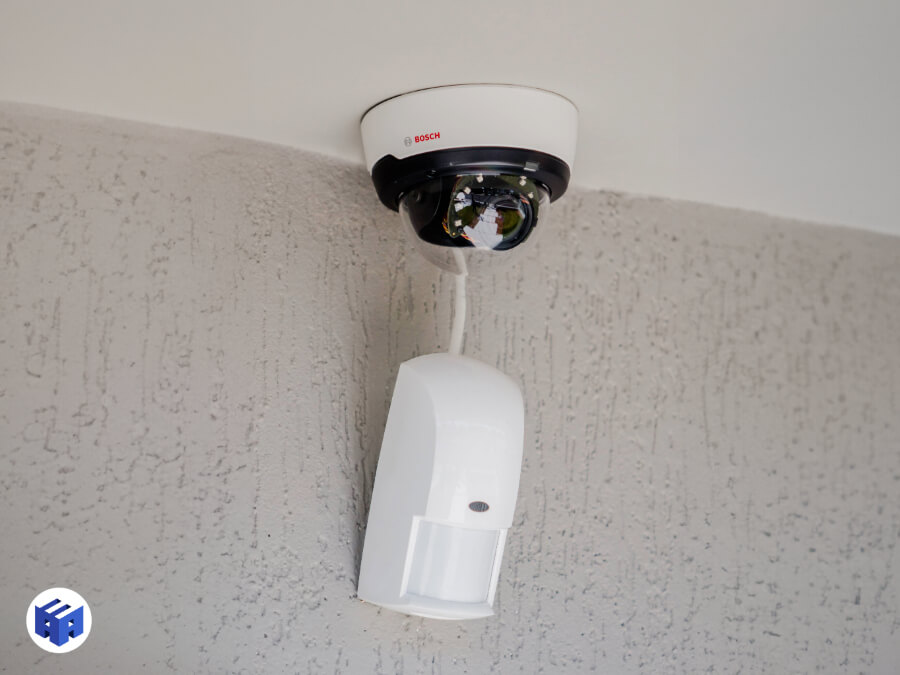
IP cameras are the starting point of a network-based CCTV system. These cameras capture high-resolution images and send them over the network to an NVR (Network Video Recorder) or other storage server. IP cameras stand out for offering superior image quality and advanced features, such as video analytics and remote control.
In addition, most IP cameras can be powered via Power over Ethernet (PoE), meaning that both power and data are transmitted through the same network cable, simplifying installation.
Network Switches
A3A Engenharia de Sistemas Archive
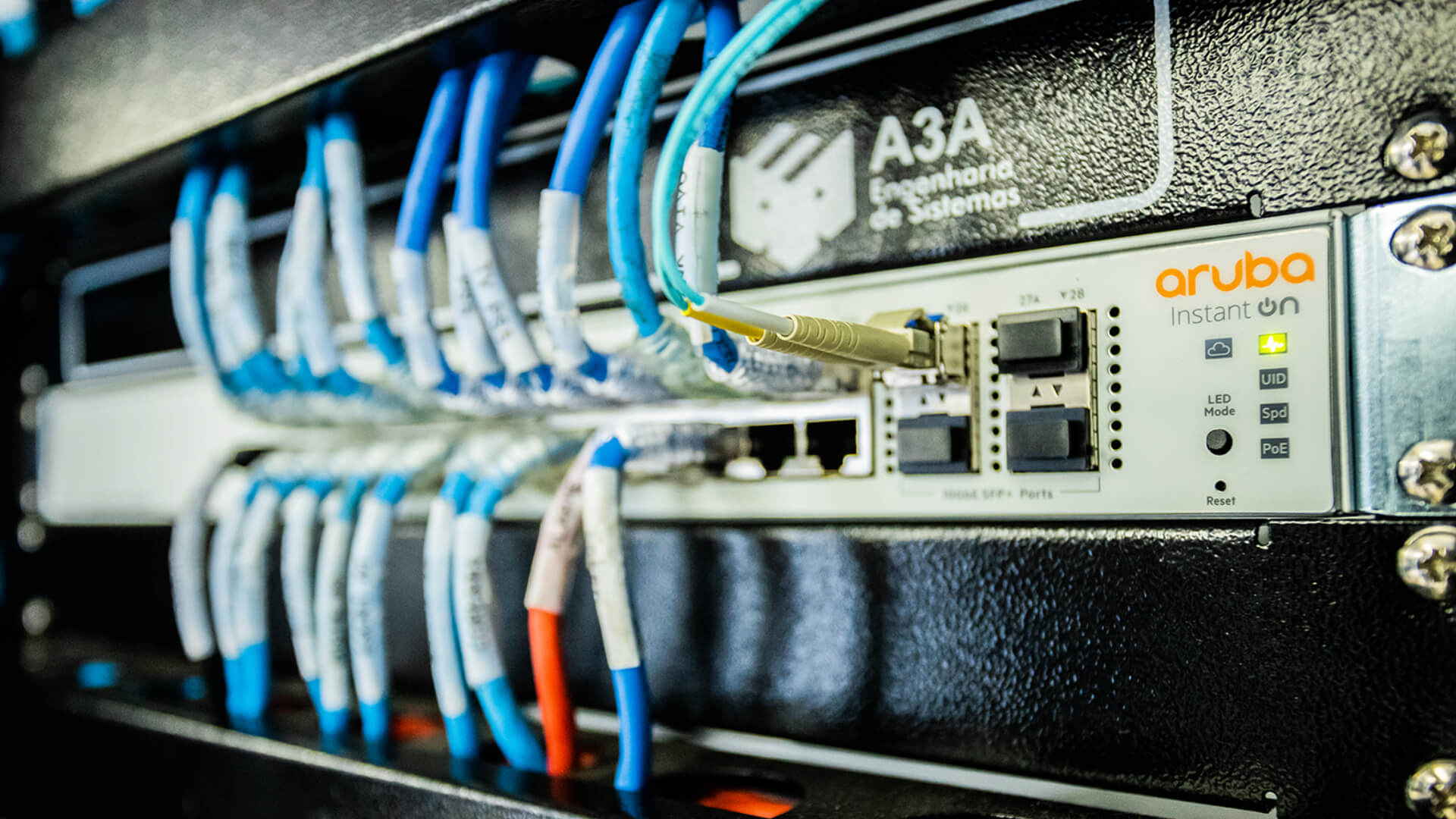
Network switches are essential for connecting IP cameras to the rest of the network infrastructure. They are responsible for directing the video data captured by the cameras to the NVR or to visualization and analysis servers.
For CCTV systems, switches that support PoE are an excellent choice, as they allow cameras to be powered directly through the network connection, eliminating the need for additional power cables. Furthermore, managed switches provide network traffic control and monitoring tools, helping to optimize system performance.
- Practical example: In a corporate building with 50 cameras, a PoE switch with VLAN support can divide the network into segments to reduce interference in video traffic.
Cabling
A3A Engenharia de Sistemas Archive
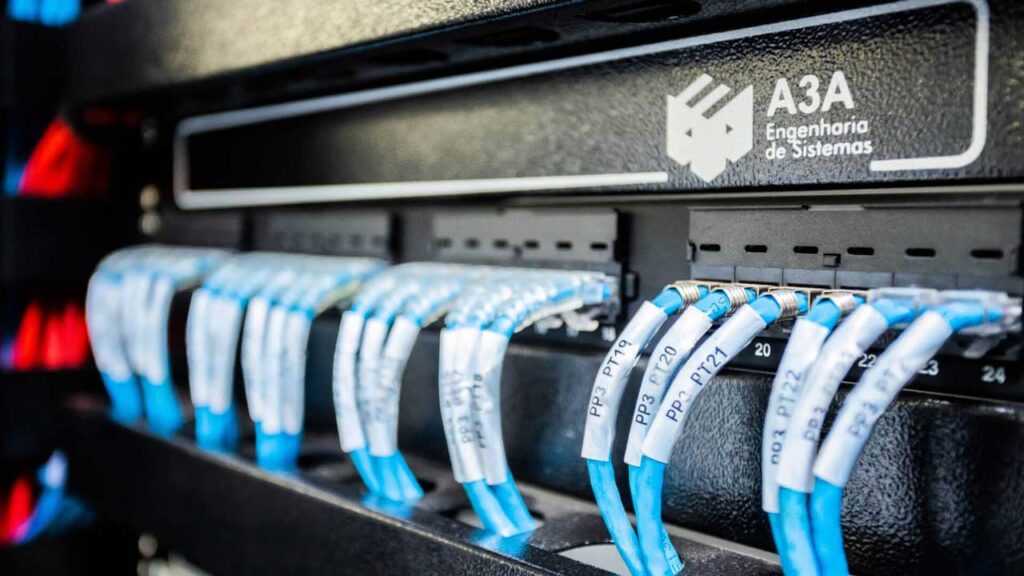
Structured cabling is another critical component of the network infrastructure for IP CCTV systems. Choosing appropriate network cables, such as Cat6 or Cat6A, ensures that video data is transmitted without quality loss and at high speed. Twisted pair cables with Gigabit Ethernet transmission capacity are recommended to avoid network bottlenecks.
In addition, in outdoor environments or areas with a lot of electromagnetic interference, the use of shielded cables (STP – Shielded Twisted Pair) is important to ensure signal integrity and avoid interference problems.
- Practical example: In an outdoor installation where cameras are spread across a large yard, the use of shielded cables or the implementation of fiber optics can prevent interference problems caused by industrial equipment.

Network Video Recorder (NVR)
The NVR is the component responsible for recording and storing the videos captured by IP cameras. Unlike DVRs (used in analog systems), the NVR receives video data directly from the network and does not require physical connections to the cameras.
An NVR must be sized to handle the number of cameras installed, the resolution of the recordings, and the number of days the videos need to be stored. In addition, it must be ensured that the NVR has sufficient storage space and supports features such as automatic backup and recording redundancy.
- Practical example: An NVR used to record video from 30 4K cameras will require large storage capacity and processing power to handle the volume of data generated.
Servers and Storage
A3A Engenharia de Sistemas Archive
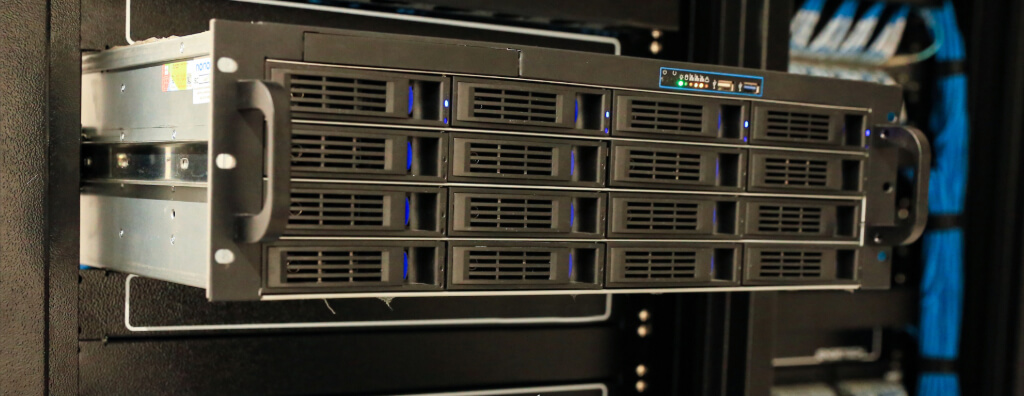
In larger installations, where the number of cameras and the amount of data are considerable, the network infrastructure may include dedicated servers and storage solutions, such as NAS (Network Attached Storage) or SAN systems. This allows continuous recording, real-time analysis, and remote access to video images.
It is important that the storage solution be configured with RAID (Redundant Array of Independent Disks) to provide redundancy and protect data against hardware failures.
- Practical example: A data center storing videos from a large company’s security system can use a NAS with RAID 5 to ensure that videos are recorded redundantly and are not lost in the event of a failure in one of the disks.
Network Requirements for an IP CCTV System
Bandwidth
One of the main challenges when deploying an IP CCTV system is ensuring that the network has sufficient bandwidth to support video traffic. Each IP camera generates a significant amount of data, especially when recording in high resolution, such as 1080p or 4K. If the network does not have sufficient capacity, this can result in packet loss, delay in video transmissions, and even recording failures.
Video compression, such as H.264 or H.265, can be used to reduce the amount of data transmitted over the network without sacrificing image quality. In addition, network segmentation using VLANs can help separate video traffic from the rest of the network, avoiding congestion.
- Practical example: For a system with 20 Full HD cameras recording at 30 frames per second, it is necessary to ensure that the network has capacity of at least 200 Mbps just for video traffic.
Quality of Service (QoS)
Configuring Quality of Service (QoS) is essential in IP CCTV systems to prioritize video traffic over other types of traffic on the network. QoS ensures that video packets take priority over regular data traffic, preventing delays or quality loss in recordings.
- Practical example: In a corporate network with cameras and internet users, QoS can be configured to ensure that video traffic from cameras takes priority over browsing and streaming traffic, preventing the CCTV system from being affected.
Network Security
As the IP CCTV system is integrated into the company’s data network, ensuring network security is a priority. The implementation of firewalls, VPNs for secure remote access, and the use of advanced authentication to access the CCTV system are necessary measures to prevent cyberattacks or unauthorized access to video images.
- Practical example: A CCTV system installed in a factory can use a VPN to allow managers to remotely monitor camera images securely, protecting the system from intrusions.
Conclusion
The network infrastructure required for IP-based CCTV systems must be carefully planned and sized to ensure efficient transmission of large volumes of high-quality video data. IP cameras, PoE network switches, high-capacity cabling, robust NVRs, and storage servers play fundamental roles in a modern CCTV system. In addition, adequate bandwidth, QoS, network security, and the use of technologies such as video compression are essential to ensure an efficient and secure system. By understanding these components, it is possible to design and implement a high-performance IP CCTV system that meets monitoring and security needs.