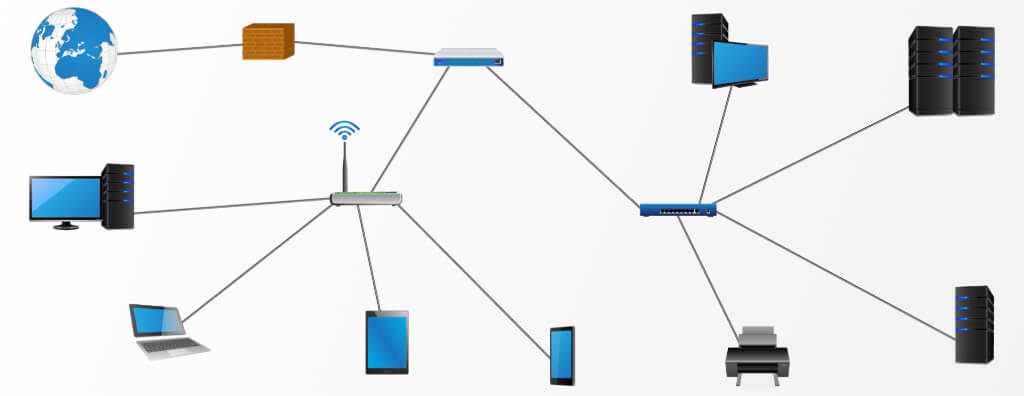
Concept The Logical Network is the part of the computer network that deals with the organization, configuration, and management of communication between devices within that network. A computer network is composed of two fundamental parts: the physical network, which involves cabling, switches, routers, and other physical components, and the logical network, which concerns the organization, […]
Check it out!
Concept
The Logical Network is the part of the computer network that deals with the organization, configuration, and management of communication between devices within that network.
A computer network is composed of two fundamental parts: the physical network, which involves cabling, switches, routers, and other physical components, and the logical network, which concerns the organization, configuration, and management of communication between devices.
While the physical network is responsible for the tangible transmission of data, the logical network deals with how that data is directed, prioritized, and organized to ensure the proper functioning of the network.
In this article, we will address the concept of logical network, the main components and configurations involved, as well as some common problems and their solutions.
[elementor-template id=”24446″]
What is the Logical Network?
The Logical Network refers to the abstract layout and the policies of organization and functioning of communication between devices within a network.
It is composed of elements such as IP addressing, communication routes, subnets, VLANs, NAT (Network Address Translation), among others.
The correct configuration of these elements ensures that data flows properly between devices and that network performance is optimized.
Main Configurations Made in a Logical Network:
- IP Addressing
- Definition: Each device on a network must have a unique IP address to be able to communicate with other devices. IP addressing can be configured manually (static) or automatically (dynamic, via DHCP).
- Common Problems: IP conflicts, incorrect addressing, or lack of proper subnet planning can cause connectivity problems.
- Solution: Planning an efficient addressing scheme, including the creation of adequate subnets to segment traffic, avoids conflicts and optimizes data flow.
- Subnets
- Definition: Subnets divide a larger network into smaller ones, allowing for more refined segmentation and control of data traffic.
- Common Problems: Misconfigured subnets can lead to routing problems and unwanted interference between network segments.
- Solution: Analyzing the logical topology of the network and properly configuring subnets prevents congestion and improves access control and security.
- Routing
- Definition: Routing is the process of directing data packets from one network to another. Devices such as routers and L3 switches perform this role, using routing tables to decide the best path.
- Common Problems: Routing problems can result in packet loss, incorrect routes, and general network slowdowns.
- Solution: Analyzing routing tables and creating static or dynamic routes according to expected traffic ensures that packets reach their destinations efficiently.
- VLANs (Virtual Local Area Networks)
- Definition: VLANs allow logical networks to be created within the same physical infrastructure, segmenting traffic securely and efficiently.
- Common Problems: Misconfigured VLANs can lead to communication failures between devices or create security vulnerabilities.
- Solution: VLAN creation must be well planned based on network usage, ensuring that sensitive traffic is properly isolated. Connectivity tests between VLANs and adjustments to switch configurations are crucial to avoid problems.
- NAT (Network Address Translation)
- Definition: NAT is responsible for mapping private IP addresses to public IP addresses, allowing devices on an internal network to access external networks, such as the internet.
- Common Problems: Incorrect NAT configurations can prevent internal devices from accessing external services, or create security vulnerabilities.
- Solution: Correct NAT management involves analyzing the network’s inbound and outbound routes, as well as ensuring that address translation occurs securely and efficiently.
- QoS (Quality of Service)
- Definition: QoS is a technique used to prioritize different types of network traffic, ensuring that critical data, such as VoIP and video conferencing, receives higher priority compared to less urgent data.
- Common Problems: Inadequate configurations or absence of QoS can result in quality loss in sensitive services, such as video or audio degradation in calls.
- Solution: Correct QoS configuration involves defining appropriate priorities for each type of traffic, ensuring that critical services receive the necessary bandwidth. Regularly reviewing QoS policies ensures that the network meets the demands of real-time and latency-sensitive services.
Diagnosis and Troubleshooting in the Logical Network
1. Initial Diagnosis
- Symptom Assessment: Slowness, packet loss, or devices that cannot communicate may be indicative of problems in the logical network configuration.
- Log and Configuration Analysis: Reviewing logs from routers, switches, and DHCP servers, as well as checking routing tables and firewall rules, allows quick identification of bottlenecks.
2. Connectivity Tests
- Ping and Traceroute Tests: These are essential tools for identifying where communication is being interrupted.
- VLAN and Routing Configuration Review: It is important to verify that devices are in the correct VLANs and that routes have been configured properly.
3. Correction and Adjustment
- IP and Subnet Reconfiguration: Adjustments to IP addressing, subnet division, and creation of new routes are common troubleshooting steps.
- Traffic Isolation with VLANs: VLAN segmentation can be redone to ensure that only appropriate traffic passes between different network segments.
4. Preventive Maintenance
- Logical Network Monitoring: Continuous monitoring tools allow tracking of data flow and identification of anomalies before they become critical problems.
- Configuration Documentation: Maintaining a detailed record of logical network configurations facilitates future diagnostics and ensures operational consistency.
Physical Network and Logical Network: The Foundation for High Performance and Availability in Computer Networks
An efficient and reliable computer network depends on two fundamental pillars: the physical network and the logical network. Together, they form the structure that supports fast, secure, and highly available data communication.
For a high-performance computer network, both parts — physical and logical — must work together.
The physical network provides the medium through which data travels, and the logical network organizes, manages, and prioritizes that traffic.
If one of the layers fails, the other will not be able to compensate for the impact, compromising the efficiency and availability of the network as a whole.
- Expected Performance: A high-performance network is only possible when the physical network is optimized to provide the adequate infrastructure (high transfer rate, low interference, and quality components), and the logical network is configured to ensure efficient communication, with adequate prioritization and correct routing. This results in a network that meets business demands with low latency, high responsiveness, and little or no interruption.
In summary, the combination of a robust physical network and a well-structured logical network is essential to ensure the high performance and availability expected in any computer network.
Specialized Services
Ensuring the proper functioning of the logical network is essential for the performance of the entire IT infrastructure.
Physical Network and Logical Network: The Foundation for High Performance and Availability in Computer Networks
A3A Engenharia de Sistemas offers services for:
- Complete Logical Network Diagnosis: Identification and correction of failures in IP addressing, routing, and VLANs.
- Logical Network Optimization: Traffic segmentation services, VLAN creation, and routing table adjustment.
- Maintenance and Monitoring: Preventive maintenance plans with real-time logical network monitoring and proactive corrections.
- Complete Physical Network Review: Network infrastructure diagnostic service.
Conclusion
The Logical Network is just as important as the Physical Network to ensure the efficiency, security, and performance of a computer network.
The proper configuration of elements such as IPs, subnets, VLANs, and routes can prevent a series of problems and maximize the use of available resources.
A correct diagnosis and the adoption of specialized solutions ensure that the network functions correctly, delivering the expected performance.
A network adequacy project will diagnose and propose solutions in both the physical layer and the logical layer, providing efficient and secure communication.
Get in touch and speak with a specialist.