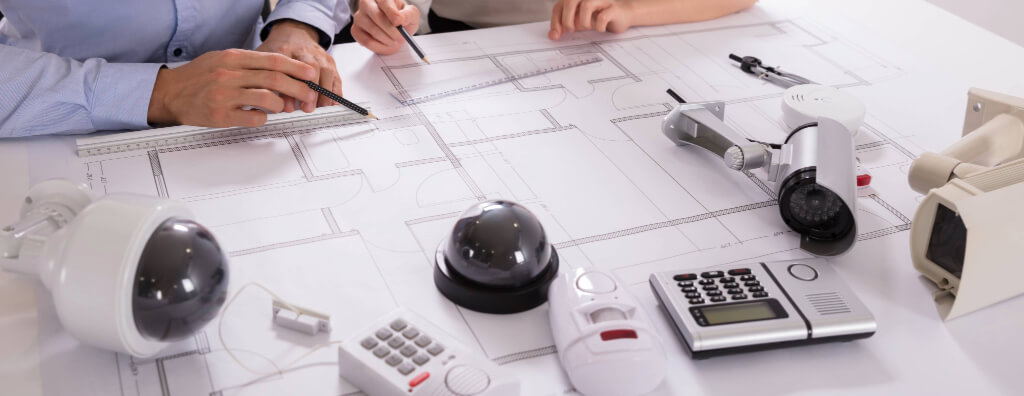
Understand what as-built documentation is, why it matters in engineering and infrastructure projects, and how it supports compliance, maintenance, traceability, and digital asset management.
Check it out!
The as-built documentation represents the consolidation of the actual execution conditions of a project after its field implementation. The development and delivery of the as-built are fundamental processes in electrical systems, structured networks, automation, electronic security, and critical infrastructure due to the need for precision, traceability, and regulatory compliance. The absence of a reliable record makes proper audits impossible, hinders future expansions, and may compromise the operational and legal safety of installations.
This article details the concept of as-built, its strategic role in engineering, applicable regulatory requirements, methodological processes, impact on operational maintenance, and technical guidelines for its preparation. The requirements for electrical systems, telecommunications, electronic security, and cybersecurity will be explored, addressing methods, reports, and the systemic integration of as-built throughout the life cycle of the project.
Take a look!
[elementor-template id=”24446″]
Definition and Purpose of As-Built
The term as-built refers to the revised technical documentation that faithfully reflects all changes, deviations, or adaptations carried out during project implementation. At the end of the project, this documentation replaces drawings, diagrams, specifications, reports, material lists, and other records from the executive design, consolidating all changes implemented for technical, operational, or logistical reasons in the field.
- Main objective: to record, accurately and unambiguously, the infrastructure, equipment, interconnections, and final configurations implemented in the development.
- Scope of application: electrical installations, building and industrial automation systems, structured cabling, electronic security systems, and information technology projects.
The as-built ensures the traceability of technical interventions, since it serves as the basis for preventive maintenance, corrective maintenance, inspections, expansions, and compliance audits.
Applicable Technical Standards and Regulations
Electrical Environment
As stated in ABNT NBR 5410, after installation is completed, all project documentation must be revised and updated to faithfully reflect what was actually executed. This as-built documentation, also called “as constructed,” includes drawings, schematics, descriptive specifications, component lists, calculations, panels, and equipment diagrams.
Structured Networks and Telecommunications
ABNT NBR 16869-1 states that the as-built record must include:
- Updated floor plans with the actual cable routes;
- Actual routing of ducts, cable trays, and telecommunications spaces;
- Logical/physical diagrams (implemented topology);
- Detailed identification and location of network points;
- Certification results for channels and permanent links;
- Photographic records and electronic documentation linked to the installed components.
Electronic Security Systems
ABNT NBR IEC 62676-1-1:2019 specifies that the documentation of video surveillance, access control, and alarm systems must reflect, in the delivered as-built:
- Final diagrams and schematics of connections, topologies, and monitoring points;
- Details of interfaces between heterogeneous systems (CCTV, access control, intrusion detection);
- Functional acceptance reports, including effectively programmed parameters and any field adaptations;
- Operational procedures and routines revised for the installed condition;
- Detailed records of relevant events and system changes.
As-Built Preparation Processes
Methodological Flow
- Field Survey: Conducting a detailed technical inspection to identify deviations from the executive design.
- Marking and Updating: Inclusion or correction of duct routes, points, panels, devices, and equipment, using differentiated visual highlighting.
- Document Review: Updating and consolidating drawings, diagrams, tables, specifications, and material lists according to what was executed.
- Technical Validation: Generation of reports and verification maps comparing what was planned with what was actually performed, covering all technically justified changes.
- Formal Delivery: Preparation of technical dossiers, preferably in electronic and physical format, including editable files and drawings in PDF, DWG, and any other extensions required by contract or applicable standard.
The process may include photographic reports, compliance analysis, attachment of test reports, checklists, and formal acceptance records by the client or responsible technical parties.
Essential Components and Best Practices in As-Built Documentation
- Final Drawings: Floor plans, sections, and elevations indicating actual cable routes, conduits, and equipment locations.
- Functional and Single-Line Diagrams: Representations of circuits, interconnections, logical flows, and system interfaces.
- Descriptive Specifications: Text describing the implemented solutions, technical justifications, and regulatory compliance.
- Installed Material List: Complete list of implemented items, including serial number, internal code, configuration parameters, and manufacturer data.
- Test and Certification Reports: Performance test results and final system acceptance records, according to technical standard requirements.
- Technical Photographs: Records of actual installation conditions, critical points, and evidence of compliance.
The adoption of documentation management software is recommended for version control, traceability of changes, and intelligent indexing of records.
As-Built Particularities in Electrical Systems
According to ABNT NBR 5410, the electrical as-built must include updated information on the following:
- Component Specifications: Description, nominal characteristics, and applicable technical standards for all installed devices and equipment.
- Design Parameters: Short-circuit currents, voltage drop, demand factors, ambient temperature considered, and other specific conditions.
- Distribution Panel Schematics: Detailed indication of circuits, their purposes, powered points, and technical reserves.
- Maximum Capacities: Maximum effectively allowed loads and potential future loads for all terminal circuits.
- User Manual: Accessible document for maintenance and operation teams, including functions, guidelines, and operational recommendations.
The update may be performed by the designer, the installer, or another formally appointed professional, ensuring traceability of revisions.
As-Built Particularities in Structured Networks and Telecommunications
ABNT NBR 16869-1 Requirements
- Detailed Floor Plans: Clear indication of cable paths, ducts, shafts, pull boxes, and network points.
- Rack and Panel Elevations: Face-view representation showing the exact equipment position and physical interconnection.
- Grounding and Equipotential Bonding Designs: Integration with the building’s overall solution to certify correct network performance and safety.
- Photographic Reports and Testing: Standardized visual documentation and link certification reports.
- Equipment Records: Identification of each device, active point, passive components, and interconnections, including standardized coding.
Documentation Process
- The work scope must include post-installation documentation updates, specifying the criteria for identification, preparation, and control of the as-built;
- Reports may include tables, lists, diagrams, or forms integrated into databases to facilitate maintenance and future expansions;
- Integration between printed documentation, electronic files (DWG, PDF, XLS), and document management systems is recommended to ensure accessibility.
As-Built Particularities in Electronic Security
As-built documentation in electronic security projects involves specific requirements for video surveillance, alarms, and access control systems:
- Video Surveillance Systems: Final drawings and diagrams, details of camera positioning, angle, and coverage as executed, records of adjustments made, and final configuration parameters;
- Alarm Systems: Mapping of sensors, controllers, monitored areas, and corresponding field reconfigurations;
- Access Control: Details of interfaces with doors, turnstiles, biometric readers, authentication devices, and final implemented logic.
Relevant events, parameter settings, and system changes must be recorded, including adjustments made during commissioning.
Another important point is the need to document the interface with other solutions and systems, respecting the most restrictive requirement in integrated environments.
As-Built Documentation in Cybersecurity and Critical Infrastructure
In information technology and information security infrastructure environments, as-built documentation gains strategic importance for audits, operational continuity, and incident response.
- Asset Inventory: Updated list of equipment, network devices, servers, and critical components, including identification and actual parameter settings.
- Topology Mapping: Final network diagrams reflecting established connections, VLAN segmentations, interconnection points, firewalls, and segregated zones as installed.
- Logs and Change Records: Implementation of audit mechanisms and change tracking in the infrastructure, essential for incident response and forensic analysis.
- Versioning History: Version control of the actual configurations and parameter settings applied to logical security equipment.
- Compliance Reports: Formal record of adherence to governance policies, technical standards, and frameworks such as CIS Controls, NIST Cybersecurity Framework, and ISO 27001.
As-built documentation strengthens governance over the environment, consolidating essential controls for resilience and response to cyber events.
Technical Responsibility and Compliance Auditing
The preparation, review, and delivery of as-built documentation are activities with defined technical responsibility. Traceability of changes and formalization of records must be conducted by qualified professionals, according to legal competence and applicable standards.
- Audit and Acceptance: Reviewing the as-built may involve multidisciplinary teams and may be preceded by visual inspection, functional verification, compliance testing, and cross-validation with the document management system.
- Versioning Control: All revisions and updates must be traceable, identifying the parties responsible for each modification and the corresponding date.
This approach ensures technical compliance with national and international standards, providing operational safety, legality, and robustness for future project expansions.
Operational and Strategic Impacts of As-Built
- Risk Management: As-built documentation is fundamental for identifying, analyzing, and mitigating operational and safety risks.
- Maintenance Efficiency: It enables agile response to failures, proper replacement of parts, and precise intervention at critical installation points.
- Facilitates Expansions and Renovations: It provides detailed technical support for expansion projects, new demands, and technological integrations.
- Support for Compliance: It facilitates auditing processes, certifications, regulatory inspections, and compliance with legal and regulatory requirements.
- Basis for Training: It provides educational and practical material for training operation, maintenance, and safety teams.
These factors reinforce the role of as-built as an essential tool throughout the complete life cycle of engineering and technology assets.
Integration of As-Built into Digital Asset Management
The advancement of electronic documentation systems, such as network asset management systems, maintenance software, and document control platforms, makes it possible to integrate as-built documentation into centralized databases.
- Advantages of digitalization: Online availability of records, real-time access to field data, access permission control, and integration among engineering, maintenance, and safety areas.
- Cloud Management: Secure storage on local servers or in the cloud, ensuring redundancy, integrity, and traceability of technical data.
- Report Automation: Generation of dynamic infrastructure reports, extraction of tables, charts, and diagrams to support operational and strategic decisions.
In this way, as-built is consolidated as a dynamic and integrated asset management tool in the context of Industry 4.0.
Security, Protection, and Operational Continuity Requirements
As-built plays a crucial role in systematizing and updating security controls, facilitating the implementation of policies and procedures aligned with best practices in information security management and business continuity.
- Physical and logical security: Documentation must map access, controls, monitoring points, and segmentation of critical environments.
- Incident response plans: Accurate records are fundamental for planning, execution, and simulations of response in adverse situations.
- Periodic testing: The performance of audits, vulnerability tests, and attack simulations depends on realistic information about asset topology and configuration.
- Cyber resilience: Historical records of all changes enable quick restoration and post-incident analysis, contributing to the robustness of the operating environment.
Conclusion
The preparation and maintenance of the as-built consolidate technical and regulatory control over engineering, technology, and security assets. The accuracy of final drawings, descriptive reports, test records, material lists, and integration with digital management reflects a commitment to technical excellence, operational sustainability, and reduction of systemic risks.
It is essential that all stages be conducted in accordance with current technical standards, with the involvement of qualified professionals and the use of appropriate tools to ensure traceability, periodic updating, and full auditability of technical records.
As-built documentation, in addition to being a contractual requirement, represents a competitive differentiator for organizations focused on safety, continuity of operations, and technological evolution of their infrastructures.
Final Considerations
As presented in this article, as-built is a fundamental foundation for the efficient, safe, and standards-compliant management of electrical/electronic, network, telecommunications, and security system projects. Documentary accuracy strengthens decision-making, supports technical governance, and enables sustainable and safe operations throughout the entire life cycle of the project.
Thank you for following this reading. Follow A3A Engenharia de Sistemas on social media and stay up to date with the most relevant topics in engineering and applied technology.
