
The Importance of a Specialist Engineer in Project Management for Structured Cabling System Deployments The execution of a structured cabling project is a complex task that demands technical precision and a high level of organization to ensure the infrastructure operates efficiently, stably, and scalably. The presence of an Engineer specialist in structured cabling project management […]
Check it out!
The Importance of a Specialist Engineer in Project Management for Structured Cabling System Deployments
The execution of a structured cabling project is a complex task that demands technical precision and a high level of organization to ensure the infrastructure operates efficiently, stably, and scalably. The presence of an Engineer specialist in structured cabling project management is crucial at every stage of the installation, from project design to final project delivery. This professional ensures that the system is designed and implemented in compliance with standards, guaranteeing the quality, safety, and efficiency of the network.
[elementor-template id=”24446″]
The Engineer’s Role in Project Design
The design of the structured cabling project is the phase where all critical decisions are made. The specialist Engineer has the technical knowledge required to design a system that meets the company’s specific needs, ensuring that the network infrastructure is efficient and scalable.
Defining Technical Requirements
The Engineer is responsible for understanding the company’s demands and translating these needs into a technical project. This involves calculating the number of network points, identifying areas of highest data traffic, selecting appropriate materials, and defining the network topology.

A project well designed by an Engineer ensures that the infrastructure will be correctly sized, preventing future performance issues and allowing the integration of new technologies as the company grows.
Compliance with Technical Standards
The specialist Engineer is responsible for ensuring that the project follows all international technical standards, such as ANSI/TIA and ISO/IEC standards and the NBR 14565 standard, which are essential for ensuring the quality, safety, and durability of the cabling system.
Compliance with standards reduces the risk of failures, interference, and compatibility issues, ensuring that the network operates with high performance and security.
Technical Supervision During Installation
The execution of the structured cabling installation is a critical phase, where supervision by an Engineer specialist in project management is indispensable. This professional ensures that the project is implemented as planned and within the established quality standards.
Technical Team Supervision
During installation, the Engineer ensures that the technical team follows the project guidelines and applies best installation practices. The presence of a specialist Engineer reduces installation errors, such as improperly routed cables, inadequate tensions, or defective connections.
Continuous supervision minimizes errors, ensuring that the installation is carried out correctly and efficiently, resulting in less rework and faster delivery.
Adjustments and Problem Solving
Even with a well-planned project, unforeseen events can occur during installation. The Project Manager Engineer is prepared to handle these issues quickly and efficiently, adjusting the project and implementing technical solutions that ensure continuity of work without compromising quality.
The supervision of a Project Manager Engineer allows problems to be resolved promptly, avoiding delays and ensuring that the project is completed on time.
Quality Assurance and System Certification
After installation, it is the responsibility of the Project Manager Engineer to oversee and ensure that the system is certified in accordance with technical standards, conducting tests and documenting the entire process to ensure that the infrastructure meets performance requirements.
Testing and Certification
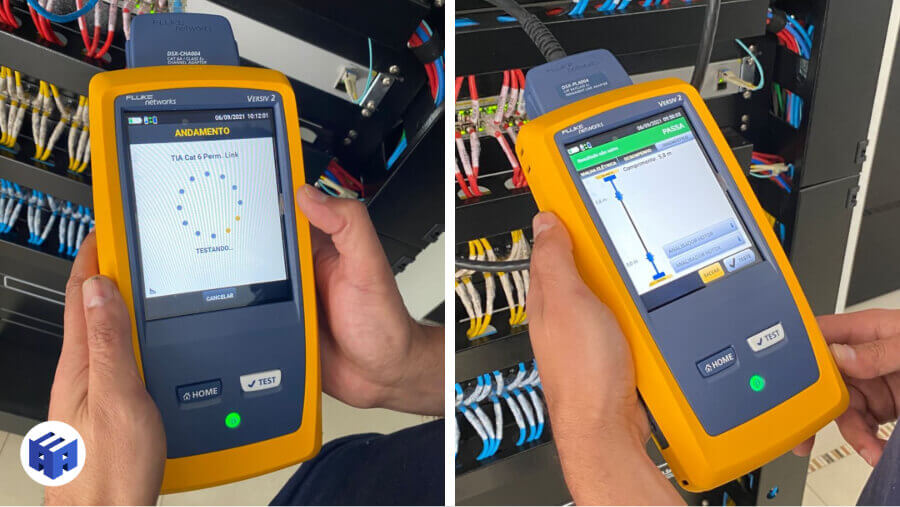
A3A Engenharia de Sistemas Archive
The Engineer is responsible for performing the necessary tests, such as continuity, attenuation, crosstalk, and impedance tests, using certification equipment that validates the integrity and performance of the cabling system.
System certification ensures that the installation was carried out correctly, without signal failures or issues, and that the network is ready to operate stably and efficiently.
Documentation Delivery
After certification, the responsible Engineer prepares and delivers all necessary documentation to the client, including detailed test reports, cabling schematics, and guidance for future maintenance. This documentation process is fundamental for long-term network infrastructure management.
Project documentation ensures that any future expansion, adjustment, or maintenance need is based on accurate information, reducing operational costs and risks.
Safety and Legal Compliance
In addition to ensuring the technical quality of the installation, the Project Manager Engineer is the professional responsible for ensuring that the project complies with legal and regulatory requirements, such as the issuance of the Technical Responsibility Note (ART) and compliance with safety standards.
Issuance of the ART
The ART (Anotação de Responsabilidade Técnica) is an essential document that ensures the project was conducted by a qualified professional, registered with CREA (Regional Engineering and Agronomy Council), and that all legal and technical aspects have been met.
The issuance of the ART by the Engineer ensures that the structured cabling project has legal backing, assuring the client that the installation was carried out professionally and in compliance with regulatory requirements.
Workplace Safety Assurance
The Project Manager Engineer also supervises the implementation of workplace safety measures, such as the Environmental Risk Prevention Program (PPRA), the Occupational Health Medical Control Program (PCMSO), and the issuance of Occupational Health Certificates (ASO) for the entire technical team involved.
These measures guarantee the safety of everyone involved in the project and prevent possible interruptions due to compliance issues or workplace accidents.
Post-Installation Support and Maintenance
The role of the Project Manager Engineer does not end with project delivery. They also provide technical support to ensure the system continues to operate efficiently and safely, and advise the client on preventive maintenance.
Specialized Technical Support
Should any problem arise after installation, the Engineer can be consulted to provide quick and technical solutions. Their knowledge of the project from the start facilitates the identification and resolution of failures.
Post-installation technical support provided by the Project Manager Engineer minimizes downtime and ensures that the company continues to operate without interruptions.
Preventive Maintenance Planning
The Project Manager Engineer should also develop a preventive maintenance plan, which helps extend the useful life of the cabling system, ensuring that it operates within performance parameters over the long term.
Preventive maintenance reduces future costs by avoiding emergency repairs and maximizing the return on investment made in the cabling system.
Conclusion
Having an Engineer specialist in structured cabling project management overseeing all stages of the installation, from project design to final delivery, is fundamental for ensuring the quality, safety, and efficiency of the network infrastructure. This professional provides the technical expertise needed to ensure that the structured cabling system is designed, implemented, and maintained to the highest quality standards, providing long-term stability, scalability, and availability.
When hiring a specialized Engineering firm, the presence of a Project Manager Engineer dedicated to executing the project makes all the difference in the success of the installation.
Need help implementing a structured cabling system? Contact us and schedule a meeting with our Engineering Department.
Normative References:
- ABNT NBR 14565 – Structured Cabling Systems for Commercial Buildings: This standard is the main reference in Brazil for structured cabling, based on international standards such as ANSI/TIA and ISO/IEC. It establishes guidelines for the installation of cabling systems in commercial buildings, covering both copper cabling and fiber optics. The standard covers everything from component requirements to recommended installation practices.
- ABNT NBR 16415 – Structured cabling for industrial buildings: Complementary to NBR 14565, this standard specifies requirements for structured cabling in industrial environments, considering the specific needs of this type of installation, such as resistance to electromagnetic interference and adverse environmental conditions.
- ABNT NBR 5410 – Low-voltage electrical installations: Although this is a standard focused on electrical installations, it is important to mention it, as in structured cabling projects, the electrical installations must comply to ensure the safety and efficiency of the system.
- ANSI/TIA-568 (Telecommunications Industry Association): This standard is widely used in the United States and establishes minimum requirements for structured cabling in different environments, such as commercial and residential. It includes cable categories, such as CAT5e and CAT6, and connector and performance specifications.
- ISO/IEC 11801: International standard that provides specifications for structured cabling in different types of buildings, such as offices and data centers. It covers performance requirements for copper and fiber optic cables, as well as defining maximum distances and components to be used.
- ISO/IEC 14763: This standard provides guidelines for the installation, operation, and maintenance of cabling systems, addressing aspects such as performance certification and cabling organization.
- EN 50173: European standard similar to ISO/IEC 11801, which establishes requirements for structured cabling. It is widely adopted in Europe.
Frequently Asked Questions
It is the set of practices and methodologies applied to plan, execute, monitor, and finalize structured cabling projects, ensuring everything is completed on time, within budget, and in accordance with the required technical standards.
A PMP-certified (Project Management Professional) professional has mastery of international best practices in project management, such as those defined by the PMBOK. This means more control, predictability, effective communication between parties, and a greater guarantee of success in the system deployment.
The PMBOK is a globally used guide of project management best practices. In structured cabling projects, it guides everything from scope, schedule, and cost planning to risk management, integration, quality, resources, and communication between teams.
The initiation stage (requirements gathering and scope definition), detailed planning (schedule, costs, resources), execution with technical supervision, continuous monitoring, and closure with testing, certification, and documentation are all essential to guarantee project success.
Yes, companies that use recognized methodologies such as PMBOK demonstrate a commitment to organization, quality, and efficiency. This translates into greater transparency for the client, risk reduction, and better results, from the initial project through post-construction.
Efficient management anticipates possible challenges, makes quick adjustments in case of unforeseen events, ensures the use of appropriate materials, closely supervises all stages, and delivers complete documentation at the end. This reduces the chance of failures and prevents extra costs in the future.
In addition to technical expertise, a specialized company offers professional project management, follows national and international standards, maintains certified engineers on its team, and delivers complete and customized solutions — from diagnosis to final certification.
Not necessarily. Often, the investment in professional management pays for itself by avoiding rework, waste, and delays. Furthermore, well-managed projects have a longer useful life and add value to the company’s assets.
Relevant Links
Solutions
Structured Cabling Project – Stages, Costs and Documents
Books and Standards
eBook – Why hire a Structured Cabling Design?
Structured Cabling Technical Standards
NBR 14565 – Brazilian Structured Cabling Standard
Engineering Services
Network Certification for Structured Cabling Systems
Consulting in Structured Cabling Projects
Structured Cabling Installation
Specialized Structured Cabling Services
Educational Content
How to avoid common problems in Structured Cabling Systems?
