
Compare wired and wireless networks in terms of performance, stability, security, mobility, cost, and best-fit scenarios for corporate environments.
Check it out!
Wired network vs. wireless network: these are the two main options for implementing communication networks, and the choice between them depends on the context, the needs, and the performance requirements.
Communication networks are essential to ensure the proper functioning of companies, homes, and even personal devices.
In this article, we will compare wired networks and wireless networks, covering their main strengths and the situations in which each one stands out.
[elementor-template id=”24446″]
1. Performance and Speed
- Wired Network: In terms of speed and performance, wired networks provide superior and more stable data transmission. By using twisted-pair cables (such as Cat6 or Cat6a) or optical fibre, it is possible to achieve speeds of up to 10 Gbps or more, with low latency. In addition, wired networks are not affected by physical barriers such as walls, or by interference from other electronic devices, providing a consistent user experience.
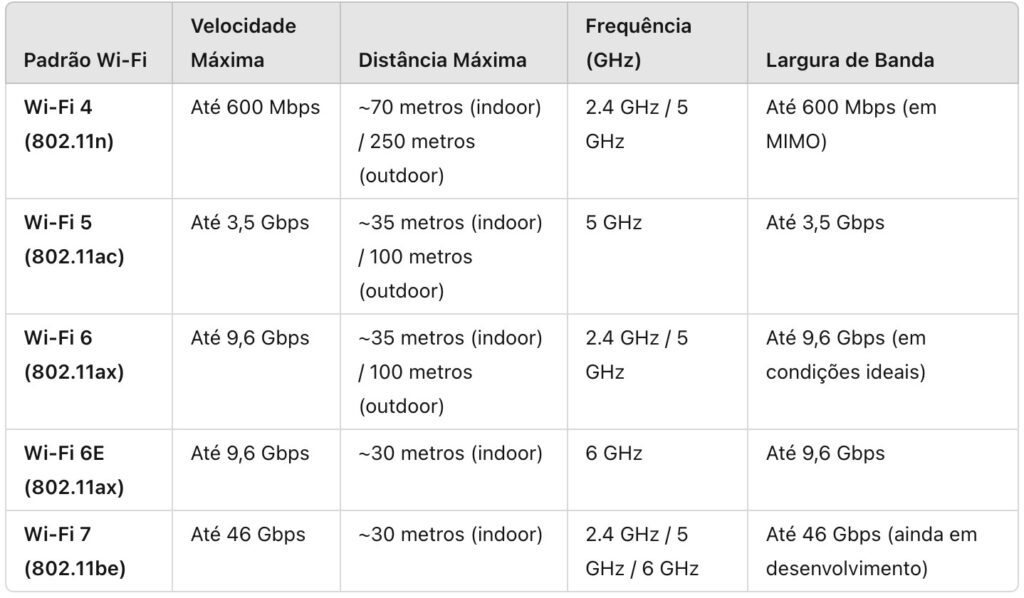
- Wireless Network: Wireless networks, such as Wi-Fi, offer mobility and convenience, but speed may be limited depending on the technology. With Wi-Fi 6, for example, it is possible to reach speeds of up to 9.6 Gbps under ideal conditions, but in practice factors such as distance from the router, physical obstacles, and interference from other devices can reduce performance. In addition, latency tends to be higher in wireless networks, especially in congested environments.
If high speed and stability are the priority, wired networks are the best choice. Wireless networks are better suited for users who prioritise mobility and convenience, albeit with a possible performance limitation.
2. Reliability and Stability
- Wired Network: Wired networks are extremely reliable because they depend on direct physical connections. Electromagnetic interference may be a concern in some cases, but when quality cabling and a well-planned design are used, the wired network provides a stable connection, without drops or signal fluctuations, which is essential for critical operations and uninterrupted workflows.
- Wireless Network: Wireless networks are more susceptible to interference from physical barriers (walls, furniture), as well as signal contention with other devices such as smartphones, microwave ovens, and other routers. In environments with many connected devices, such as offices or homes with several users, performance may become inconsistent, with temporary connection drops or speed variations.
A wired network is more reliable for sensitive applications and for environments that require a continuous and stable connection. Wireless networks, on the other hand, offer flexibility, but may suffer from interruptions and loss of quality in environments with many connected devices.
3. Security
- Wired Network: Security is one of the greatest advantages of wired networks. Since data travels through physical cables, it is harder to intercept information, ensuring an additional layer of protection. To access the network, an attacker would need physical access to the cables or equipment.
- Wireless Network: Wireless networks are more exposed to attacks such as sniffing and hijacking, since the signal propagates through the air and can be intercepted by nearby devices. Although Wi-Fi networks can be protected by encryption (WPA3, for example) and other security measures such as firewalls and multi-factor authentication, they are still more susceptible to intrusion attempts.
If security is a priority, especially in corporate environments, a wired network provides additional physical protection. Wireless networks can be secure, but they require greater effort in terms of configuration and maintenance to keep the network protected against attacks.
4. Mobility and Flexibility
- Wired Network: The main disadvantage of wired networks is the lack of mobility. Since devices must be physically connected to network cables, user movement is limited. In addition, adding new devices or expanding a wired network may require building work or physical infrastructure adjustments, which can be costly.
- Wireless Network: Wireless networks provide full mobility. Devices can connect from anywhere within the router’s range, without the need for physical cabling. This makes Wi-Fi networks ideal for mobile devices such as smartphones, tablets, and laptops, in addition to making network expansion easier without requiring additional cabling.
If the priority is mobility and flexibility, especially in dynamic environments with mobile devices, wireless networks are the ideal choice.
5. Implementation Cost
- Wired Network: Implementing a wired network generally has a higher initial cost due to the need to install cables, switches, and routers. In addition, future expansions may require new cabling runs, which can make the project more expensive, especially in existing buildings.
- Wireless Network: Wireless networks, on the other hand, have a lower initial cost, as they only require the installation of one or more wireless routers and access points. Network expansion can be done easily by adding new devices without the need for additional physical infrastructure.
Wireless networks tend to have a lower implementation cost and are easier to expand. Wired networks require greater initial investment, but they provide better cost-effectiveness in terms of performance and longevity in high-performance scenarios.
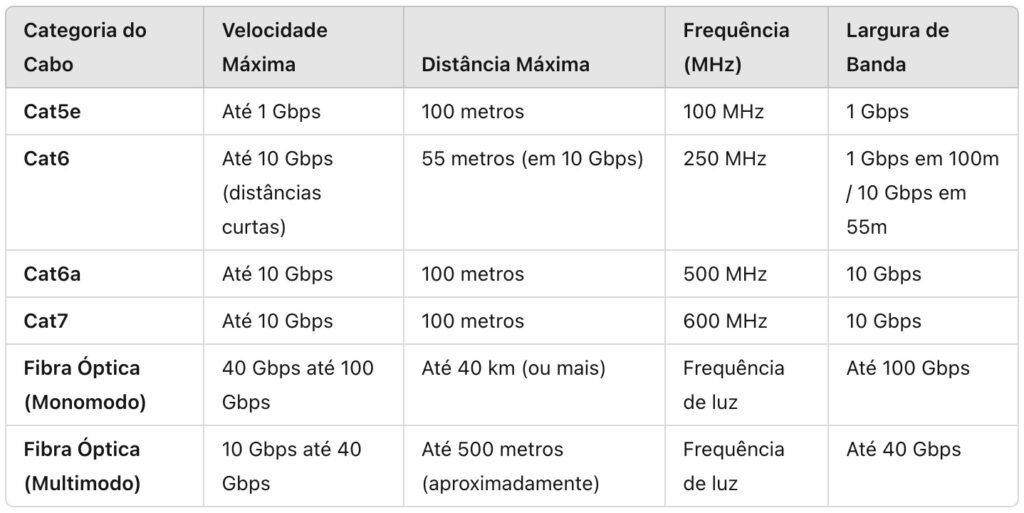
Main options for wired networks:
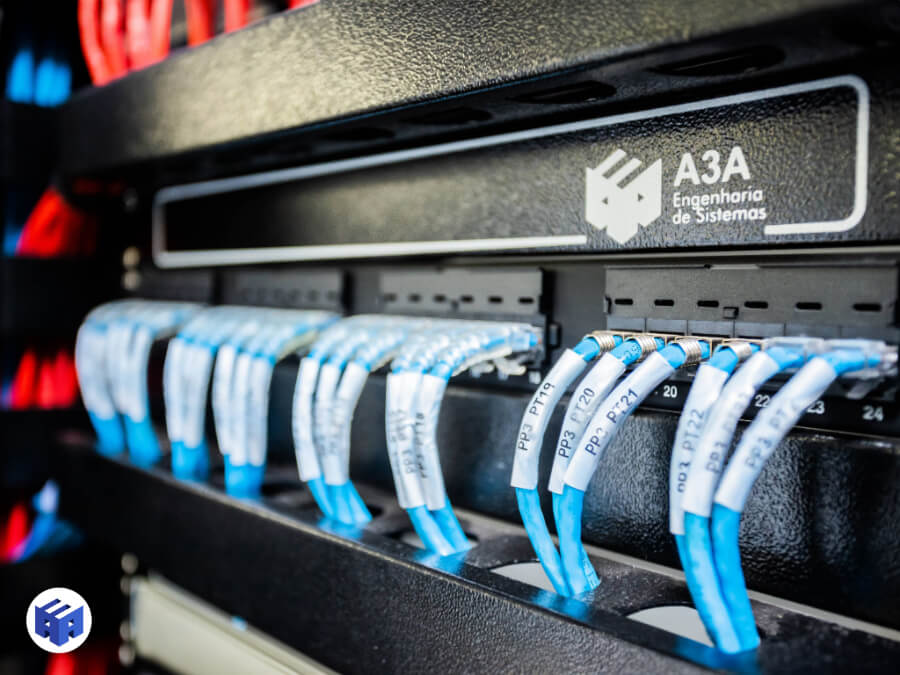
Collection: A3A Engenharia de Sistemas
Specific features of each cable type:
- Cat5e: An improved version of Cat5, it is the most widely used cable in Gigabit Ethernet networks. It supports speeds of up to 1 Gbps over distances of up to 100 metres.
- Cat6: Supports up to 10 Gbps, but only over shorter distances, approximately 55 metres. Over longer distances (up to 100 metres), speed is limited to 1 Gbps.
- Cat6a: It is an “augmented” version of Cat6 that can maintain 10 Gbps over longer distances, up to 100 metres, while offering higher frequency capacity and reduced interference.
- Cat7: It has enhanced shielding and supports up to 10 Gbps over a distance of 100 metres, with a higher frequency than Cat6a, allowing better performance and less interference in critical environments.
Main options for Wi-Fi networks:

How to define the best option?
The choice between a wired network and a wireless network depends on your specific needs:
- If you need high performance, stability, and security, especially for critical applications such as video conferencing, servers, and business operations, a wired network is the best option.
- If mobility, flexibility, and implementation cost are more important, especially for mobile devices and dynamic environments, the wireless network is the ideal solution.
In many cases, a combination of both networks (wired and wireless) can be the most efficient solution, taking advantage of the strengths of each technology.
Let’s do a quick exercise to better understand the possibilities of wired networks compared with wireless networks:
Case Study: Network Deployment in a High-Demand Corporate Environment
Scenario
You are responsible for planning and implementing a network for a corporate environment with the following characteristics:
- A high number of users, working simultaneously in activities such as ERP (Enterprise Resource Planning) and CRM (Customer Relationship Management), which require constant and fast access to centralised databases.
- Monitoring systems, with several security cameras transmitting high-resolution video in real time, in addition to an integrated access control system.
- The need for high performance and stability on the network to ensure that company operations run without interruptions or performance bottlenecks.
Needs Analysis
- Fast access to databases: Both ERP and CRM depend on fast and reliable access to servers and databases. These systems deal with large volumes of data and require a stable, low-latency connection to avoid delays in the company’s critical operations.
- Monitoring systems and access control: The CCTV system, composed of several cameras, generates a large amount of data traffic, especially if the cameras are high resolution. The access control system also needs to operate without failures, since it involves the company’s physical security.
- A high number of users: With many employees connected simultaneously, it is essential to ensure that the network has sufficient capacity to serve all users without loss of performance.
Comparison: Wired Network vs. Wireless Network
- Wireless Network:
- Strengths:
- Flexibility and mobility, allowing employees to connect from anywhere in the office.
- Generally lower implementation cost, with the installation of wireless routers and distributed access points.
- Weaknesses:
- The wireless network may be affected by interference, signal congestion (especially in environments with many users), and physical barriers that reduce signal quality.
- The available bandwidth on a wireless network may not be sufficient to handle the heavy video traffic from security cameras, in addition to all users simultaneously using demanding systems such as ERP and CRM.
- Higher latency, which may affect response time when accessing databases and other critical services.
- Strengths:
- Wired Network:
- Strengths:
- High traffic capacity and consistent speed. By using Cat6a cabling or optical fibre, the wired network can easily support the data volume generated by security cameras, in addition to handling a large number of simultaneous users engaged in data-intensive activities.
- Stability and low latency, essential for the proper functioning of critical systems such as ERP, CRM, and real-time video monitoring.
- High physical security, reducing the chances of data interception or network intrusion.
- Weaknesses:
- Less flexibility in terms of user mobility. However, most companies can mitigate this with strategic network outlets and the integration of a small wireless segment for mobile devices.
- Higher initial cost, due to the need to install cabling, switches, and organise the physical infrastructure.
- Strengths:
Ideal Solution
In this scenario, the wired network would be the best option to meet corporate demands. The need for high speed, stability, and security makes a wired network more suitable for handling the large number of users, the heavy use of ERP and CRM, and the real-time video transmission from security cameras.
Reasons:
- Performance and Reliability: A wired network, using Cat6, Cat6a, or Cat7 cabling, can support large traffic volumes consistently and with low latency, which is crucial for systems such as ERP and CRM. In addition, high-resolution video transmission from multiple cameras requires a reliable connection to avoid data loss or interruptions in monitoring.
- Security: With a wired network, data is better protected against external interception. Since the company deals with sensitive data such as financial and operational information, ensuring network security is essential.
- Expansion Capacity: Although the wireless network offers flexibility, the wired network is more suitable for corporate environments where the number of simultaneously connected devices is high. The wired infrastructure can be expanded as needed while maintaining stable performance.
Hybrid Implementation
An interesting option may be the implementation of a hybrid network, where the main infrastructure is wired to guarantee critical performance, and a wireless network is configured to provide mobility and flexibility for mobile devices and areas that do not require high performance, such as meeting rooms or common areas.
- Wired Network: Responsible for connecting desktops, servers, security systems, and other critical devices that require high speed and stability.
- Wireless Network: Used for smartphones, tablets, and laptops in environments that demand mobility, but where bandwidth demand is not as high.
Conclusion:
For a corporate environment with many simultaneous demands, large data volume, and a need for security and reliability, the wired network is the best choice. It offers the performance needed to ensure efficient operations, especially in critical systems such as ERP and CRM. Adding a wireless network can complement the infrastructure to provide flexibility for mobile users without compromising overall network stability.
