
CAT6 vs. CAT6A Cable: the choice between these two standards is one of the critical decisions in structured cabling projects, as it directly impacts transmission capacity, system performance, and compliance with technical standards. Analyzing the technical differences — such as frequency, transmission rates, immunity to interference, and application limits — is fundamental to specifying a […]
Check it out!
CAT6 vs. CAT6A Cable: the choice between these two standards is one of the critical decisions in structured cabling projects, as it directly impacts transmission capacity, system performance, and compliance with technical standards. Analyzing the technical differences — such as frequency, transmission rates, immunity to interference, and application limits — is fundamental to specifying a scalable, reliable infrastructure prepared for current and future demands in corporate or industrial environments.
When planning network infrastructure, it is essential to understand the technical differences between twisted-pair cable categories (UTP/STP). This choice will have a direct impact on performance, bandwidth, frequency, and future network expansions. In this article, we discuss in detail the technical aspects that must be considered when specifying a CAT6 or CAT6A structured cabling system.
In this article, we cover the main design criteria that guide the selection between CAT6 cable and CAT6A cable in structured cabling solutions.
[elementor-template id=”24446″]
Category 6 (CAT6)
Source: A3A Engenharia Archive
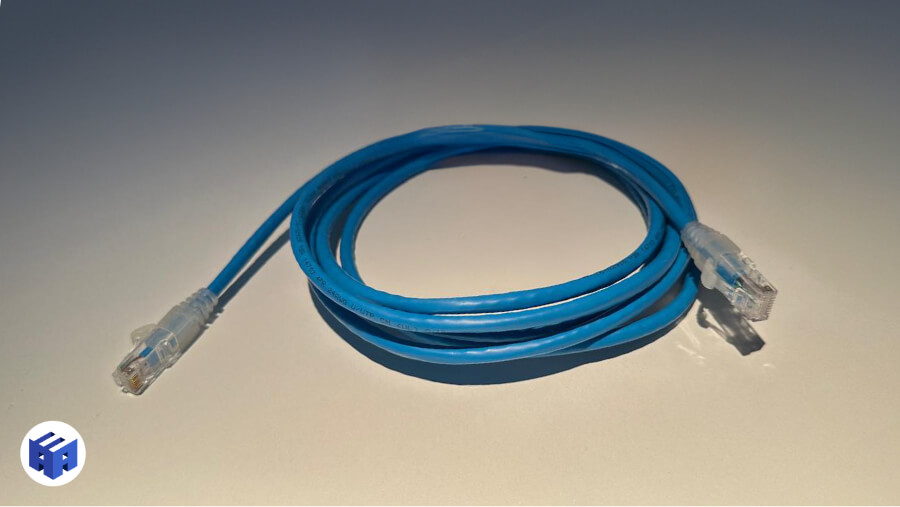
CAT6 cable (an acronym for Category 6) is a twisted-pair cable consisting of four pairs of copper wires twisted together and enclosed in a plastic jacket. It was designed to deliver improved performance over CAT5e. CAT6 has greater bandwidth capacity and is suitable for Gigabit Ethernet networks and other high-speed voice, data, and video applications.
CAT6 cable supports transmission speeds of up to 1 Gbps at distances of up to 100 meters. It operates at frequencies up to 250 MHz, enabling faster transmission and greater data processing capacity. CAT6 also provides better crosstalk and interference reduction compared to CAT5e, resulting in more reliable and efficient data transmission.
Category 6A (CAT6A)
SOURCE: COMMSCOPE
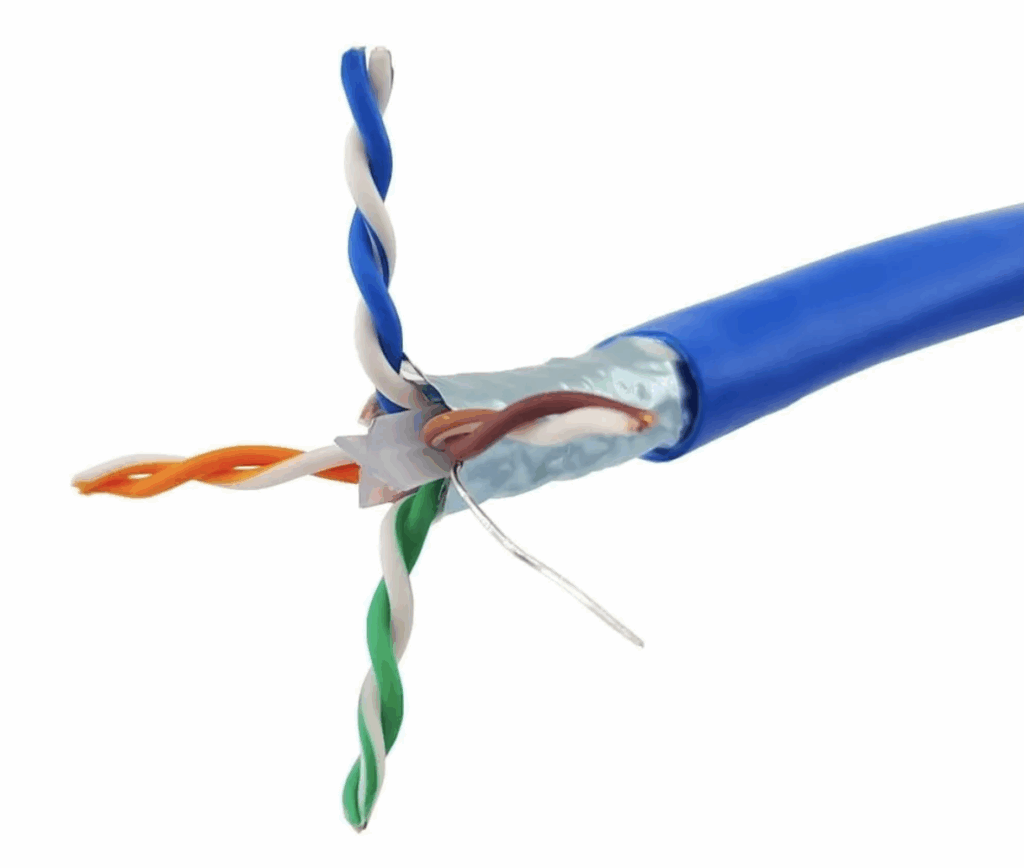
CAT6A cable (an acronym for Category 6 Augmented) is an enhanced version of CAT6. Like CAT6, it features four pairs of twisted copper wires enclosed in a plastic jacket. However, CAT6A incorporates significant improvements over CAT6.
CAT6A cable supports transmission speeds of up to 10 Gbps at distances of up to 100 meters, making it suitable for high-speed networks such as 10GBASE-T. CAT6A also operates at frequencies up to 500 MHz, enabling even faster transmission and greater data processing capacity compared to CAT6.
In addition, CAT6A offers superior crosstalk and interference reduction compared to CAT6. This is achieved through more efficient isolation between the twisted wire pairs, resulting in even more reliable and efficient data transmission.
Which Is the Better Option?
The choice between CAT6 and CAT6A cable depends on the specific needs and requirements of your network infrastructure. Both categories offer improved performance over CAT5e, with greater bandwidth and data processing capacity.
If you need transmission speeds of up to 1 Gbps at distances up to 100 meters, CAT6 is a suitable option. It delivers superior performance over CAT5e and is more cost-effective than CAT6A.
However, if you require transmission speeds of up to 10 Gbps at distances up to 100 meters, CAT6A is the recommended choice. It provides even better performance than CAT6 and is better suited for high-speed networks and applications that demand greater bandwidth.
It is important to note that CAT6A generally has a higher cost than CAT6. Therefore, when making a decision, consider your current and future needs as well as your available budget.
Bandwidth and Frequency: CAT6 vs. CAT6A
CAT6 cable can support frequencies up to 250 MHz, while CAT6A can operate up to 500 MHz. This frequency difference results in greater bandwidth capacity for CAT6A, enabling faster data transmission and supporting high-speed applications such as 10GBASE-T.
Although CAT6 has a lower bandwidth, it is still suitable for most Gigabit Ethernet networks and offers superior performance over CAT5e.
Crosstalk (NEXT) and Interference: CAT6 vs. CAT6A
CAT6A incorporates significant improvements over CAT6 in terms of crosstalk and interference. It employs advanced isolation and shielding techniques to reduce near-end crosstalk (NEXT) between the twisted wire pairs, resulting in more reliable data transmission that is less susceptible to interference and noise.
While CAT6 also provides crosstalk reduction compared to CAT5e, CAT6A offers enhanced protection against electromagnetic interference, making it better suited for environments with high electrical or radio frequency interference.
Maximum Distance: CAT6 vs. CAT6A
Both CAT6 and CAT6A have a maximum distance limitation of 100 meters for optimal performance. However, when it comes to 10GBASE-T speeds, CAT6’s maximum distance is reduced to 55 meters, while CAT6A supports 10 Gbps speeds across the full 100 meters. Therefore, if you need 10 Gbps performance at longer distances, CAT6A is the recommended choice.
Cost: CAT6 vs. CAT6A
Cost is an important factor to consider when choosing between CAT6 and CAT6A cable. Generally, CAT6A is more expensive than CAT6, due to its technical improvements and greater bandwidth. The additional cost of CAT6A can range from 10% to 20% compared to CAT6. It is important to weigh your budget against your network’s specific requirements when making a decision.
Comparison Table: CAT6 vs. CAT6A Cable
| Characteristic | CAT6 Cable | CAT6A Cable |
|---|---|---|
| Maximum frequency | 250 MHz | 500 MHz |
| Maximum speed | 1 Gbps (100 m) / 10 Gbps (up to 55 m) | 10 Gbps (up to 100 m) |
| Shielding | UTP or STP | UTP or STP |
| Typical diameter | ~6.0 mm | ~7.0–8.5 mm |
| Interference immunity | Good | Superior to CAT6 |
| Maximum distance for 10 Gbps | 55 m | 100 m |
| Common applications | Corporate and residential networks | Data centers, high-performance networks |
| Backward compatibility | Backward compatible with CAT5e | Backward compatible with CAT6 and CAT5e |
| Standard | ANSI/TIA-568-C.2 | ANSI/TIA-568-C.2 |
“A structured cabling project is essential to ensure that all performance, safety, and scalability requirements are met. The correct choice of cables and topology is only possible when the specific needs of each environment are considered from the very beginning of the planning process.”
— Eng. Altair Galvão, specialist in network design and structured cabling
Understanding How a Structured Cabling System Works
A Structured Cabling System is a standardized infrastructure that enables the interconnection of network devices in a corporate environment. It consists of twisted-pair cables, connectors, patch panels, and network equipment. The primary goal is to ensure the efficient transmission of data, voice, and video, providing a reliable, high-performance network.
In Structured Cabling, cables are organized in a specific topology, generally following the star distribution pattern. This means all cables are connected to a central point — such as a telecommunications cabinet — where patch panels are installed. These panels enable the connection and management of cables that extend to network outlets, such as workstations, servers, phones, and other devices.
Using a Structured Cabling System provides a range of benefits, including greater flexibility for future expansions, ease of maintenance and management, better cable organization, reduced interference and crosstalk, support for multiple network services, and greater communication reliability.
Structured Cabling Infrastructure is based on technical standards and norms, such as those defined by TIA/EIA and ISO/IEC. These guidelines establish requirements for cabling installation, performance, and certification, ensuring compliance and interoperability among the various network components.
Conclusion
When planning your network infrastructure, the choice between CAT6 and CAT6A must be based on your company’s specific requirements. Both categories offer improved performance over CAT5e, with greater bandwidth and data processing capacity.
If transmission speeds of up to 1 Gbps are sufficient to meet your company’s demands, CAT6 is a suitable option. It offers superior performance over CAT5e and may be a more cost-effective choice.
However, if you require speeds of up to 10 Gbps to support high-speed applications such as 10GBASE-T, CAT6A is the recommended choice. With its faster transmission capacity and greater bandwidth, CAT6A is especially well-suited for high-speed networks.
Remember to consider not only transmission speeds, but also supported distances and available budget. With the right choice, you can ensure an efficient network infrastructure ready to meet your company’s present and future demands.
Don’t wait! Ensure your business efficiency with a high-quality Structured Cabling Project. Fill out the form below and we’ll find the ideal solution for your business.
Normative References
“NBR 14565 — Structured Cabling for Commercial Buildings” — ABNT (Brazilian Association of Technical Standards)
“ISO/IEC 11801 — Generic Cabling for Customer Premises” — ISO/IEC (International Organization for Standardization & International Electrotechnical Commission)
“ANSI/TIA 568 — Generic Telecommunications Cabling for Customer Premises” — ANSI/TIA (American National Standards Institute & Telecommunications Industry Association)
“What Are the Structured Cabling Services and Their Technical Responsibilities?” — CREA (Regional Council of Engineering and Agronomy)
“Structured Cabling Systems: the Fact File” — CommScope
Frequently Asked Questions
What is the difference between CAT6 and CAT6A?
CAT6A supports higher frequencies (up to 500 MHz) and speeds of up to 10 Gbps at up to 100 m, while CAT6 reaches up to 250 MHz and 10 Gbps, but limited to 55 m.
What is the speed of a CAT6A cable?
Up to 10 Gbps (10 Gigabits per second) at distances of up to 100 meters.
What is the difference between CAT6 and CAT7?
CAT7 offers superior shielding, frequencies up to 600 MHz, and supports up to 10 Gbps at 100 m — ideal for high electromagnetic interference environments. CAT6 is more common in commercial and residential networks.
What is the difference between CAT5e and CAT6 network cables?
CAT5e supports up to 1 Gbps at 100 m with a frequency of 100 MHz, while CAT6 supports up to 10 Gbps (at up to 55 m) with a frequency of 250 MHz.
What are the specifications of the CAT6A cable?
Frequency: up to 500 MHz
Speed: up to 10 Gbps at up to 100 m
Shielding: UTP or STP
Applications: 10GBASE-T, data centers, corporate networks.
What are the differences between CAT6 and CAT7?
CAT7 has individual and overall shielding, higher frequency (600 MHz), and supports industrial environments and critical applications. CAT6 is more flexible and sufficient for most residential and commercial projects.
How many CAT6 cables fit in a conduit?
It depends on the conduit and cable diameters, but it is essential to follow technical standards (such as NBR 5410) to avoid exceeding conduit fill capacity and ensure cable integrity.
1 cable: up to 53% of the conduit’s internal cross-section.
2 cables: up to 31%.
3 or more cables: up to 40% of the conduit’s internal cross-section.
What is the cost of an executive project relative to the total investment?
The executive project typically represents between 5% and 10% of the total deployment cost, depending on complexity and scale. In large-scale projects, this percentage can be even lower — down to 3% — thanks to the dilution of engineering costs across the overall project value.
Does the executive project actually generate savings?
Yes. In addition to avoiding rework and unnecessary purchases, correct material and service specification can generate immediate savings of 15% to 20% on deployment costs, as demonstrated in real cases validated by A3A Engenharia’s technical portfolio.
What should be required from a structured cabling project supplier?
Detailed executive project, technical specification, bill of materials, executive plans and diagrams, as-built documentation, ART (Technical Responsibility Declaration), test reports, and network point certification.
Is it possible to adapt the infrastructure for future expansions?
Yes. When the project is well-designed and documented, the infrastructure is prepared for expansions, upgrades, and future integrations without the need for rework or extended downtime.
How do I know if my system complies with the applicable standards?
Request complete technical documentation (executive project, test reports, ART) and require that the work be carried out by qualified and experienced professionals.
If in doubt, request a specialized technical audit.
Relevant Links
eBook — Why Hire a Structured Cabling Project?
Structured Cabling Technical Standards
Network Certification for Structured Cabling Systems
Consulting for Structured Cabling Projects
Structured Cabling Installation
How to Avoid Common Problems in Structured Cabling Systems
Components of Structured Cabling
Key Benefits of Structured Cabling