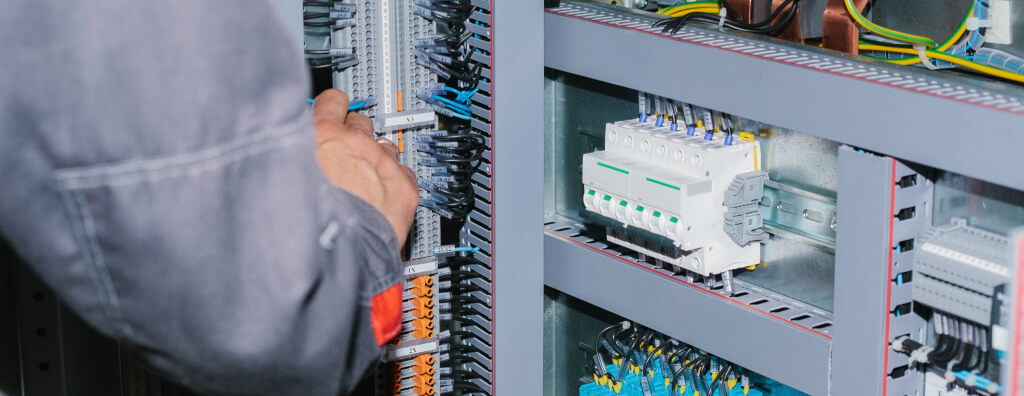
Understand the main technical and normative aspects of low-voltage electrical installations, including planning, conductor sizing, protection, grounding, and documentation.
Check it out!
Electrical projects play a fundamental role in the safety, efficiency, and functionality of any building. A well-designed project not only guarantees proper energy distribution, but also ensures compliance with technical standards, minimizing the risks of failures, short circuits, and fires, in addition to facilitating future maintenance and expansions.
This article addresses the main technical and normative aspects for preparing an electrical project, highlighting planning stages, component selection, sizing criteria, protection, grounding, and documentation.
[elementor-template id=”24446″]
Initial Planning of the Electrical Project
Before starting any project phase, it is essential to understand the consumption profile, environmental conditions, and local utility company rules.
Load and Demand Survey
Identify all loads (lighting, outlets, air conditioning equipment, motors, heaters) and apply simultaneity and demand factors according to NBR 5410. This procedure ensures proper sizing without burdening the system with unnecessary oversizing.
Classification of Environments
Environments with humidity, excessive heat, corrosive agents, or explosion risk require special attention. NBR 5410 determines the degree of external influence, indicating the correct selection of components, insulating materials, and protective devices.
Sizing of Conductors, Conduits, and Cables
The sizing of electrical wires and cables is critical to ensure safety and energy efficiency.
Selection of Electrical Conductors
Choose conductors with appropriate cross-sections, taking into account their current-carrying capacity (ampacity), permitted voltage drop (generally up to 4%), and insulation type. NBR 5410 provides clear tables and guidelines for each installation scenario.
Conduits, Trunking, and Cable Trays
The conduction infrastructure must allow the passage of cables without damaging the insulation. Respect occupancy factors and maintain space for future maintenance or expansions, following standard guidelines to ensure practicality and durability.
Protective Devices: RCDs, SPDs, and Circuit Breakers
Protection is the heart of the electrical project, preventing failures and damage in situations of overcurrent, short circuit, or overvoltage.
Circuit Breakers and Fuses
Select circuit breakers and fuses according to interrupting capacity and tripping curves, ensuring selective and coordinated operation. This avoids unnecessary shutdown of the entire system in the event of a localized fault.
Residual Current Devices (RCDs)
RCDs increase safety against electric shocks by quickly disconnecting the circuit when earth leakage currents exceed 30 mA, as required by ABNT NBR 5410, especially in wet areas or areas with risk of accidental contact.
Surge Protection Devices (SPDs)
Install SPDs for protection against transient overvoltages, common in lightning discharges or switching operations on the grid. The correct application of these devices follows both NBR 5410 and ABNT NBR 5419 (Lightning Protection).
Electrical Grounding and Equipotential Bonding
An efficient grounding system ensures the safety of people and equipment.
Protective Conductor (PE)
Size the protective conductor according to the standard, ensuring that earth faults are quickly detected and interrupted by protective devices.
Equipotential Bonding Bars
Interconnect metallic masses and other conductive parts, ensuring proper equipotential bonding. This avoids dangerous potential differences, reducing the risk of electric shocks.
Fire Protection and Special Risks
Electrical installations must follow specific criteria in locations with fire or explosion risk.
Locations with High Fire Risk
Environments with flammable materials require flame-retardant materials, independent circuits, and reinforced protection. Compliance with NBR 5410 and complementary standards is essential.
Classified Areas
In explosive atmospheres, follow ABNT NBR IEC 60079 standards, ensuring certified and safe equipment and components.
Documentation, Diagrams, and Descriptive Memorial
Complete and well-detailed documentation facilitates execution, maintenance, and possible expansions of the electrical system.
Floor Plans and Single-Line/Multi-Line Diagrams
Include all information (location of lighting points, outlets, distribution boards, and conduit routes) clearly and in a standardized manner. Single-line diagrams show the connection between loads, conductors, and protective devices, following ABNT graphic standards.
Descriptive Memorial and Calculations
The memorial must present sizing criteria, conductor tables, protective devices, voltage drop, and short-circuit currents, in addition to justifying technical choices based on standards.
Technical Specifications
List materials, equipment, and components, ensuring compliance with standards and expected performance.
Conclusion
The development of an electrical project in accordance with NBR 5410 and other current standards is an investment in the safety, efficiency, and durability of the electrical installation. Strictly following technical and normative standards ensures a reliable system, avoiding failures, accidents, and high maintenance costs. A well-planned electrical project, with effective grounding, appropriate protective devices, and complete documentation, optimizes energy consumption, extends equipment service life, and ensures peace of mind for all users.