Technical challenges and solutions for installing CCTV systems in industrial, power, and healthcare critical environments.
Check it out!
Installing CCTV systems in critical environments, such as industries, power infrastructure, hospitals, or large urban areas, presents a series of technical and operational challenges. These locations require robust, reliable, and uninterrupted monitoring to ensure security, protect valuable assets, and prevent incidents.
In this article, we will explore the main challenges faced in installing CCTV cameras in these scenarios and the solutions to overcome these obstacles.
[elementor-template id=”24446″]
Challenges in Installing CCTV Cameras in Critical Environments
Archive: A3A Engenharia de Sistemas
Extreme Environmental Conditions
One of the main challenges in critical environments, especially in industries and outdoor installations, is adverse climatic and environmental conditions. CCTV cameras can be subjected to extreme temperatures, humidity, dust, rain, and even exposure to corrosive or explosive substances, depending on the location.
- Practical Example: In an oil refinery, cameras need to withstand exposure to chemicals, as well as high temperatures and corrosive environments.
Solution: To face these challenges, it is necessary to use cameras with an appropriate protection rating, such as IP66 or IP67 (resistance to dust and water) and cameras with corrosion protection and certification for hazardous areas, such as ATEX (Explosive Atmospheres). Additionally, the use of specific protection enclosures for each type of environment is crucial.
Vandalism Resistance
In critical environments, such as public areas or remote industrial facilities, there is a risk of vandalism and sabotage attempts. Cameras need to be resistant to intentional physical damage, ensuring that the monitoring system continues to function even in adverse conditions.
- Practical Example: In an urban transport hub, cameras can be subject to vandalism, where individuals try to destroy or manipulate them to avoid detection.
Solution: Using cameras with an IK10 rating, which indicates high resistance to impacts, is essential in these cases. Moreover, positioning cameras strategically, in difficult-to-access locations, can help prevent sabotage attempts.
Limited Network Infrastructure
Many critical environments, especially in remote locations, may have limited or even unavailable network infrastructure, making it difficult to install IP cameras that rely on stable connectivity to transmit data in real time.
- Practical Example: An industrial plant in a rural area may not have access to high-speed wired networks, hindering the transmission of high-definition videos.
Solution: In these situations, using long-range wireless networks, such as industrial Wi-Fi, LTE/4G networks, or even mesh networks, can be an effective solution. Additionally, cameras with local recording on memory cards or on nearby servers (edge storage) can be used to ensure video recording, even in case of connectivity failures.
Inadequate Lighting
Many critical environments operate in low-light conditions or complete darkness, which can compromise the effectiveness of traditional CCTV cameras. The lack of adequate lighting makes it difficult to capture sharp and detailed images, which are essential for security and monitoring.
- Practical Example: In an industrial warehouse or in outdoor areas of a port complex, the lack of night-time lighting can make it difficult to identify intruders or accidents.
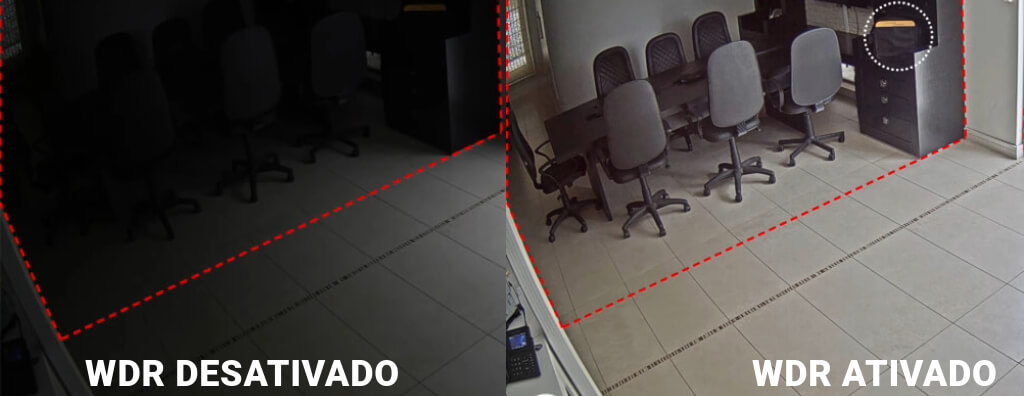
Solution: Using cameras equipped with infrared (IR) or low-light technologies allows for capturing high-quality images in poor light conditions. Cameras with WDR (Wide Dynamic Range) also help balance extreme lighting contrasts, allowing accurate capture even in areas with uneven lighting.
Cybersecurity
In critical environments, physical and digital security are equally important. CCTV cameras connected to the network are vulnerable to cyber attacks, such as attempts to intercept video, invade the video management system (VMS), or remotely disable the cameras.
- Practical Example: In a power plant, a cyber attack on the CCTV system can result in the deactivation of monitoring, opening gaps for physical intrusions or sabotage.
Solution: The implementation of robust cybersecurity measures is essential to protect the cameras and the CCTV system. This includes using encryption on video transmissions, firewalls to protect video servers, multi-factor authentication for system access, and regular firmware updates to fix vulnerabilities.
Coverage of Large Areas
In many critical environments, cameras need to cover vast areas, such as large factories, industrial complexes, or even open fields. Implementing an excessive number of cameras can lead to high costs and complexity, as well as overwhelming the network infrastructure.
- Practical Example: In a solar plant or in a mining field, where the area to be monitored is vast, it can be difficult to position cameras efficiently without creating blind spots or overloading the infrastructure.
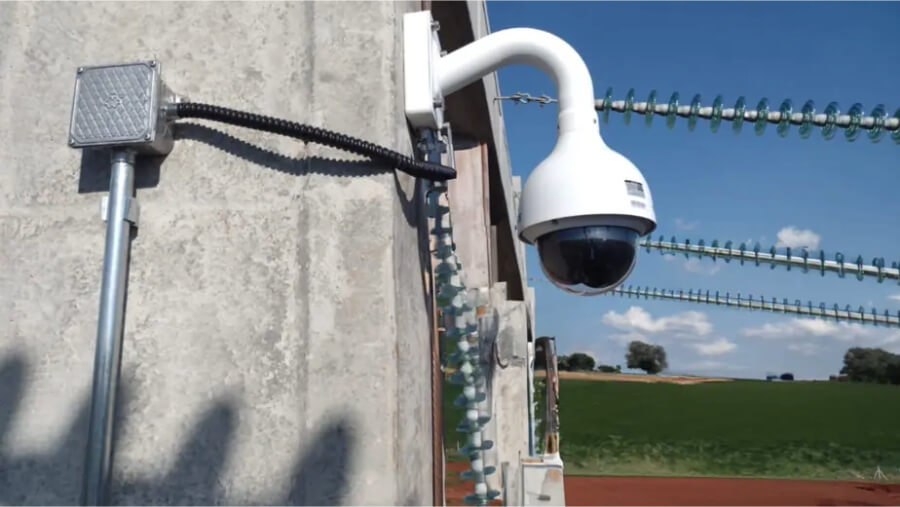
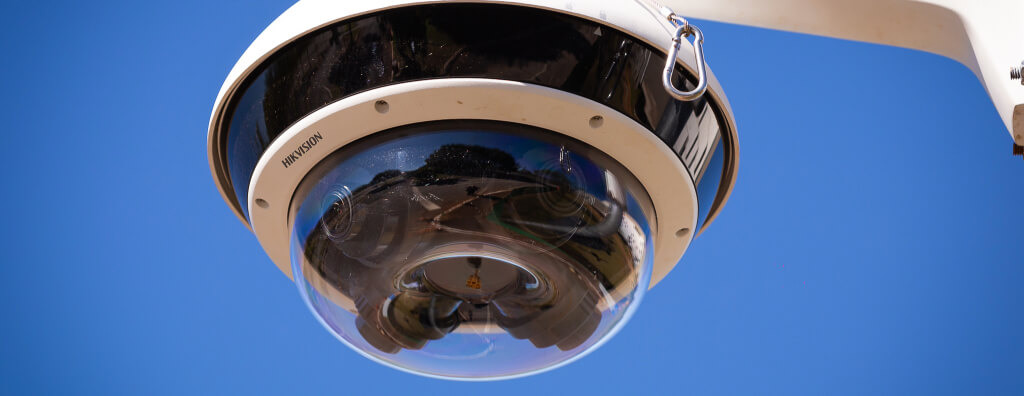
Solution: Using PTZ (Pan-Tilt-Zoom) cameras, which allow motion and remote zoom, is an effective solution for monitoring large areas with a reduced number of cameras. High-resolution cameras, such as 4K, also allow for covering larger areas without sacrificing image quality. Furthermore, a well-elaborated CCTV project will carefully define camera positioning, using mapping tools that can help maximize coverage.
Archive: A3A Engenharia de Sistemas
Additional Solutions for Critical Environments
Redundant Monitoring
A failover server is a backup solution that enters operation automatically when the main server fails or loses connection. It acts as redundancy, taking the place of the main server to ensure that the CCTV system continues recording, transmitting, and storing images even during a technical failure.
In CCTV systems, the main server manages critical functions such as video storage, camera management, and live monitoring transmission. If this server has problems, the failover server takes over these functions immediately, minimizing any impact on the operation of the security system.
In critical environments, the risk of failures in the CCTV system needs to be minimized. Implementing redundant systems, with backup cameras or storage servers in different locations, ensures that monitoring continues even in case of hardware or network failures.
Integration with Alarm Systems and Access Control
Integrating CCTV cameras with other security systems, such as intrusion alarms and access control, can increase monitoring effectiveness. When an alarm is triggered, cameras can be configured to automatically focus on the affected area, allowing for a faster and more precise response.
Conclusion
Conclusion: CCTV systems in critical environments present unique challenges, such as extreme environmental conditions, risks of vandalism, limited network infrastructure, and cybersecurity concerns. However, with the use of appropriate technologies—such as cameras with IP66/67 and IK10 protection, infrared cameras, failover servers, and shielded cabling—these challenges can be overcome. Furthermore, system integration and the use of high-resolution cameras help ensure efficient monitoring, even in large areas or hard-to-access locations. With careful planning and the correctly chosen equipment, it is possible to implement an efficient CCTV system in any critical environment.